Question 1
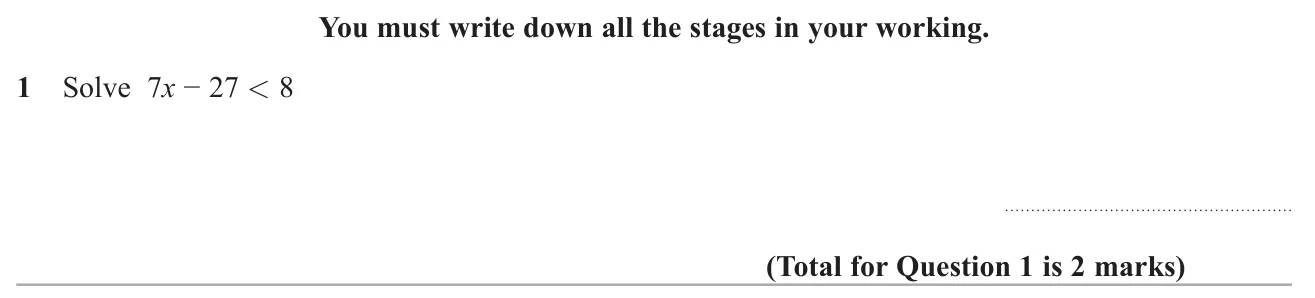
© Pearson Education Ltd. June 2022 Paper 1 (Higher, non-calculator), question 1.
Show answer
| Answer | 2 marks |
|---|
Worked solution Checked against the mark scheme
Add 27:
Divide by 7:
Watch out: Writing x = 5 instead of an inequality.
Edexcel GCSE Maths · 1MA1
Non-calculator · 21 questions · 80 marks · 1 hour 30 minutes. Try each question on paper, then press "Show answer".
© Pearson Education Ltd. June 2022 Paper 1 (Higher, non-calculator), question 1.
| Answer | 2 marks |
|---|
Worked solution Checked against the mark scheme
Add 27:
Divide by 7:
Watch out: Writing x = 5 instead of an inequality.
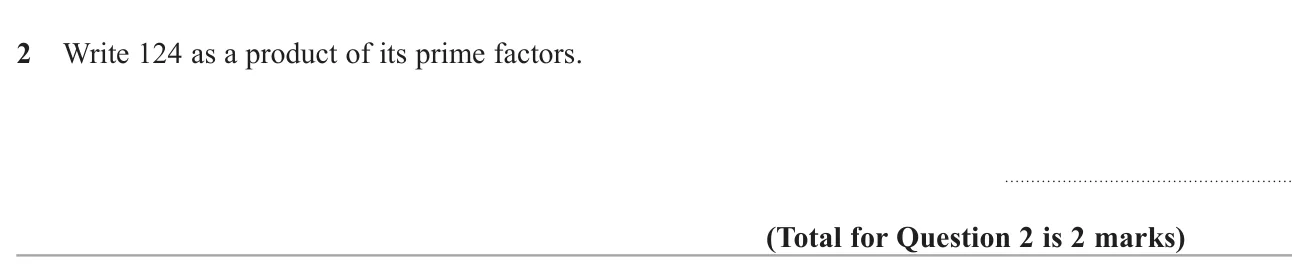
© Pearson Education Ltd. June 2022 Paper 1 (Higher, non-calculator), question 2.
| Answer | 2 marks |
|---|
Worked solution Checked against the mark scheme
, and 31 is prime.
So
Watch out: Stopping at 2 × 62 or 4 × 31.
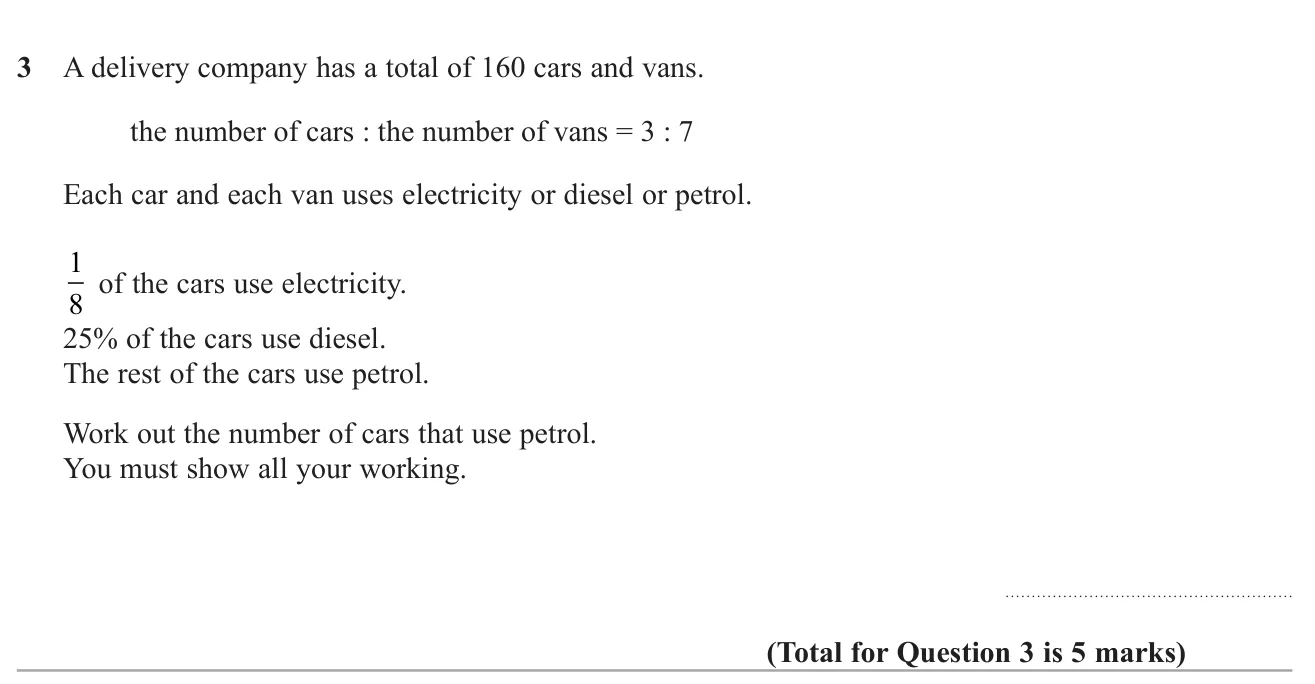
© Pearson Education Ltd. June 2022 Paper 1 (Higher, non-calculator), question 3.
| Answer | 30 | 5 marks |
|---|
Worked solution Checked against the mark scheme
Cars: ,
Electric:
Diesel: of 48
Petrol:
Watch out: Using all 160 vehicles instead of just the 48 cars (giving 100).
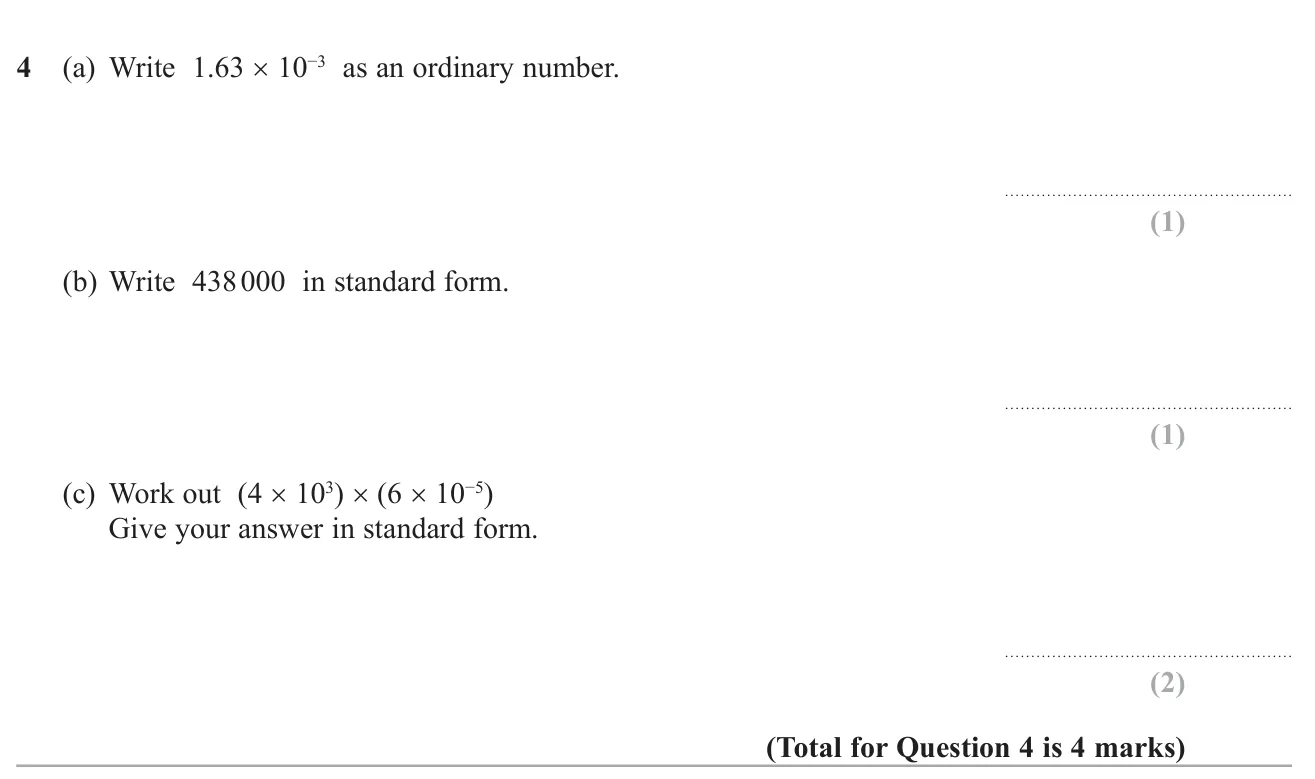
© Pearson Education Ltd. June 2022 Paper 1 (Higher, non-calculator), question 4.
| (a) | 0.00163 | 1 mark |
|---|---|---|
| (b) | 1 mark | |
| (c) | 2 marks |
Worked solution Checked against the mark scheme
(a) Move the decimal point 3 places left:
(b)
(c) and
Watch out: Leaving (c) as 24 × 10⁻², which is not in standard form.
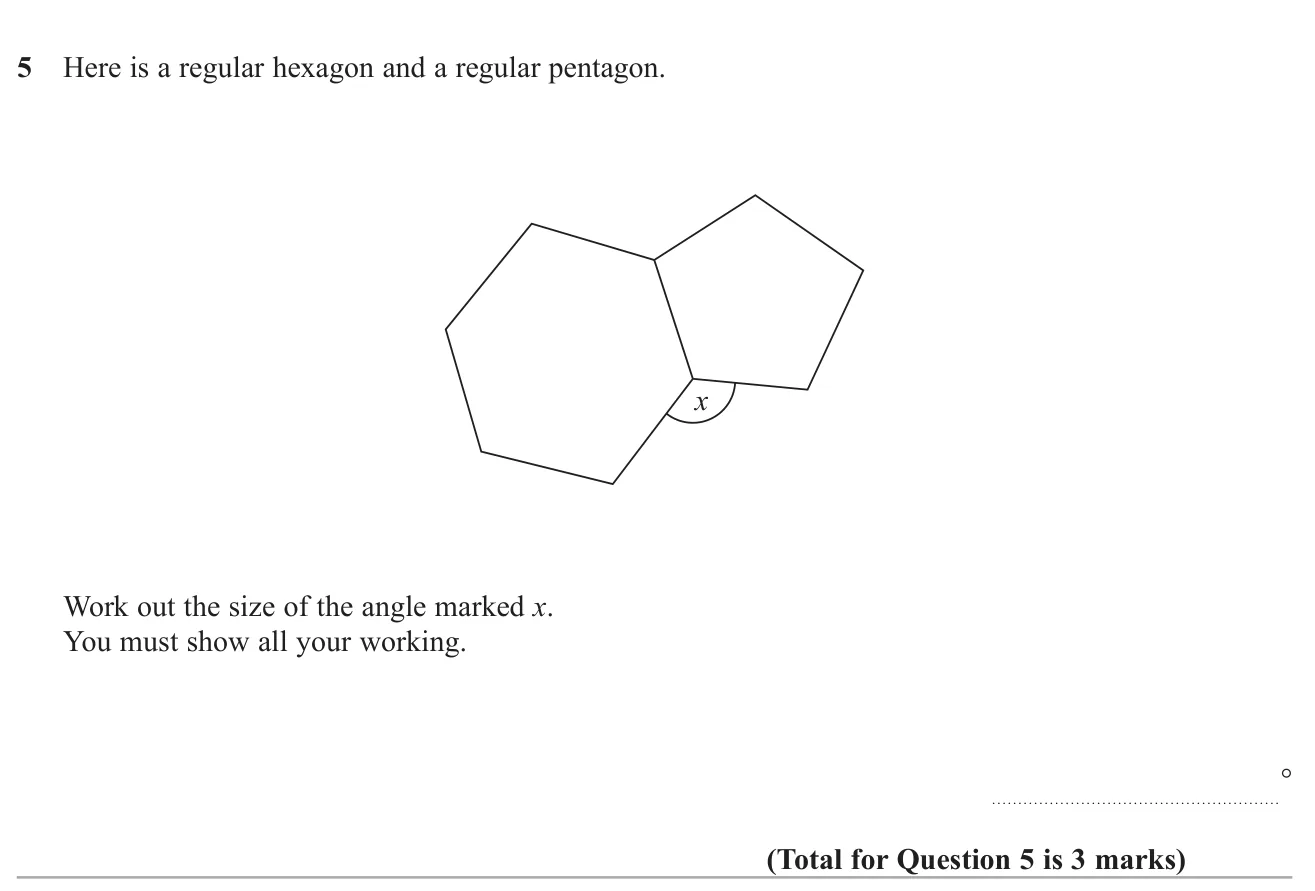
© Pearson Education Ltd. June 2022 Paper 1 (Higher, non-calculator), question 5.
| Answer | 132 | 3 marks |
|---|
Worked solution Checked against the mark scheme
Hexagon interior angle:
Pentagon interior angle:
Angles round a point add to :
Watch out: Using exterior angles in place of interior ones and getting 228.
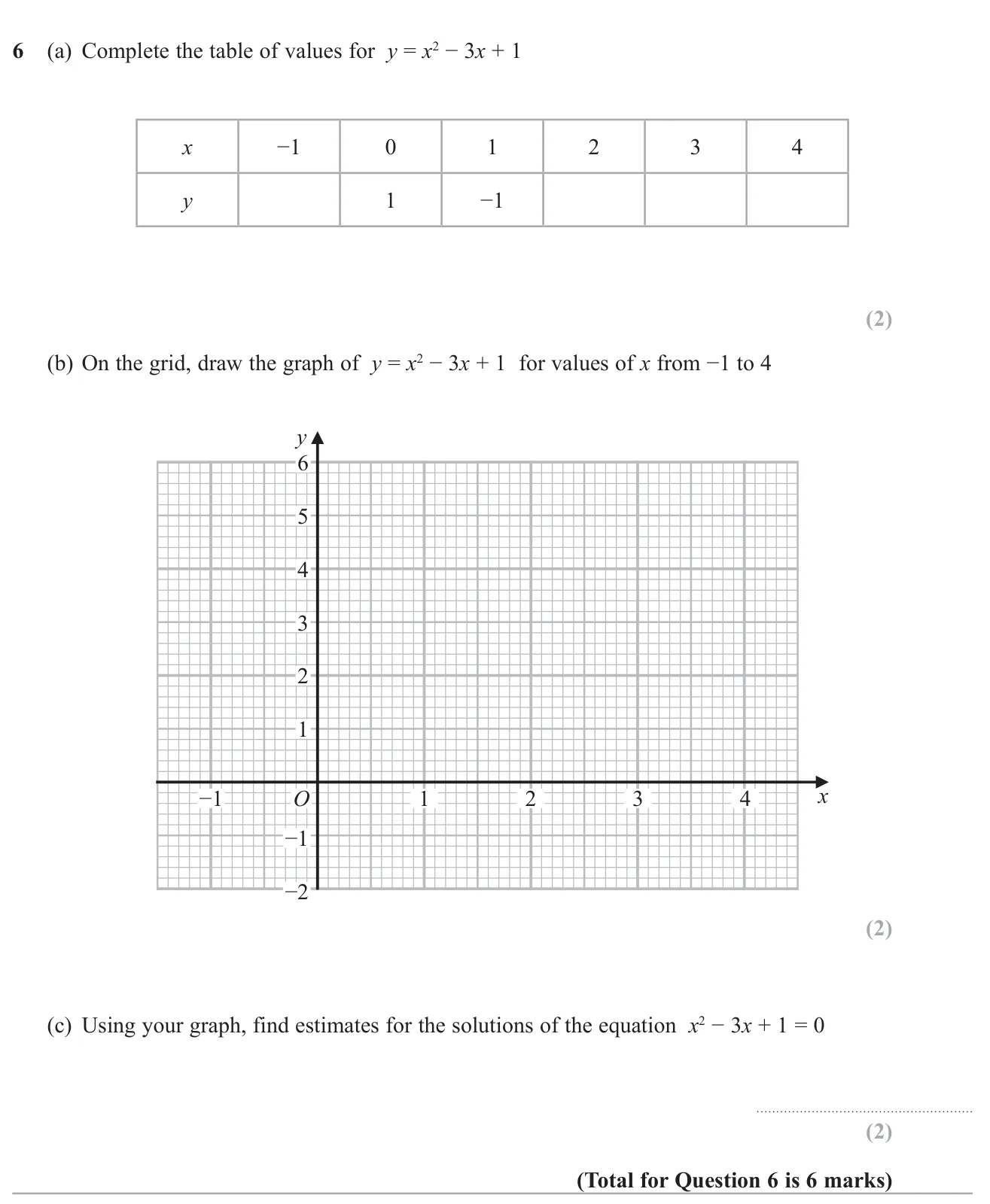
© Pearson Education Ltd. June 2022 Paper 1 (Higher, non-calculator), question 6.
| (a) | 5, −1, 1, 5 (for x = −1, 2, 3, 4) | 2 marks |
|---|---|---|
| (b) | Smooth U-shaped curve through the plotted points | 2 marks |
| (c) | and | 2 marks |
Worked solution Checked against the mark scheme
(a) : ; : ; : ; :
(b) Plot and join with a smooth curve.
(c) The curve crosses at about and
Watch out: Working out as , giving the wrong value at x = −1.
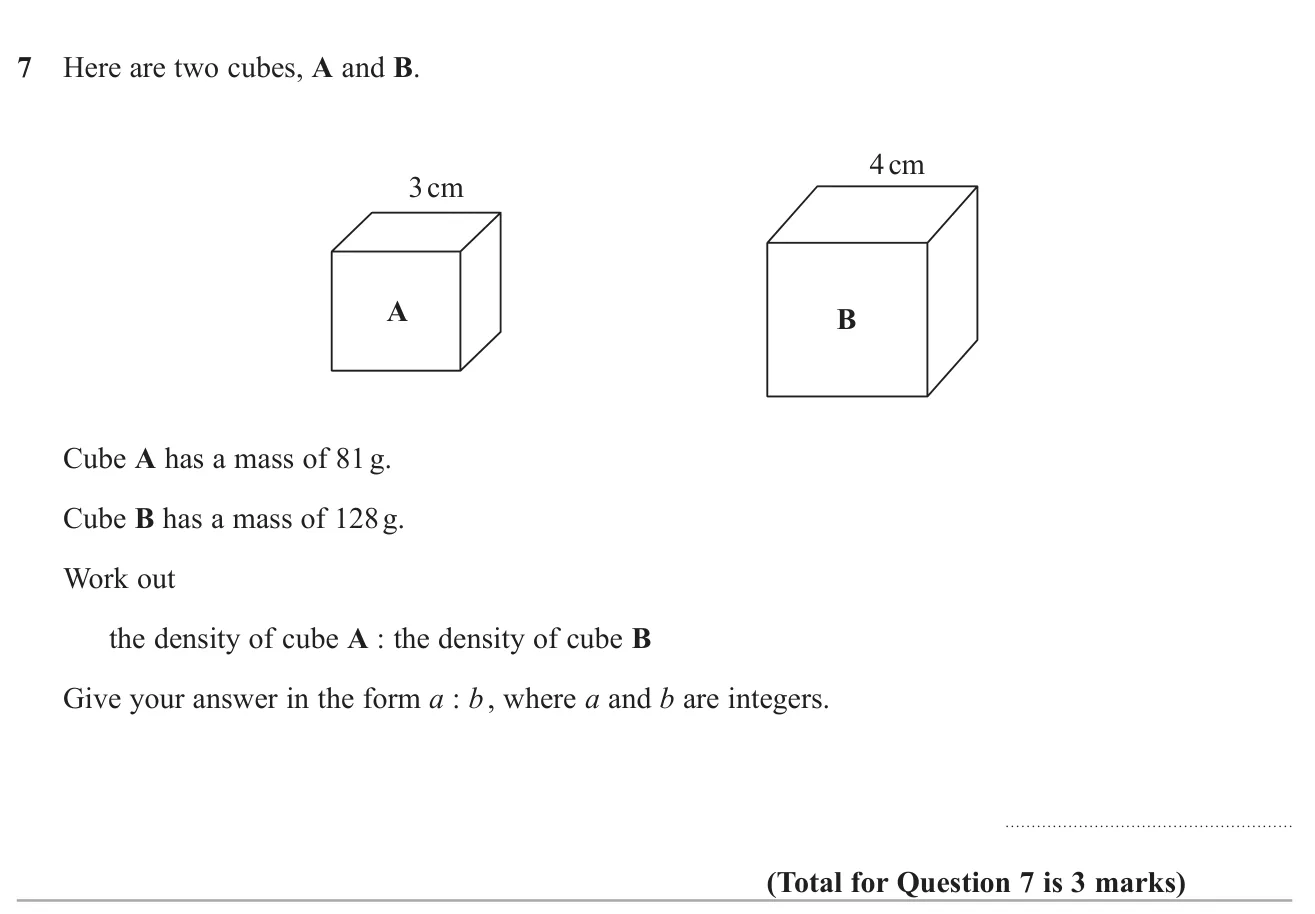
© Pearson Education Ltd. June 2022 Paper 1 (Higher, non-calculator), question 7.
| Answer | 3 : 2 | 3 marks |
|---|
Worked solution Checked against the mark scheme
Volumes: cm³ and cm³
Densities: g/cm³ and g/cm³
Ratio:
Watch out: Using side length times 6 or squaring instead of cubing.
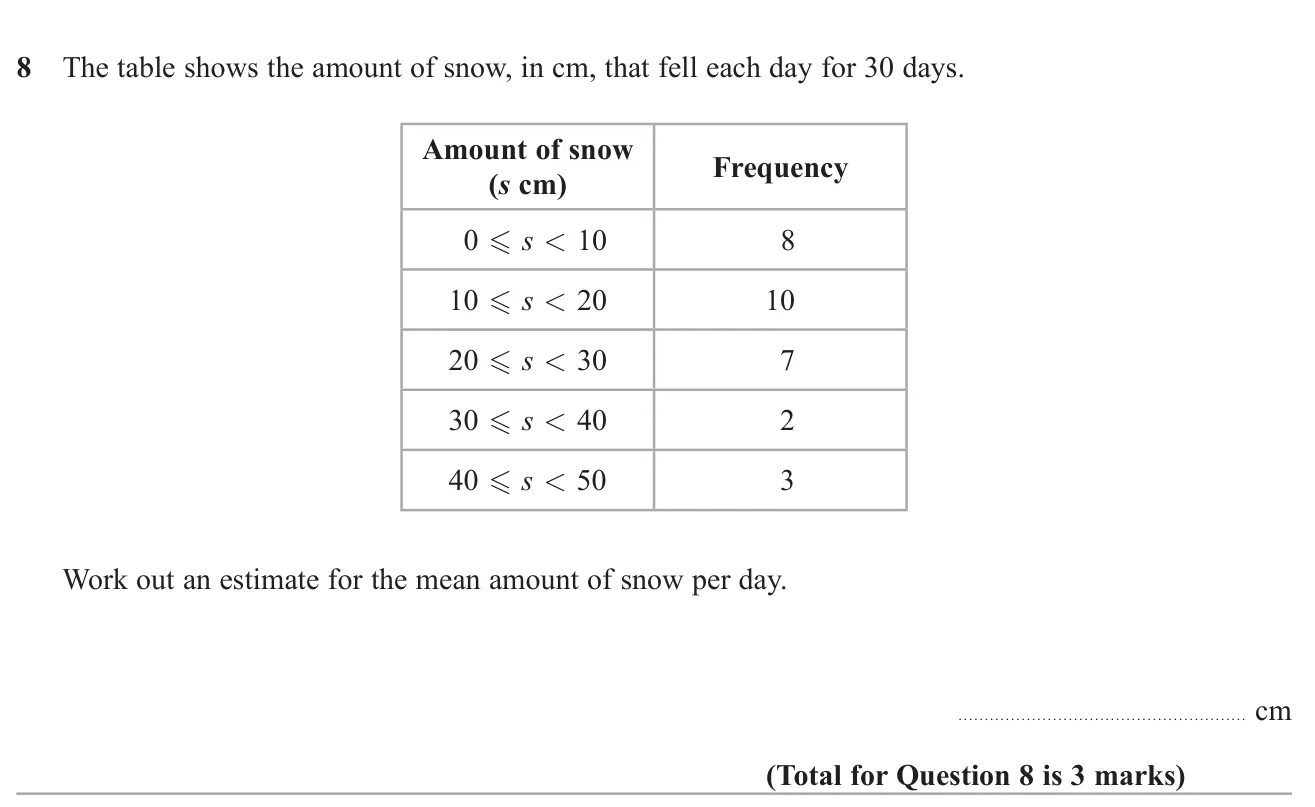
© Pearson Education Ltd. June 2022 Paper 1 (Higher, non-calculator), question 8.
| Answer | 19 cm | 3 marks |
|---|
Worked solution Checked against the mark scheme
Midpoints: 5, 15, 25, 35, 45
Mean cm
Watch out: Dividing by 5 (the number of classes) instead of the total frequency 30.
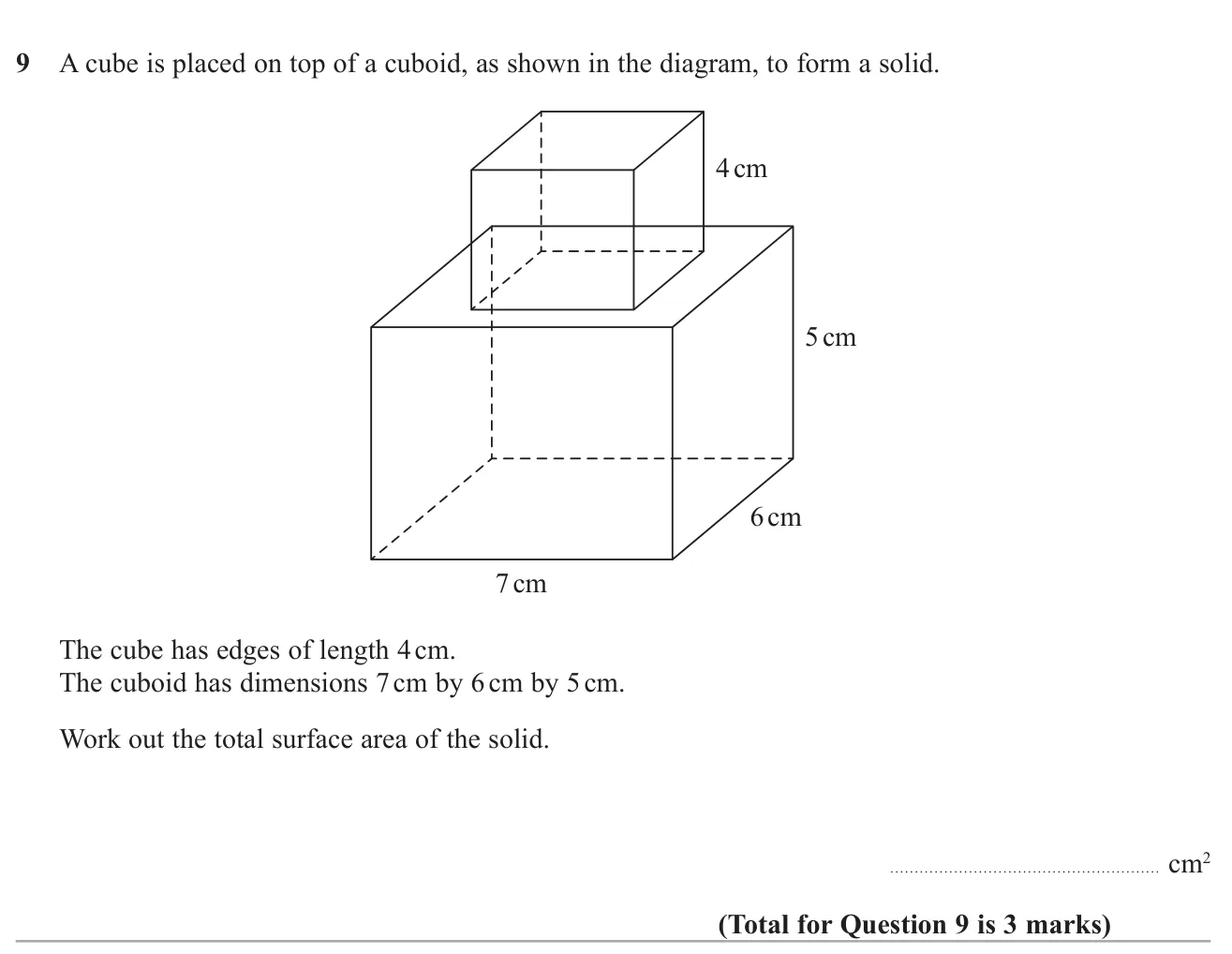
© Pearson Education Ltd. June 2022 Paper 1 (Higher, non-calculator), question 9.
| Answer | 278 cm² | 3 marks |
|---|
Worked solution Checked against the mark scheme
Cuboid faces:
Cube faces:
The join hides one face on each solid:
Watch out: Adding the two separate surface areas (310) without removing the two hidden 16 cm² faces.
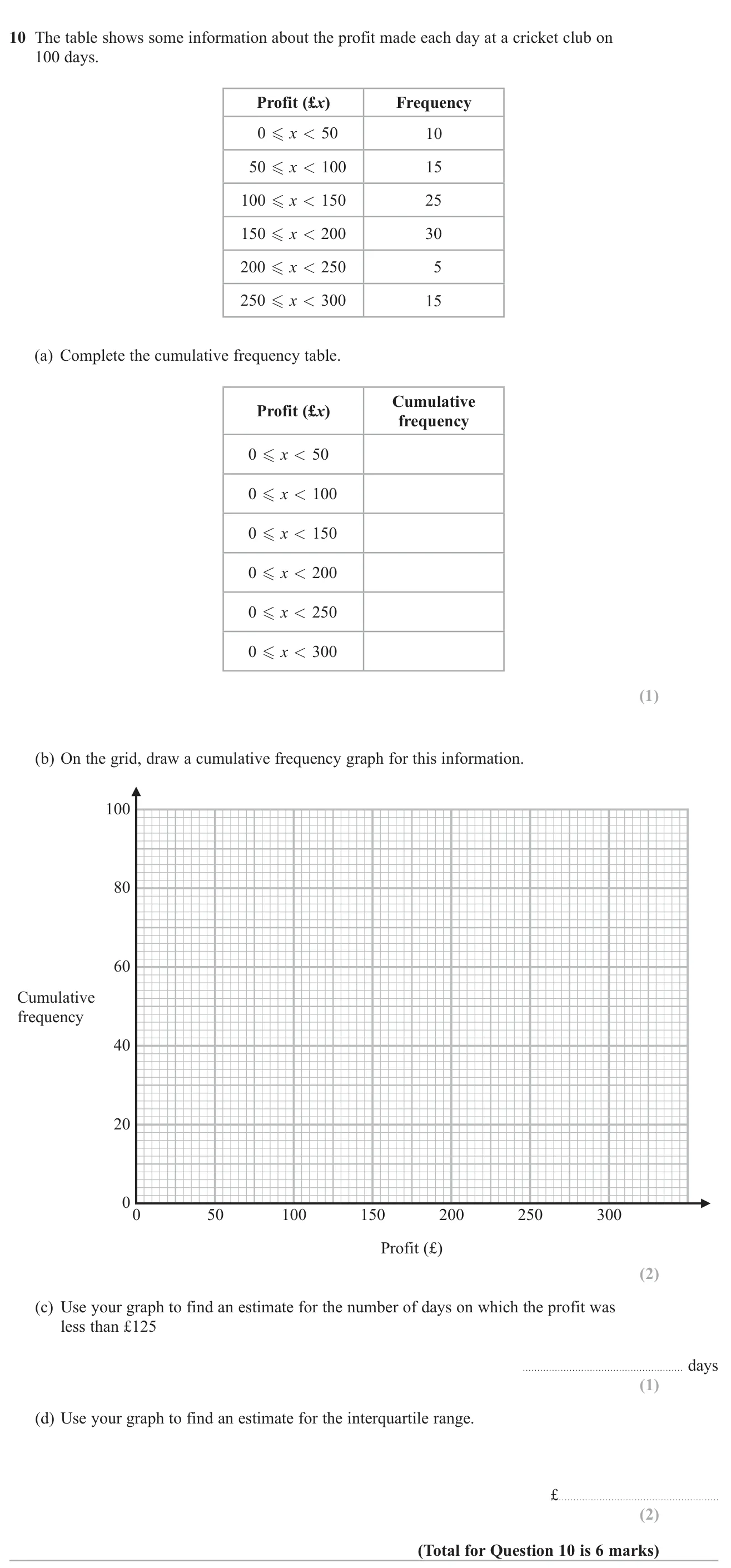
© Pearson Education Ltd. June 2022 Paper 1 (Higher, non-calculator), question 10.
| (a) | 10, 25, 50, 80, 85, 100 | 1 mark |
|---|---|---|
| (b) | Points at joined | 2 marks |
| (c) | About 37 days (35 to 39) | 1 mark |
| (d) | About £89 (85 to 93) | 2 marks |
Worked solution Checked against the mark scheme
(a) Running totals: 10, 25, 50, 80, 85, 100
(b) Plot each total at the top of its class (50, 100, …, 300) and join.
(c) Read up from £125: about 37 days.
(d) Lower quartile (25th value) ; upper quartile (75th value)
IQR
Watch out: Plotting points at class midpoints instead of upper class boundaries.
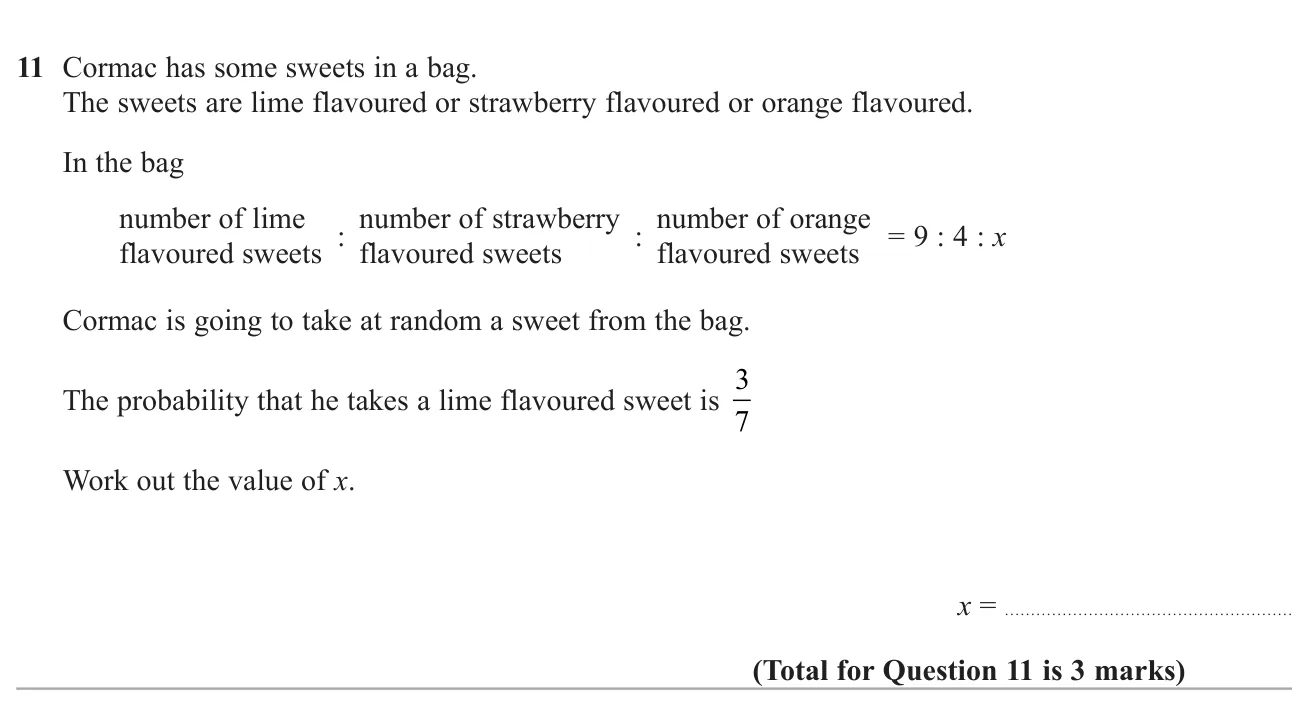
© Pearson Education Ltd. June 2022 Paper 1 (Higher, non-calculator), question 11.
| Answer | 8 | 3 marks |
|---|
Worked solution Checked against the mark scheme
, so the ratio has 21 parts in total.
Watch out: Setting by matching the denominator directly.
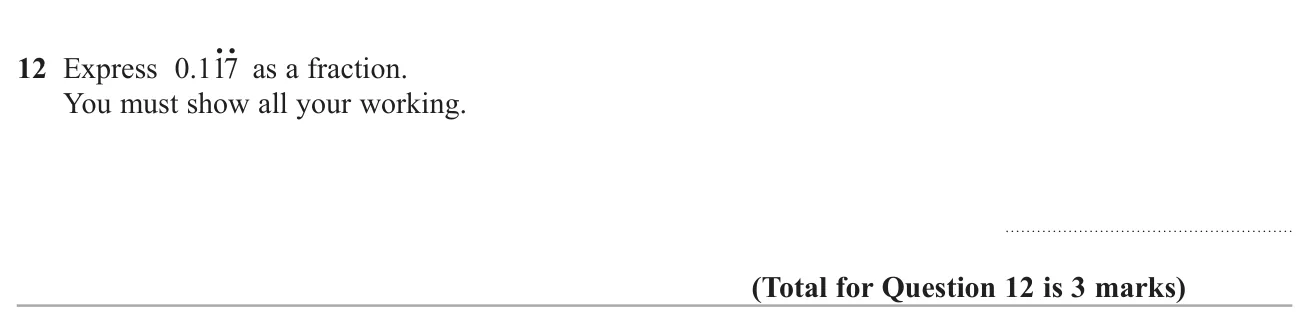
© Pearson Education Ltd. June 2022 Paper 1 (Higher, non-calculator), question 12.
| Answer | (or ) | 3 marks |
|---|
Worked solution Checked against the mark scheme
Let
and
Watch out: Treating all three digits as recurring and writing .
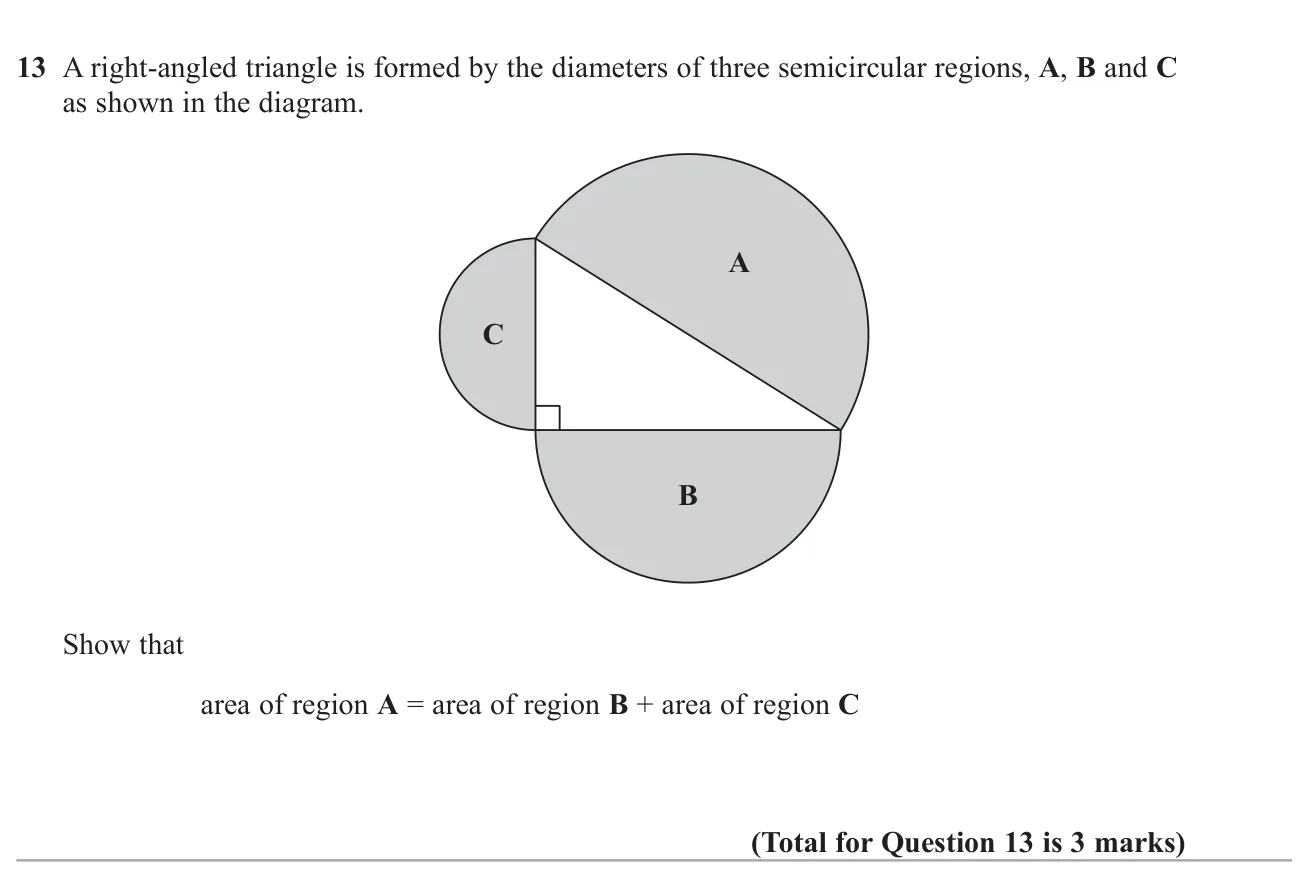
© Pearson Education Ltd. June 2022 Paper 1 (Higher, non-calculator), question 13.
| Answer | Shown: because | 3 marks |
|---|
Worked solution Checked against the mark scheme
Let the diameters be (hypotenuse), and . Pythagoras:
A semicircle with diameter has area
Multiply Pythagoras by :
So area A = area B + area C.
Watch out: Using the diameter as the radius, or only checking one numerical example without a general argument.
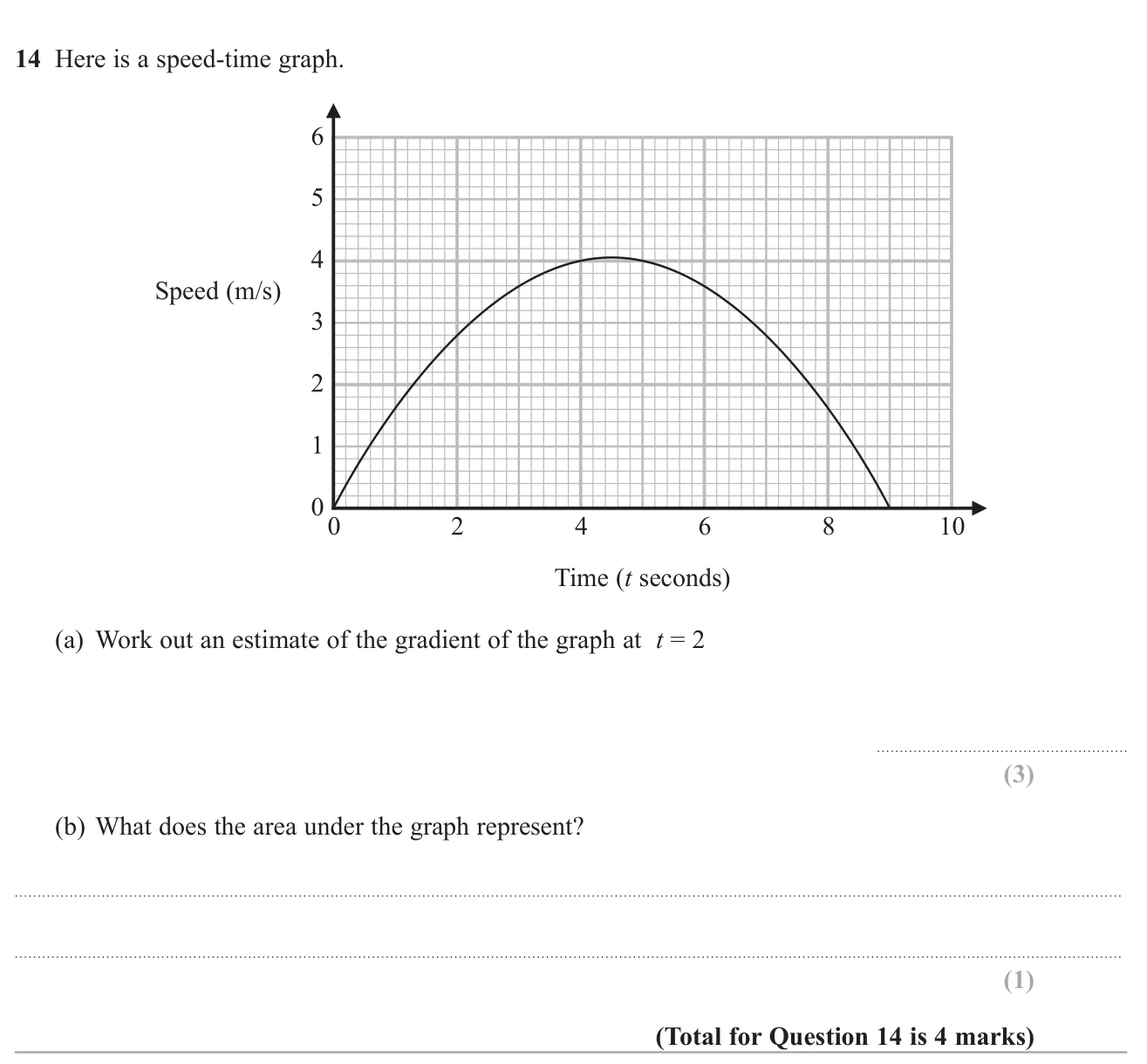
© Pearson Education Ltd. June 2022 Paper 1 (Higher, non-calculator), question 14.
| (a) | About 0.9 (0.7 to 1.1) | 3 marks |
|---|---|---|
| (b) | The distance travelled | 1 mark |
Worked solution Checked against the mark scheme
(a) Draw a tangent touching the curve at . Pick two points on it, e.g. and .
Gradient
(b) Area under a speed-time graph gives the distance travelled.
Watch out: Drawing a chord from the origin to the curve instead of a tangent at t = 2.
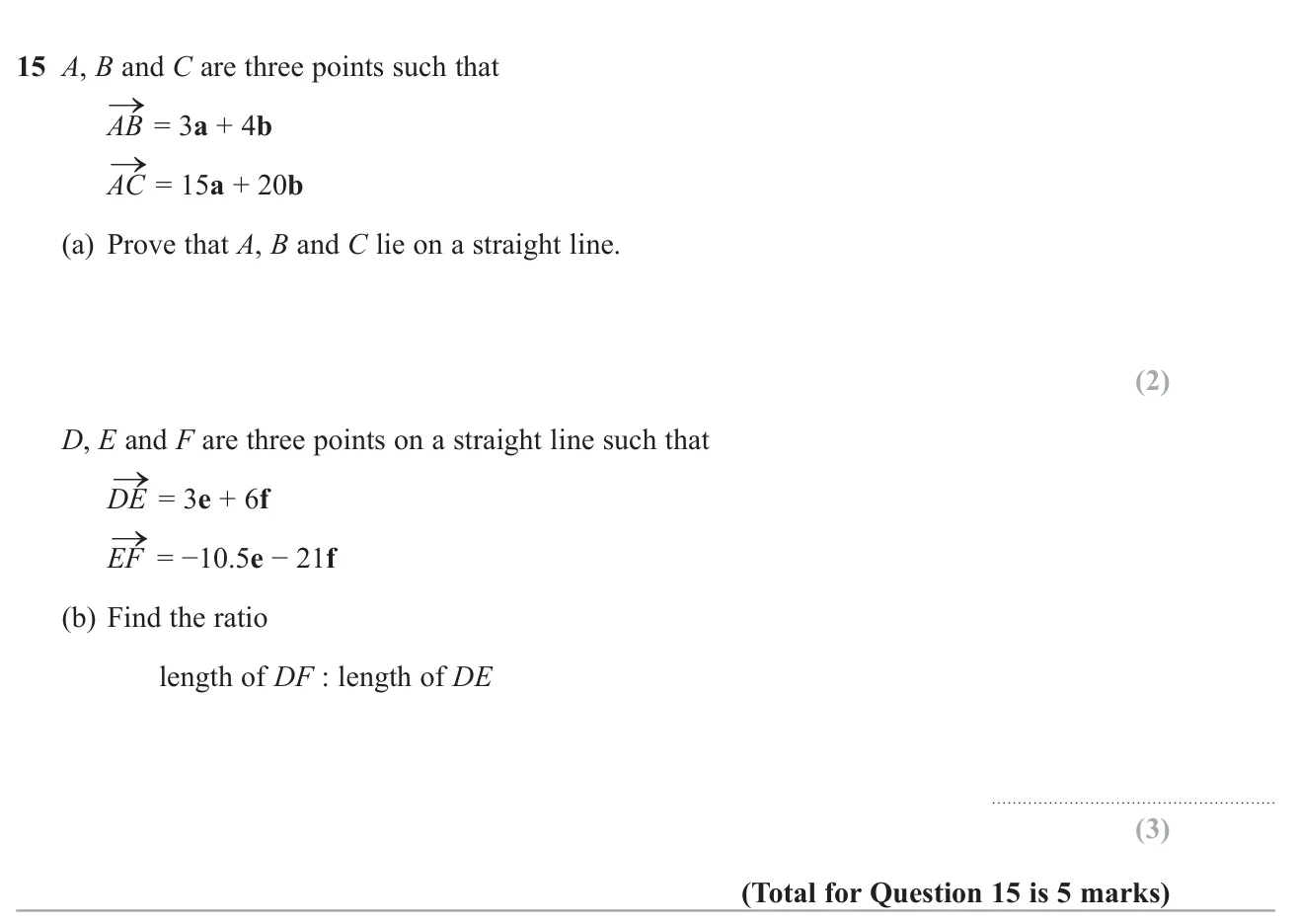
© Pearson Education Ltd. June 2022 Paper 1 (Higher, non-calculator), question 15.
| (a) | , so they are parallel and share point A | 2 marks |
|---|---|---|
| (b) | 3 marks |
Worked solution Checked against the mark scheme
(a)
So AC is parallel to AB, and both pass through A, so A, B, C are on one line.
(b)
Length DF : length DE
Watch out: In (a), showing the vectors are parallel but not mentioning the common point.
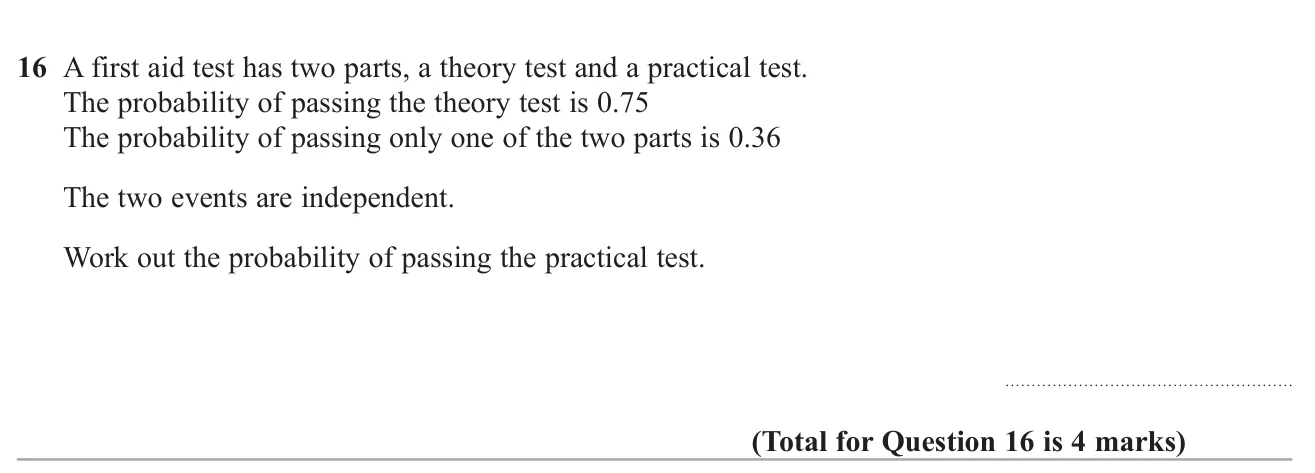
© Pearson Education Ltd. June 2022 Paper 1 (Higher, non-calculator), question 16.
| Answer | 0.78 | 4 marks |
|---|
Worked solution Checked against the mark scheme
Let = P(pass practical).
Only one passed:
, so
Watch out: Only counting pass theory and fail practical, giving .
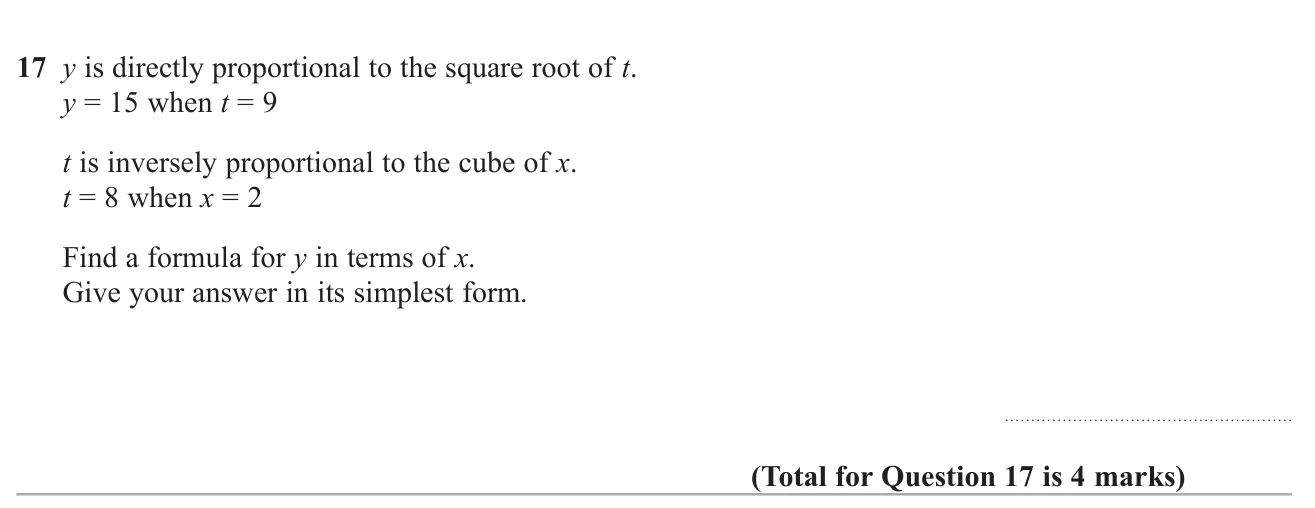
© Pearson Education Ltd. June 2022 Paper 1 (Higher, non-calculator), question 17.
| Answer | 4 marks |
|---|
Worked solution Checked against the mark scheme
: , so
: , so
Watch out: Leaving the answer as rather than simplifying the constant to 40.
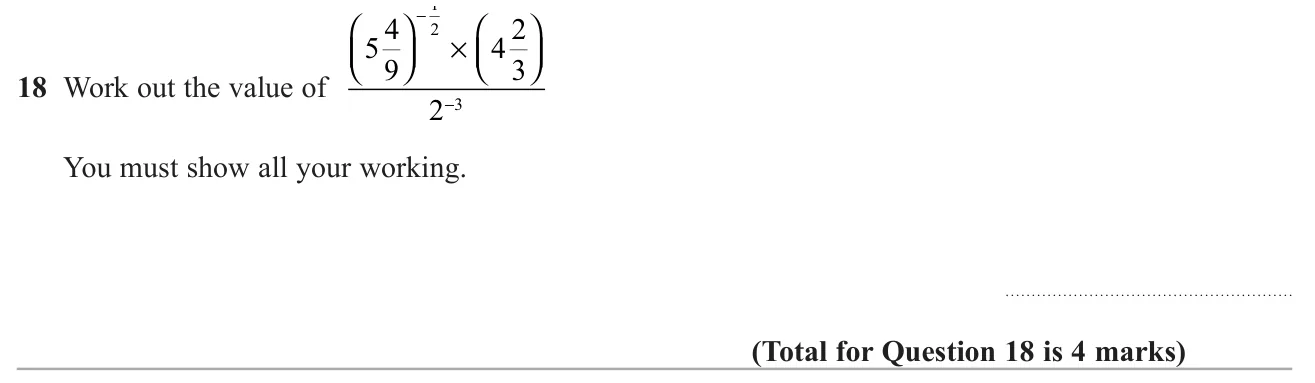
© Pearson Education Ltd. June 2022 Paper 1 (Higher, non-calculator), question 18.
| Answer | 16 | 4 marks |
|---|
Worked solution Checked against the mark scheme
Numerator:
, so the value is
Watch out: Treating the power as halving, or making the answer negative.
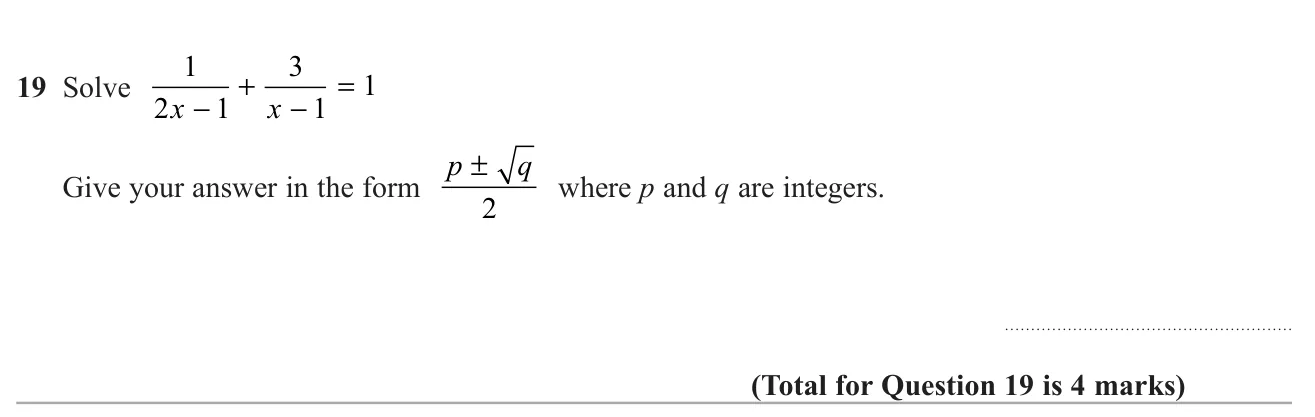
© Pearson Education Ltd. June 2022 Paper 1 (Higher, non-calculator), question 19.
| Answer | 4 marks |
|---|
Worked solution Checked against the mark scheme
Multiply by :
, so
Watch out: Not multiplying the 1 on the right-hand side by the common denominator.
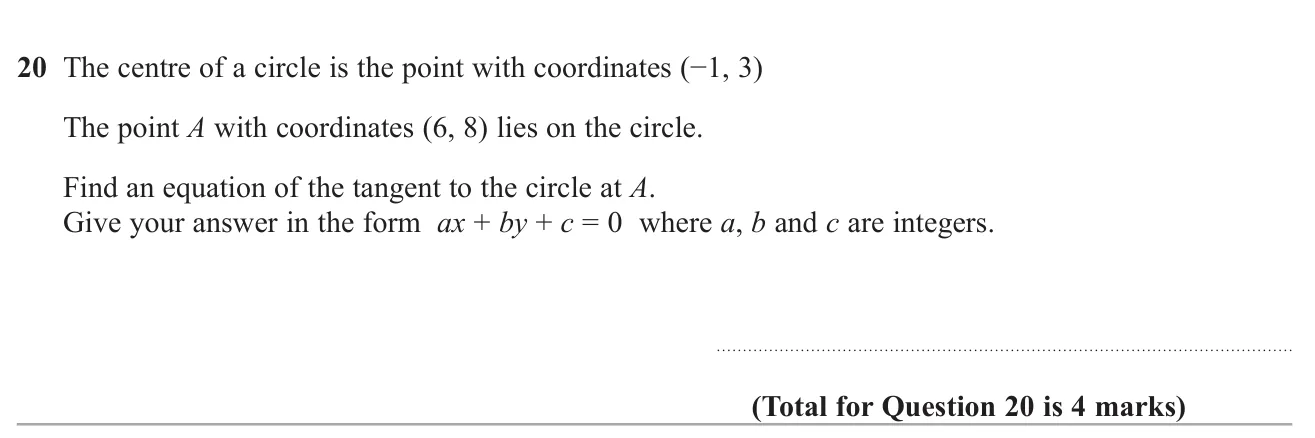
© Pearson Education Ltd. June 2022 Paper 1 (Higher, non-calculator), question 20.
| Answer | 4 marks |
|---|
Worked solution Checked against the mark scheme
Gradient of radius from to :
Tangent is perpendicular: gradient
, so
Watch out: Using the gradient of the radius (5/7) as the tangent's gradient.
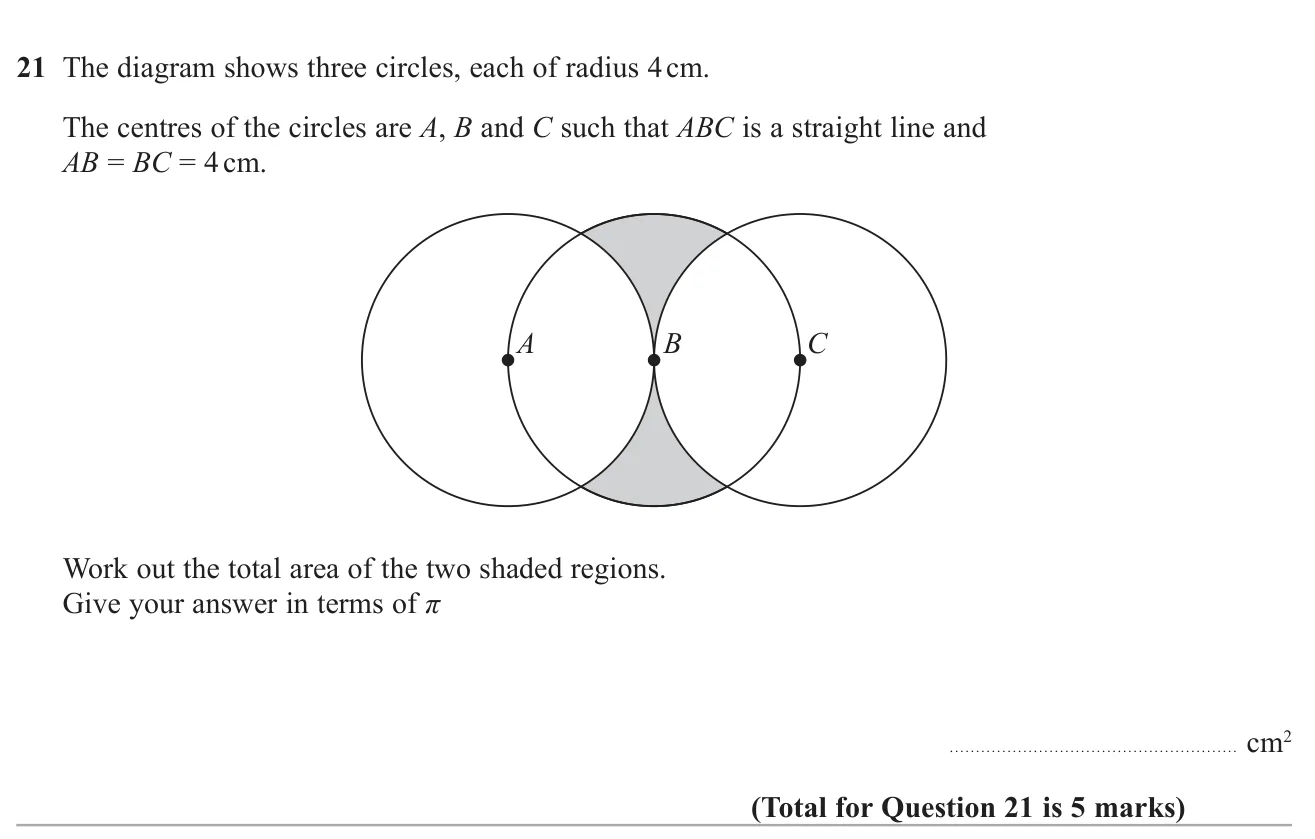
© Pearson Education Ltd. June 2022 Paper 1 (Higher, non-calculator), question 21.
| Answer | cm² | 5 marks |
|---|
Worked solution Checked against the mark scheme
Join A and B to a crossing point of their circles: all three sides are 4 cm, so the triangle is equilateral and the overlap of circles A and B uses a angle at A.
One segment
Each overlap (lens) is 2 segments, and circle B has 2 lenses, so the lenses total
Shaded = circle B minus the two lenses
Watch out: Using a 60° sector for the segment of the lens instead of 120°.
Add up your marks for all three papers and see what grade that would have been.