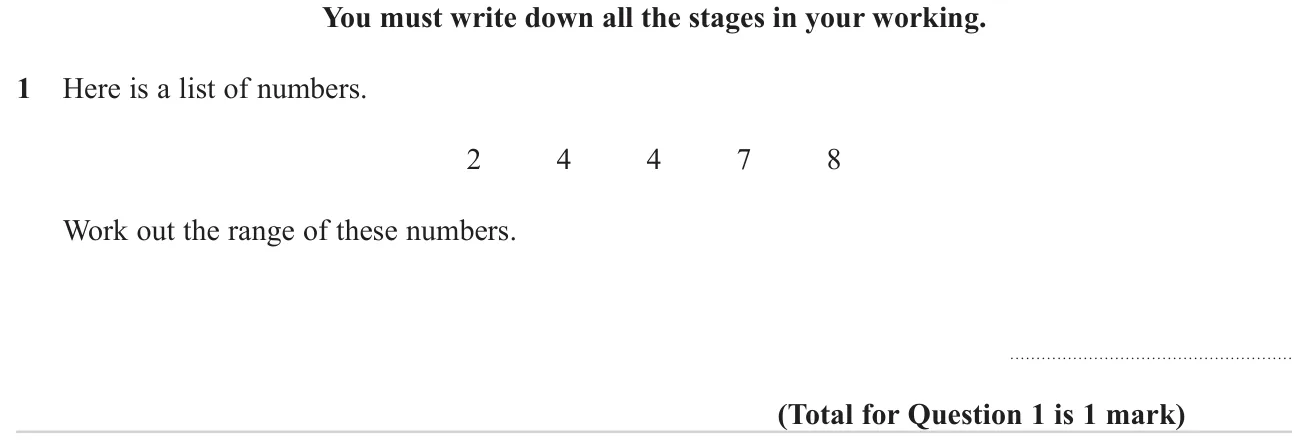
© Pearson Education Ltd. November 2023 Paper 1 (Foundation, non-calculator), question 1.
Show answer
Worked solution Checked against the mark scheme
Range = largest − smallest.
8−2=6
Watch out: Giving the mode or the mean instead of the range.
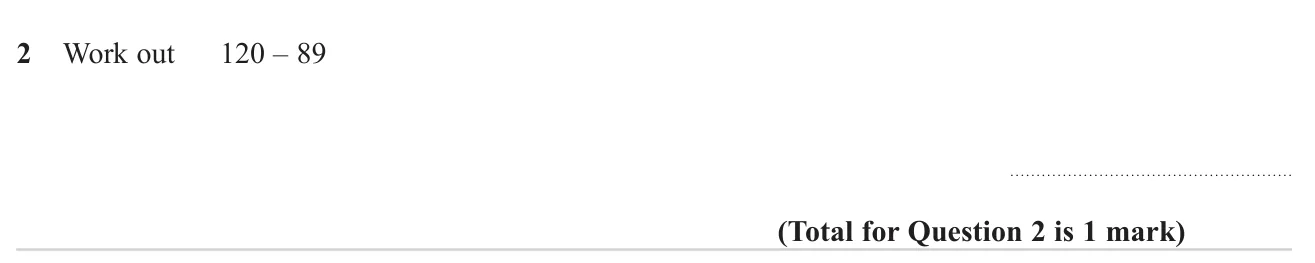
© Pearson Education Ltd. November 2023 Paper 1 (Foundation, non-calculator), question 2.
Show answer
Worked solution Checked against the mark scheme
120−89: take away 90 to get 30, then add back 1.
120−89=31
Watch out: Getting 41 by borrowing incorrectly.
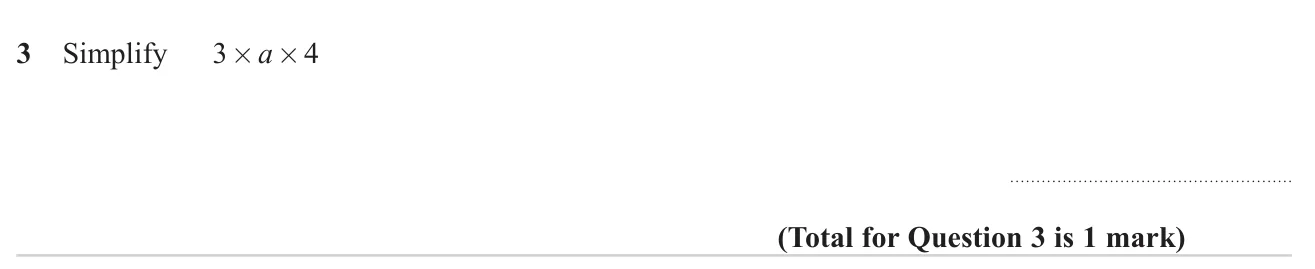
© Pearson Education Ltd. November 2023 Paper 1 (Foundation, non-calculator), question 3.
Show answer
Worked solution Checked against the mark scheme
Multiply the numbers: 3×4=12.
Keep the letter: 12a.
Watch out: Writing 7a by adding the numbers.
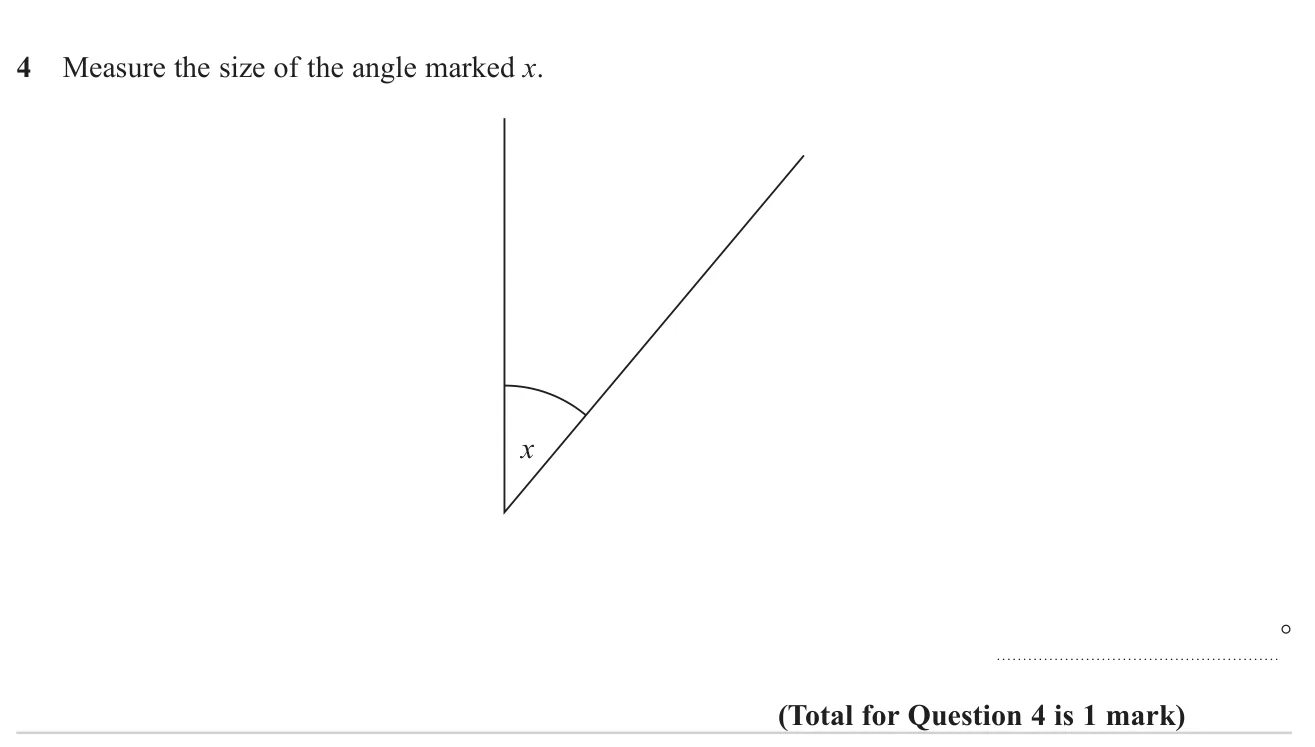
© Pearson Education Ltd. November 2023 Paper 1 (Foundation, non-calculator), question 4.
Show answer
| Answer | 40∘ | 1 mark |
|---|
Worked solution Checked against the mark scheme
Place the centre of the protractor on the vertex and line zero up with the vertical arm.
Read from the scale that starts at 0 on that arm: about 40∘.
Watch out: Reading the wrong scale and giving about 140°.
© Pearson Education Ltd. November 2023 Paper 1 (Foundation, non-calculator), question 5.
Show answer
Worked solution Checked against the mark scheme
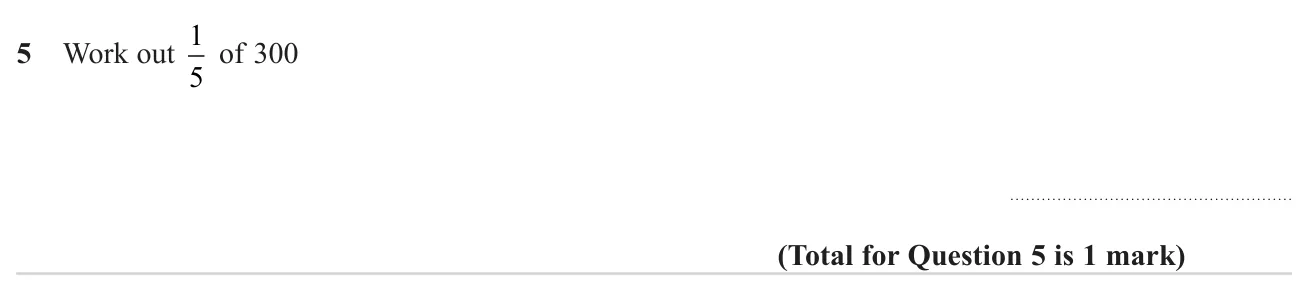
To find 51 of 300, divide by 5.
300÷5=60
Watch out: Multiplying by 5 to get 1500.
© Pearson Education Ltd. November 2023 Paper 1 (Foundation, non-calculator), question 6.
Show answer
Worked solution Checked against the mark scheme
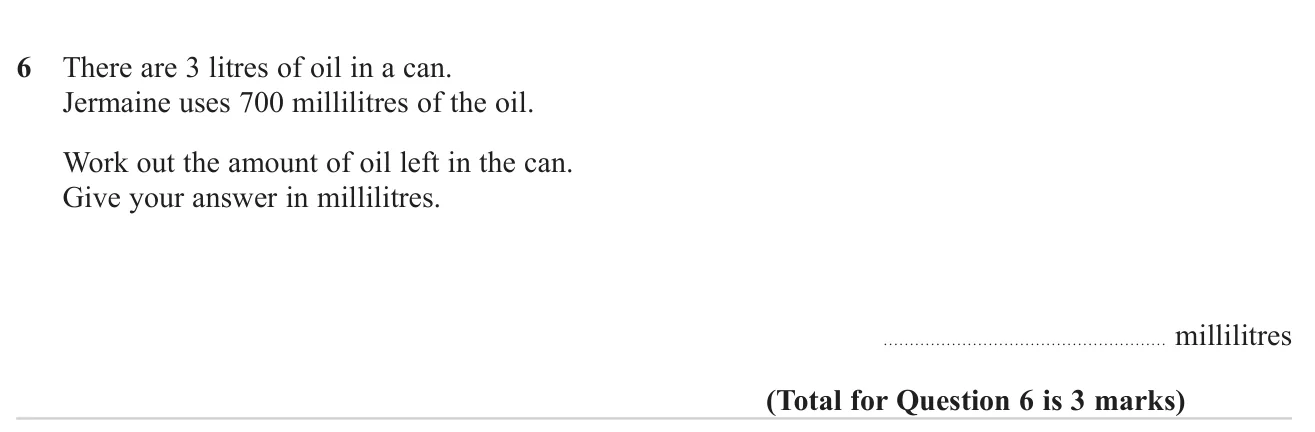
1 litre = 1000 ml, so 3 litres = 3000 ml.
3000−700=2300 ml
Watch out: Subtracting 700 from 3 without changing units first.
© Pearson Education Ltd. November 2023 Paper 1 (Foundation, non-calculator), question 7.
Show answer
| (a) | 15 m | 1 mark |
|---|
| (b) | 4 cm | 1 mark |
|---|
Worked solution Checked against the mark scheme
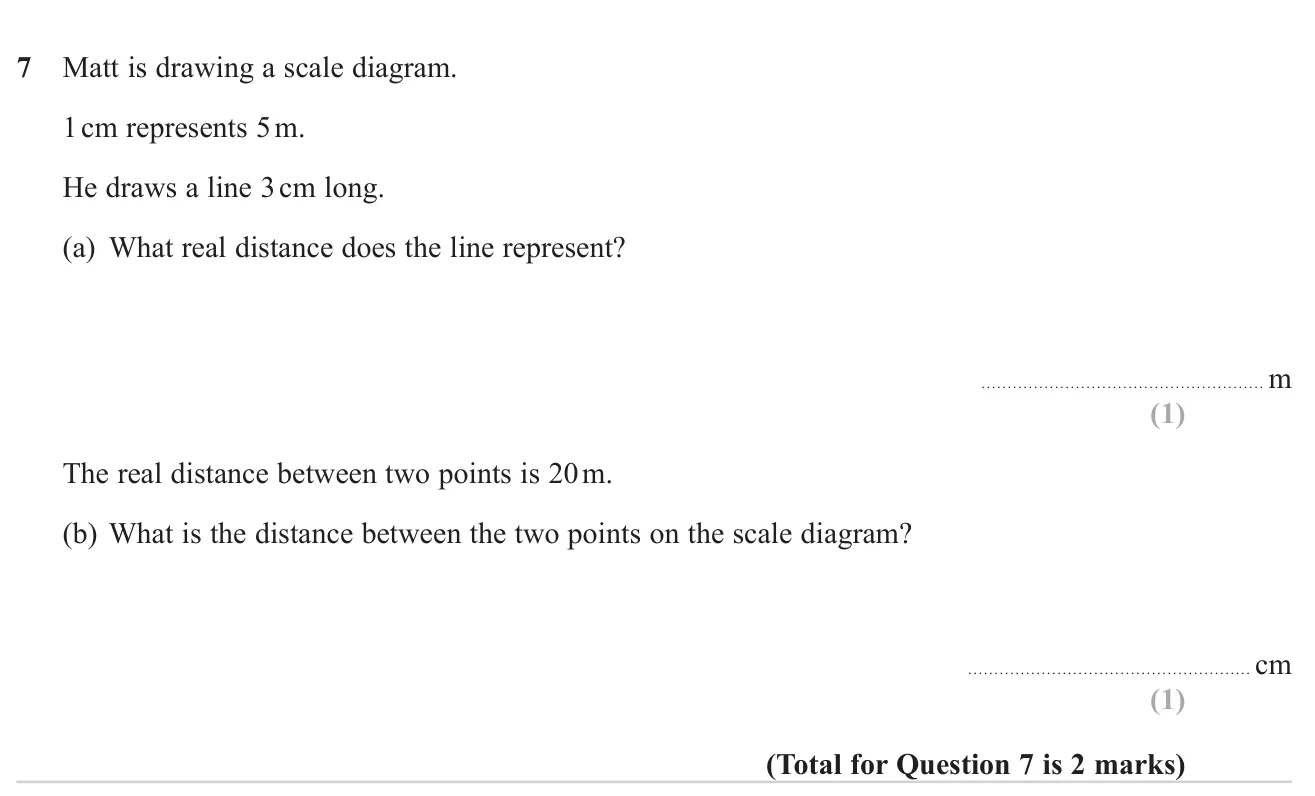
(a) Each cm is 5 m, so 3×5=15 m.
(b) 20÷5=4 cm.
Watch out: Multiplying in (b) to get 100 cm.
© Pearson Education Ltd. November 2023 Paper 1 (Foundation, non-calculator), question 8.
Show answer
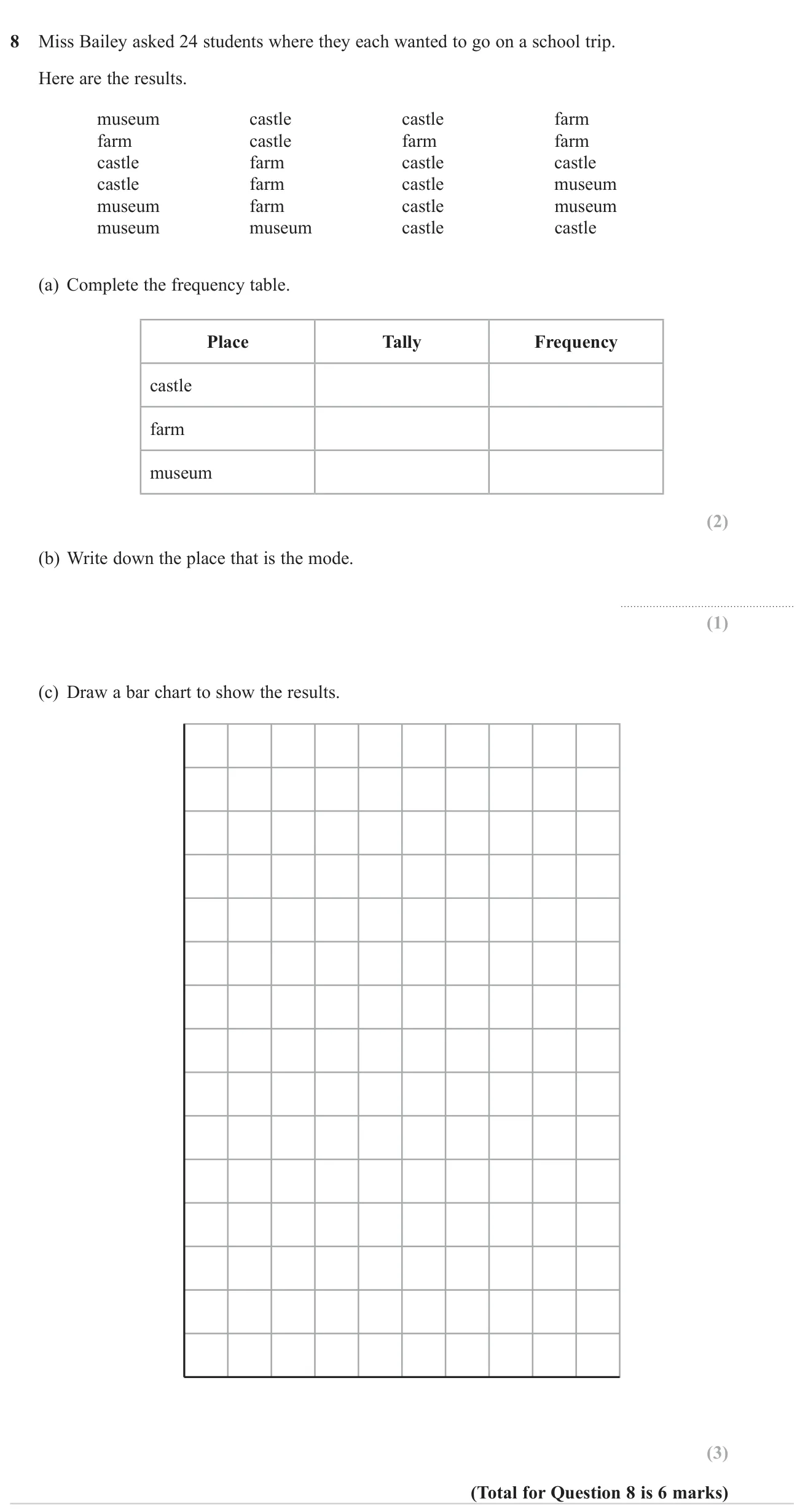
| (a) | castle 11, farm 7, museum 6 | 2 marks |
|---|
| (b) | castle | 1 mark |
|---|
| (c) | Bar chart with bars of height 11, 7 and 6 | 3 marks |
|---|
Worked solution Checked against the mark scheme
(a) Count each place: castle 11, farm 7, museum 6. Check: 11+7+6=24.
(b) The mode is the most common choice: castle.
(c) Label the horizontal axis with the three places and the vertical axis 0 to 12 in equal steps. Draw bars of height 11, 7 and 6 with equal widths.
Watch out: Giving the frequency 11 as the mode instead of the place.
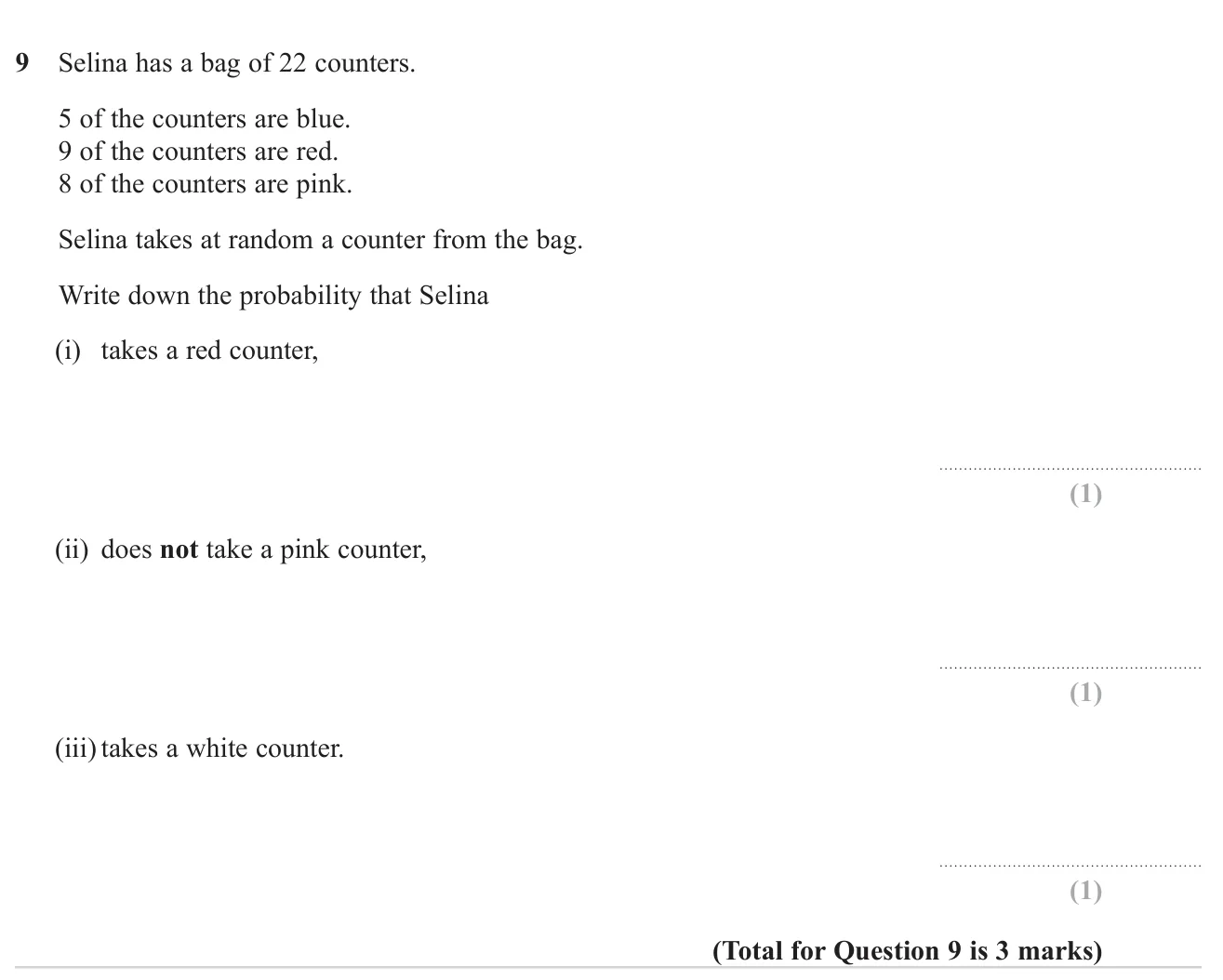
© Pearson Education Ltd. November 2023 Paper 1 (Foundation, non-calculator), question 9.
Show answer
| (i) | 229 | 1 mark |
|---|
| (ii) | 2214=117 | 1 mark |
|---|
| (iii) | 0 | 1 mark |
|---|
Worked solution Checked against the mark scheme
(i) 9 red out of 22: 229
(ii) Not pink: 22−8=14, so 2214=117
(iii) There are no white counters, so the probability is 0.
Watch out: Writing probabilities as ratios such as 9 : 22.
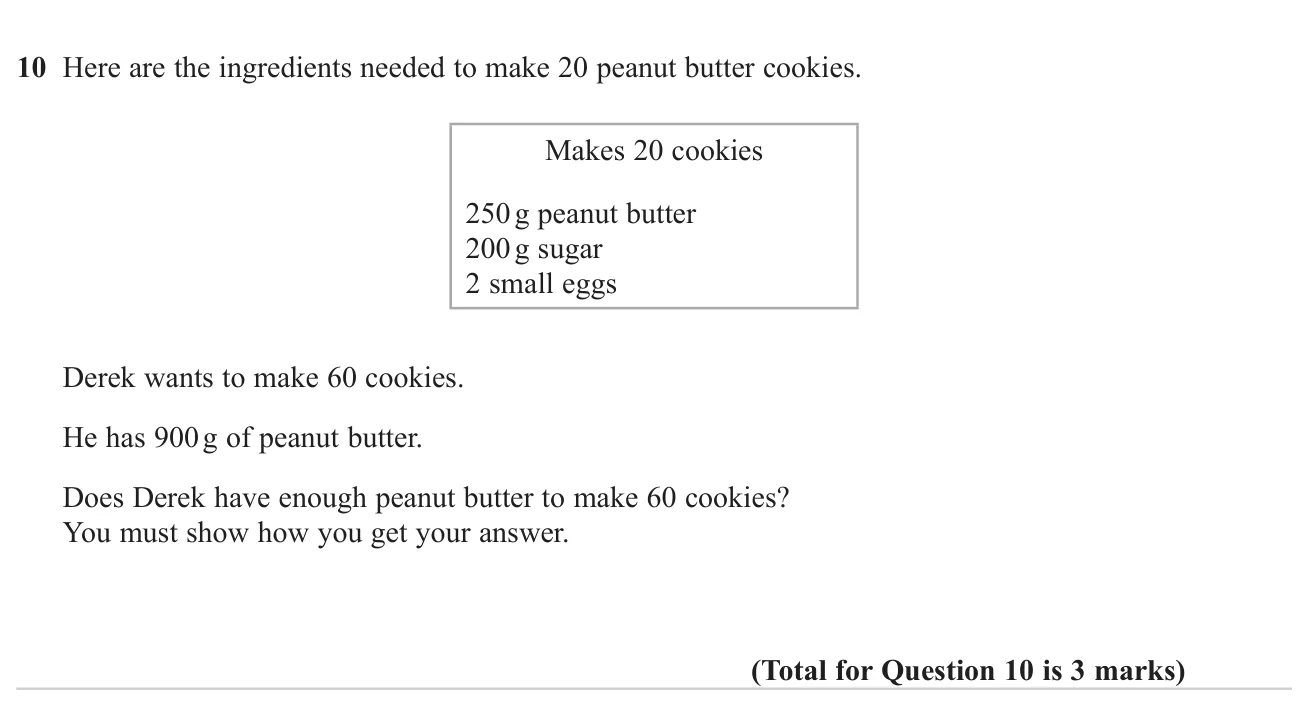
© Pearson Education Ltd. November 2023 Paper 1 (Foundation, non-calculator), question 10.
Show answer
| Answer | Yes: 750 g is needed and he has 900 g | 3 marks |
|---|
Worked solution Checked against the mark scheme
60 cookies is 60÷20=3 times the recipe.
Peanut butter needed: 3×250=750 g
750<900, so yes, he has enough (150 g spare).
Watch out: Comparing 900 g with 250 g without scaling up.
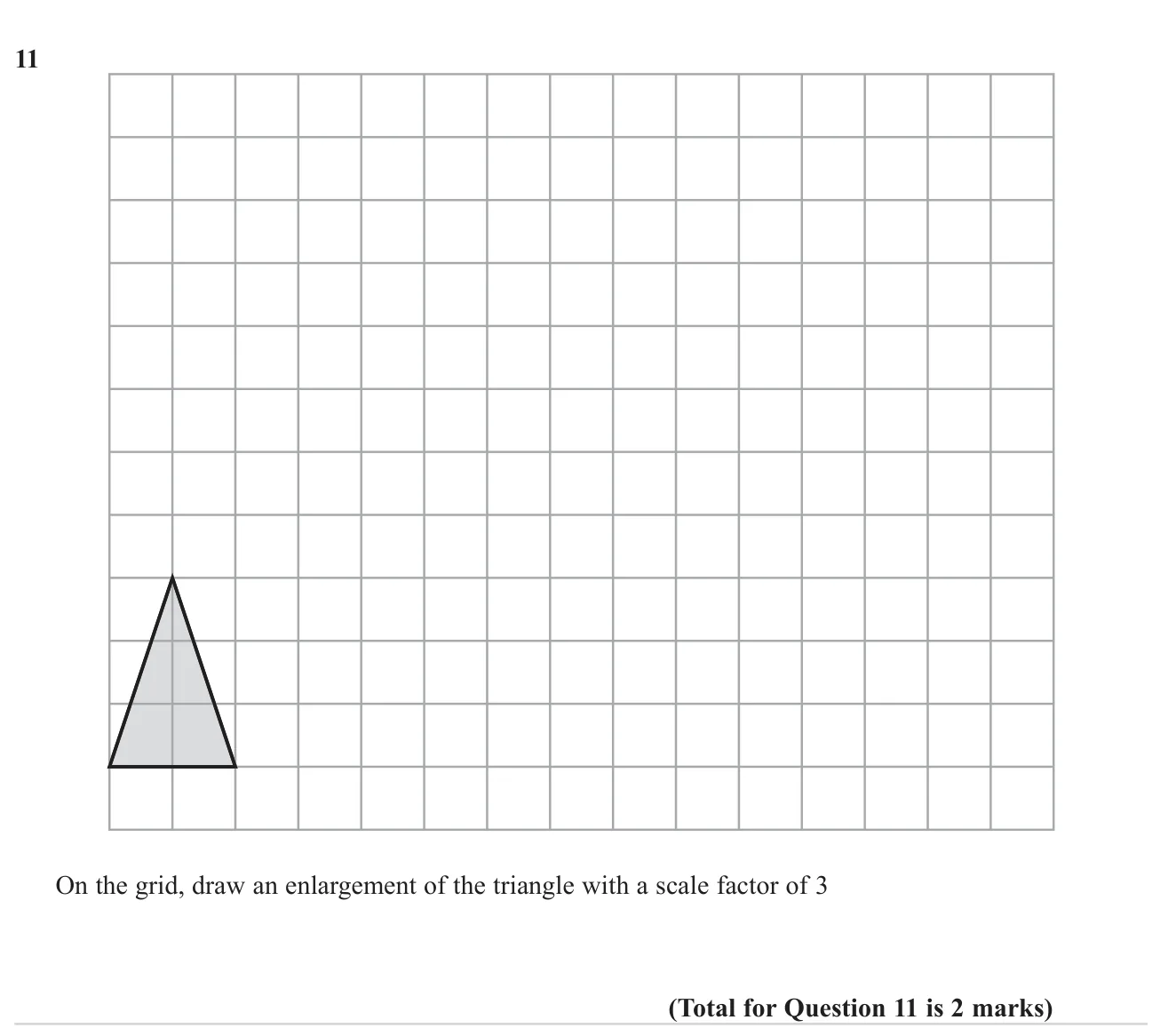
© Pearson Education Ltd. November 2023 Paper 1 (Foundation, non-calculator), question 11.
Show answer
| Answer | Triangle with base 6 squares and height 9 squares, apex above the middle of the base | 2 marks |
|---|
Worked solution Checked against the mark scheme
The triangle has base 2 squares and height 3 squares, with its top above the middle of the base.
Multiply every length by 3: base 2×3=6, height 3×3=9.
Draw a base of 6 squares and put the top 9 squares above its midpoint.
Watch out: Adding 3 to each length instead of multiplying.
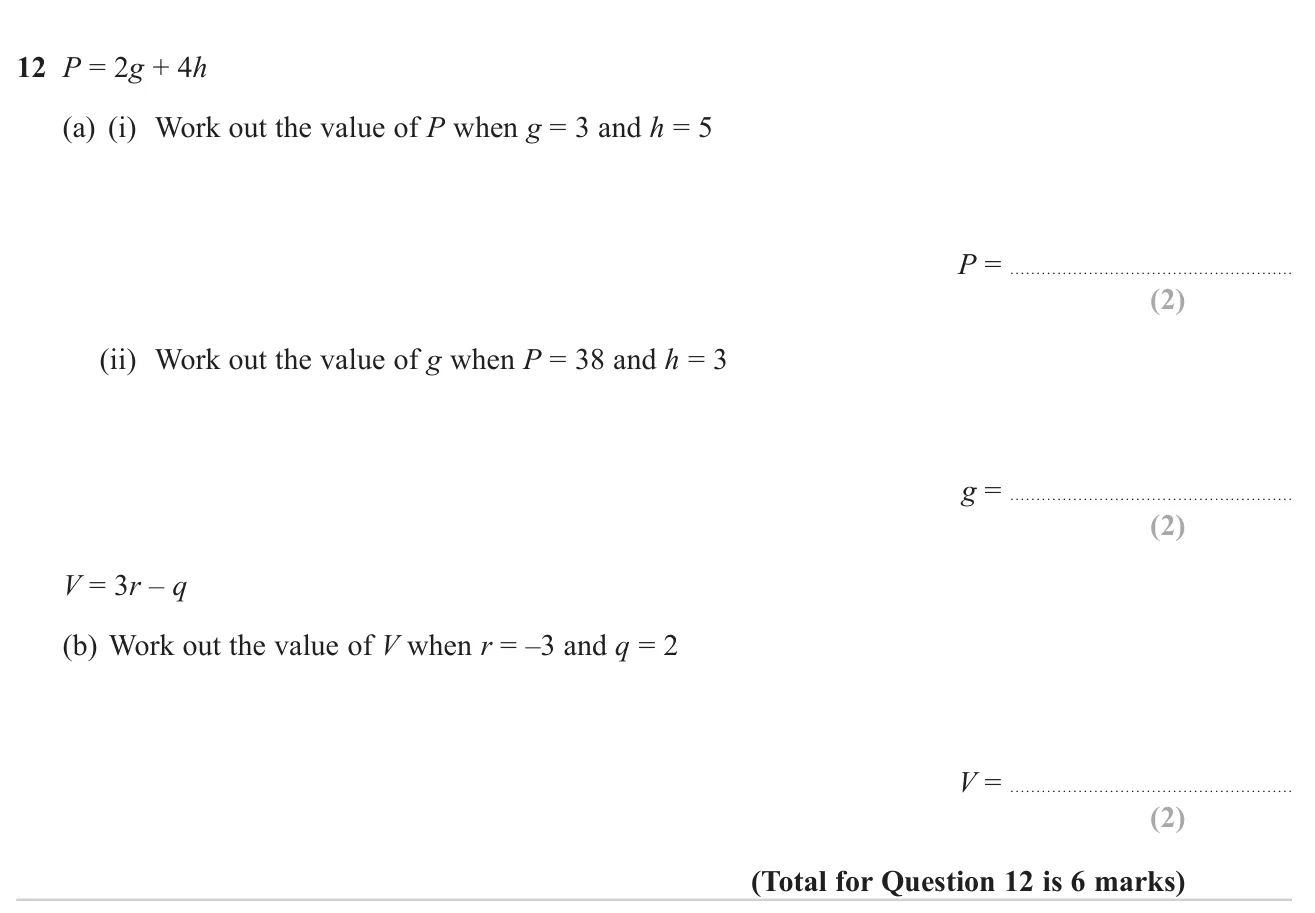
© Pearson Education Ltd. November 2023 Paper 1 (Foundation, non-calculator), question 12.
Show answer
| (a(i)) | 26 | 2 marks |
|---|
| (a(ii)) | 13 | 2 marks |
|---|
| (b) | −11 | 2 marks |
|---|
Worked solution Checked against the mark scheme
(a)(i) P=2×3+4×5=6+20=26
(ii) 38=2g+12, so 2g=26 and g=13
(b) V=3×(−3)−2=−9−2=−11
Watch out: In (b), getting −7 by working out −9 + 2.
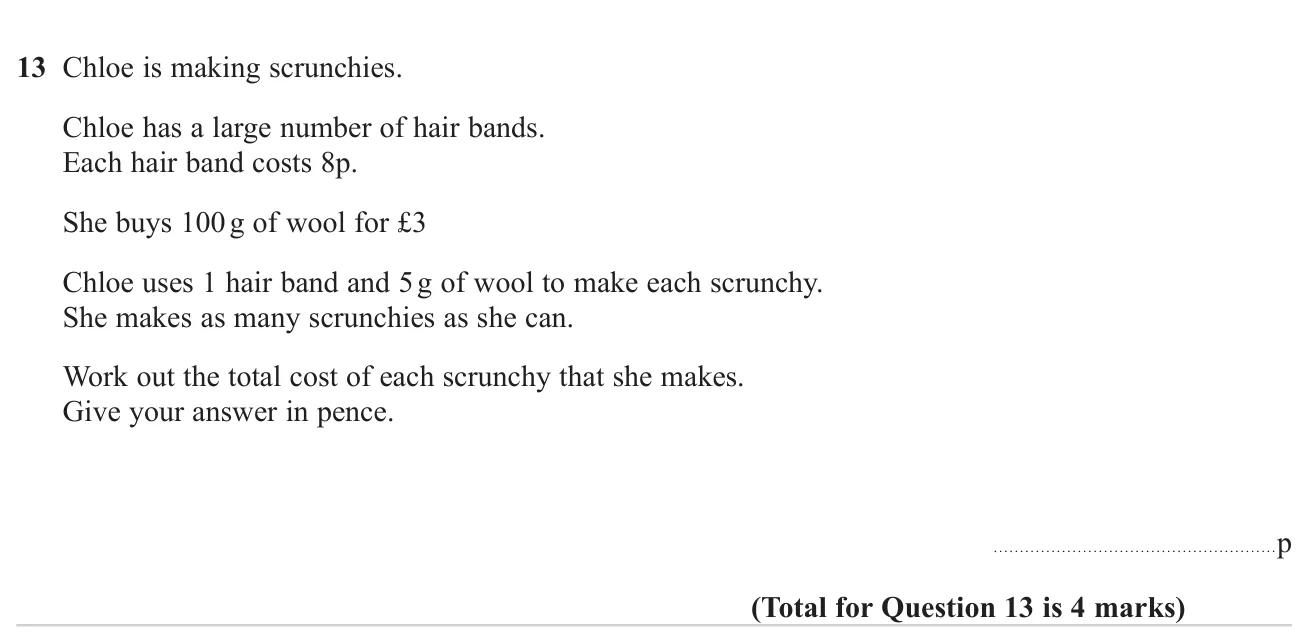
© Pearson Education Ltd. November 2023 Paper 1 (Foundation, non-calculator), question 13.
Show answer
Worked solution Checked against the mark scheme
Number of scrunchies: 100÷5=20
Wool per scrunchy: 300÷20=15p
Total cost each: 15+8=23p
Watch out: Forgetting to add the 8p hair band and giving 15p.
© Pearson Education Ltd. November 2023 Paper 1 (Foundation, non-calculator), question 14.
Show answer
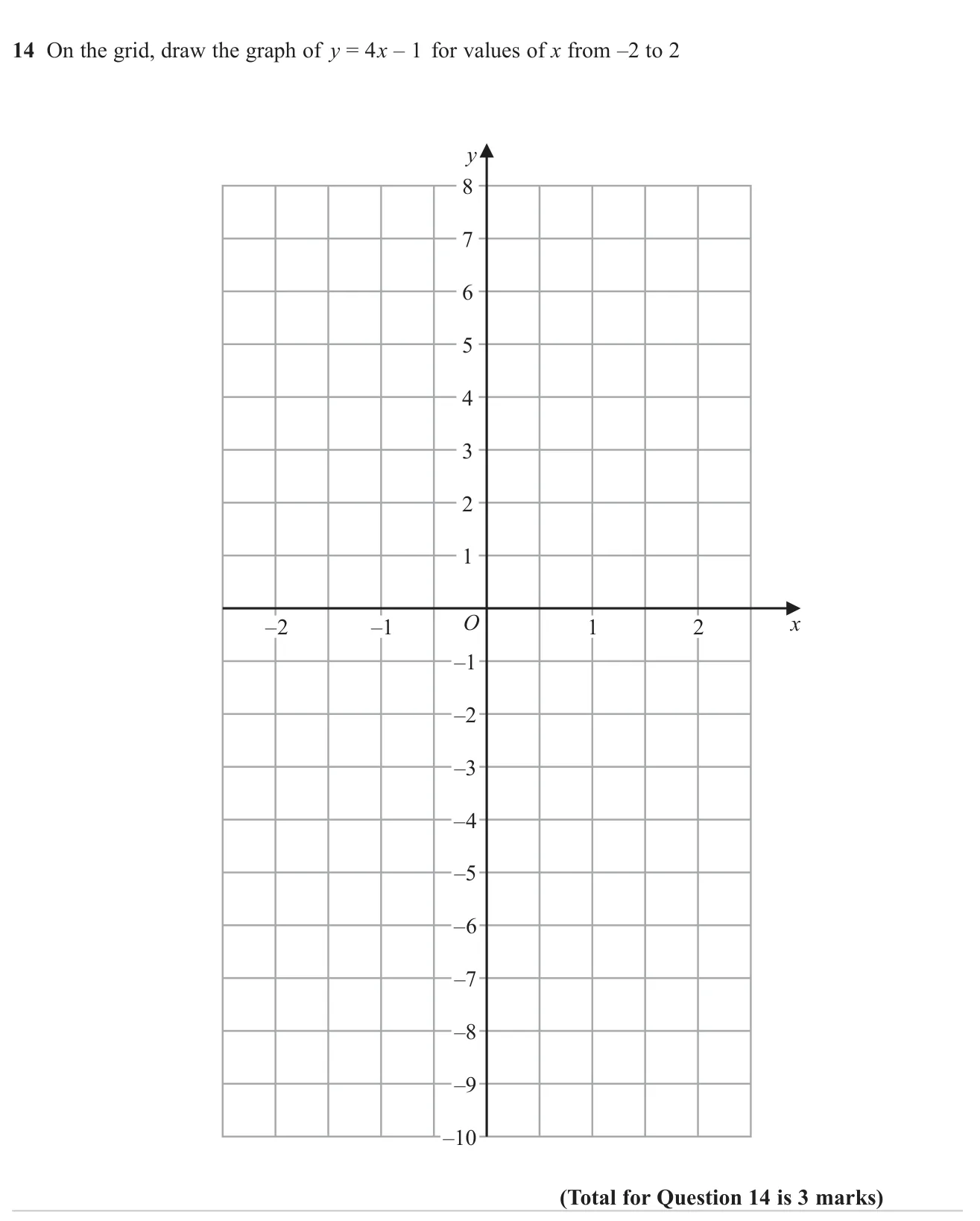
| Answer | Straight line through (−2,−9), (−1,−5), (0,−1), (1,3), (2,7) | 3 marks |
|---|
Worked solution Checked against the mark scheme
Make a table of values using y=4x−1:
| x | −2 | −1 | 0 | 1 | 2 |
|---|---|---|---|---|---|
| y | −9 | −5 | −1 | 3 | 7 |
Plot the points and join them with one straight ruled line from x=−2 to x=2.
Watch out: Working out 4×(−2)−1 as −7.
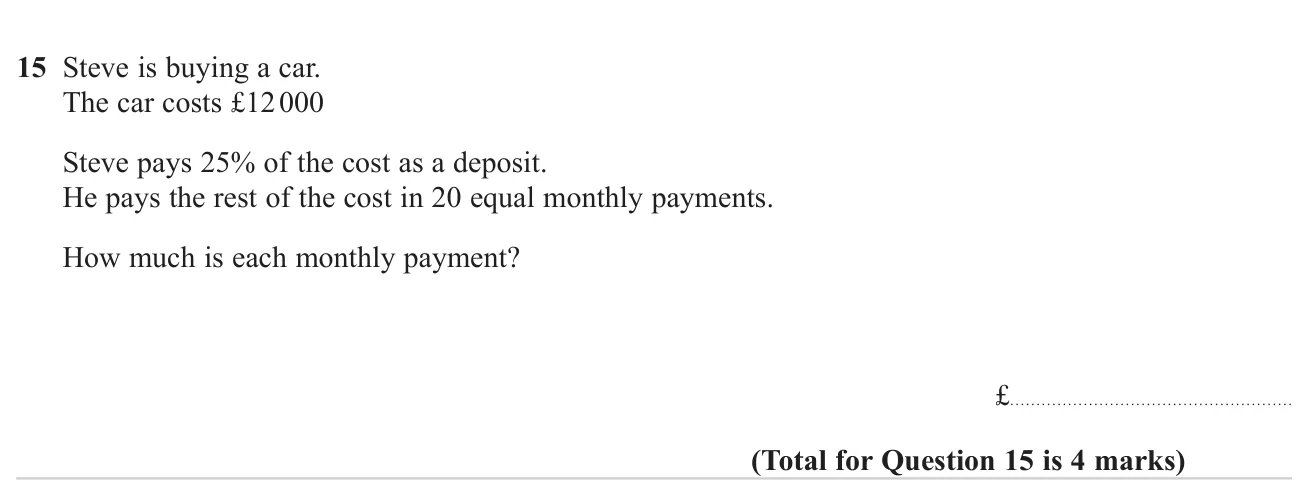
© Pearson Education Ltd. November 2023 Paper 1 (Foundation, non-calculator), question 15.
Show answer
Worked solution Checked against the mark scheme
Deposit: 25% of £12 000 =12000÷4=£3000
Left to pay: 12000−3000=£9000
Each payment: 9000÷20=£450
Watch out: Dividing the full £12 000 by 20 to get £600.
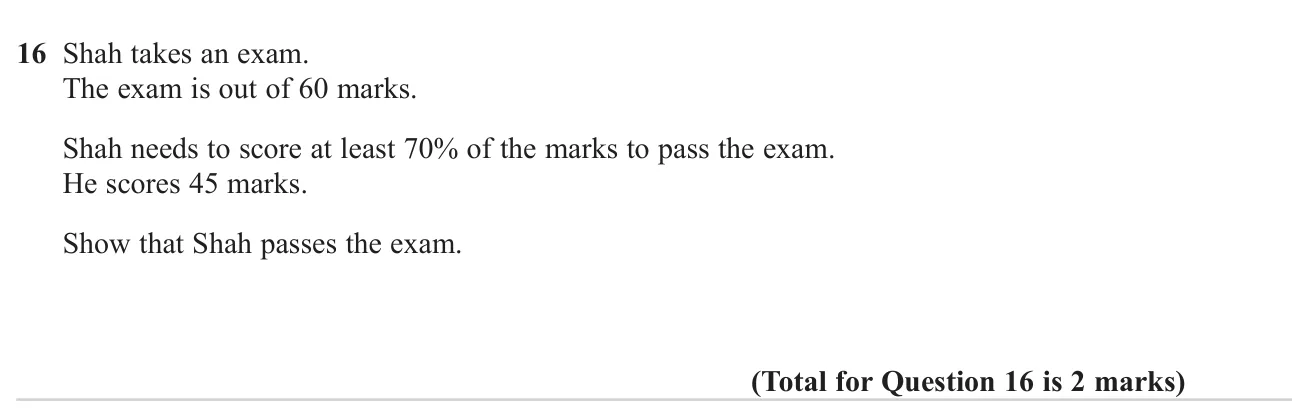
© Pearson Education Ltd. November 2023 Paper 1 (Foundation, non-calculator), question 16.
Show answer
| Answer | 45 out of 60 is 75%, which is at least 70% (or 70% of 60 is 42 and 45 ≥ 42) | 2 marks |
|---|
Worked solution Checked against the mark scheme
Pass mark: 10% of 60 is 6, so 70% is 7×6=42 marks.
Shah scored 45, and 45≥42, so he passes.
Or: 6045=43=75%, which is more than 70%.
Watch out: Working out 70% of 45 instead of 70% of 60.
© Pearson Education Ltd. November 2023 Paper 1 (Foundation, non-calculator), question 17.
Show answer
| Answer | 353 | 3 marks |
|---|
Worked solution Checked against the mark scheme
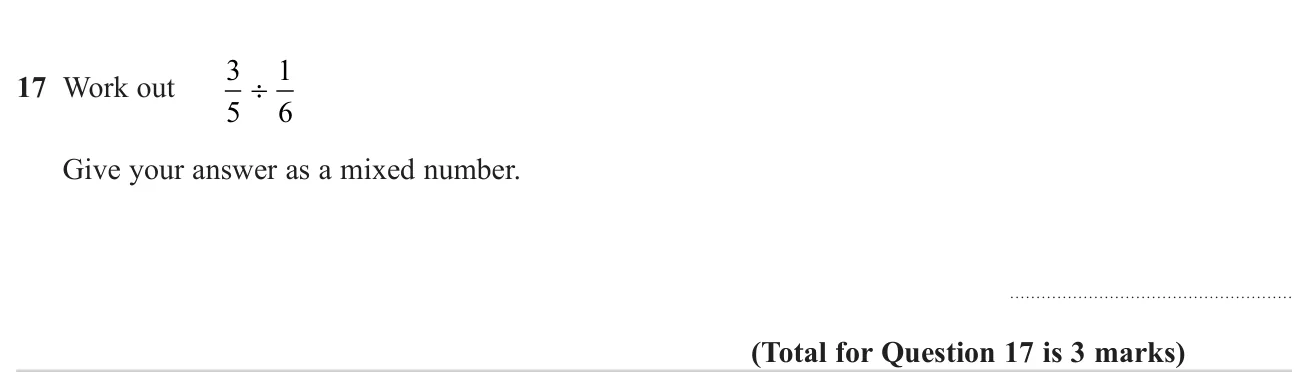
Keep, change, flip: 53÷61=53×16=518
18÷5=3 remainder 3, so 518=353
Watch out: Flipping the first fraction instead of the second.
© Pearson Education Ltd. November 2023 Paper 1 (Foundation, non-calculator), question 18.
Show answer
Worked solution Checked against the mark scheme
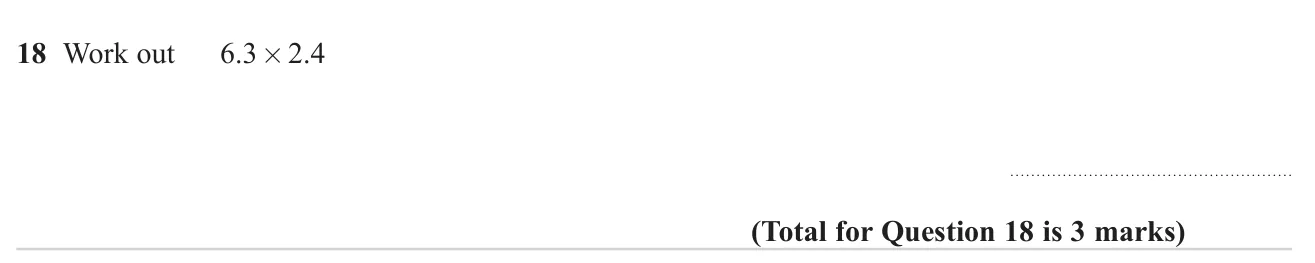
Work out 63×24: 63×20=1260 and 63×4=252, so 1260+252=1512.
There are two decimal places in the question, so 6.3×2.4=15.12
Watch out: Putting the decimal point in the wrong place, e.g. 151.2.
© Pearson Education Ltd. November 2023 Paper 1 (Foundation, non-calculator), question 19.
Show answer
| (a(i)) | 1 | 1 mark |
|---|
| (a(ii)) | 251 | 1 mark |
|---|
| (b) | 26 | 2 marks |
|---|
Worked solution Checked against the mark scheme
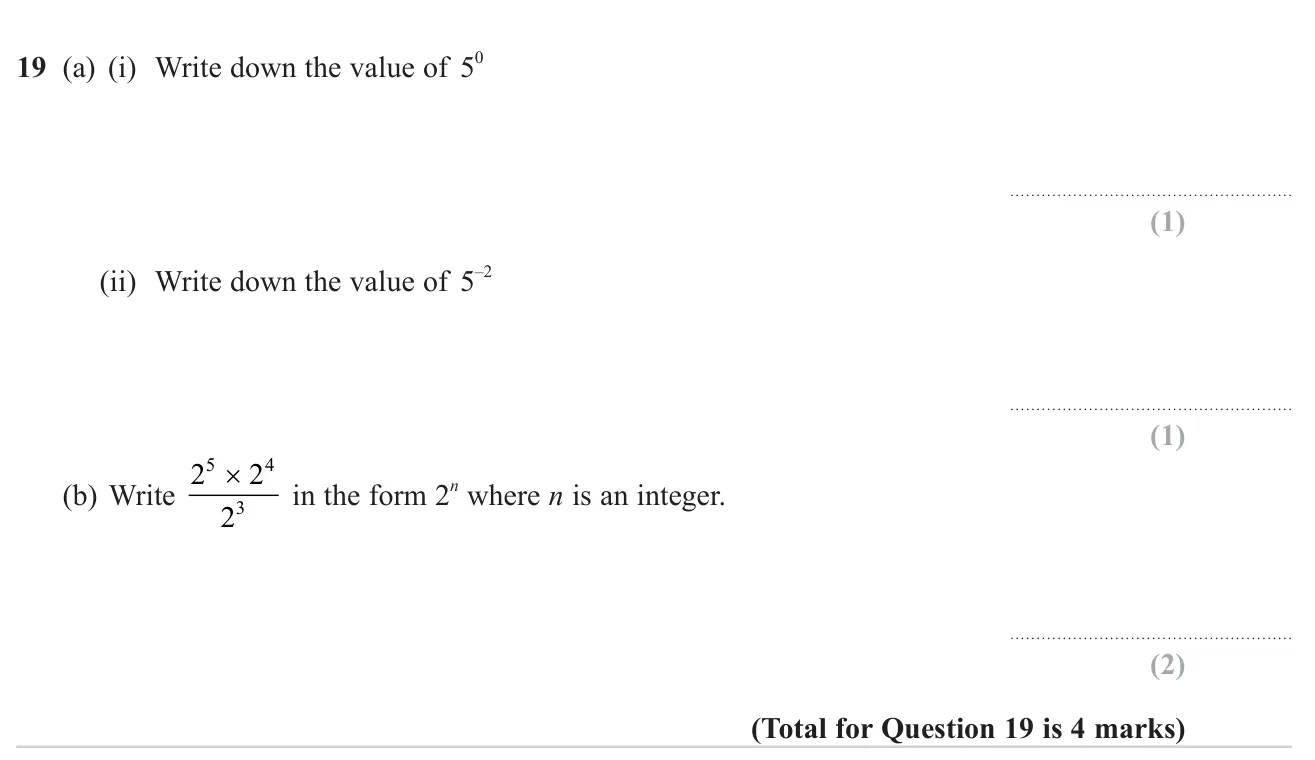
(a)(i) Any non-zero number to the power 0 is 1.
(ii) 5−2=521=251
(b) Add the powers when multiplying: 25×24=29. Subtract when dividing: 29÷23=26.
Watch out: Giving 50=0 or 5−2=−25.
© Pearson Education Ltd. November 2023 Paper 1 (Foundation, non-calculator), question 20.
Show answer
| (a) | 22×3×13 | 2 marks |
|---|
| (b) | 26 | 2 marks |
|---|
Worked solution Checked against the mark scheme
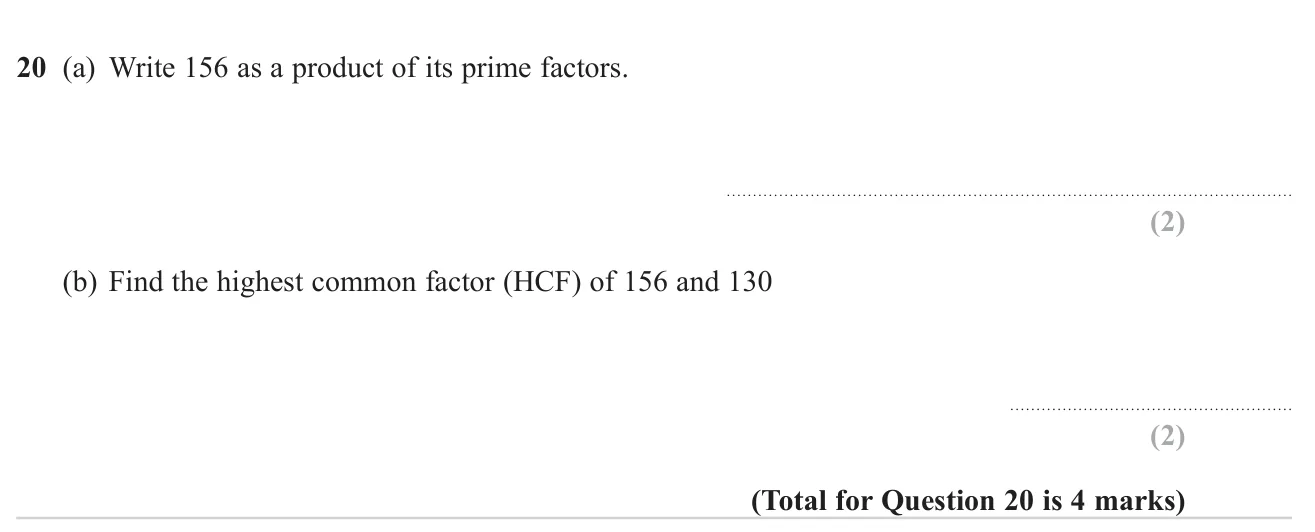
(a) 156=2×78=2×2×39=2×2×3×13, so 156=22×3×13
(b) 130=2×5×13
Shared primes: 2×13=26
Watch out: Giving a list of the prime factors (2, 2, 3, 13) instead of a product.
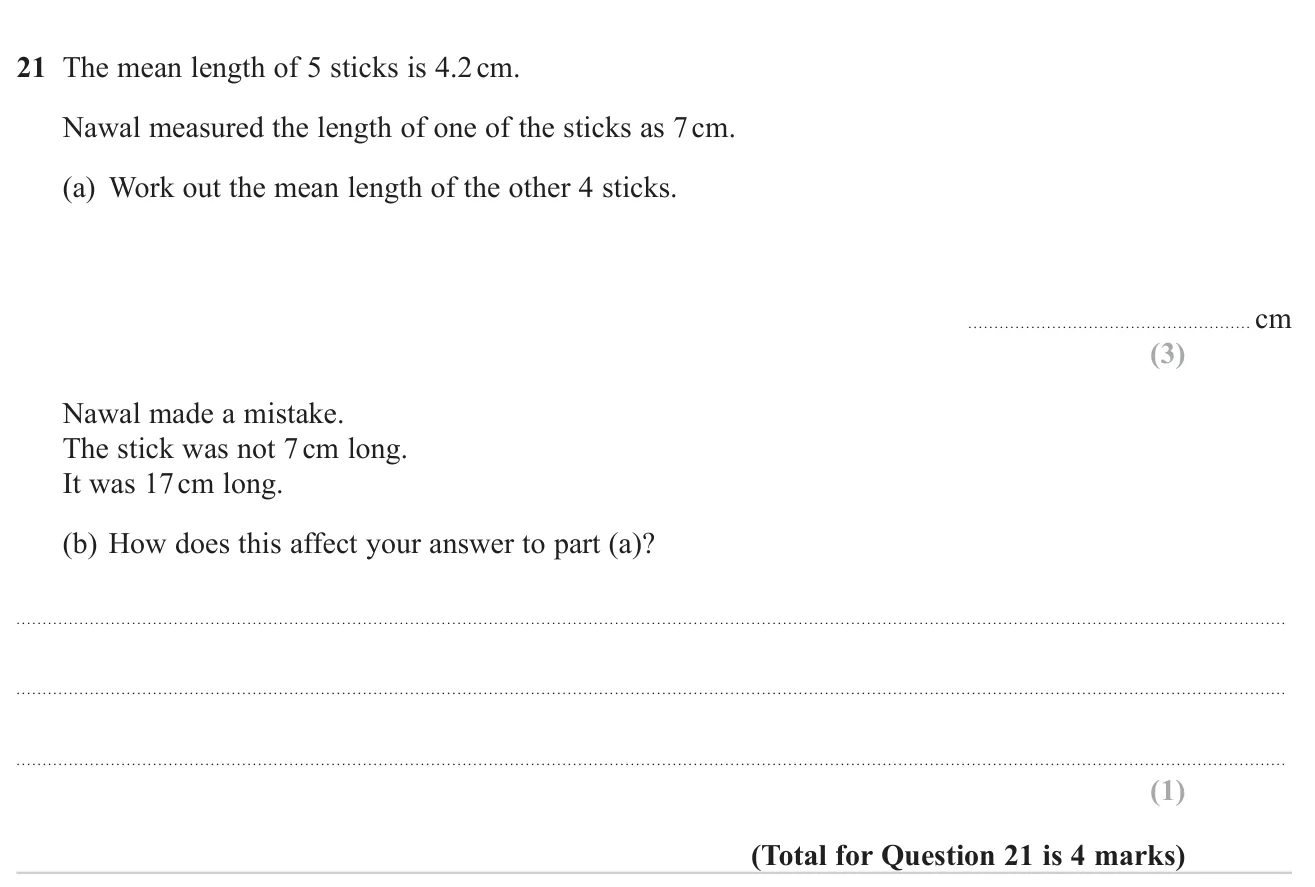
© Pearson Education Ltd. November 2023 Paper 1 (Foundation, non-calculator), question 21.
Show answer
| (a) | 3.5 cm | 3 marks |
|---|
| (b) | The mean of the other 4 sticks would be smaller (it becomes 1 cm) | 1 mark |
|---|
Worked solution Checked against the mark scheme
(a) Total length: 4.2×5=21 cm
Other 4 sticks: 21−7=14 cm, so mean =14÷4=3.5 cm
(b) The other 4 sticks now total 21−17=4 cm, so their mean goes down to 4÷4=1 cm.
Watch out: Saying the mean would increase because 17 is bigger than 7.
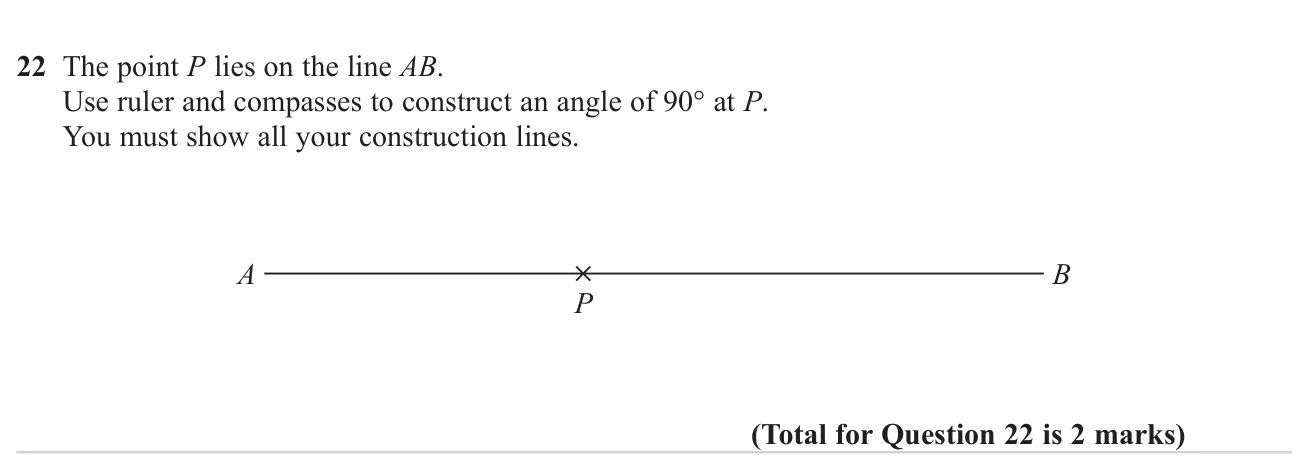
© Pearson Education Ltd. November 2023 Paper 1 (Foundation, non-calculator), question 22.
Show answer
| Answer | Perpendicular to AB through P, with construction arcs shown | 2 marks |
|---|
Worked solution Checked against the mark scheme
With compasses centred on P, mark two points on AB the same distance either side of P.
Widen the compasses. From each of those two points draw arcs above the line that cross.
Join P to the crossing point with a ruler. This line meets AB at 90∘. Leave all arcs showing.
Watch out: Drawing the right angle with a protractor and no arcs.
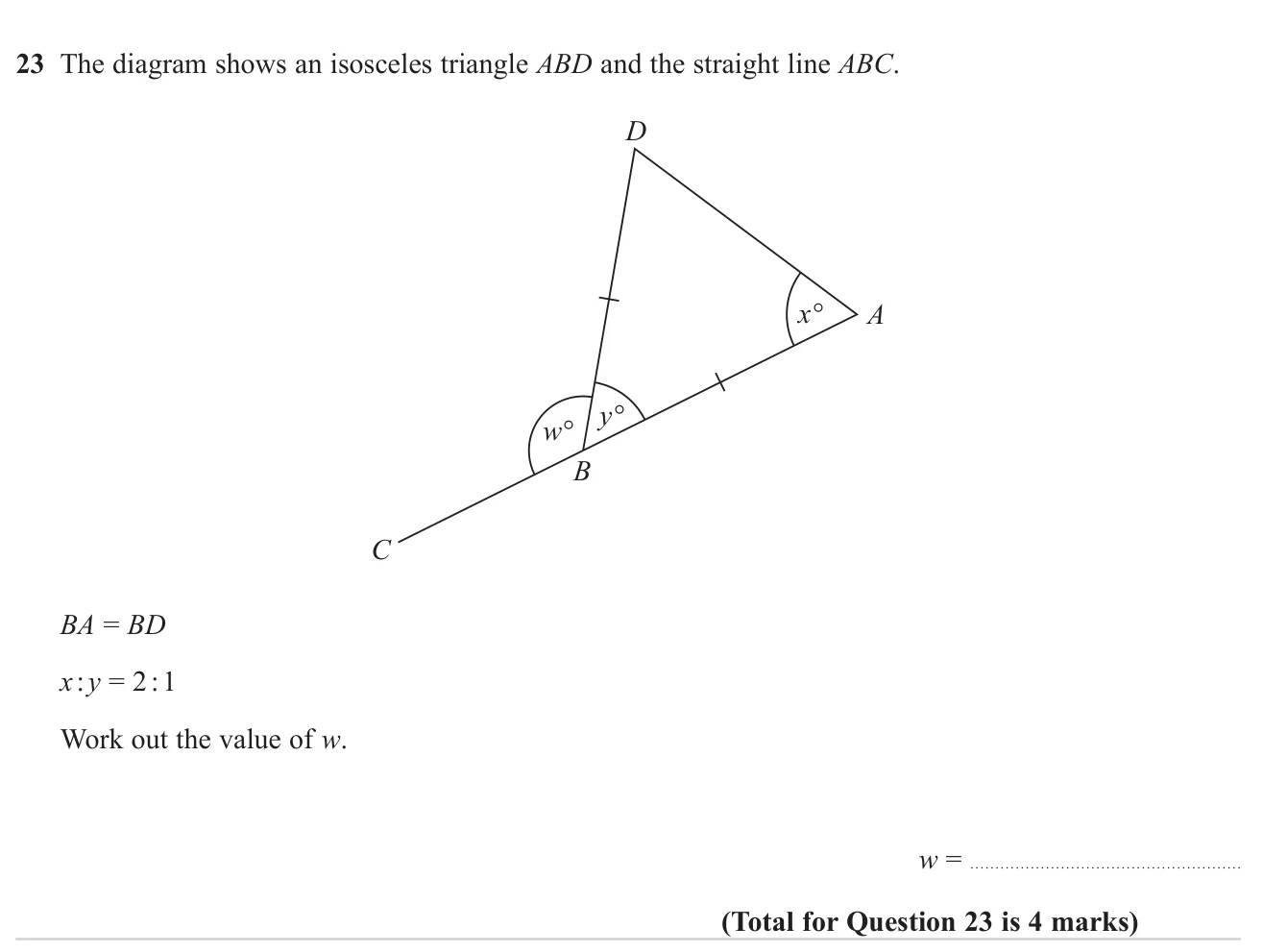
© Pearson Education Ltd. November 2023 Paper 1 (Foundation, non-calculator), question 23.
Show answer
Worked solution Checked against the mark scheme
BA = BD, so the angles at A and D are equal: both are x.
Angles in the triangle: x+x+y=180. With x=2y: 5y=180, so y=36.
Angles on a straight line: w=180−36=144
Watch out: Treating x as the angle at B and the apex angle as x.
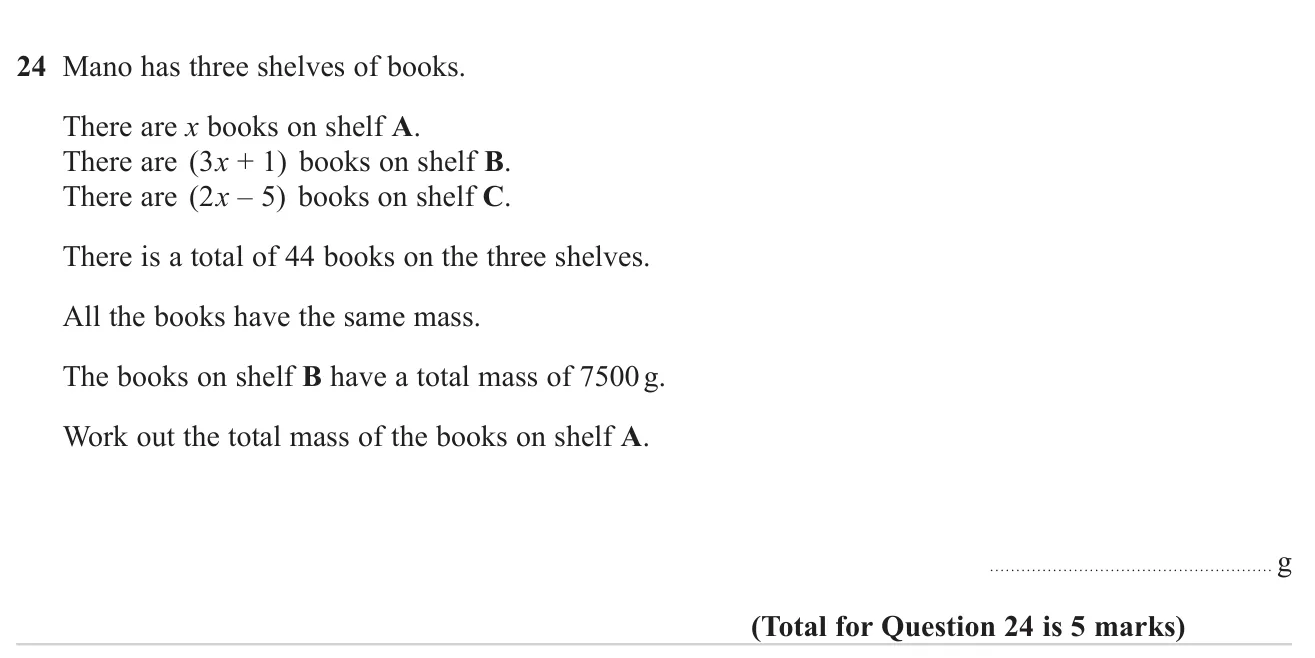
© Pearson Education Ltd. November 2023 Paper 1 (Foundation, non-calculator), question 24.
Show answer
Worked solution Checked against the mark scheme
x+3x+1+2x−5=44, so 6x−4=44, 6x=48, x=8
Shelf B: 3×8+1=25 books, so one book is 7500÷25=300 g
Shelf A: 8×300=2400 g
Watch out: Dividing 7500 by 8 (shelf A) instead of by the number on shelf B.
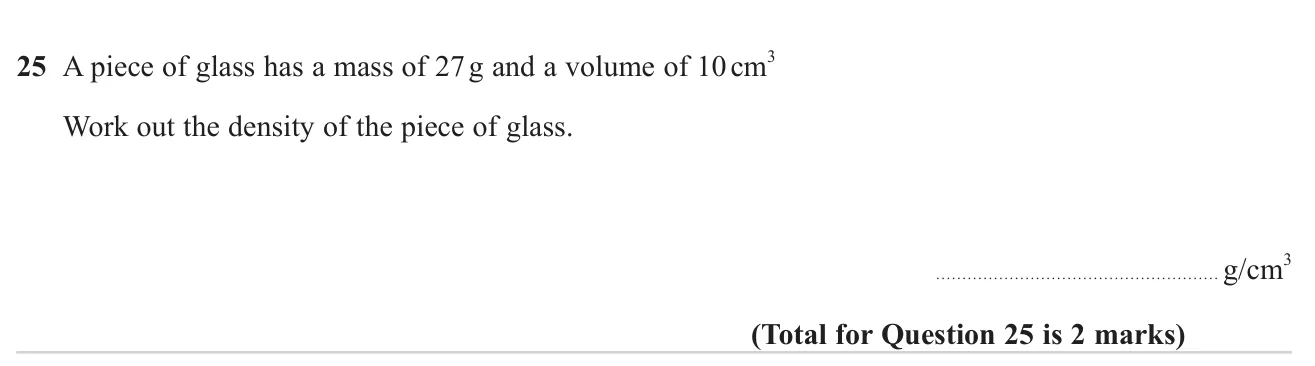
© Pearson Education Ltd. November 2023 Paper 1 (Foundation, non-calculator), question 25.
Show answer
Worked solution Checked against the mark scheme
Density = mass ÷ volume
27÷10=2.7 g/cm³
Watch out: Multiplying to get 270.
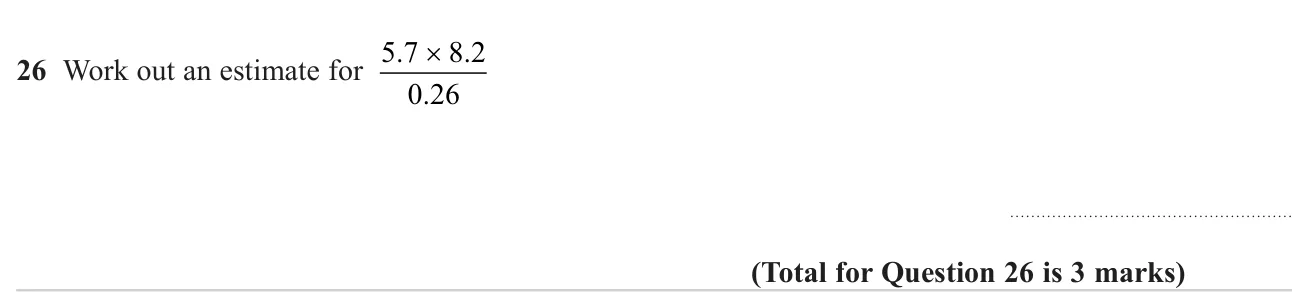
© Pearson Education Ltd. November 2023 Paper 1 (Foundation, non-calculator), question 26.
Show answer
| Answer | Between 160 and 200 (e.g. 160 or 192) | 3 marks |
|---|
Worked solution Checked against the mark scheme
Round: 5.7≈6, 8.2≈8, 0.26≈0.3
6×8=48
48÷0.3=480÷3=160
Watch out: Rounding 0.26 to 0 or to 1.
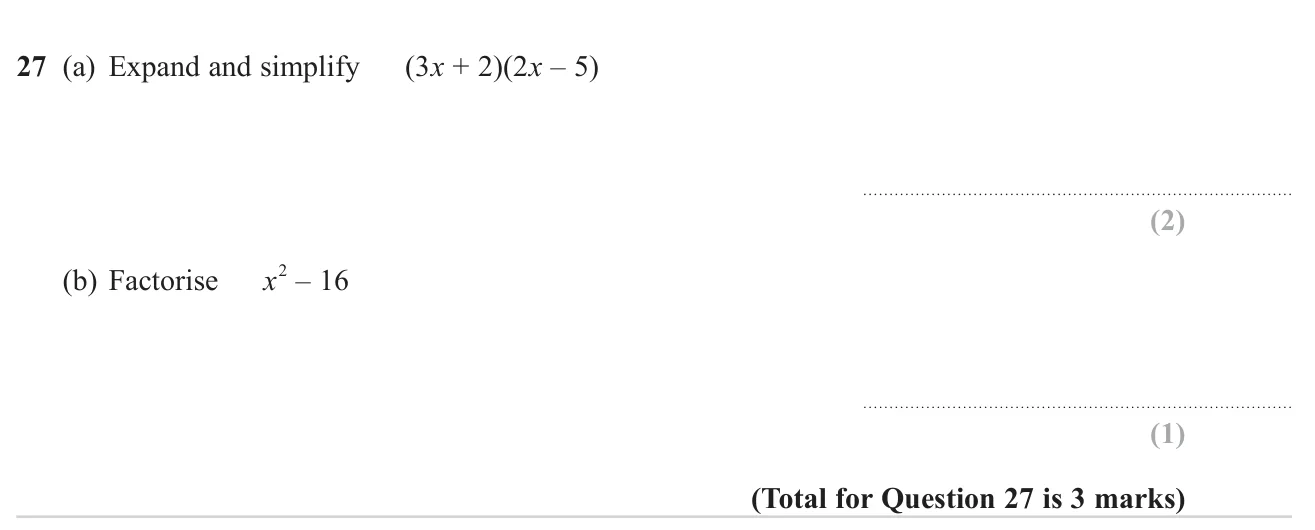
© Pearson Education Ltd. November 2023 Paper 1 (Foundation, non-calculator), question 27.
Show answer
| (a) | 6x2−11x−10 | 2 marks |
|---|
| (b) | (x−4)(x+4) | 1 mark |
|---|
Worked solution Checked against the mark scheme
(a) (3x+2)(2x−5)=6x2−15x+4x−10=6x2−11x−10
(b) x2−16=x2−42=(x−4)(x+4)
Watch out: In (a), getting +11x or −19x by mishandling signs.
Finished the paper?
Add up your marks for all three papers and see what grade that would have been.