© Pearson Education Ltd. November 2023 Paper 3 (Foundation, calculator), question 1.
Show answer
Worked solution Checked against the mark scheme
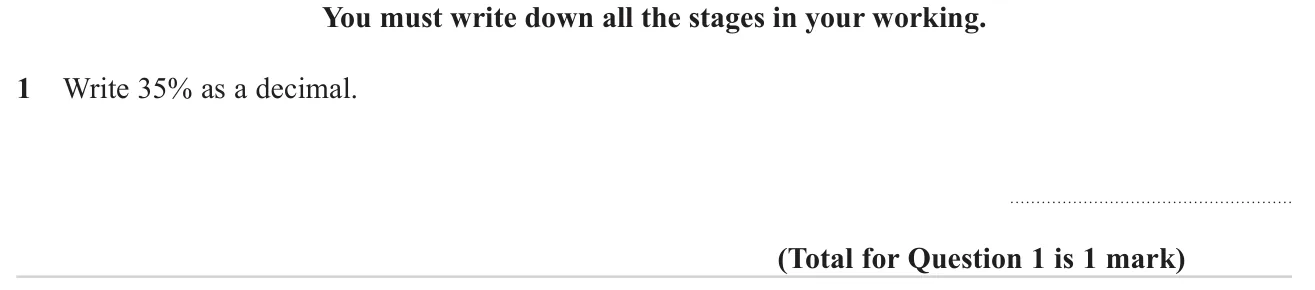
Per cent means out of 100, so divide by 100.
35%=35÷100=0.35
Watch out: Writing 3.5 or 0.035.
© Pearson Education Ltd. November 2023 Paper 3 (Foundation, calculator), question 2.
Show answer
Worked solution Checked against the mark scheme
8061 lies between 8000 and 8100.
The tens digit is 6, which is 5 or more, so round up: 8100.
Watch out: Rounding down to 8000, or writing 8060.
© Pearson Education Ltd. November 2023 Paper 3 (Foundation, calculator), question 3.
Show answer
| Answer | Any number less than −5, e.g. −6 | 1 mark |
|---|
Worked solution Checked against the mark scheme
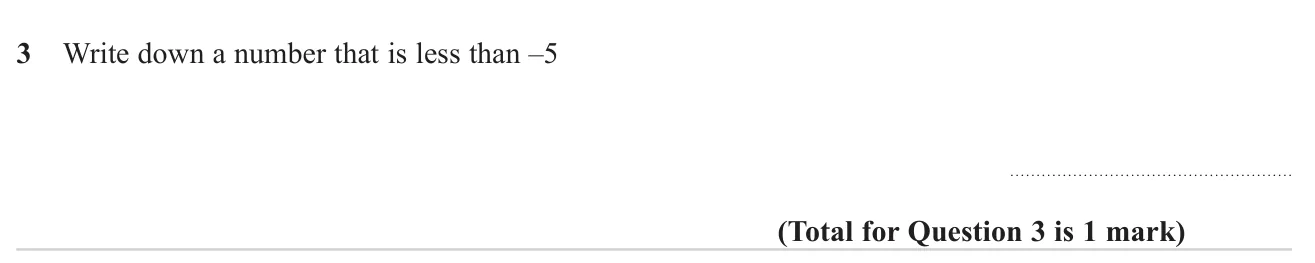
On a number line, numbers less than −5 are further to the left.
So −6, −7 or −10 all work.
Watch out: Giving −4, thinking it is smaller because 4 is less than 5.
© Pearson Education Ltd. November 2023 Paper 3 (Foundation, calculator), question 4.
Show answer
| Answer | 216 (or 72) | 1 mark |
|---|
Worked solution Checked against the mark scheme
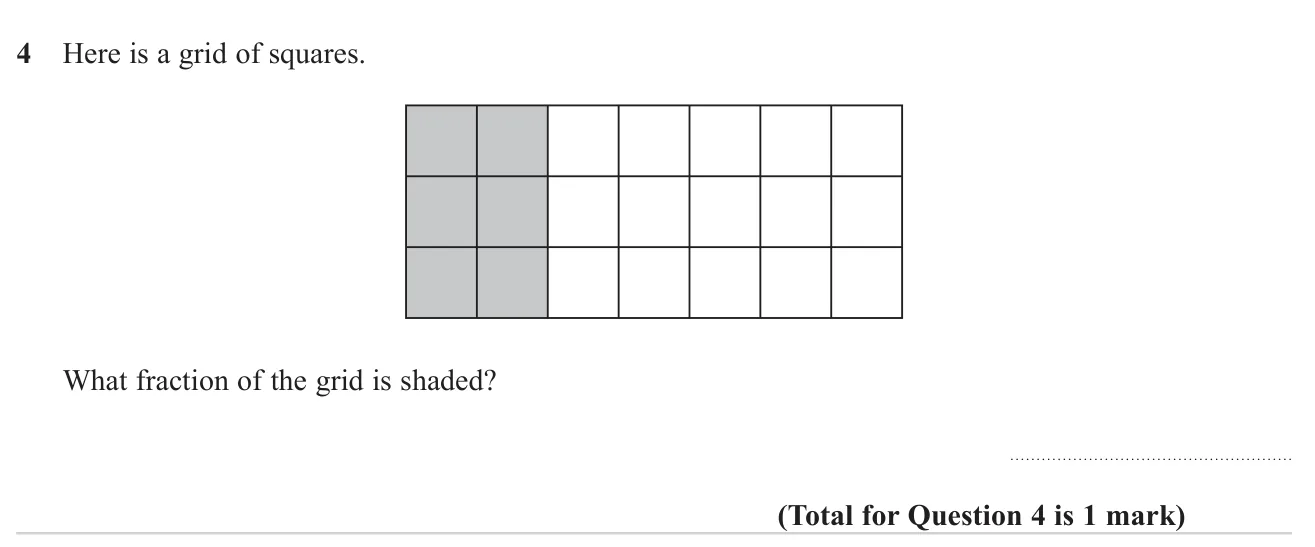
The grid has 3×7=21 squares and 6 of them are shaded.
Fraction shaded =216=72
Watch out: Writing shaded over unshaded, 6/15.
© Pearson Education Ltd. November 2023 Paper 3 (Foundation, calculator), question 5.
Show answer
| Answer | 9 tenths (109 or 0.9) | 1 mark |
|---|
Worked solution Checked against the mark scheme
In 27.963 the first digit after the decimal point is the tenths digit.
So the 9 is worth 109=0.9.
Watch out: Saying hundredths, or 900.
© Pearson Education Ltd. November 2023 Paper 3 (Foundation, calculator), question 6.
Show answer
| (a) | 2 whole symbols drawn for banana | 1 mark |
|---|
| (b) | Year 8 (Year 7 sold 141, Year 8 sold 150) | 3 marks |
|---|
Worked solution Checked against the mark scheme
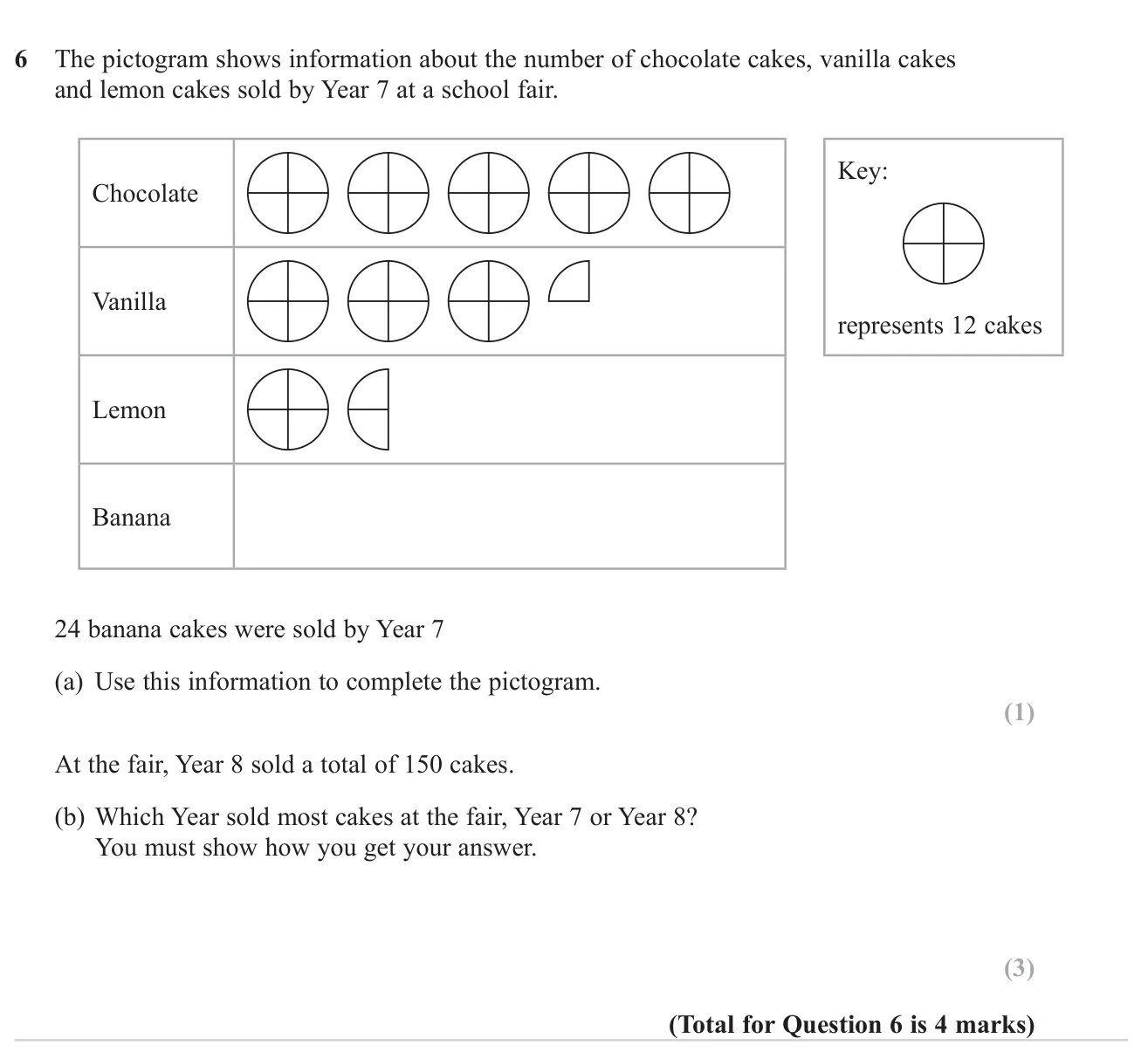
(a) Each circle is 12 cakes, so 24÷12=2 circles for banana.
(b) Chocolate 5×12=60; vanilla 341×12=39; lemon 121×12=18; banana 24.
Year 7 total =60+39+18+24=141, which is less than 150, so Year 8 sold more.
Watch out: Reading a quarter circle as half a symbol, or leaving banana out of the total.
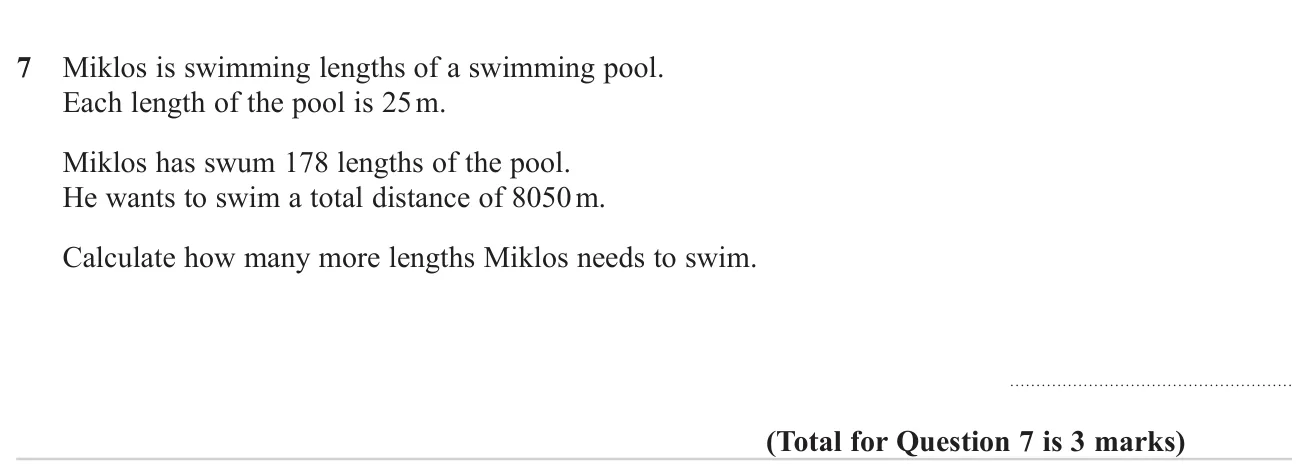
© Pearson Education Ltd. November 2023 Paper 3 (Foundation, calculator), question 7.
Show answer
Worked solution Checked against the mark scheme
Total lengths needed: 8050÷25=322
Lengths still to swim: 322−178=144
Watch out: Giving the remaining distance 3600 m instead of the number of lengths.
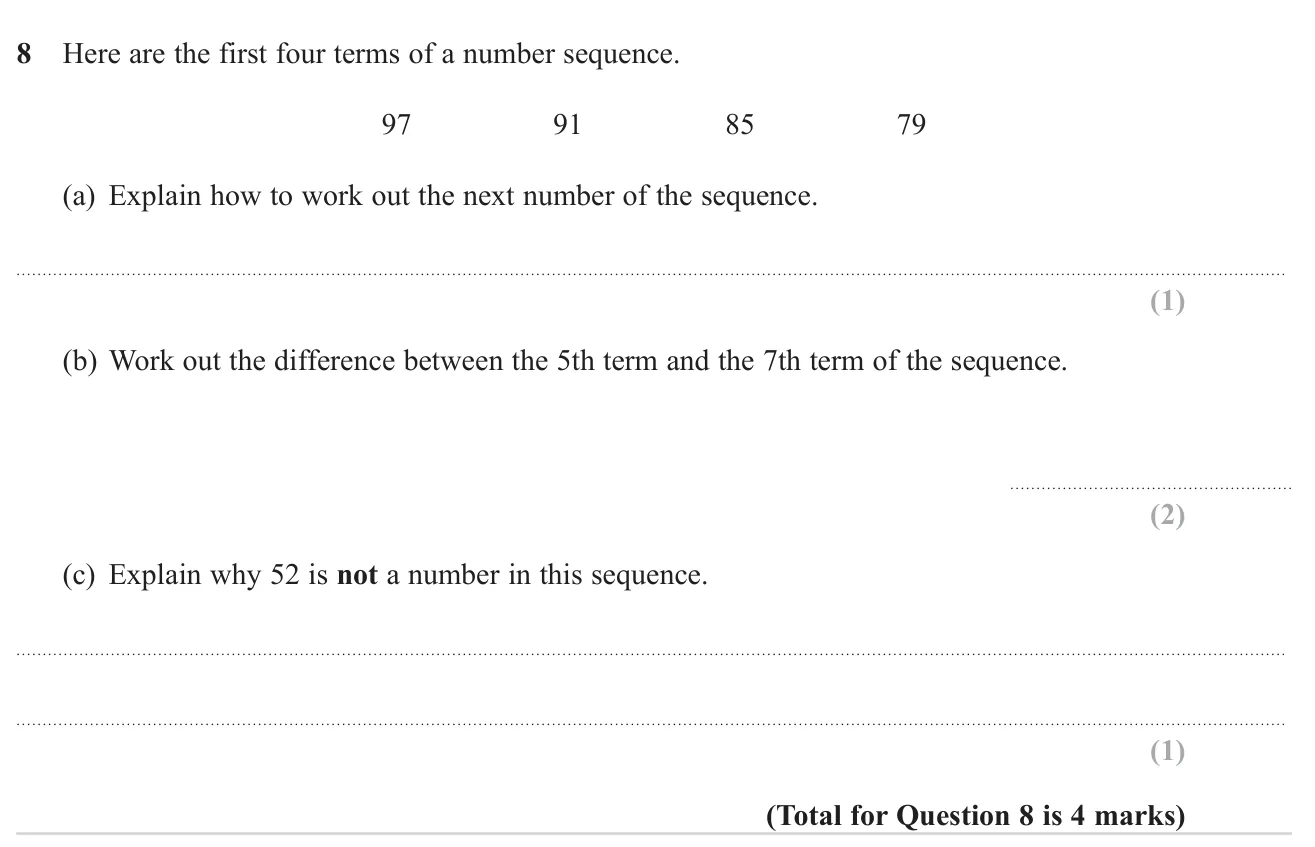
© Pearson Education Ltd. November 2023 Paper 3 (Foundation, calculator), question 8.
Show answer
| (a) | Subtract 6 each time | 1 mark |
|---|
| (b) | 12 | 2 marks |
|---|
| (c) | All the terms are odd, but 52 is even | 1 mark |
|---|
Worked solution Checked against the mark scheme
(a) 97−91=6, so each term is 6 less than the one before.
(b) 5th term =73, 6th =67, 7th =61. Difference =73−61=12
(c) Every term is odd (odd minus 6 stays odd). 52 is even, so it cannot appear. The terms go 55, 49, missing 52.
Watch out: In (c), just saying 'it goes past 52' without a reason.
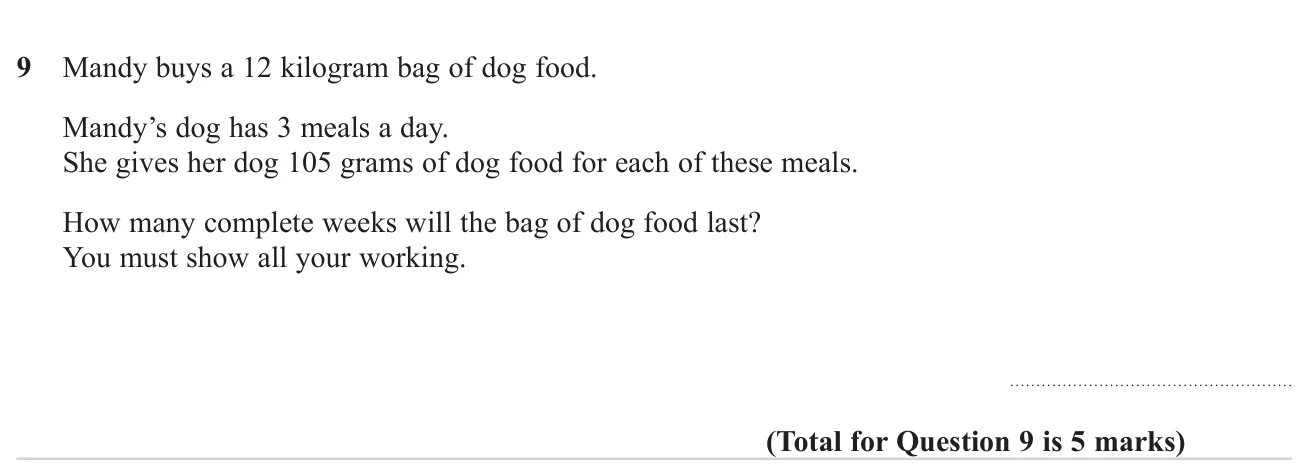
© Pearson Education Ltd. November 2023 Paper 3 (Foundation, calculator), question 9.
Show answer
Worked solution Checked against the mark scheme
12 kg=12000 g
Food per day =3×105=315 g; per week =315×7=2205 g
12000÷2205=5.44..., so the bag lasts 5 complete weeks.
Watch out: Rounding 5.44 up to 6, or forgetting to change kg into g.
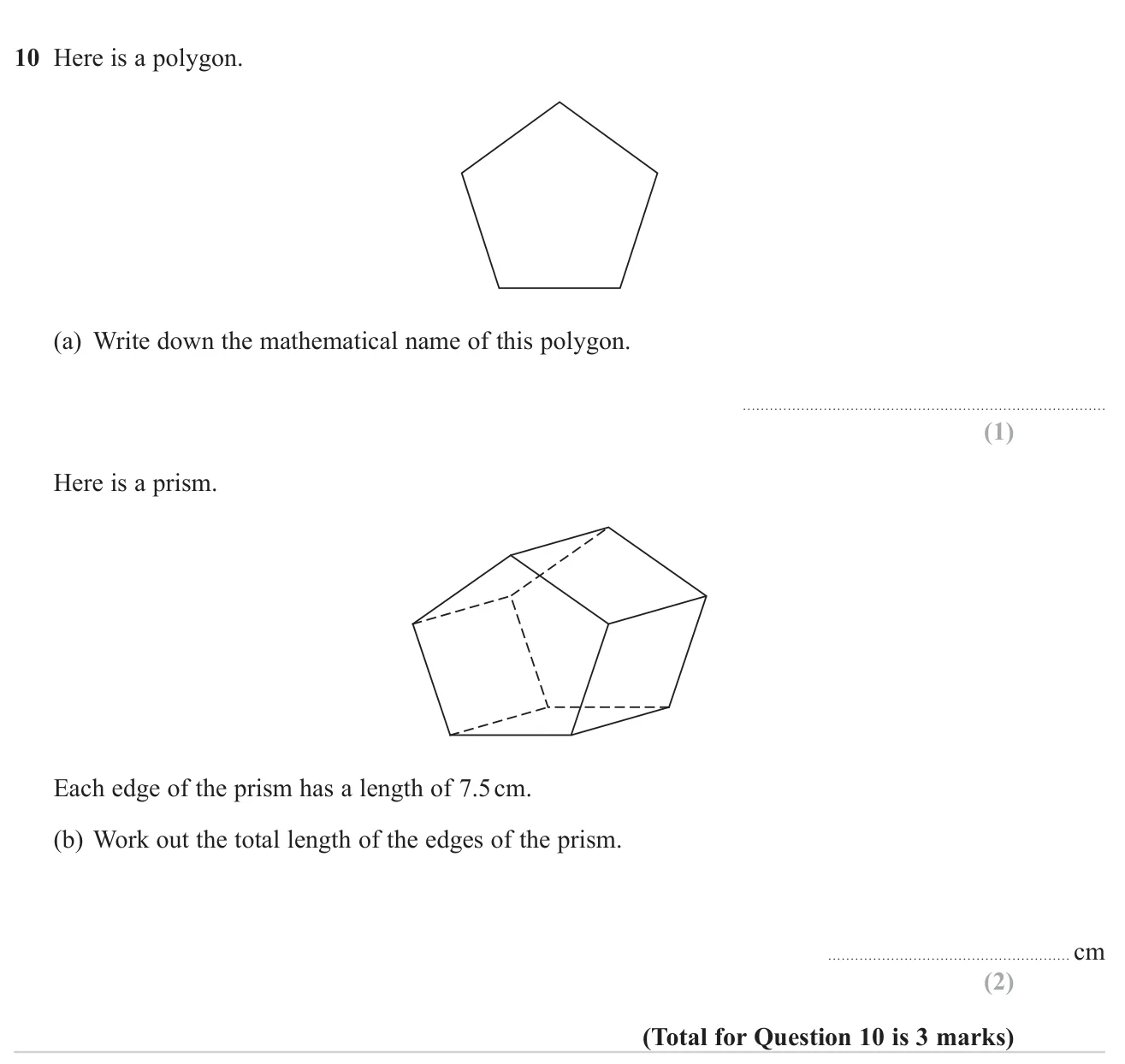
© Pearson Education Ltd. November 2023 Paper 3 (Foundation, calculator), question 10.
Show answer
| (a) | Pentagon | 1 mark |
|---|
| (b) | 112.5 cm | 2 marks |
|---|
Worked solution Checked against the mark scheme
(a) It has 5 sides, so it is a pentagon.
(b) A pentagonal prism has 5+5+5=15 edges (two pentagons plus 5 joining edges).
Total length =15×7.5=112.5 cm
Watch out: Counting only the edges you can see, or only 10 edges.
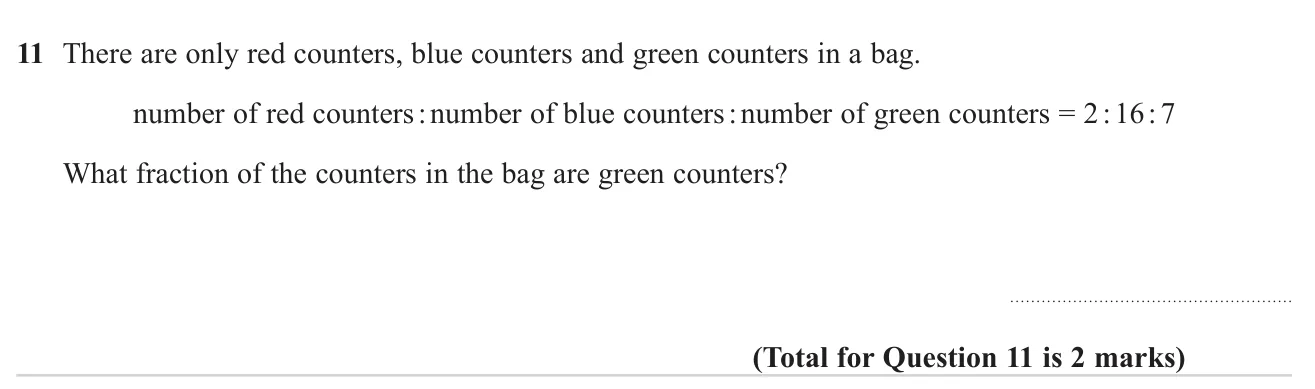
Question 11
Ratio2 marksGrade 3Calculator © Pearson Education Ltd. November 2023 Paper 3 (Foundation, calculator), question 11.
Show answer
| Answer | 257 | 2 marks |
|---|
Worked solution Checked against the mark scheme
Total parts =2+16+7=25
Green is 7 of these parts, so the fraction is 257.
Watch out: Writing 7/18, comparing green with the other colours instead of the total.
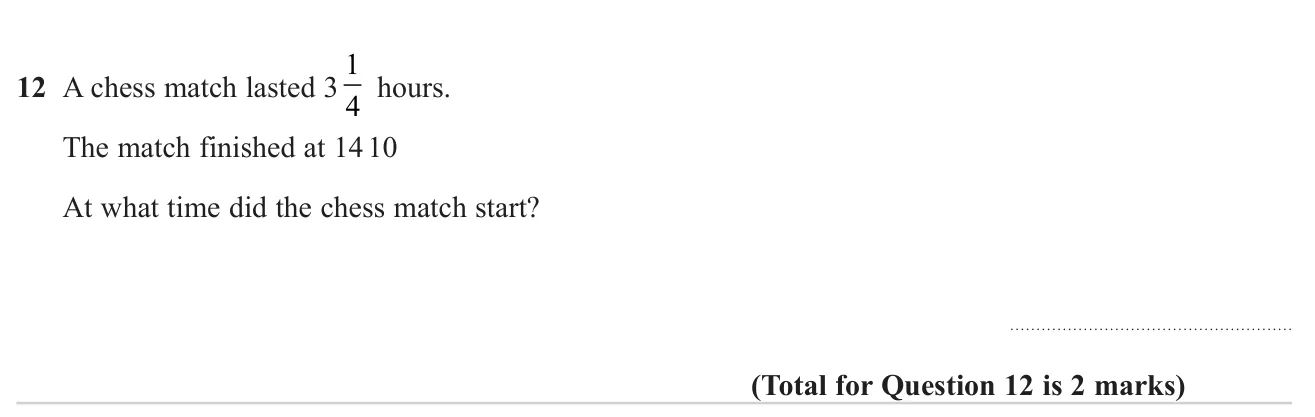
© Pearson Education Ltd. November 2023 Paper 3 (Foundation, calculator), question 12.
Show answer
Worked solution Checked against the mark scheme
341 hours =3 hours 15 minutes.
14 10 back 3 hours is 11 10; back 15 more minutes is 10 55.
Watch out: Treating ¼ hour as 25 minutes, giving 10 45.
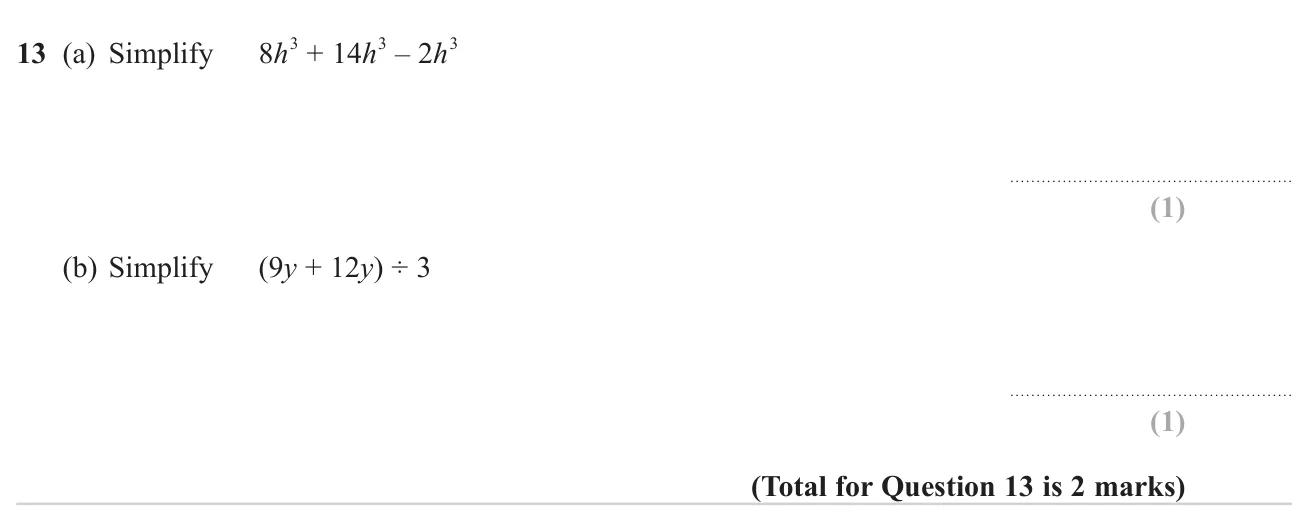
© Pearson Education Ltd. November 2023 Paper 3 (Foundation, calculator), question 13.
Show answer
| (a) | 20h3 | 1 mark |
|---|
| (b) | 7y | 1 mark |
|---|
Worked solution Checked against the mark scheme
(a) The terms are all h3: 8+14−2=20, so 20h3.
(b) 9y+12y=21y, and 21y÷3=7y.
Watch out: In (a), changing the power to give 20h⁹.
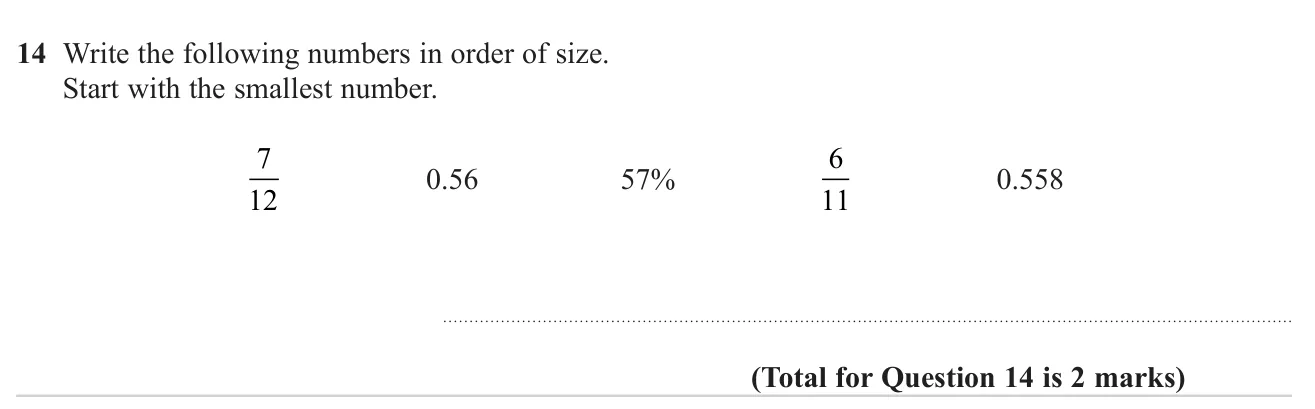
© Pearson Education Ltd. November 2023 Paper 3 (Foundation, calculator), question 14.
Show answer
| Answer | 116, 0.558, 0.56, 57%, 127 | 2 marks |
|---|
Worked solution Checked against the mark scheme
Change each to a decimal:
127=0.583..., 57%=0.57, 116=0.545...
Smallest first: 116 (0.545), 0.558, 0.56, 57% (0.57), 127 (0.583)
Watch out: Thinking 0.558 is bigger than 0.56 because it has more digits.
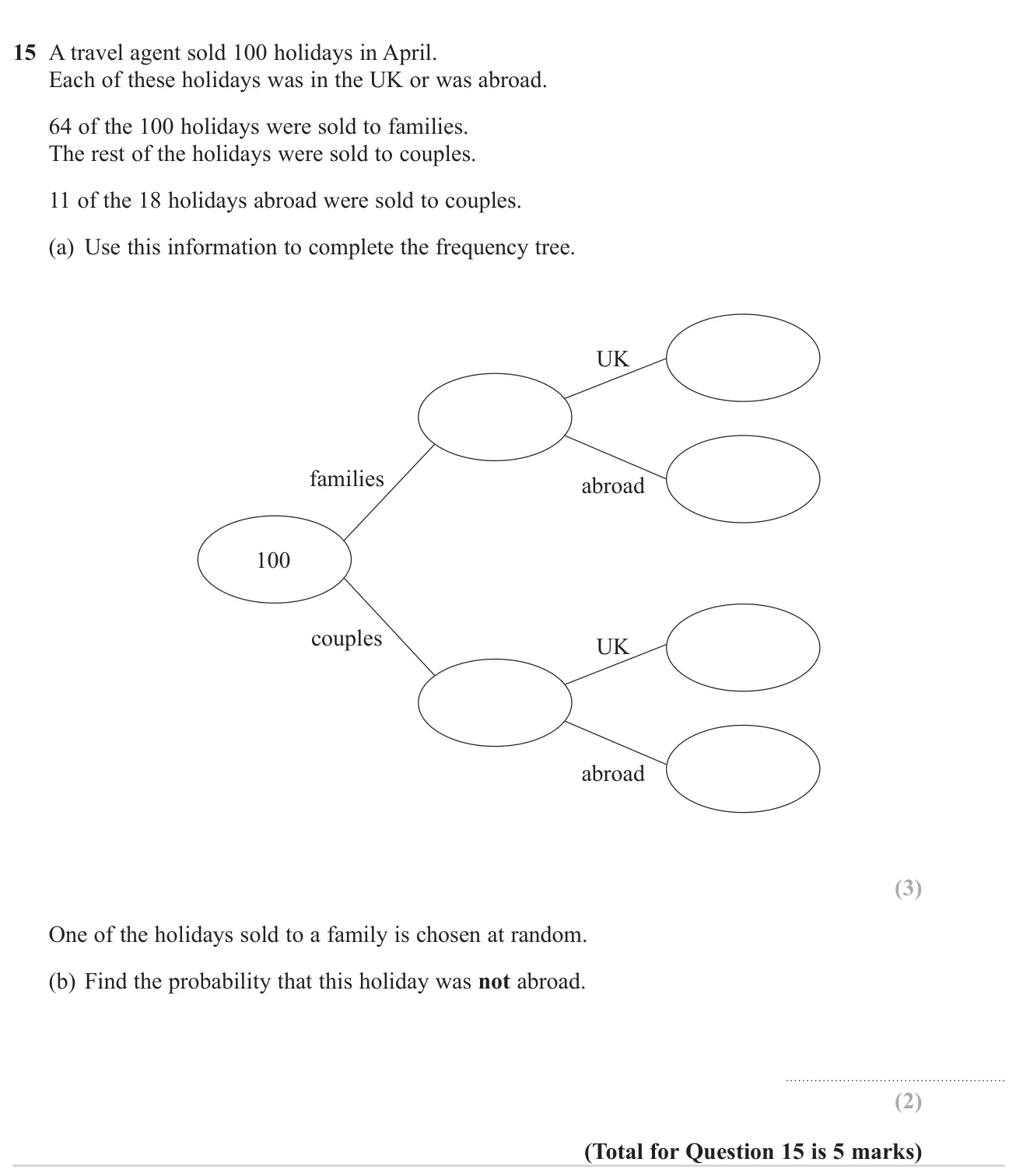
© Pearson Education Ltd. November 2023 Paper 3 (Foundation, calculator), question 15.
Show answer
| (a) | Families 64 (UK 57, abroad 7); couples 36 (UK 25, abroad 11) | 3 marks |
|---|
| (b) | 6457 | 2 marks |
|---|
Worked solution Checked against the mark scheme
(a) Couples =100−64=36. Couples abroad =11, so couples UK =36−11=25.
Families abroad =18−11=7, so families UK =64−7=57.
(b) Not abroad means UK: 6457
Watch out: In (b), dividing by 100 instead of by the 64 families.
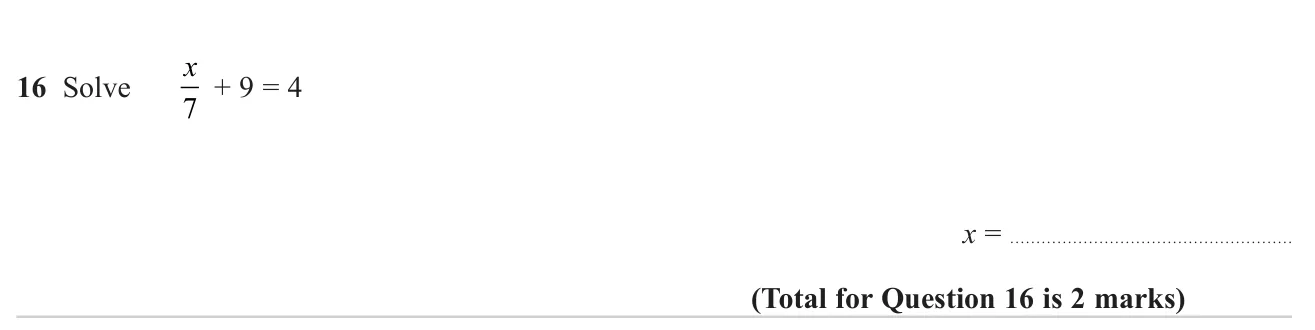
© Pearson Education Ltd. November 2023 Paper 3 (Foundation, calculator), question 16.
Show answer
| Answer | x=−35 | 2 marks |
|---|
Worked solution Checked against the mark scheme
7x+9=4
Subtract 9: 7x=−5
Multiply by 7: x=−35
Watch out: Adding 9 instead of subtracting, giving x = 91.
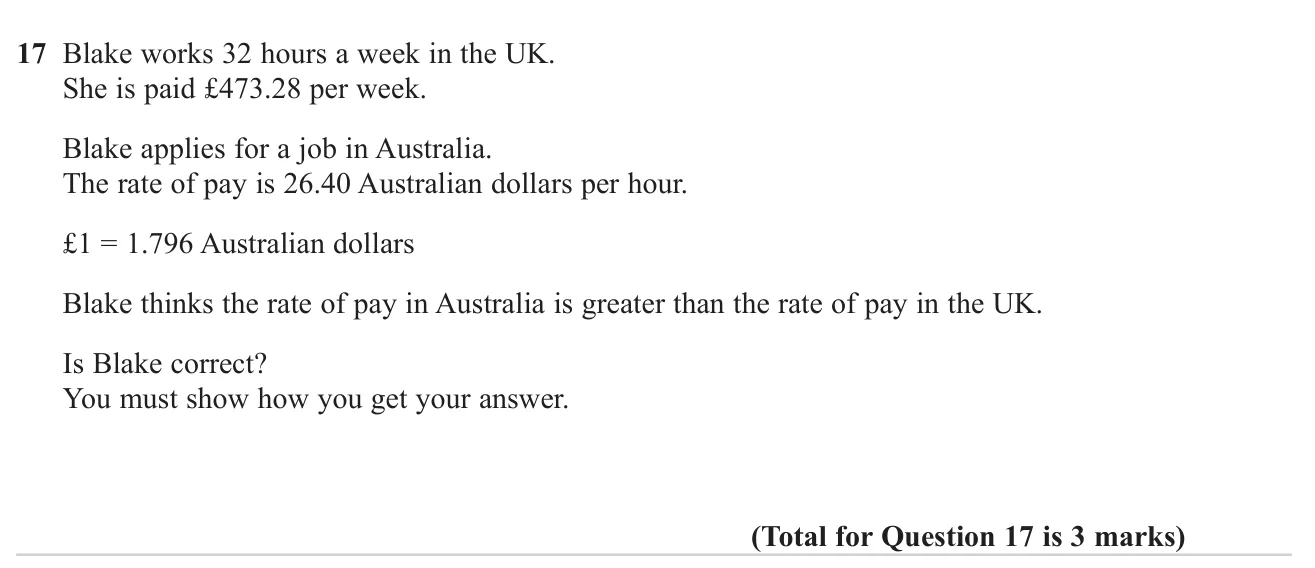
© Pearson Education Ltd. November 2023 Paper 3 (Foundation, calculator), question 17.
Show answer
| Answer | No: the Australian rate is about £14.70 an hour, less than £14.79 in the UK | 3 marks |
|---|
Worked solution Checked against the mark scheme
UK hourly pay: 473.28÷32=£14.79
Australian hourly pay in pounds: 26.40÷1.796=£14.699...
£14.70<£14.79, so no, Blake is not correct.
Watch out: Multiplying by 1.796 instead of dividing when changing dollars to pounds.
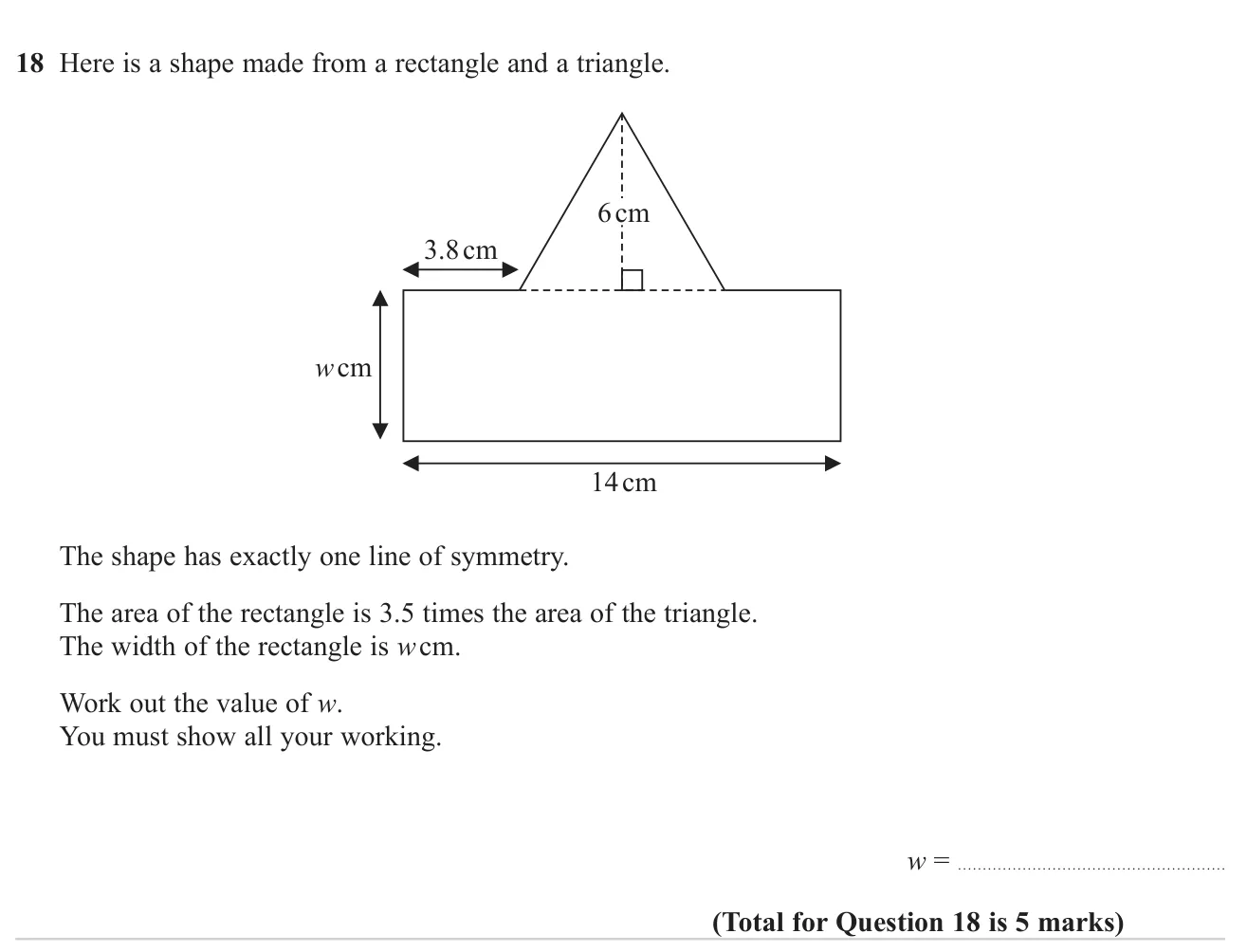
© Pearson Education Ltd. November 2023 Paper 3 (Foundation, calculator), question 18.
Show answer
Worked solution Checked against the mark scheme
The shape is symmetrical, so the triangle's base =14−3.8−3.8=6.4 cm.
Triangle area =21×6.4×6=19.2 cm²
Rectangle area =3.5×19.2=67.2 cm²
14w=67.2, so w=67.2÷14=4.8
Watch out: Subtracting 3.8 only once, giving a base of 10.2 cm.
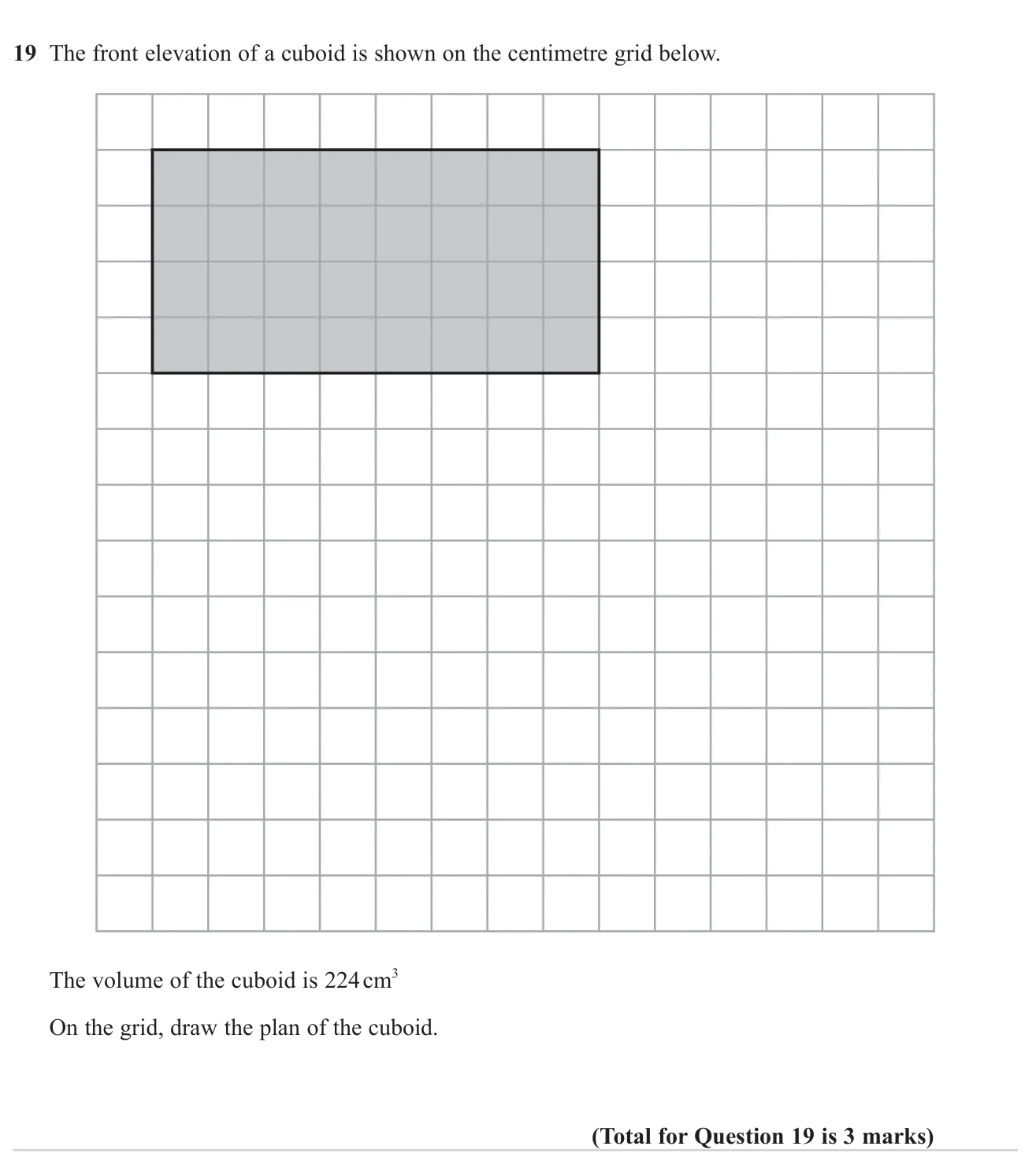
© Pearson Education Ltd. November 2023 Paper 3 (Foundation, calculator), question 19.
Show answer
| Answer | A rectangle 8 cm by 7 cm | 3 marks |
|---|
Worked solution Checked against the mark scheme
From the elevation the cuboid is 8 cm long and 4 cm high.
Depth =224÷(8×4)=7 cm
The plan (view from above) is length × depth: draw a rectangle 8 cm by 7 cm.
Watch out: Drawing the plan as 8 by 4, copying the front elevation.
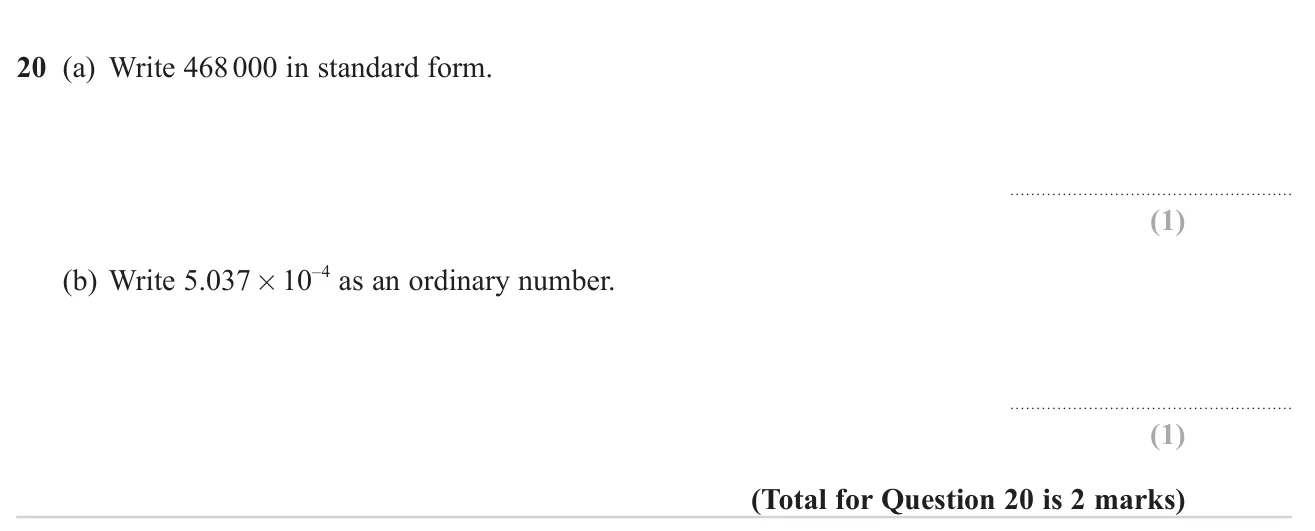
© Pearson Education Ltd. November 2023 Paper 3 (Foundation, calculator), question 20.
Show answer
| (a) | 4.68×10⁵ | 1 mark |
|---|
| (b) | 0.000 503 7 | 1 mark |
|---|
Worked solution Checked against the mark scheme
(a) Put the decimal point after the first digit: 4.68. The point moves 5 places, so 4.68×10⁵.
(b) A power of −4 means move the point 4 places left: 0.0005037
Watch out: In (b), moving the point the wrong way, giving 50 370.
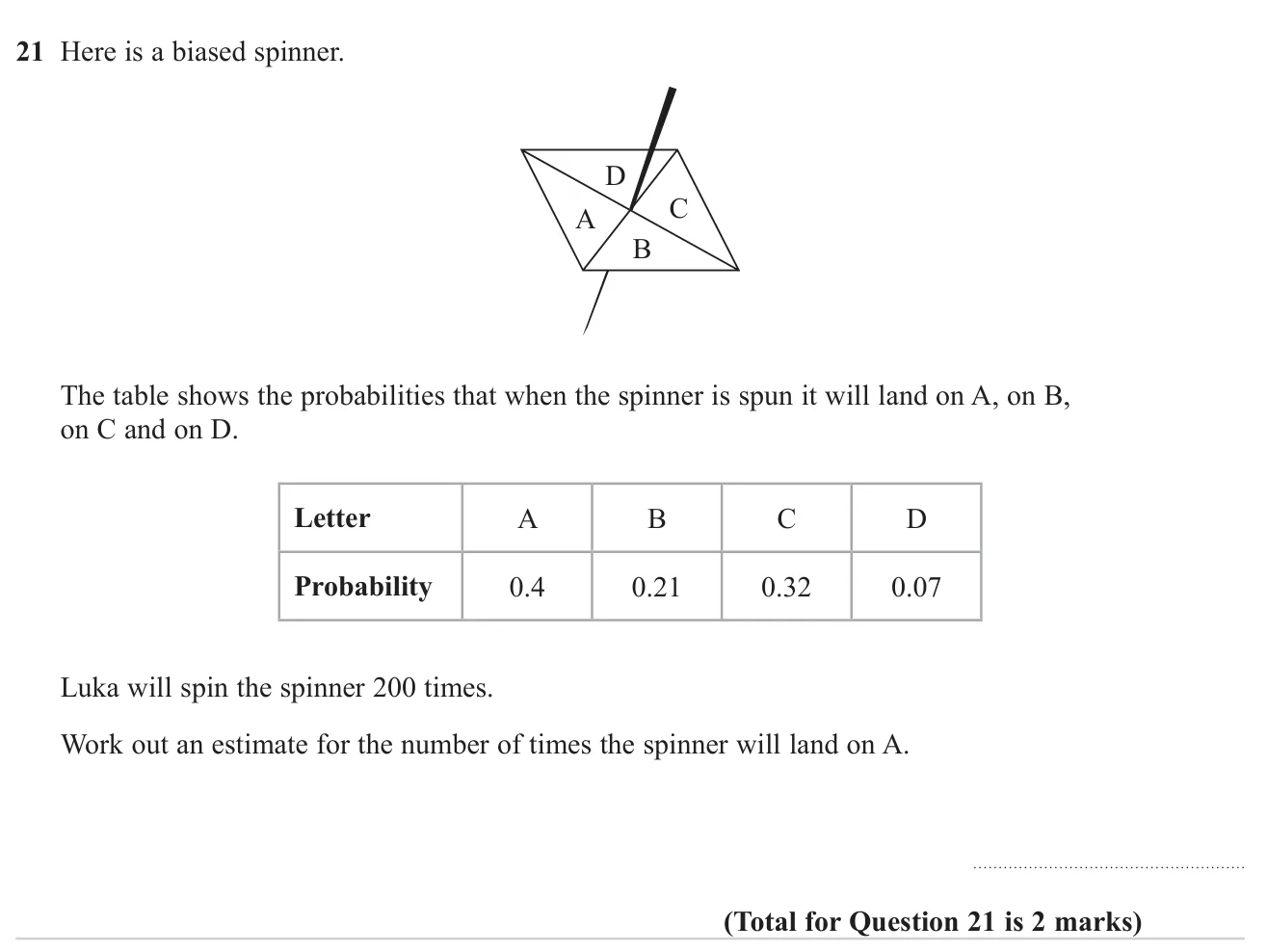
© Pearson Education Ltd. November 2023 Paper 3 (Foundation, calculator), question 21.
Show answer
Worked solution Checked against the mark scheme
Expected number = probability × number of spins
0.4×200=80
Watch out: Giving the answer as a probability, 80/200.
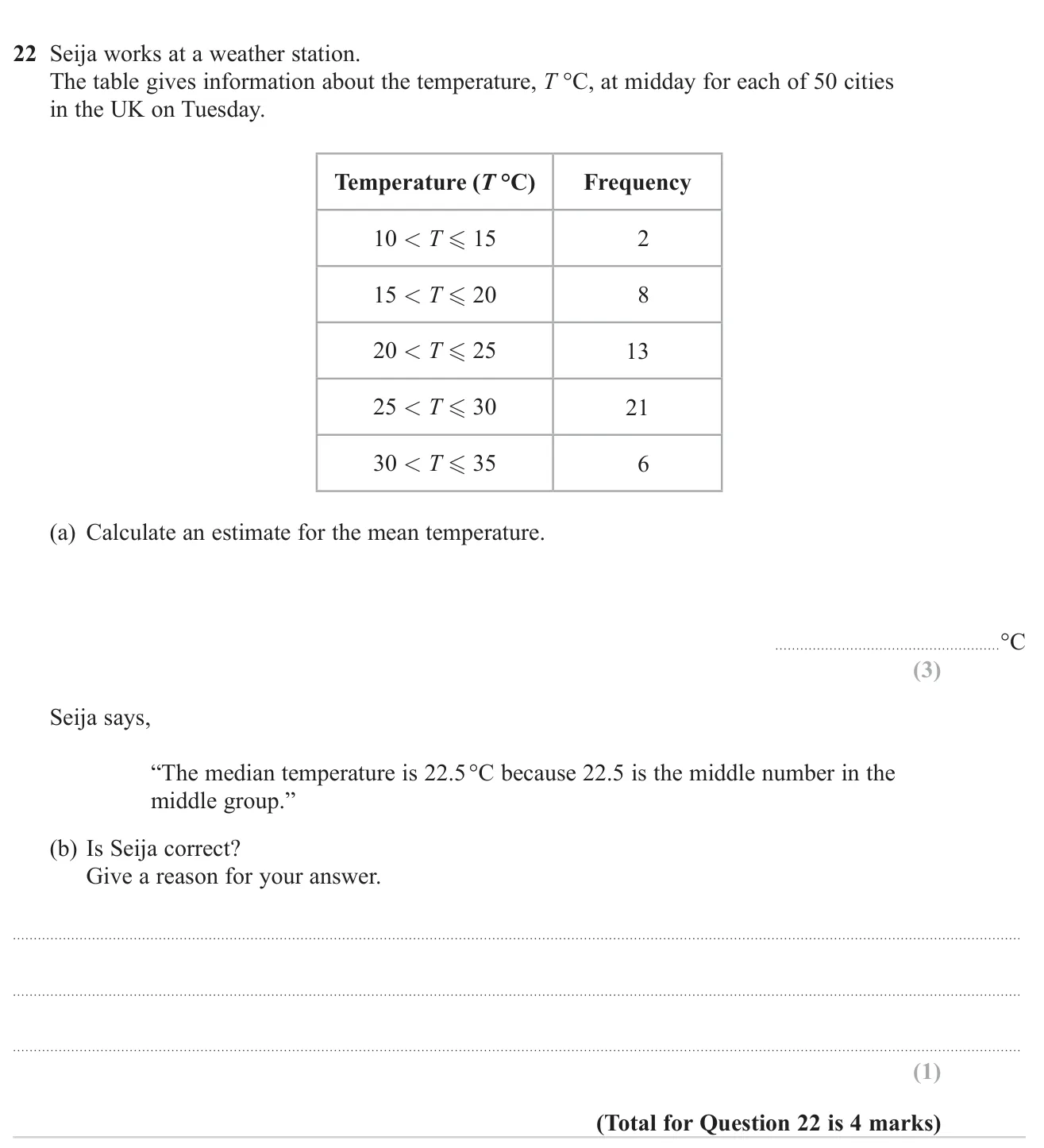
© Pearson Education Ltd. November 2023 Paper 3 (Foundation, calculator), question 22.
Show answer
| (a) | 24.6 °C | 3 marks |
|---|
| (b) | No: the median is the 25th–26th value, which lies in the 25 < T ≤ 30 group | 1 mark |
|---|
Worked solution Checked against the mark scheme
(a) Midpoints 12.5, 17.5, 22.5, 27.5, 32.5.
∑fx=25+140+292.5+577.5+195=1230
Mean ≈1230÷50=24.6 °C
(b) No. The median is about the 25.5th value. 2+8+13=23, so it is in the 25<T≤30 group, not the middle group.
Watch out: In (a), dividing by 5 (the number of groups) instead of 50.
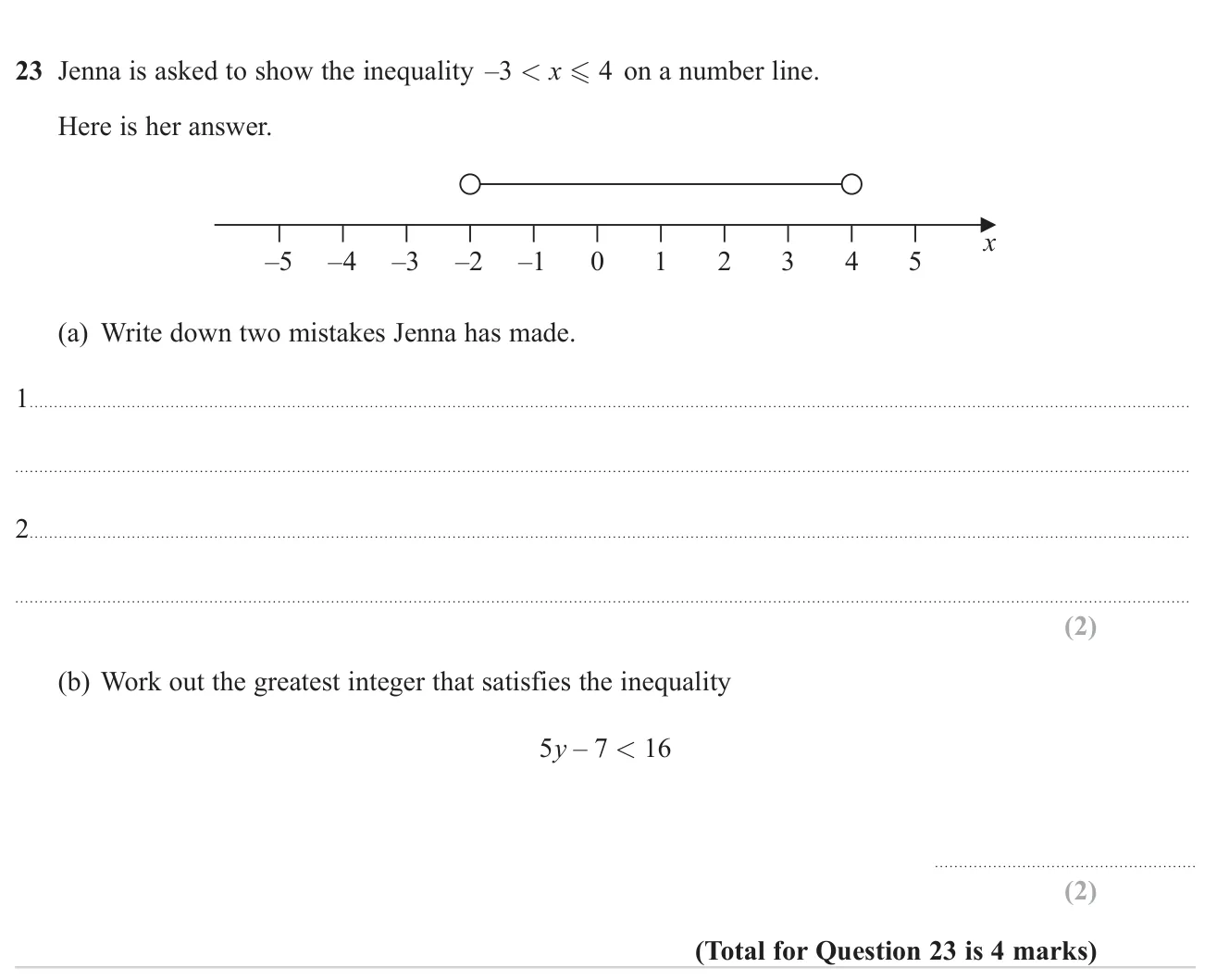
© Pearson Education Ltd. November 2023 Paper 3 (Foundation, calculator), question 23.
Show answer
| (a) | The circle at 4 should be filled in; the open circle should be at −3, not −2 | 2 marks |
|---|
| (b) | 4 | 2 marks |
|---|
Worked solution Checked against the mark scheme
(a) ≤4 includes 4, so the circle at 4 should be solid. The line should start with an open circle at −3, but Jenna started at −2.
(b) 5y−7<16 gives 5y<23, so y<4.6.
The greatest integer is 4.
Watch out: In (b), giving 5 by rounding 4.6 up.
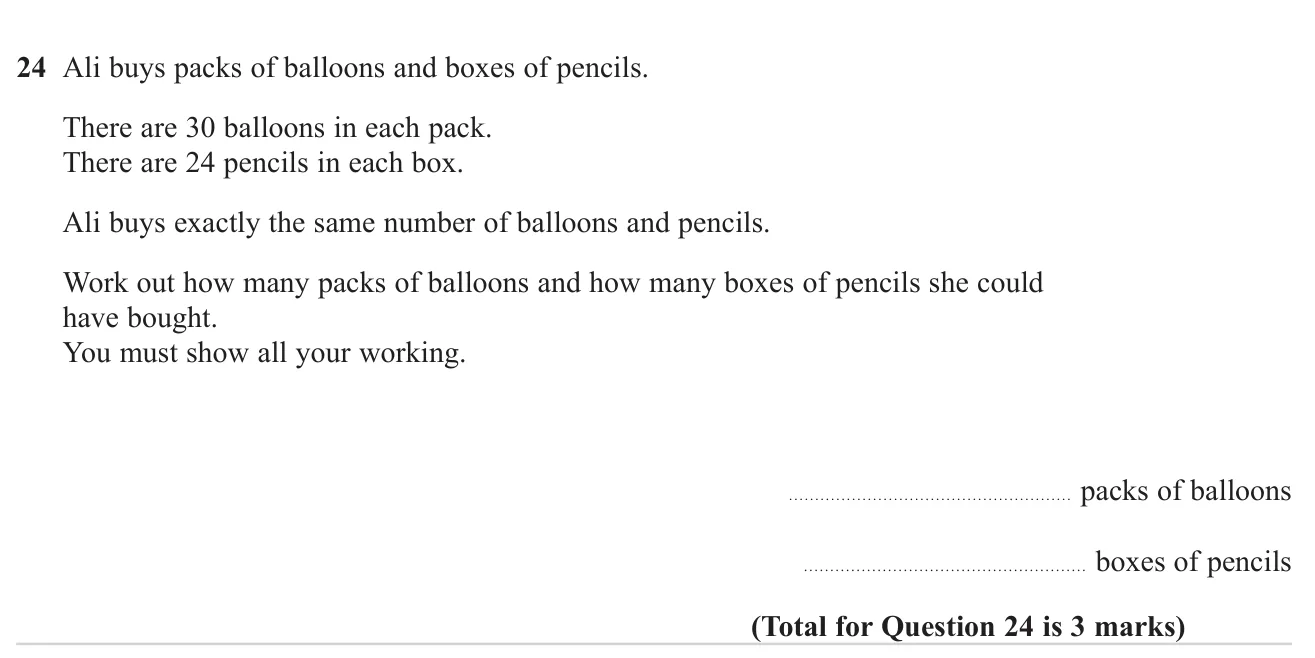
© Pearson Education Ltd. November 2023 Paper 3 (Foundation, calculator), question 24.
Show answer
| Answer | 4 packs of balloons and 5 boxes of pencils (or any multiple, e.g. 8 and 10) | 3 marks |
|---|
Worked solution Checked against the mark scheme
Multiples of 30: 30, 60, 90, 120
Multiples of 24: 24, 48, 72, 96, 120
LCM =120, so 120÷30=4 packs and 120÷24=5 boxes.
Watch out: Swapping the answers round, 5 packs and 4 boxes.
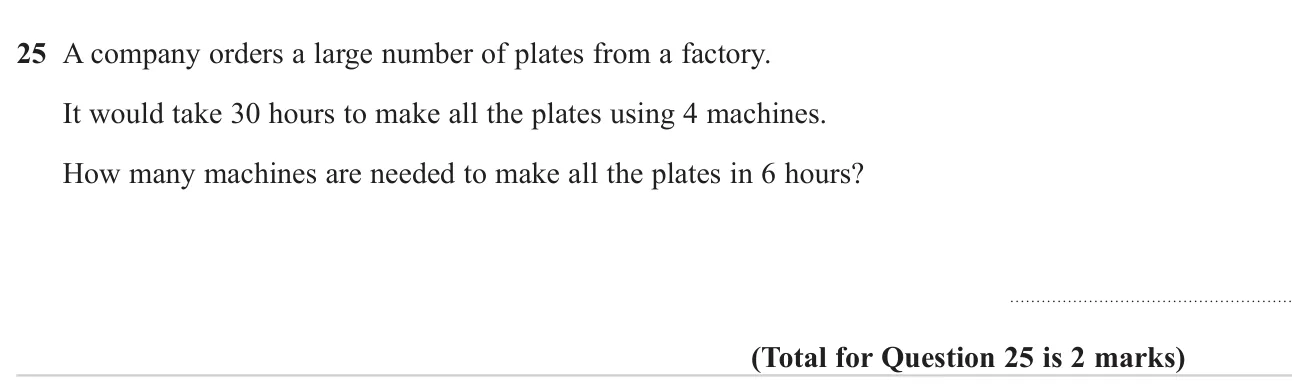
© Pearson Education Ltd. November 2023 Paper 3 (Foundation, calculator), question 25.
Show answer
Worked solution Checked against the mark scheme
Total work =30×4=120 machine-hours.
In 6 hours: 120÷6=20 machines.
Watch out: Treating it as direct proportion and getting 0.8.
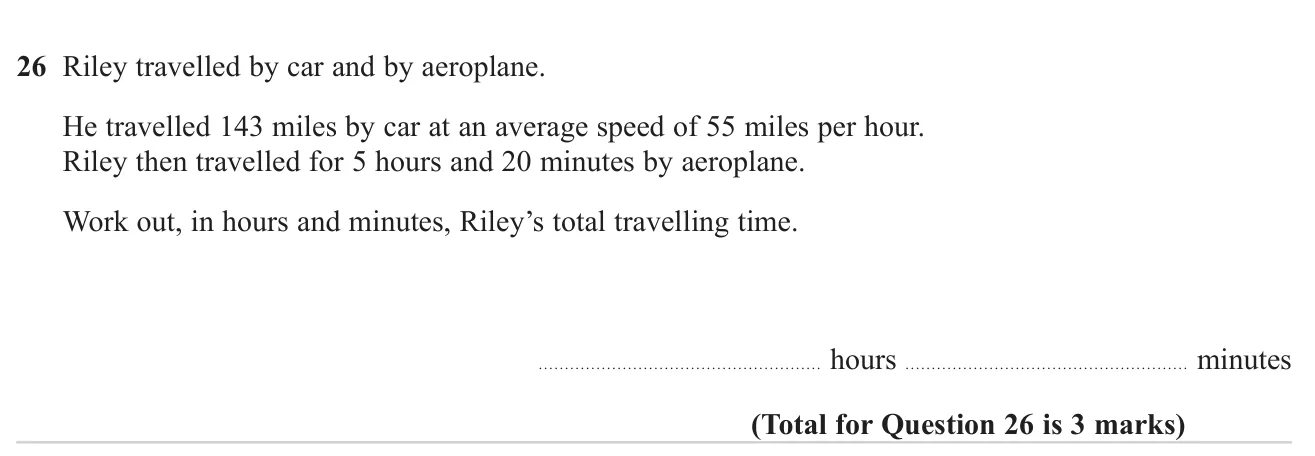
© Pearson Education Ltd. November 2023 Paper 3 (Foundation, calculator), question 26.
Show answer
| Answer | 7 hours 56 minutes | 3 marks |
|---|
Worked solution Checked against the mark scheme
Car time =143÷55=2.6 hours =2 hours 36 minutes (0.6×60=36).
Total =2 h 36 min +5 h 20 min =7 hours 56 minutes
Watch out: Reading 2.6 hours as 2 hours 60 minutes.
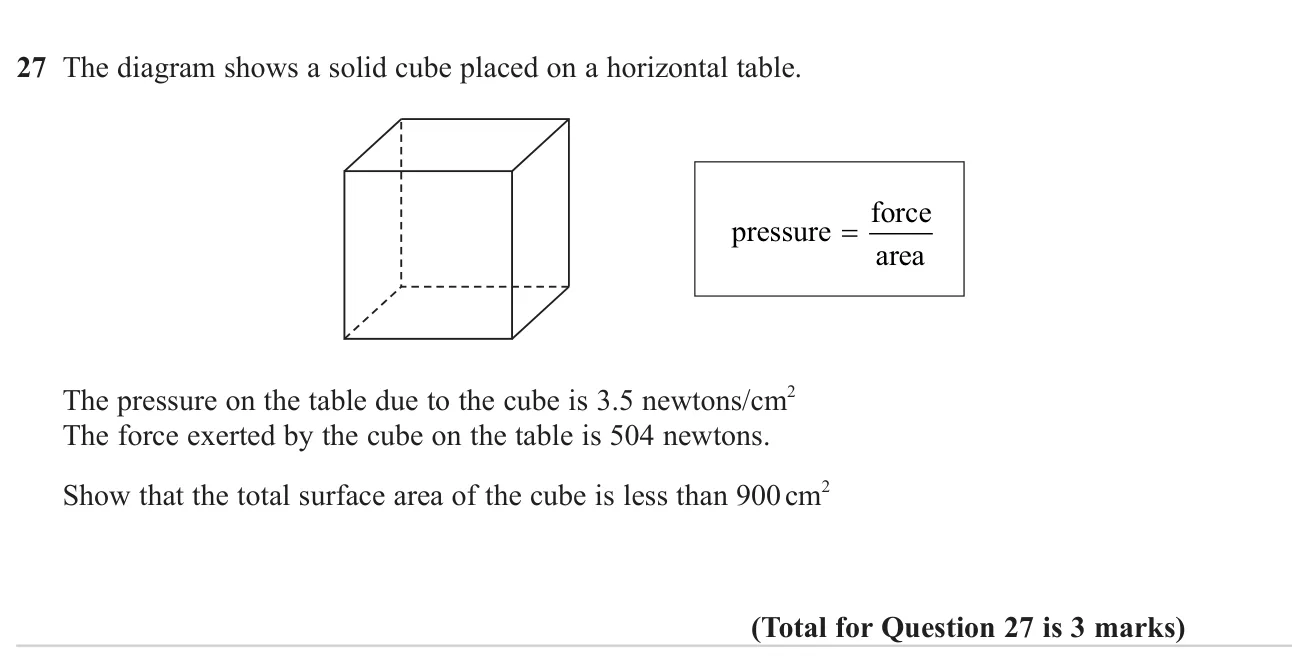
© Pearson Education Ltd. November 2023 Paper 3 (Foundation, calculator), question 27.
Show answer
| Answer | Face area 144 cm², so surface area 864<900 cm² | 3 marks |
|---|
Worked solution Checked against the mark scheme
Area of face on the table =force÷pressure=504÷3.5=144 cm²
A cube has 6 equal faces: 6×144=864 cm²
864<900, so the surface area is less than 900 cm².
Watch out: Multiplying force by pressure instead of dividing.
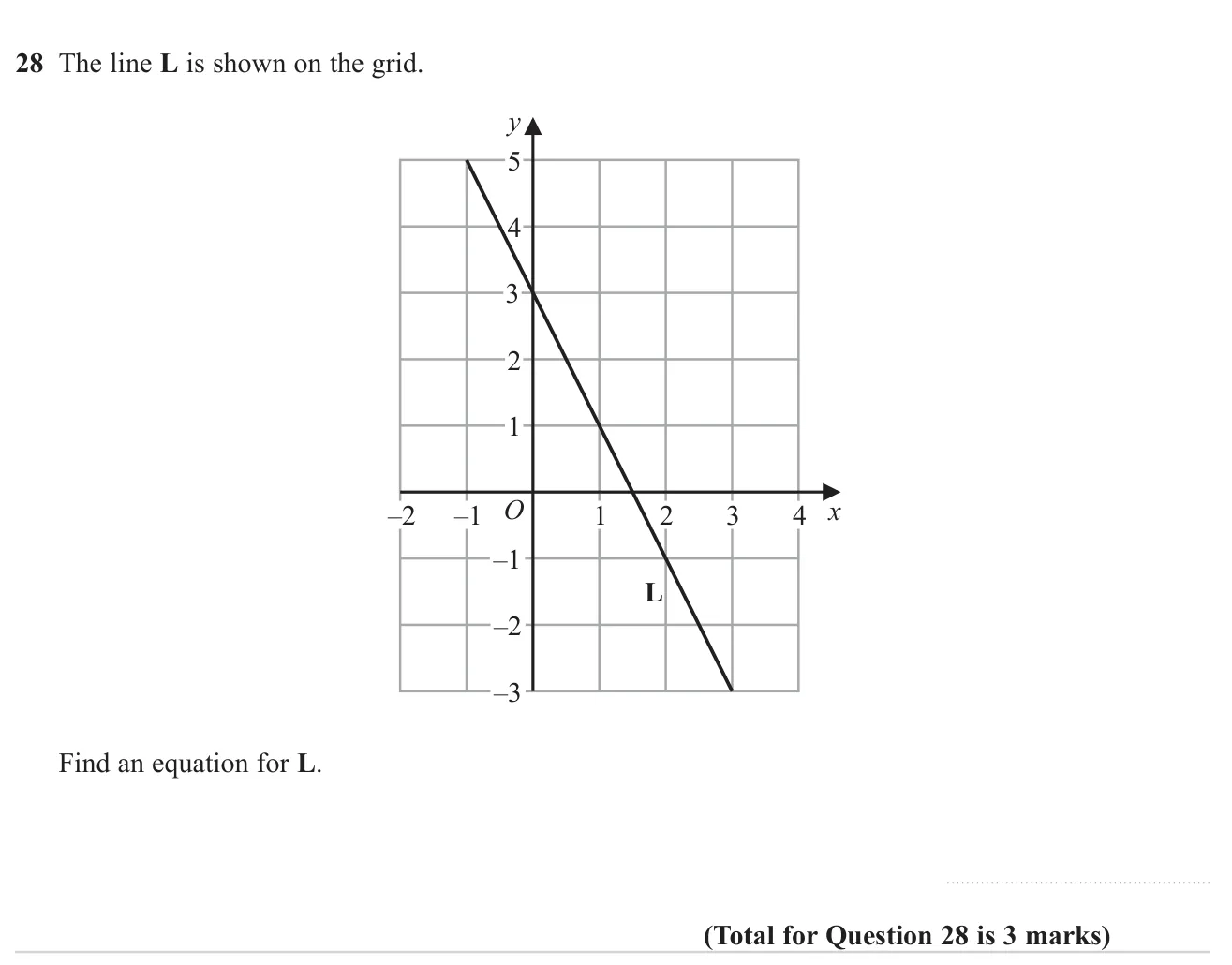
© Pearson Education Ltd. November 2023 Paper 3 (Foundation, calculator), question 28.
Show answer
| Answer | y=−2x+3 | 3 marks |
|---|
Worked solution Checked against the mark scheme
The line crosses the y-axis at 3, so c=3.
From (0, 3) to (1, 1): down 2 for every 1 across, so gradient =−2.
Equation: y=−2x+3
Watch out: Getting the gradient as +2 because the sign is missed.
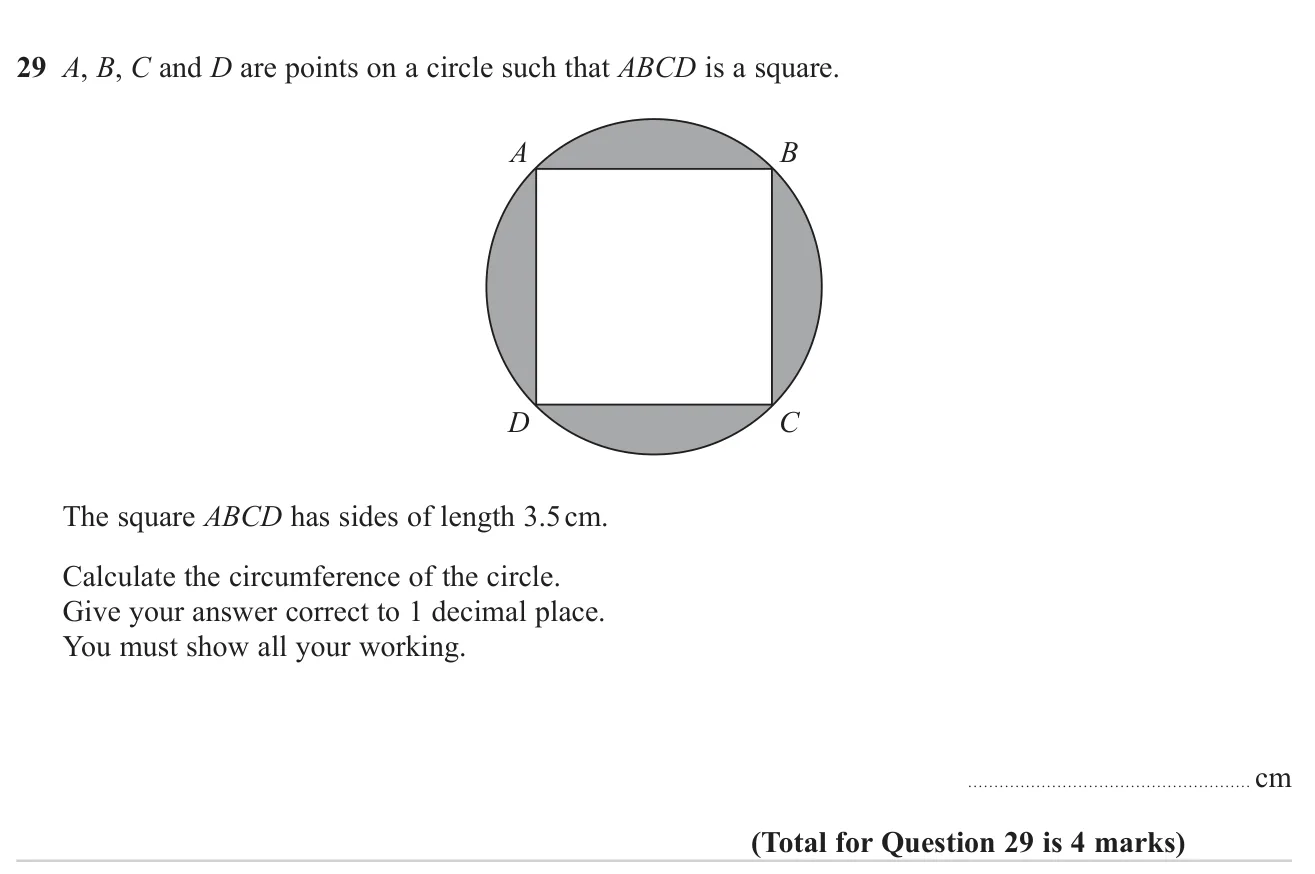
© Pearson Education Ltd. November 2023 Paper 3 (Foundation, calculator), question 29.
Show answer
Worked solution Checked against the mark scheme
The diagonal of the square is a diameter of the circle.
d=3.52+3.52=24.5=4.949... cm
Circumference =πd=π×4.949...=15.55...≈15.6 cm
Watch out: Using the side 3.5 cm as the diameter, giving 11.0 cm.
Finished the paper?
Add up your marks for all three papers and see what grade that would have been.