© Pearson Education Ltd. November 2023 Paper 1 (Higher, non-calculator), question 1.
Show answer
Worked solution Checked against the mark scheme
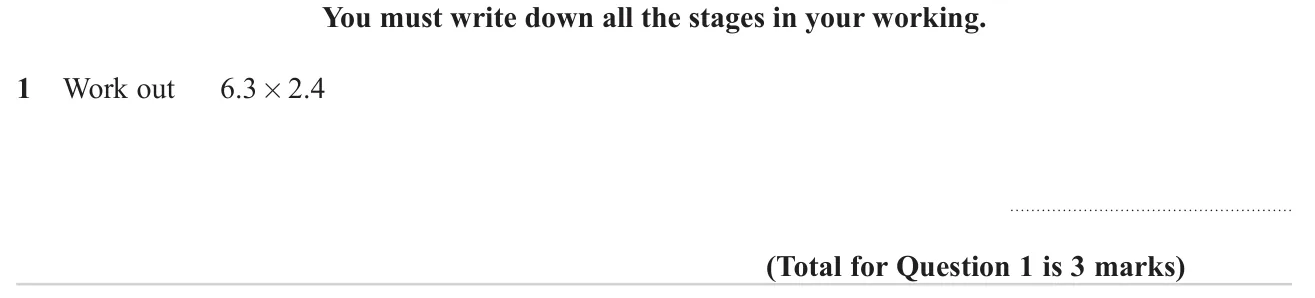
Work out 63×24: 63×20=1260 and 63×4=252, so 1260+252=1512.
There are two decimal places in the question, so 6.3×2.4=15.12
Watch out: Putting the decimal point in the wrong place, e.g. 151.2.
© Pearson Education Ltd. November 2023 Paper 1 (Higher, non-calculator), question 2.
Show answer
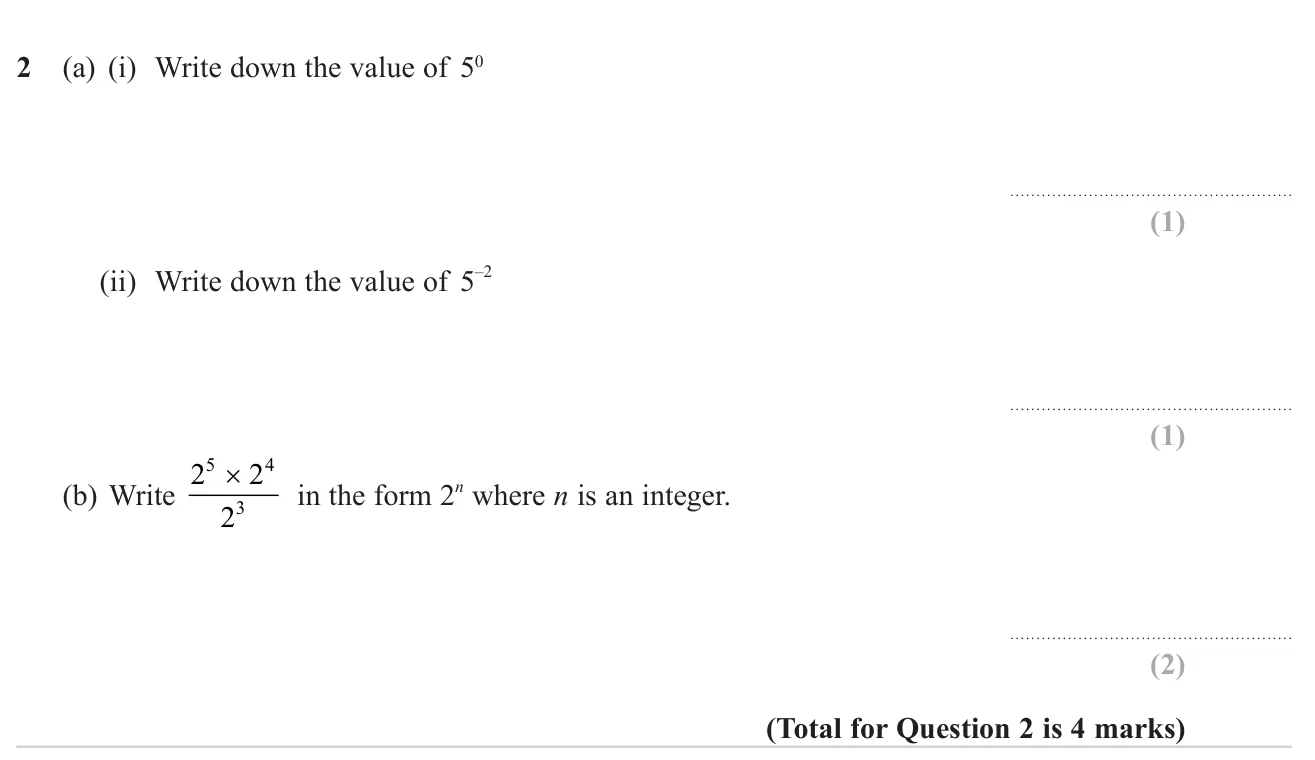
| (a(i)) | 1 | 1 mark |
|---|
| (a(ii)) | 251 | 1 mark |
|---|
| (b) | 26 | 2 marks |
|---|
Worked solution Checked against the mark scheme
(a)(i) Any non-zero number to the power 0 is 1.
(a)(ii) 5−2=521=251
(b) Add powers when multiplying, subtract when dividing: 25+4−3=26
Watch out: Thinking 50=0 or 5−2=−25.
© Pearson Education Ltd. November 2023 Paper 1 (Higher, non-calculator), question 3.
Show answer
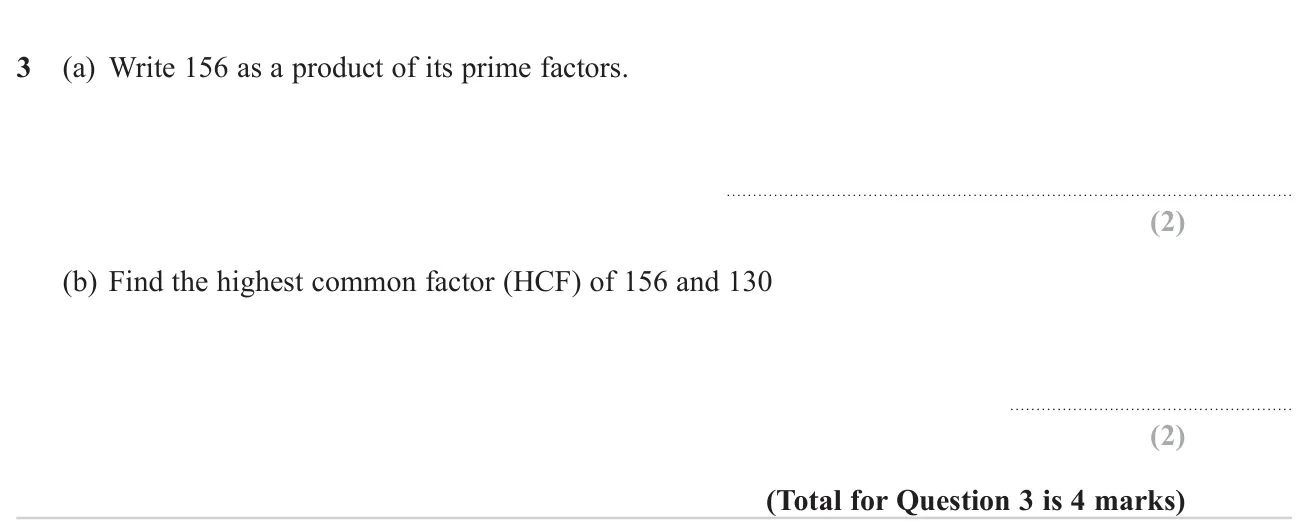
| (a) | 22×3×13 | 2 marks |
|---|
| (b) | 26 | 2 marks |
|---|
Worked solution Checked against the mark scheme
(a) 156=2×78=2×2×39=2×2×3×13, so 156=22×3×13
(b) 130=2×5×13
Shared primes: 2×13=26
Watch out: Giving a list of the prime factors (2, 2, 3, 13) instead of a product.
© Pearson Education Ltd. November 2023 Paper 1 (Higher, non-calculator), question 4.
Show answer
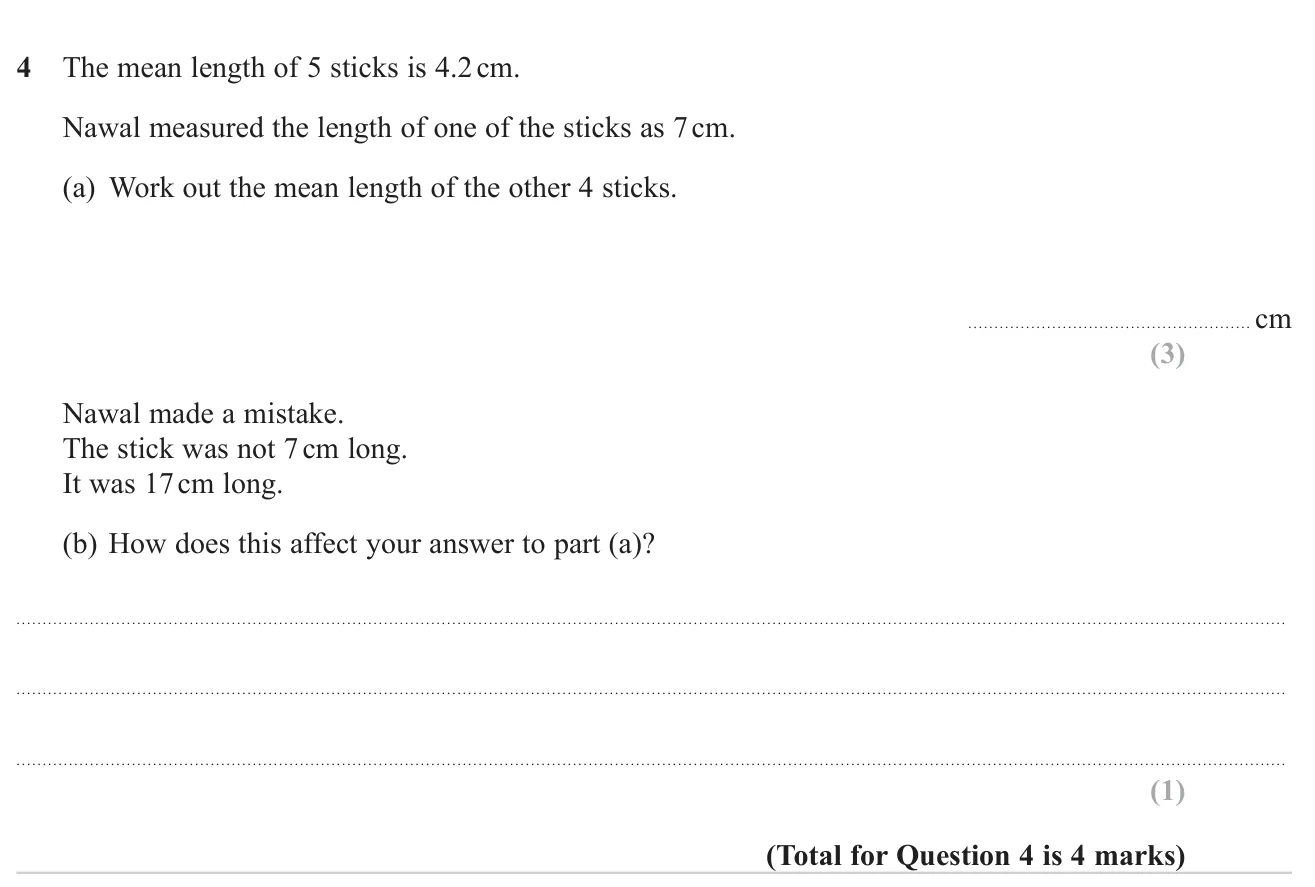
| (a) | 3.5 cm | 3 marks |
|---|
| (b) | The mean of the other 4 sticks would be smaller (it becomes 1 cm) | 1 mark |
|---|
Worked solution Checked against the mark scheme
(a) Total length: 4.2×5=21 cm
Other 4 sticks: 21−7=14 cm, so mean =14÷4=3.5 cm
(b) The other 4 sticks now total 21−17=4 cm, so their mean goes down to 4÷4=1 cm.
Watch out: Saying the mean would increase because 17 is bigger than 7.
© Pearson Education Ltd. November 2023 Paper 1 (Higher, non-calculator), question 5.
Show answer
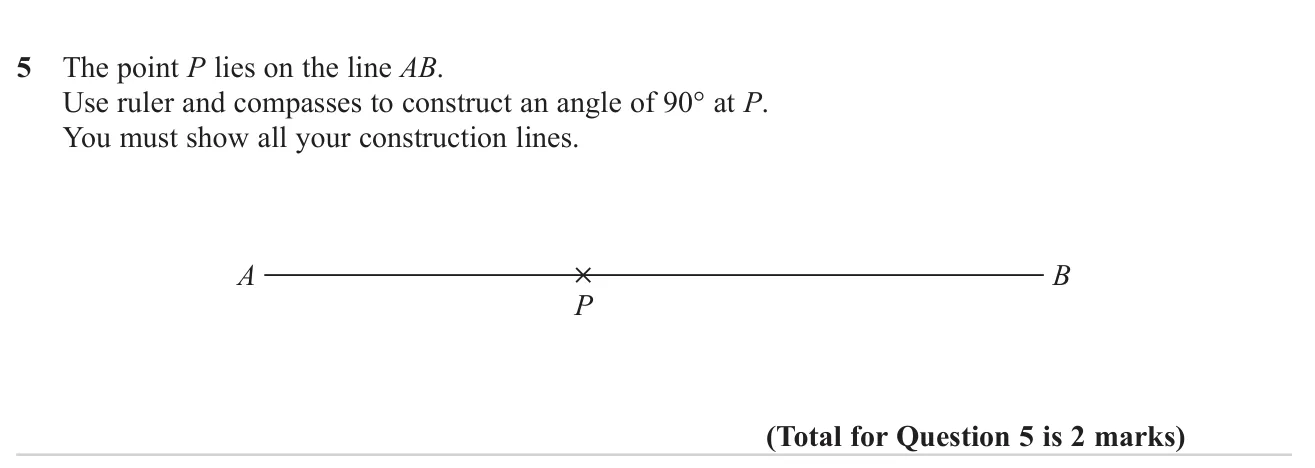
| Answer | Perpendicular to AB through P, with construction arcs shown | 2 marks |
|---|
Worked solution Checked against the mark scheme
With compasses centred on P, mark two points on AB the same distance either side of P.
Widen the compasses. From each of those two points draw arcs above the line that cross.
Join P to the crossing point with a ruler. This line meets AB at 90∘. Leave all arcs showing.
Watch out: Drawing the right angle with a protractor and no arcs.
© Pearson Education Ltd. November 2023 Paper 1 (Higher, non-calculator), question 6.
Show answer
Worked solution Checked against the mark scheme
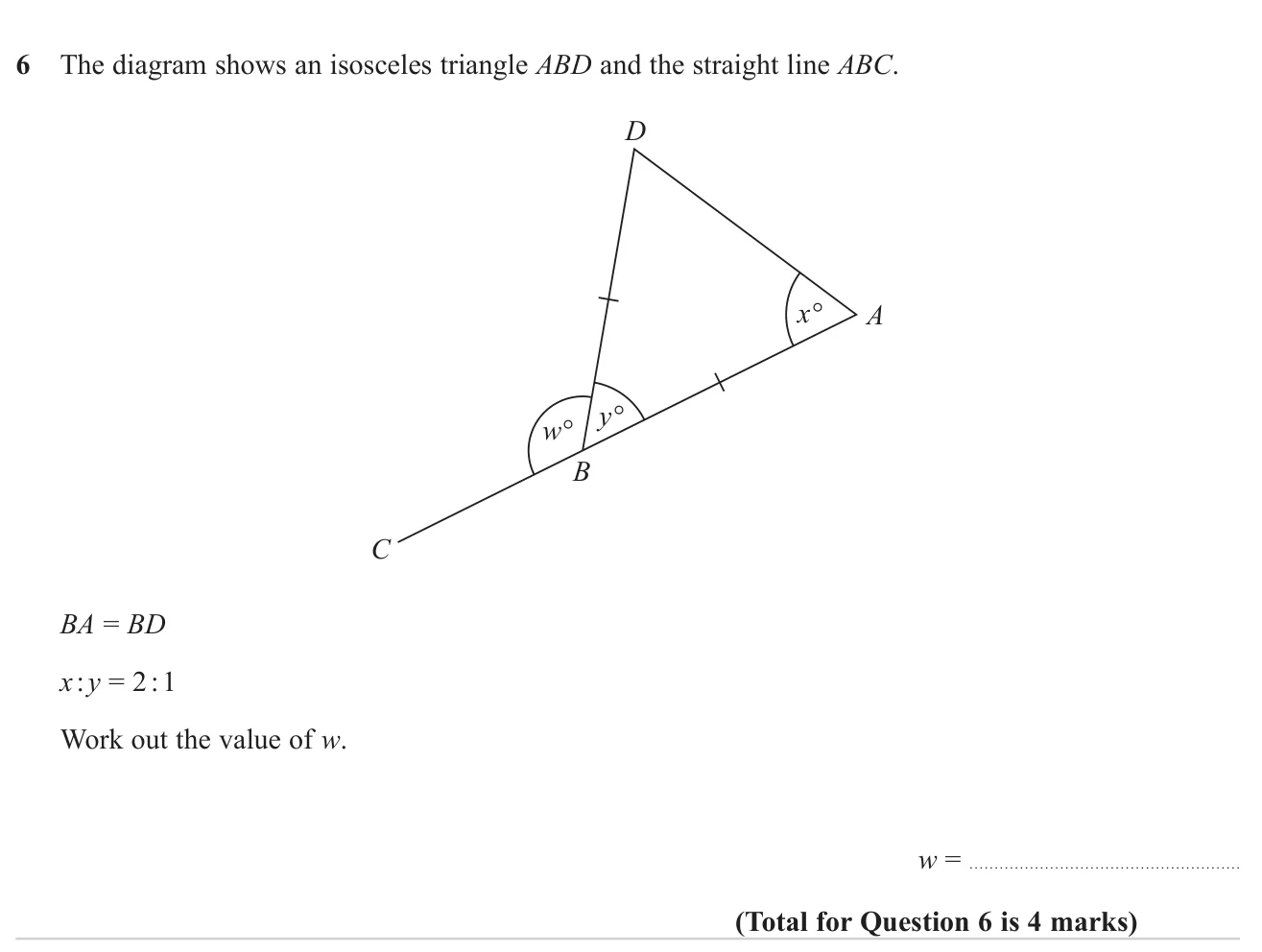
BA = BD, so the angles at A and D are equal: both are x.
Angles in the triangle: x+x+y=180. With x=2y: 5y=180, so y=36.
Angles on a straight line: w=180−36=144
Watch out: Treating x as the angle at B and the apex angle as x.
© Pearson Education Ltd. November 2023 Paper 1 (Higher, non-calculator), question 7.
Show answer
Worked solution Checked against the mark scheme
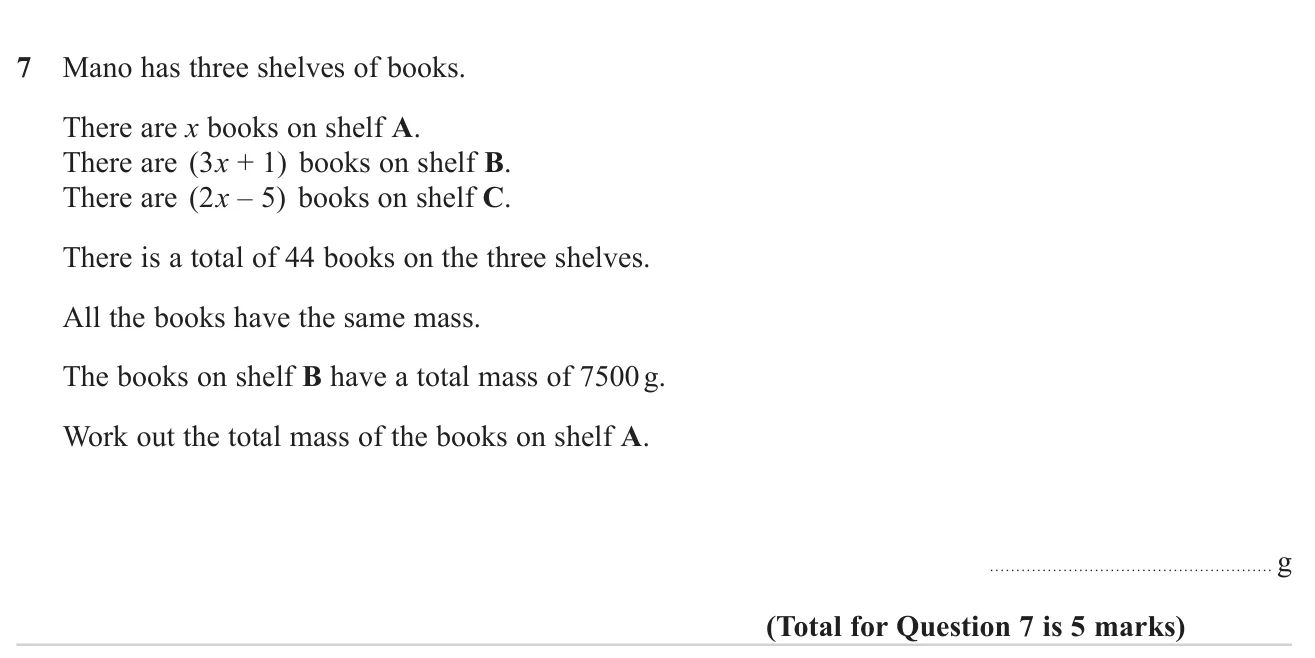
x+3x+1+2x−5=44, so 6x−4=44, 6x=48, x=8
Shelf B: 3×8+1=25 books, so one book is 7500÷25=300 g
Shelf A: 8×300=2400 g
Watch out: Dividing 7500 by 8 (shelf A) instead of by the number on shelf B.
© Pearson Education Ltd. November 2023 Paper 1 (Higher, non-calculator), question 8.
Show answer
Worked solution Checked against the mark scheme
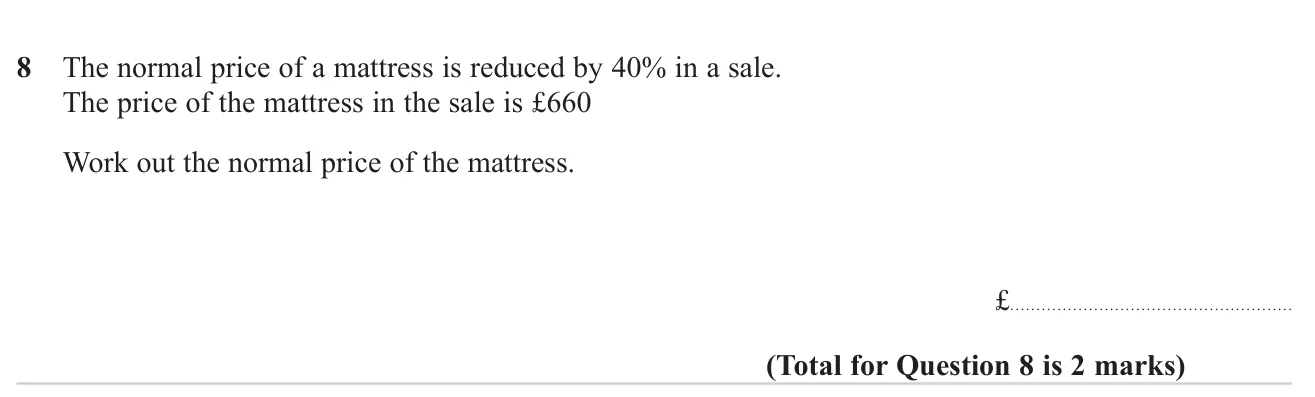
The sale price is 100%−40%=60% of the normal price.
60% is £660, so 1% is £11 and 100% is £1100
Watch out: Adding 40% of 660 to get £924.
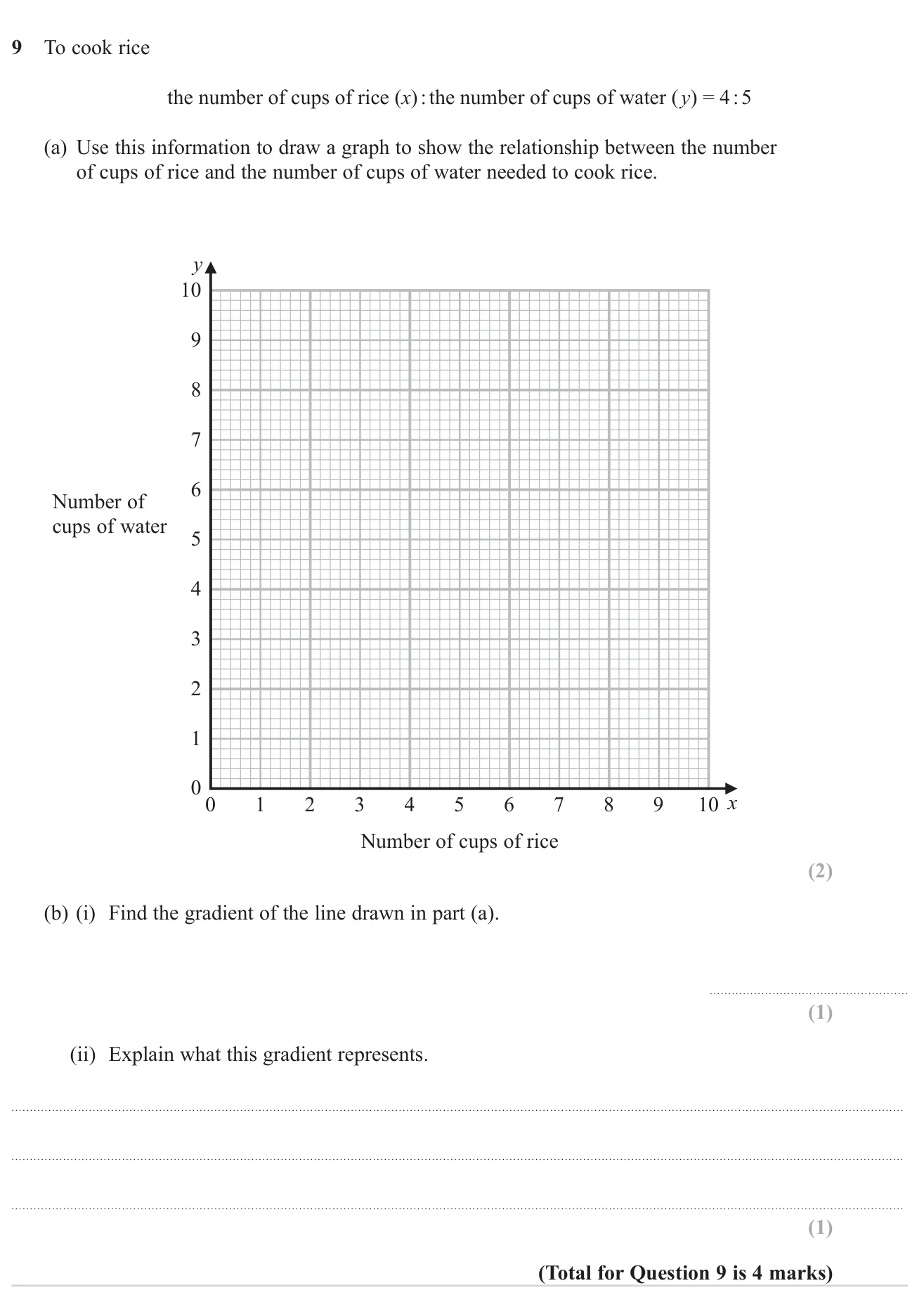
© Pearson Education Ltd. November 2023 Paper 1 (Higher, non-calculator), question 9.
Show answer
| (a) | Straight line through (0,0), (4,5) and (8,10) | 2 marks |
|---|
| (b(i)) | 1.25 | 1 mark |
|---|
| (b(ii)) | The number of cups of water needed for each cup of rice | 1 mark |
|---|
Worked solution Checked against the mark scheme
(a) 4 cups of rice need 5 cups of water, and 0 need 0. Plot (0,0), (4,5) and (8,10) and join with a ruler.
(b)(i) Gradient =runrise=45=1.25
(b)(ii) It is the number of cups of water used for every cup of rice.
Watch out: Interpreting the gradient the wrong way round (cups of rice per cup of water).
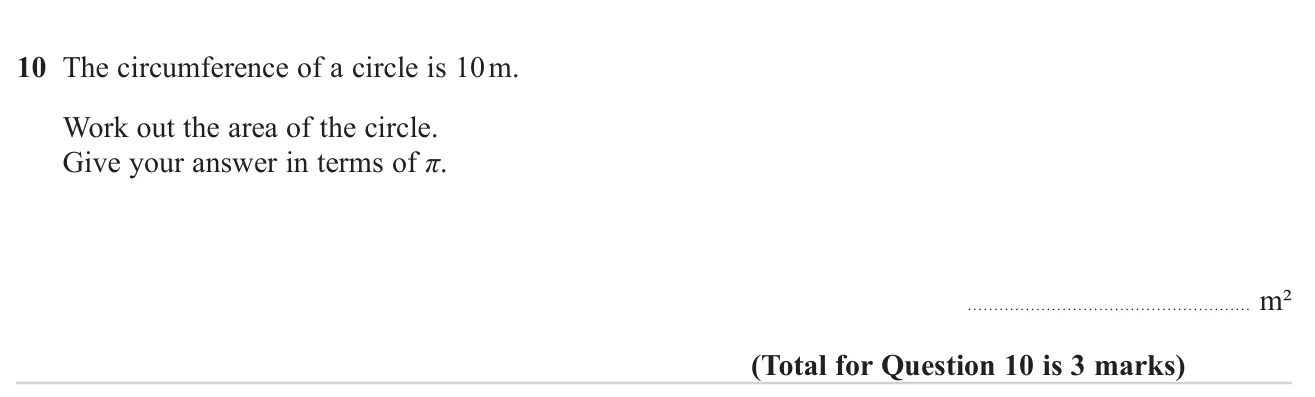
© Pearson Education Ltd. November 2023 Paper 1 (Higher, non-calculator), question 10.
Show answer
| Answer | π25 m² | 3 marks |
|---|
Worked solution Checked against the mark scheme
2πr=10, so r=π5
Area =πr2=π×π225=π25 m²
Watch out: Using 10 as the diameter in the area formula, or writing the answer as 25π.
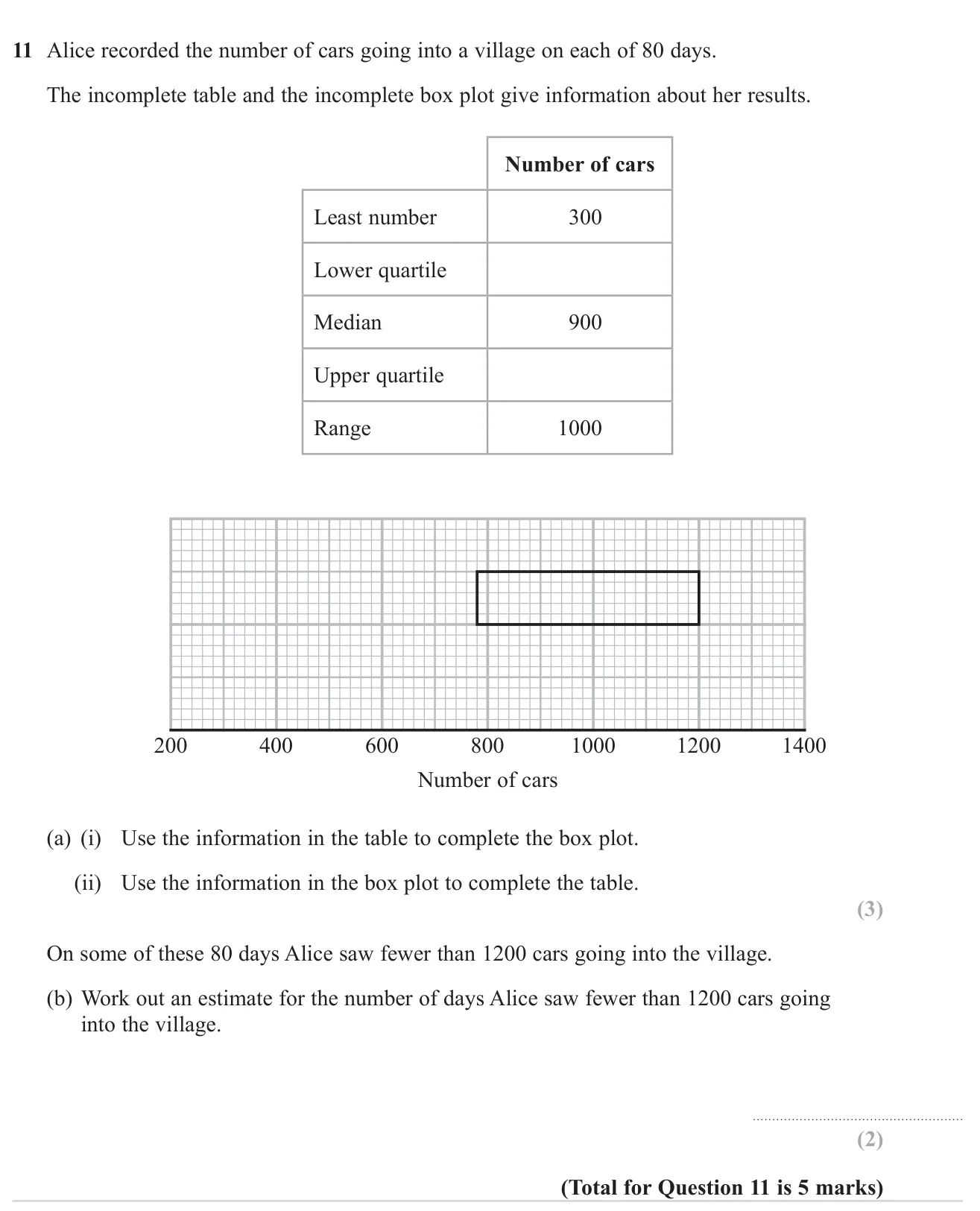
© Pearson Education Ltd. November 2023 Paper 1 (Higher, non-calculator), question 11.
Show answer
| (a) | Box plot: median line at 900, whiskers to 300 and 1300. Table: lower quartile 780, upper quartile 1200 | 3 marks |
|---|
| (b) | 60 | 2 marks |
|---|
Worked solution Checked against the mark scheme
(a) Greatest value =300+1000=1300. Draw whiskers from the box to 300 and 1300, and a line in the box at 900.
Reading the box: lower quartile =780, upper quartile =1200
(b) 1200 is the upper quartile, so about 43 of the days were below it: 43×80=60
Watch out: Drawing the top whisker to 1000 (the range) instead of 1300.
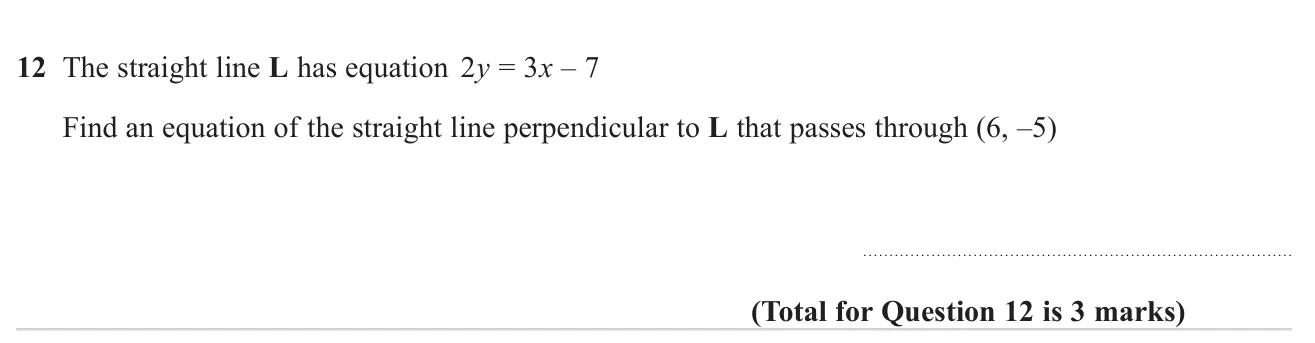
© Pearson Education Ltd. November 2023 Paper 1 (Higher, non-calculator), question 12.
Show answer
| Answer | y=−32x−1 | 3 marks |
|---|
Worked solution Checked against the mark scheme
Rearrange: y=23x−27, so the gradient of L is 23
Perpendicular gradient: −32
−5=−32×6+c=−4+c, so c=−1
y=−32x−1
Watch out: Taking the gradient as 3 without dividing by 2 first.
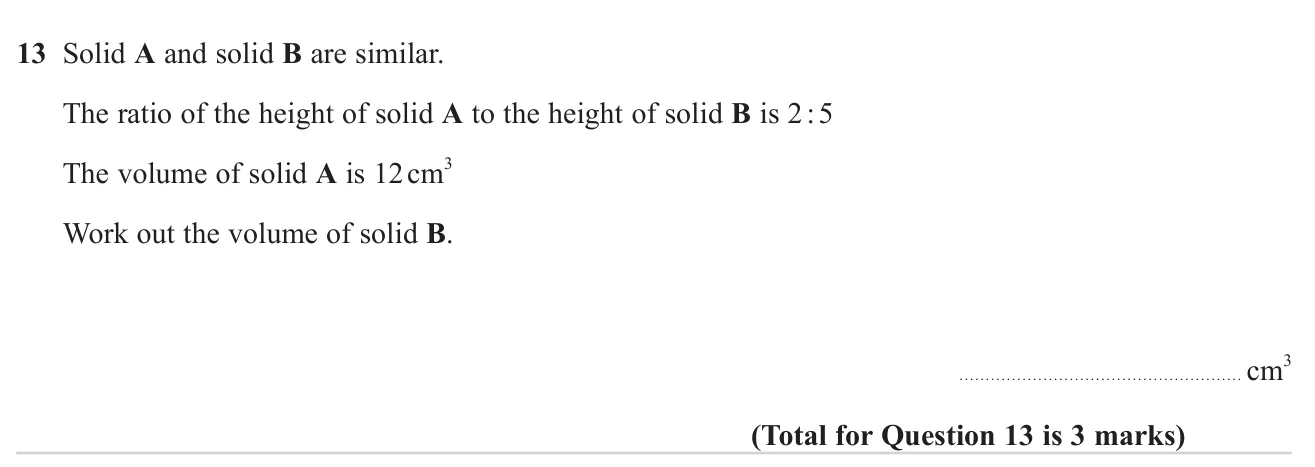
© Pearson Education Ltd. November 2023 Paper 1 (Higher, non-calculator), question 13.
Show answer
| Answer | 187.5 cm³ | 3 marks |
|---|
Worked solution Checked against the mark scheme
Length scale factor =25=2.5, so the volume scale factor is 2.53=8125
Volume of B =12×8125=1.5×125=187.5 cm³
Watch out: Multiplying by 2.5 (the length scale factor) instead of 2.5³.
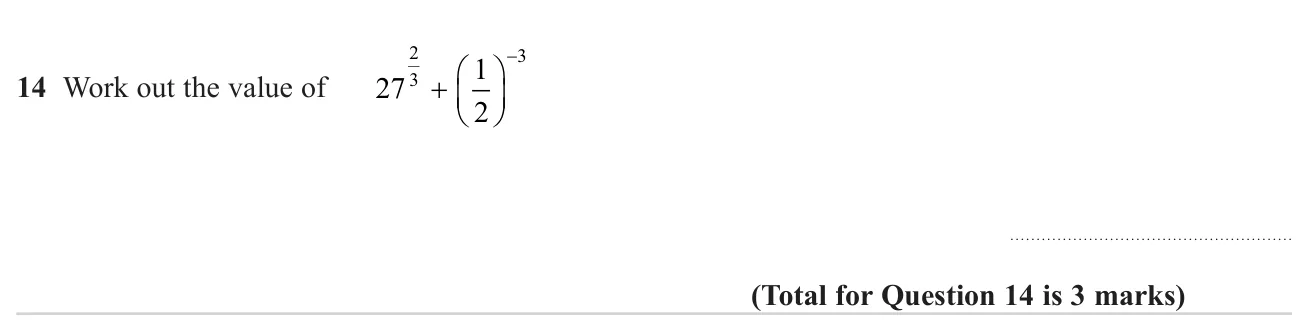
© Pearson Education Ltd. November 2023 Paper 1 (Higher, non-calculator), question 14.
Show answer
Worked solution Checked against the mark scheme
2732=(327)2=32=9
(21)−3=23=8
9+8=17
Watch out: Treating the negative power as making the answer negative, e.g. −8.
© Pearson Education Ltd. November 2023 Paper 1 (Higher, non-calculator), question 15.
Show answer
| Answer | 25 (accept 22 to 28) | 3 marks |
|---|
Worked solution Checked against the mark scheme
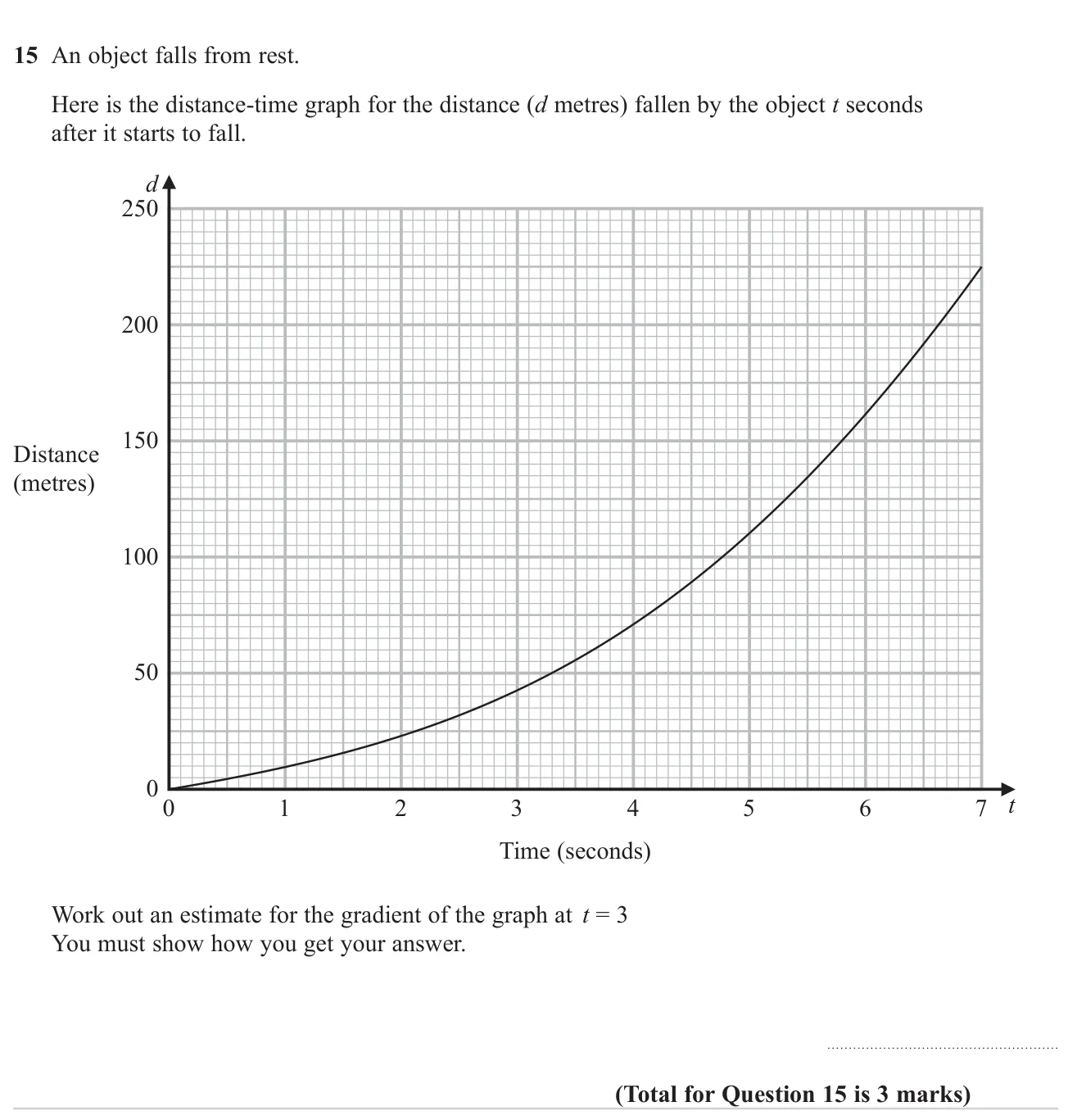
Draw a tangent touching the curve at t=3 (where d≈42).
Pick two points on the tangent, for example (2,17) and (4,67).
Gradient ≈4−267−17=250=25 (metres per second)
Watch out: Using a chord from the origin (42 ÷ 3) instead of a tangent.
© Pearson Education Ltd. November 2023 Paper 1 (Higher, non-calculator), question 16.
Show answer
| (a) | 4.5 million | 3 marks |
|---|
| (b) | Yes: the new value of k is 1.05, which is greater than 1 | 1 mark |
|---|
Worked solution Checked against the mark scheme
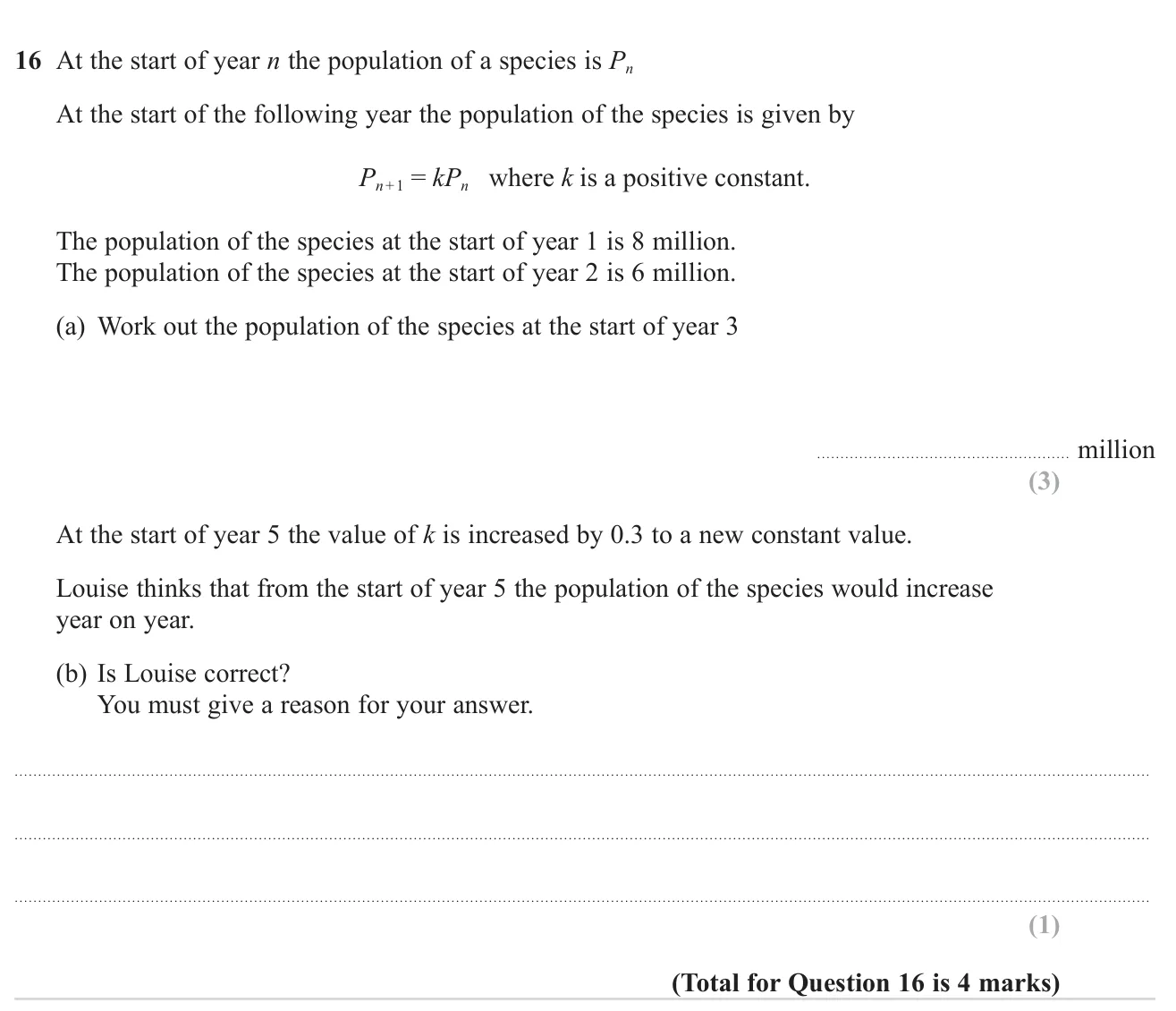
(a) P2=kP1: 6=8k, so k=0.75
P3=0.75×6=4.5 million
(b) New k=0.75+0.3=1.05. Multiplying by a number greater than 1 each year makes the population grow, so Louise is correct.
Watch out: In (b), just saying 'yes because k increased' without noting it is now above 1.
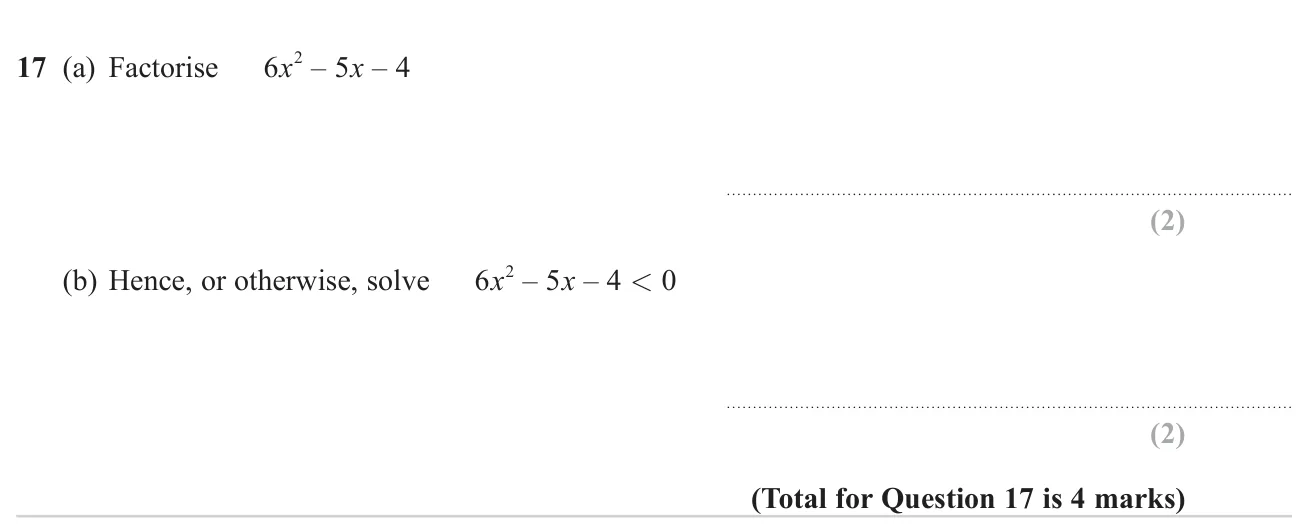
© Pearson Education Ltd. November 2023 Paper 1 (Higher, non-calculator), question 17.
Show answer
| (a) | (2x+1)(3x−4) | 2 marks |
|---|
| (b) | −21<x<34 | 2 marks |
|---|
Worked solution Checked against the mark scheme
(a) 6×(−4)=−24; use −8 and 3: 6x2−8x+3x−4=2x(3x−4)+(3x−4)=(2x+1)(3x−4)
(b) Critical values: x=−21 and x=34
The graph is a U shape, so it is below zero between the roots: −21<x<34
Watch out: Giving the outside region (x < −1/2 or x > 4/3) for a 'less than 0' inequality.
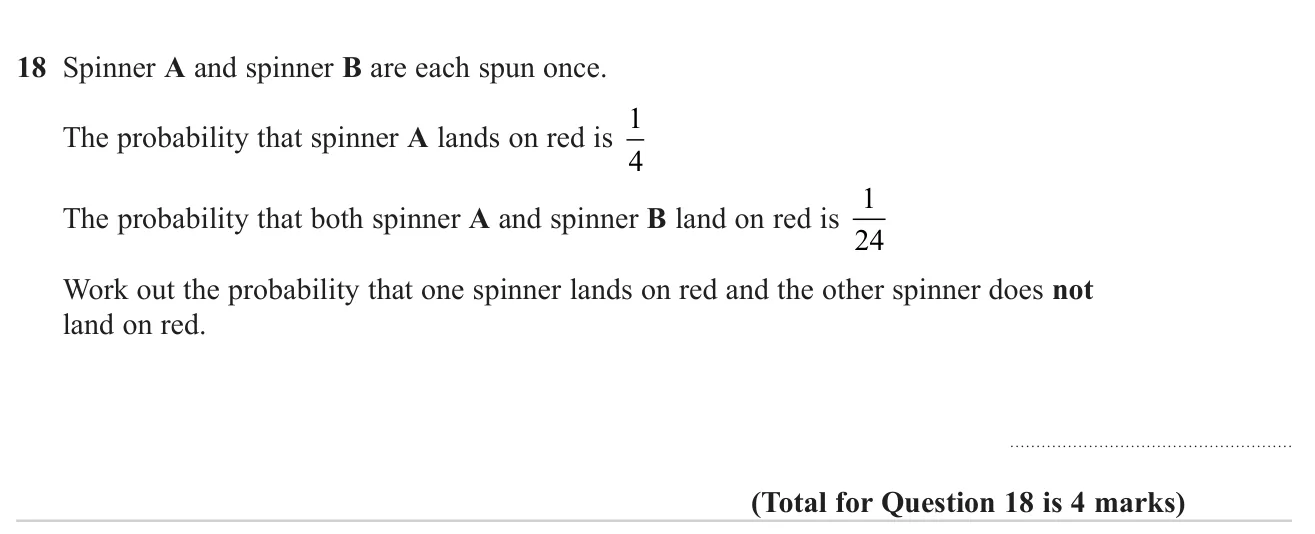
© Pearson Education Ltd. November 2023 Paper 1 (Higher, non-calculator), question 18.
Show answer
| Answer | 31 | 4 marks |
|---|
Worked solution Checked against the mark scheme
41×P(B)=241, so P(B)=61
A red, B not: 41×65=245
A not, B red: 43×61=243
Total: 245+243=248=31
Watch out: Including only one of the two ways of getting exactly one red.
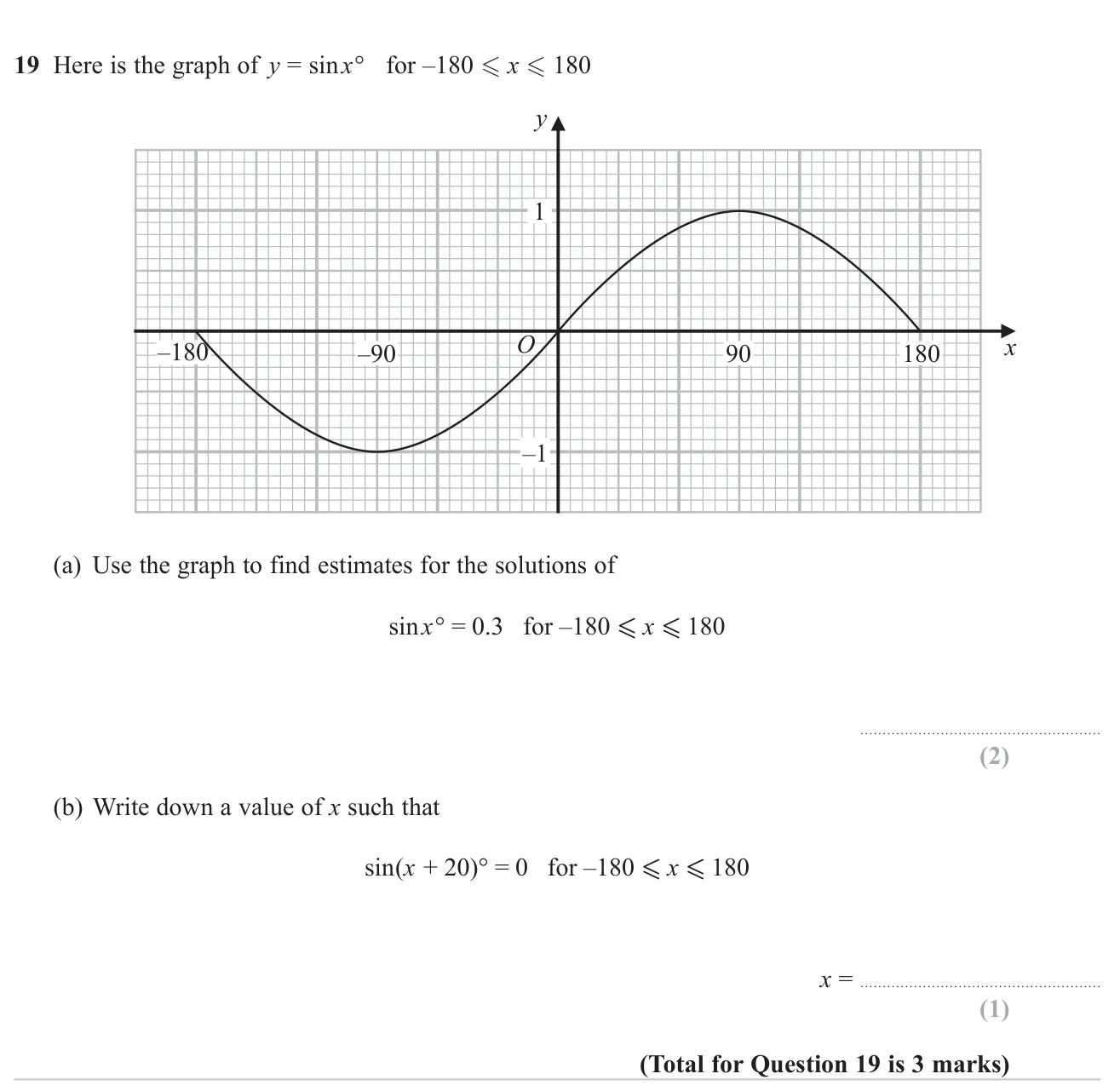
© Pearson Education Ltd. November 2023 Paper 1 (Higher, non-calculator), question 19.
Show answer
| (a) | x≈18 and x≈162 | 2 marks |
|---|
| (b) | −20 or 160 | 1 mark |
|---|
Worked solution Checked against the mark scheme
(a) Draw y=0.3 across the graph. It meets the curve twice, at about x=18 and x=180−18=162.
(b) sinθ=0 when θ=0 or 180. So x+20=0 gives x=−20 (or x+20=180 gives x=160).
Watch out: Finding only one solution in (a), missing the symmetry about x = 90.
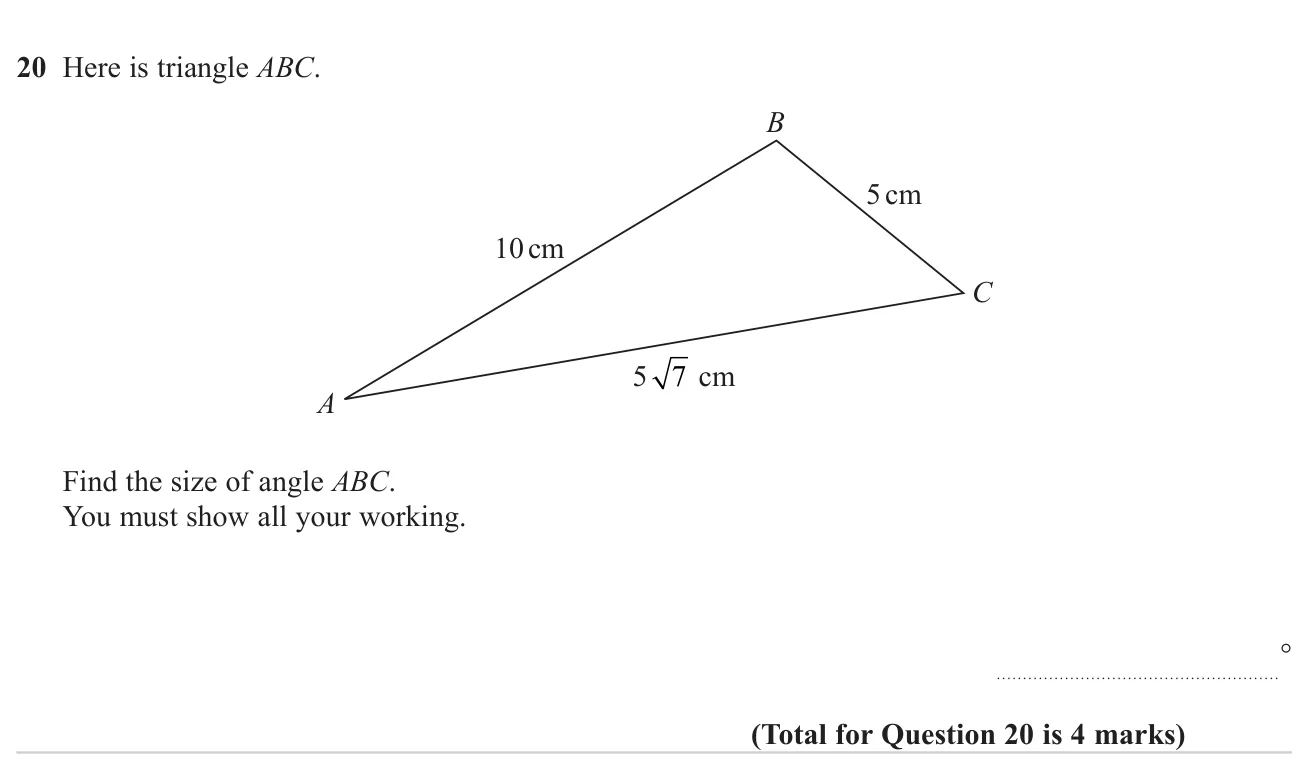
© Pearson Education Ltd. November 2023 Paper 1 (Higher, non-calculator), question 20.
Show answer
| Answer | 120° | 4 marks |
|---|
Worked solution Checked against the mark scheme
(57)2=25×7=175
cosB=2×10×5102+52−175=100125−175=−21
cos60°=21, so B=180°−60°=120°
Watch out: Squaring 5√7 as 35 or 5 × 49.
© Pearson Education Ltd. November 2023 Paper 1 (Higher, non-calculator), question 21.
Show answer
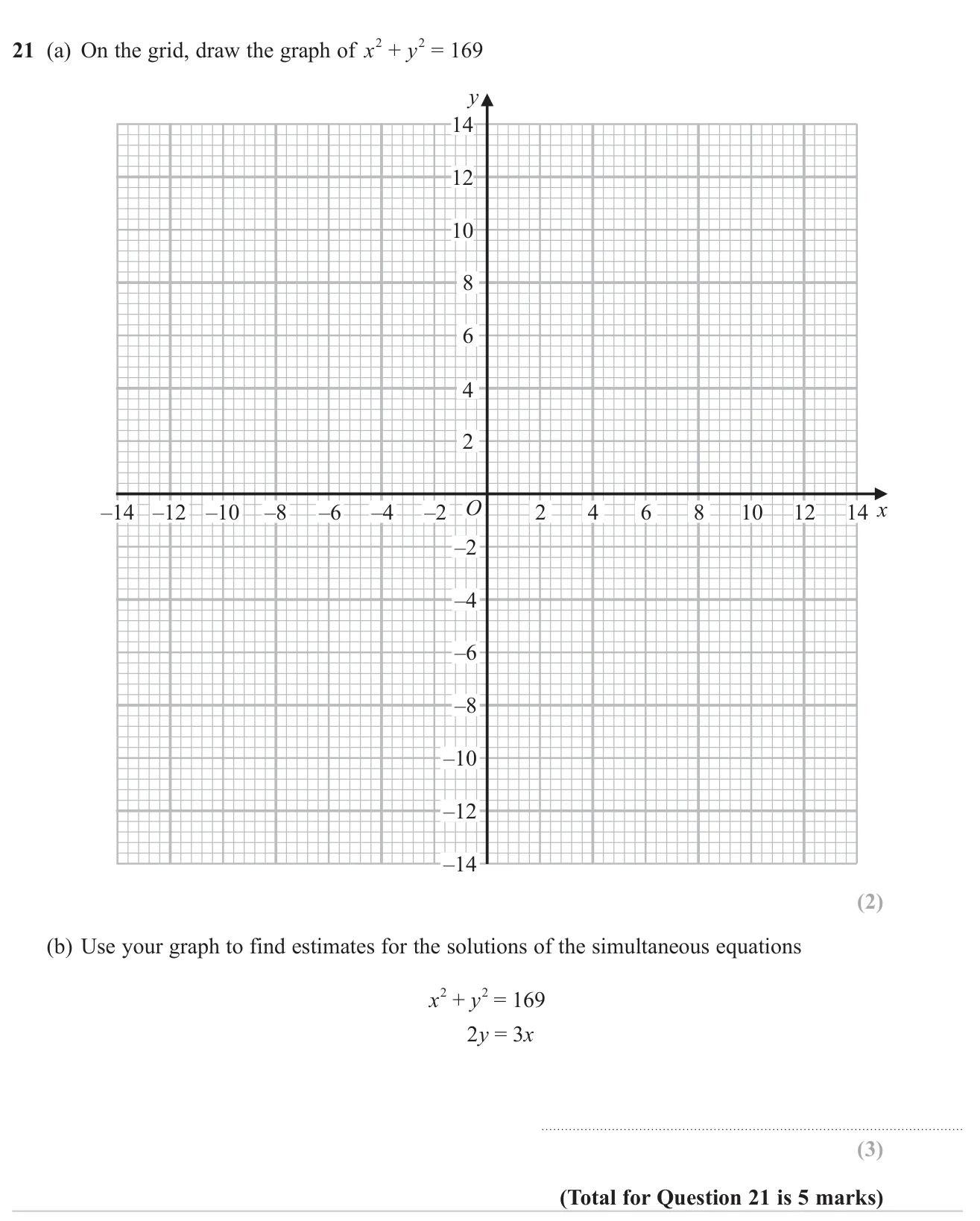
| (a) | Circle with centre (0,0) and radius 13 | 2 marks |
|---|
| (b) | x=7.2,y=10.8 and x=−7.2,y=−10.8 | 3 marks |
|---|
Worked solution Checked against the mark scheme
(a) x2+y2=169 is a circle centred at the origin with radius 169=13.
(b) Draw y=1.5x through (0,0), (4,6) and (8,12).
It crosses the circle at about (7.2,10.8) and (−7.2,−10.8).
Check: x2(1+2.25)=169 gives x2=52, x≈7.21
Watch out: Using 169 as the radius, or giving x values without matching y values.
Question 22
Surds4 marksGrade 9No calculator © Pearson Education Ltd. November 2023 Paper 1 (Higher, non-calculator), question 22.
Show answer
| Answer | 3+2 | 4 marks |
|---|
Worked solution Checked against the mark scheme
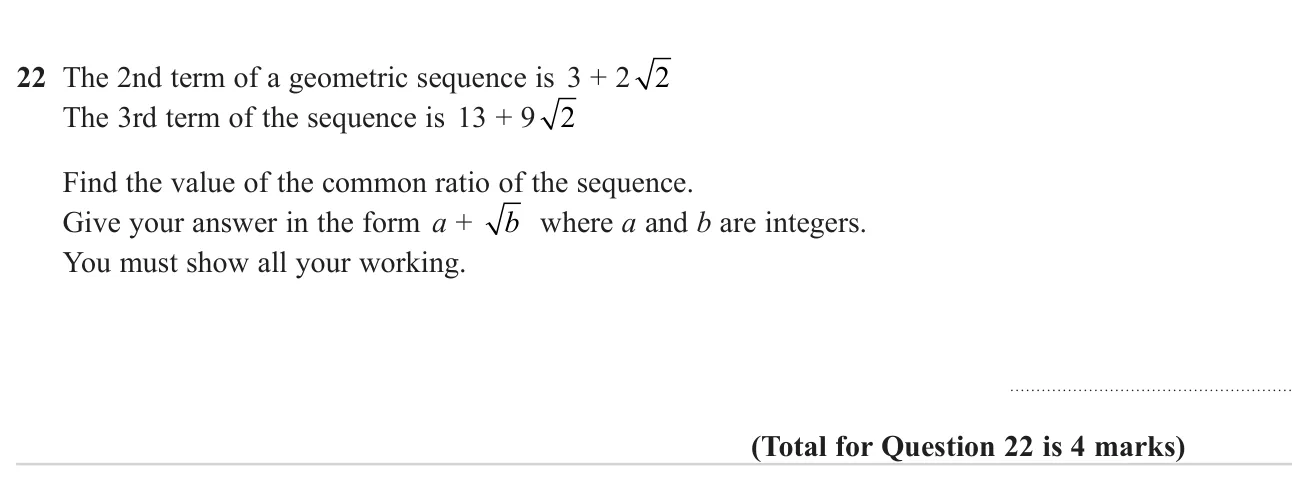
r=3+2213+92×3−223−22
Numerator: 39−262+272−36=3+2
Denominator: 9−8=1
So r=3+2
Watch out: Dividing the 2nd term by the 3rd (upside down), or errors with 2×2.
Finished the paper?
Add up your marks for all three papers and see what grade that would have been.