© Pearson Education Ltd. November 2024 Paper 3 (Foundation, calculator), question 1.
Show answer
Worked solution Checked against the mark scheme
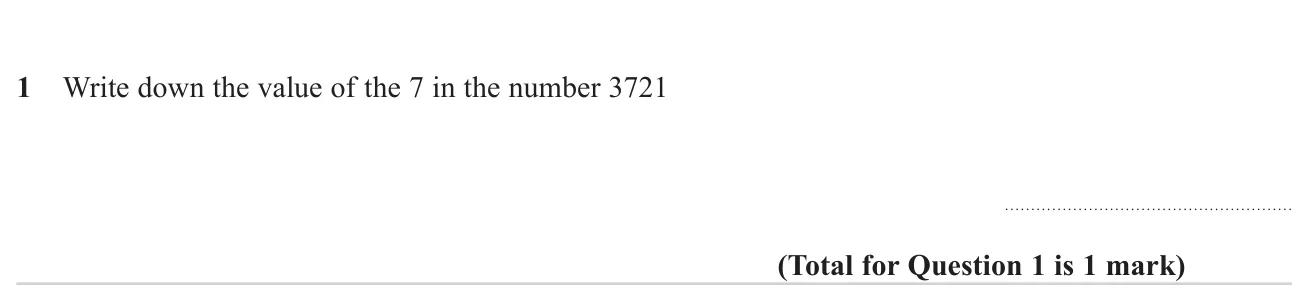
In 3721 the 7 is in the hundreds column.
So it is worth 7×100=700.
Watch out: Writing 7 or 70 instead of 700.
© Pearson Education Ltd. November 2024 Paper 3 (Foundation, calculator), question 2.
Show answer
Worked solution Checked against the mark scheme
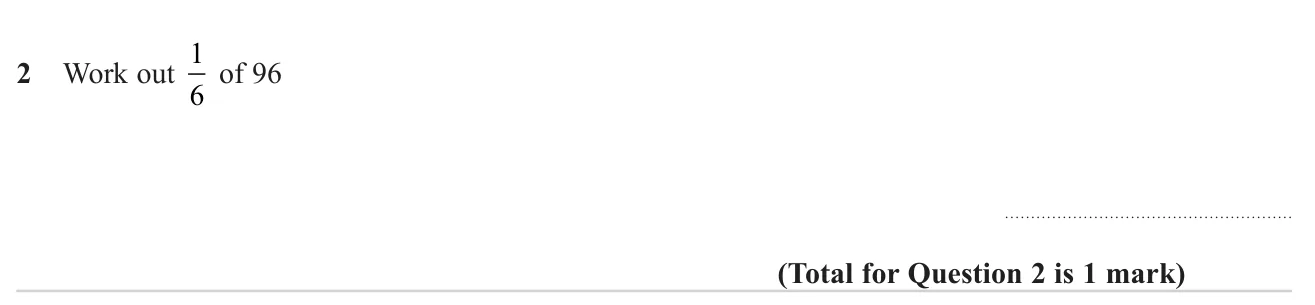
To find 61 of 96, divide by 6.
96÷6=16
Watch out: Multiplying by 6 instead of dividing.
© Pearson Education Ltd. November 2024 Paper 3 (Foundation, calculator), question 3.
Show answer
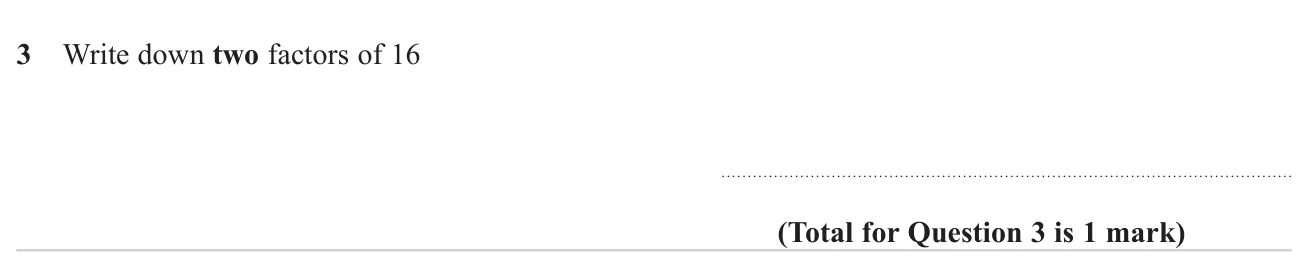
| Answer | Any two of 1,2,4,8,16 | 1 mark |
|---|
Worked solution Checked against the mark scheme
Factor pairs of 16: 1×16, 2×8, 4×4.
So the factors are 1, 2, 4, 8 and 16. Any two of these, e.g. 2 and 8.
Watch out: Giving multiples such as 32 instead of factors.
© Pearson Education Ltd. November 2024 Paper 3 (Foundation, calculator), question 4.
Show answer
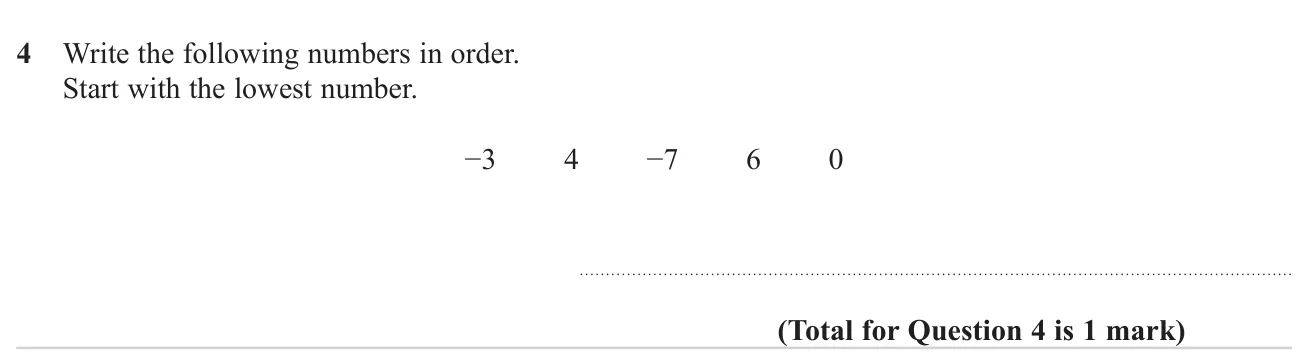
| Answer | −7,−3,0,4,6 | 1 mark |
|---|
Worked solution Checked against the mark scheme
The most negative number is the smallest.
−7<−3<0<4<6
Watch out: Putting −3 before −7 because 3 is smaller than 7.
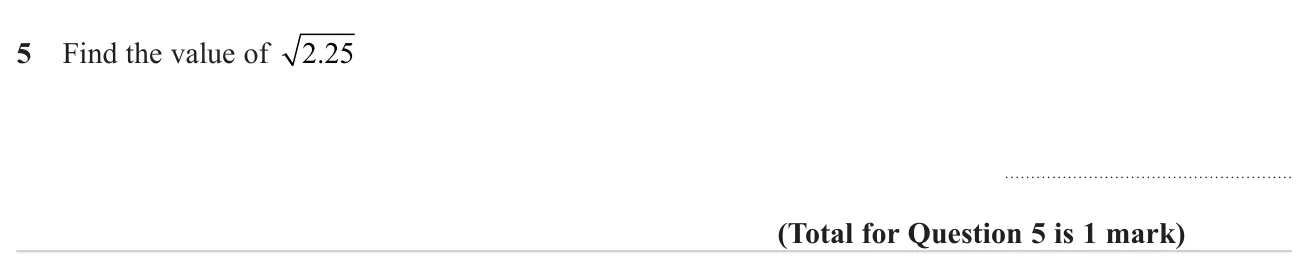
© Pearson Education Ltd. November 2024 Paper 3 (Foundation, calculator), question 5.
Show answer
Worked solution Checked against the mark scheme
1.5×1.5=2.25
So 2.25=1.5
Watch out: Halving 2.25 to get 1.125.
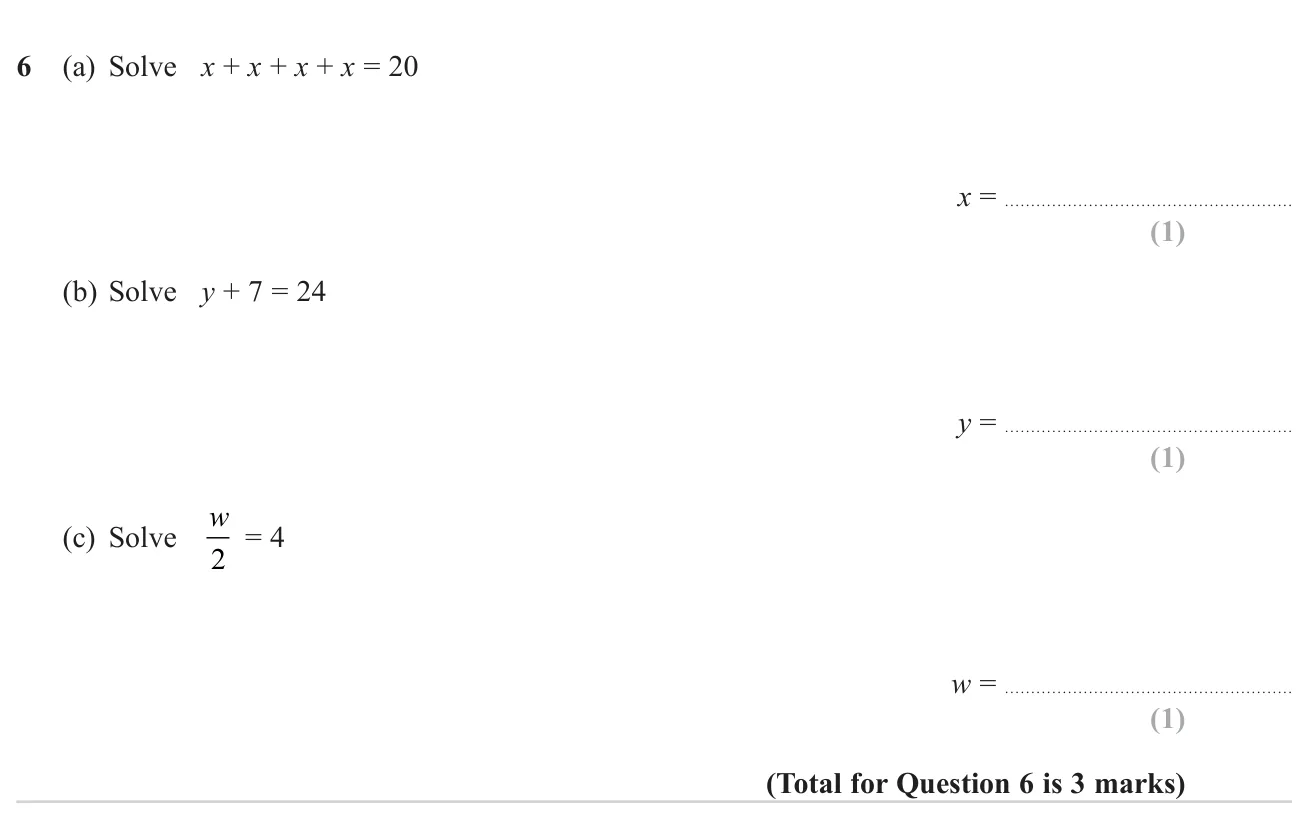
© Pearson Education Ltd. November 2024 Paper 3 (Foundation, calculator), question 6.
Show answer
| (a) | x=5 | 1 mark |
|---|
| (b) | y=17 | 1 mark |
|---|
| (c) | w=8 | 1 mark |
|---|
Worked solution Checked against the mark scheme
(a) 4x=20, so x=20÷4=5
(b) y=24−7=17
(c) w=4×2=8
Watch out: In (c), dividing 4 by 2 to get 2.
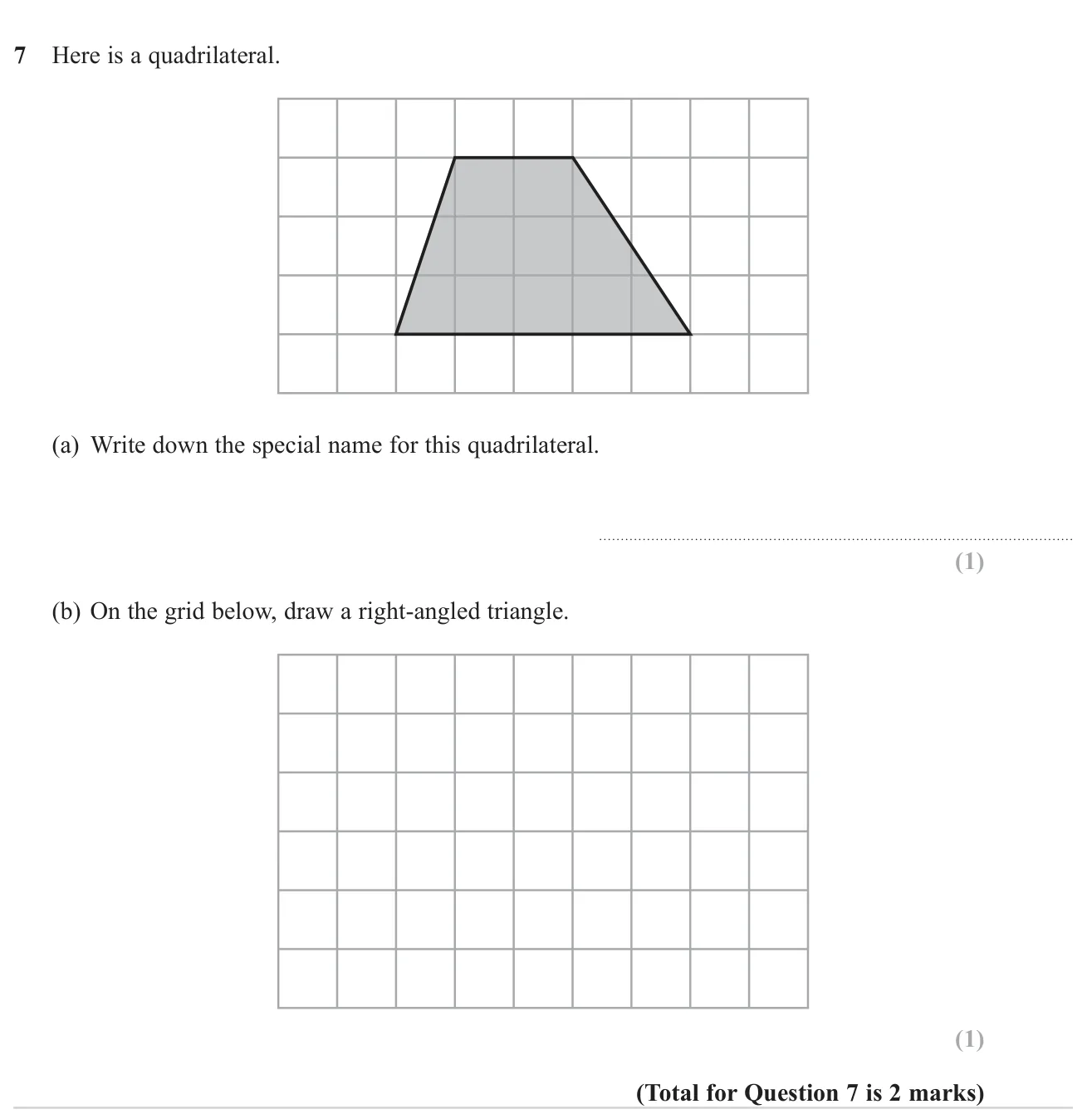
© Pearson Education Ltd. November 2024 Paper 3 (Foundation, calculator), question 7.
Show answer
| (a) | Trapezium | 1 mark |
|---|
| (b) | Any right-angled triangle drawn on the grid | 1 mark |
|---|
Worked solution Checked against the mark scheme
(a) The shape has exactly one pair of parallel sides (top and bottom), so it is a trapezium.
(b) Draw along one horizontal grid line and one vertical grid line from the same point, then join their ends. The grid lines meet at 90°.
Watch out: Calling the shape a parallelogram.
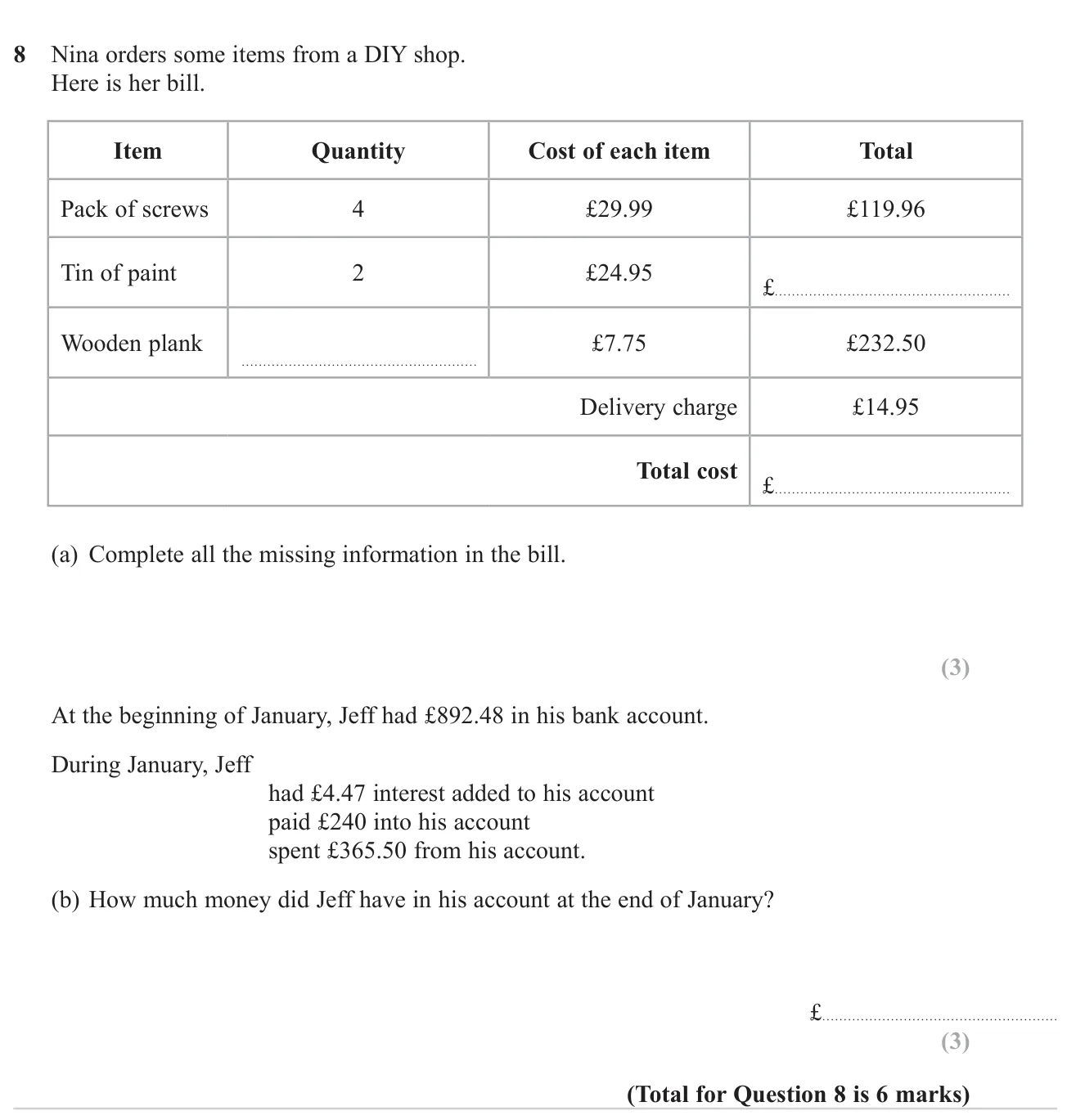
© Pearson Education Ltd. November 2024 Paper 3 (Foundation, calculator), question 8.
Show answer
| (a) | Paint total £49.90; 30 planks; total cost £417.31 | 3 marks |
|---|
| (b) | £771.45 | 3 marks |
|---|
Worked solution Checked against the mark scheme
(a) Paint: 2×24.95=£49.90
Planks: 232.50÷7.75=30
Total: 119.96+49.90+232.50+14.95=£417.31
(b) 892.48+4.47+240−365.50=£771.45
Watch out: Forgetting to include the delivery charge in the total cost.
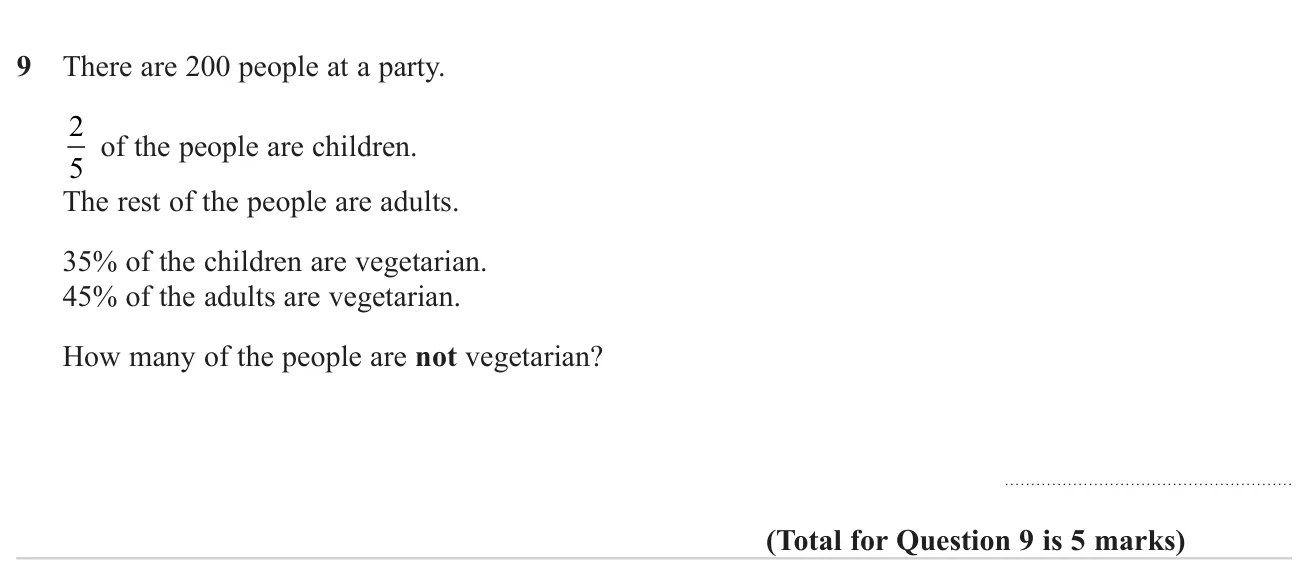
© Pearson Education Ltd. November 2024 Paper 3 (Foundation, calculator), question 9.
Show answer
Worked solution Checked against the mark scheme
Children: 52×200=80, adults: 200−80=120
Vegetarian children: 0.35×80=28
Vegetarian adults: 0.45×120=54
Not vegetarian: 200−28−54=118
Watch out: Stopping at the number of vegetarians (82).
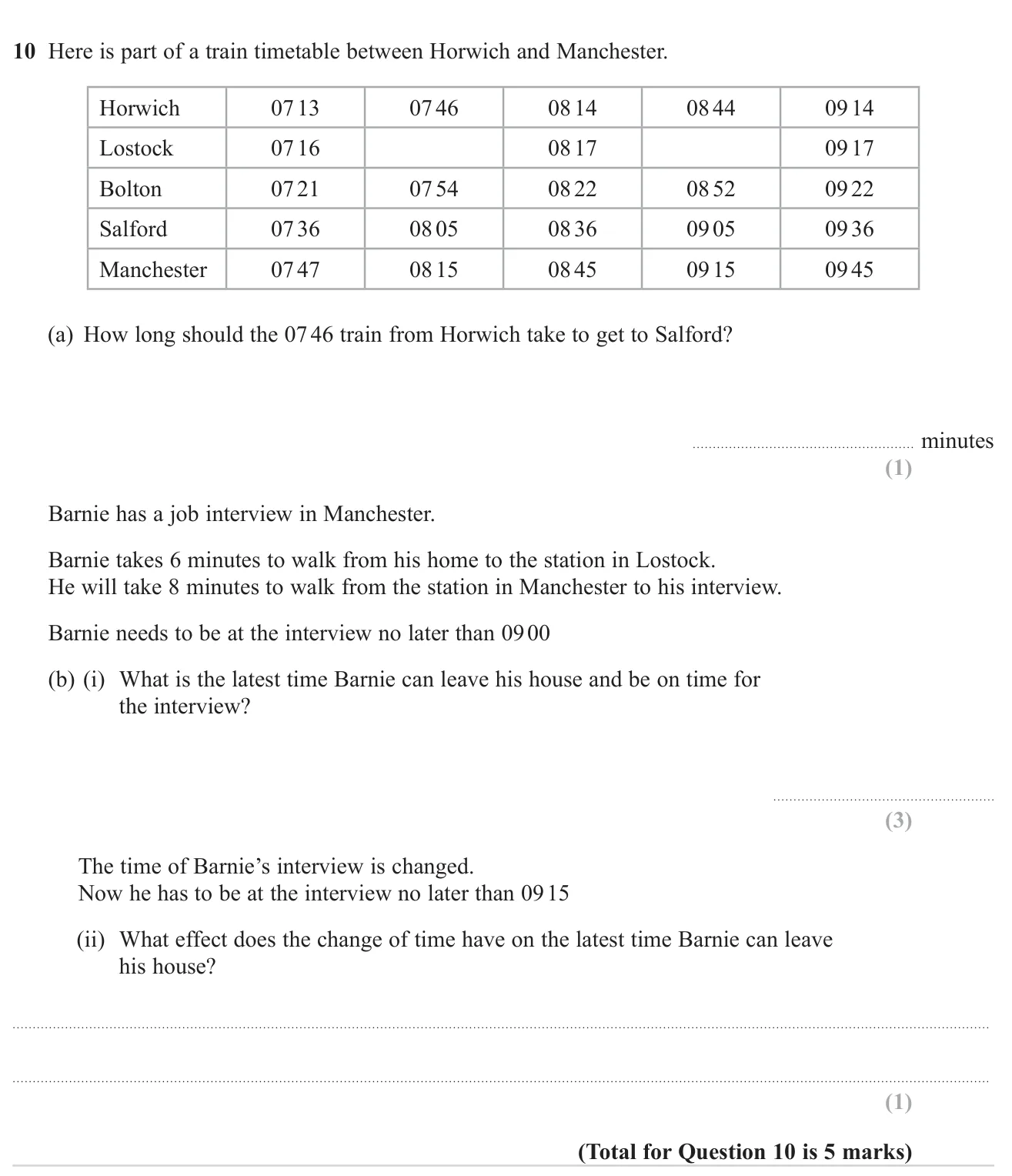
© Pearson Education Ltd. November 2024 Paper 3 (Foundation, calculator), question 10.
Show answer
| (a) | 19 minutes | 1 mark |
|---|
| (b(i)) | 08 11 | 3 marks |
|---|
| (b(ii)) | No effect, because the next train would get him there too late | 1 mark |
|---|
Worked solution Checked against the mark scheme
(a) The 07 46 reaches Salford at 08 05: that is 14 + 5 = 19 minutes.
(b)(i) He must reach Manchester by 0900−8 min =0852. The 08 17 from Lostock arrives at 08 45. Leave home 6 minutes earlier: 08 11.
(ii) The next Lostock train (09 17) reaches Manchester at 09 45, after 09 15, so he still needs the 08 17. No effect.
Watch out: Choosing a train that does not stop at Lostock.
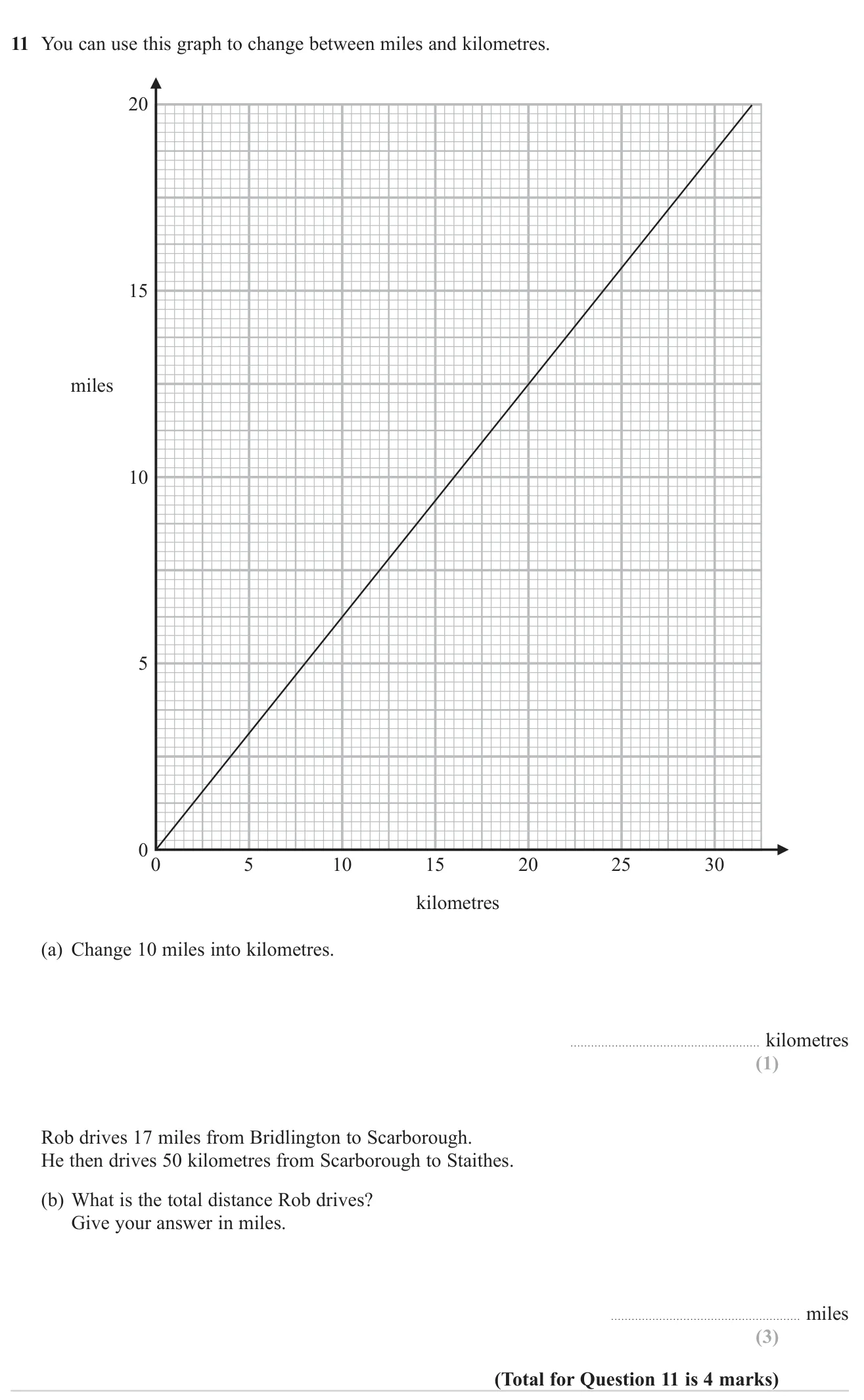
© Pearson Education Ltd. November 2024 Paper 3 (Foundation, calculator), question 11.
Show answer
| (a) | 16 km | 1 mark |
|---|
| (b) | 48 miles (47 to 49.5) | 3 marks |
|---|
Worked solution Checked against the mark scheme
(a) Read across from 10 miles: 16 km.
(b) From the graph, 25 km ≈15.5 miles, so 50 km ≈31 miles.
Total: 17+31=48 miles
Watch out: Adding 17 and 50 without converting the kilometres.
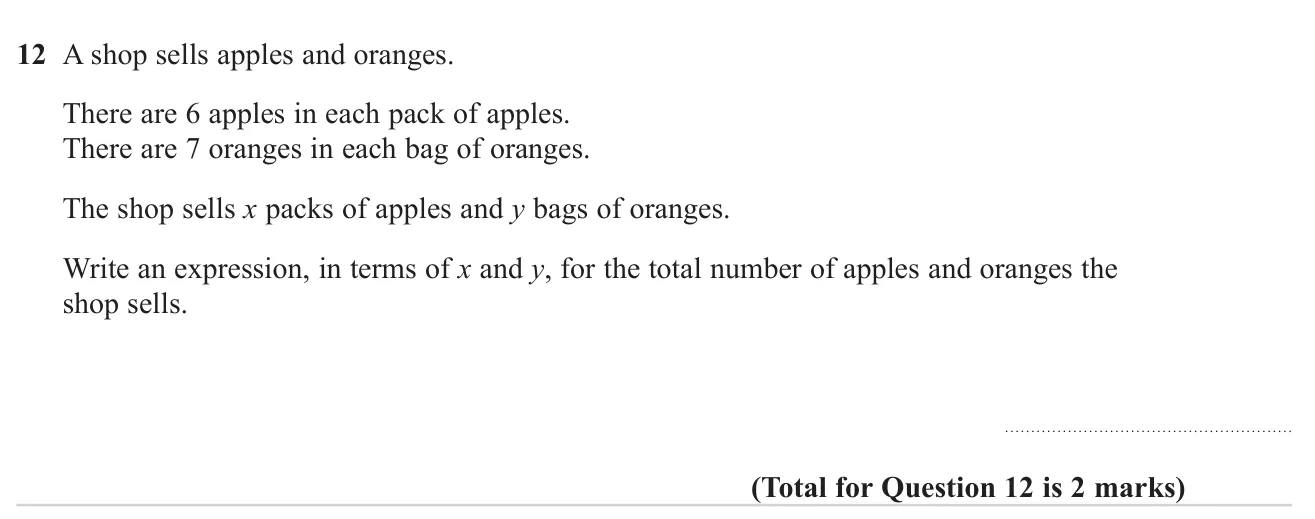
© Pearson Education Ltd. November 2024 Paper 3 (Foundation, calculator), question 12.
Show answer
| Answer | 6x+7y | 2 marks |
|---|
Worked solution Checked against the mark scheme
Each pack has 6 apples, so x packs give 6x apples.
Each bag has 7 oranges, so y bags give 7y oranges.
Total: 6x+7y
Watch out: Writing 13xy by combining unlike terms.
© Pearson Education Ltd. November 2024 Paper 3 (Foundation, calculator), question 13.
Show answer
Worked solution Checked against the mark scheme
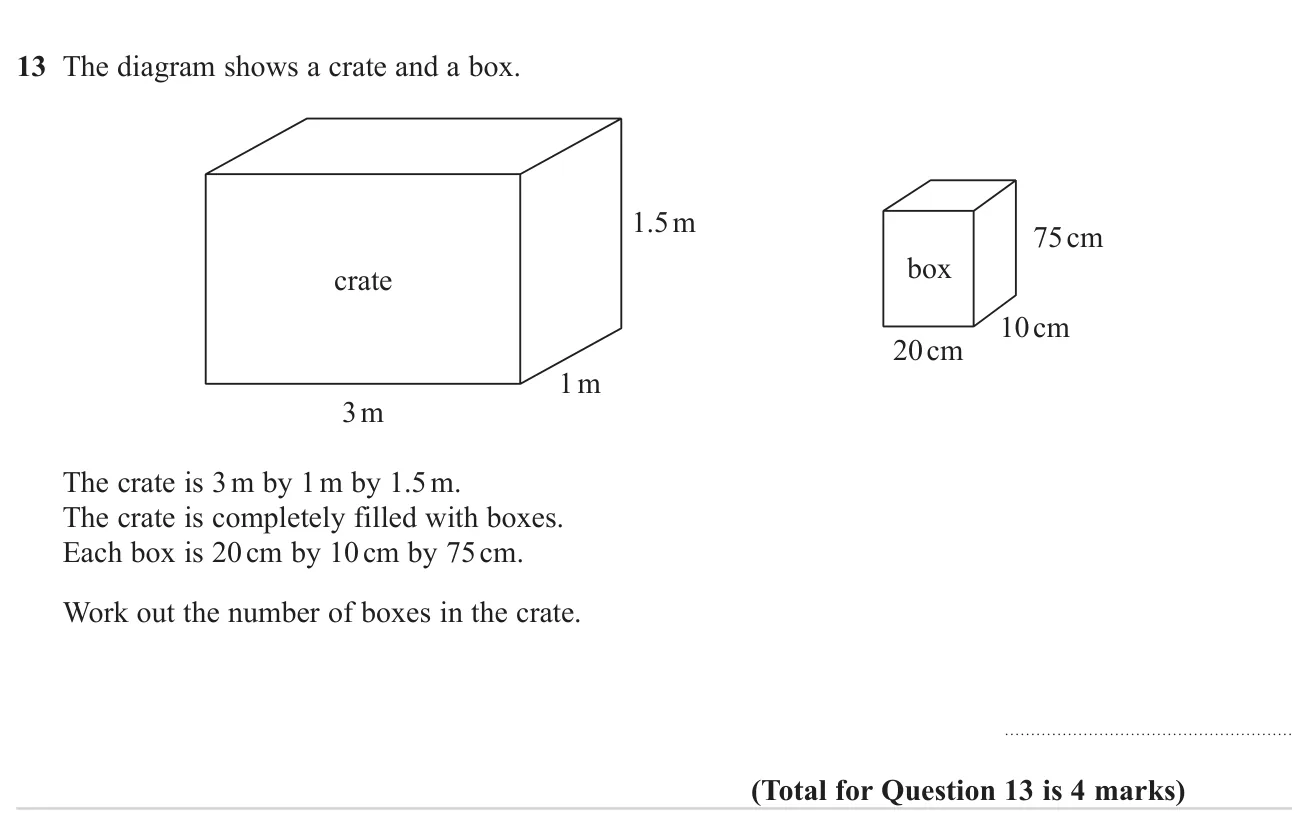
Crate in cm: 300×100×150
300÷20=15, 100÷10=10, 150÷75=2
Boxes: 15×10×2=300
(Check with volumes: 4500000 cm3÷15000 cm3=300 boxes)
Watch out: Mixing metres and centimetres without converting.
© Pearson Education Ltd. November 2024 Paper 3 (Foundation, calculator), question 14.
Show answer
Worked solution Checked against the mark scheme
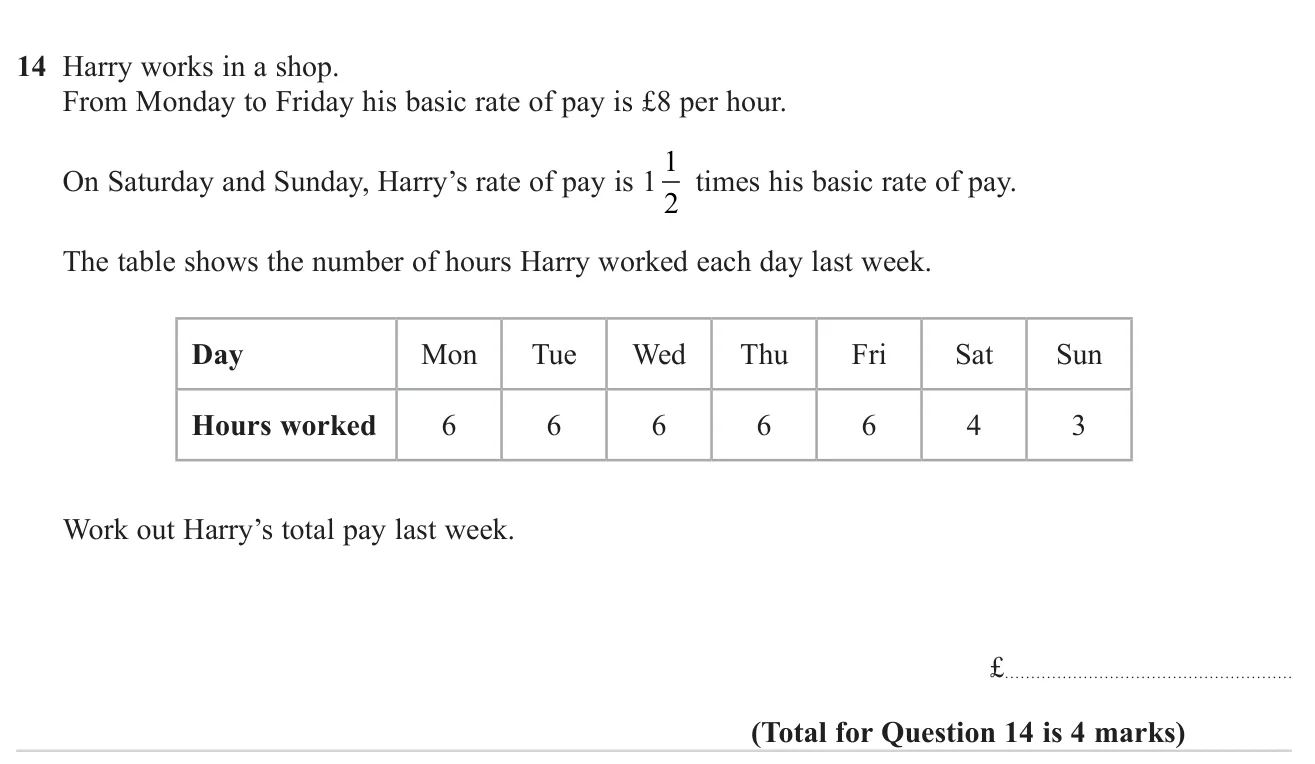
Weekdays: 5×6=30 hours, 30×8=£240
Weekend rate: 1.5×8=£12 per hour
Weekend: (4+3)×12=£84
Total: 240+84=£324
Watch out: Paying all hours at the basic £8 rate.
© Pearson Education Ltd. November 2024 Paper 3 (Foundation, calculator), question 15.
Show answer
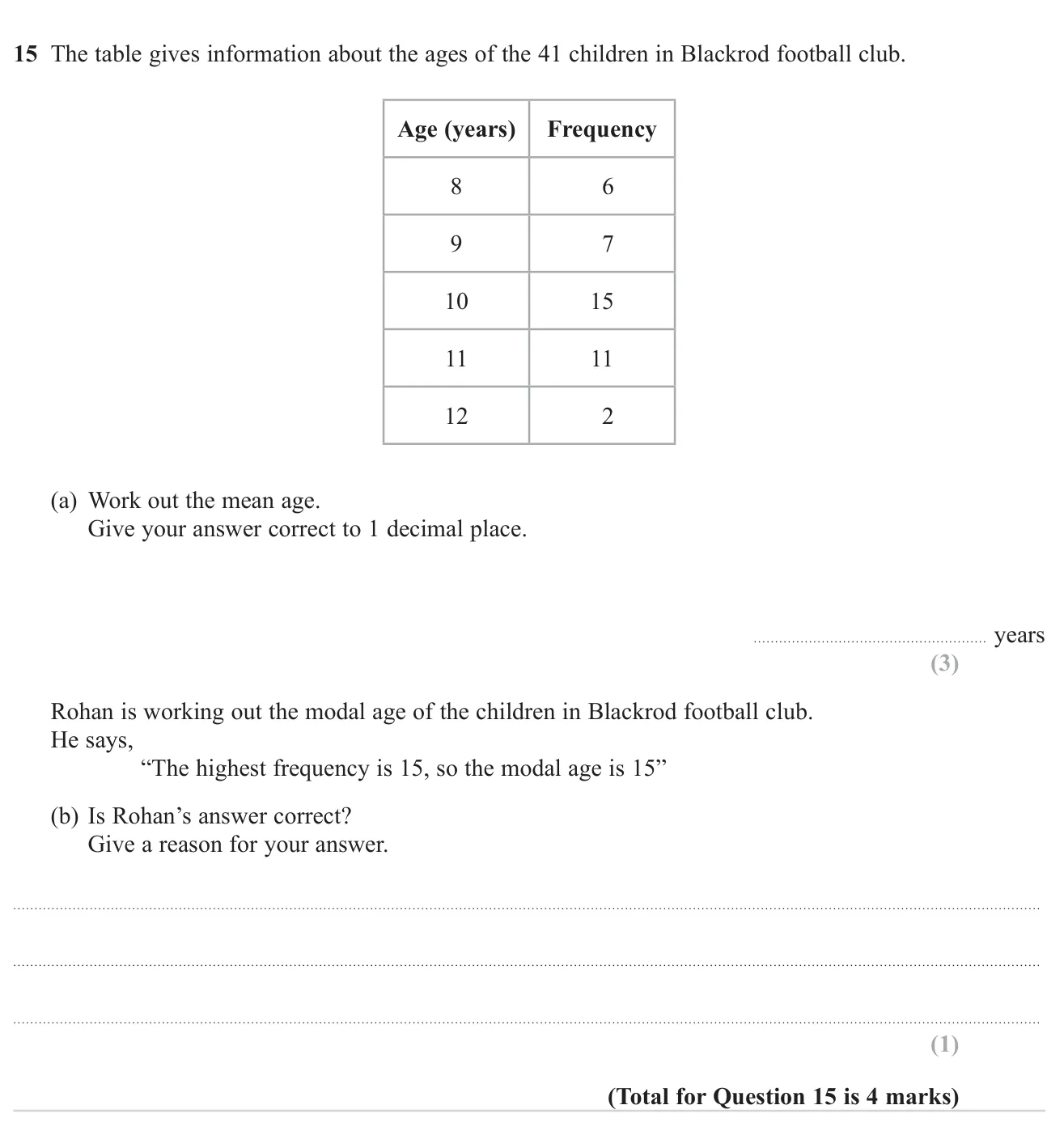
| (a) | 9.9 years | 3 marks |
|---|
| (b) | No: the mode is 10, the age with the highest frequency (15 is a frequency, not an age) | 1 mark |
|---|
Worked solution Checked against the mark scheme
(a) ∑fx=48+63+150+121+24=406
Mean =406÷41=9.90...≈9.9 years
(b) No. 15 is how many children there are, not an age. The modal age is 10.
Watch out: Dividing by 5 (the number of rows) instead of 41.
© Pearson Education Ltd. November 2024 Paper 3 (Foundation, calculator), question 16.
Show answer
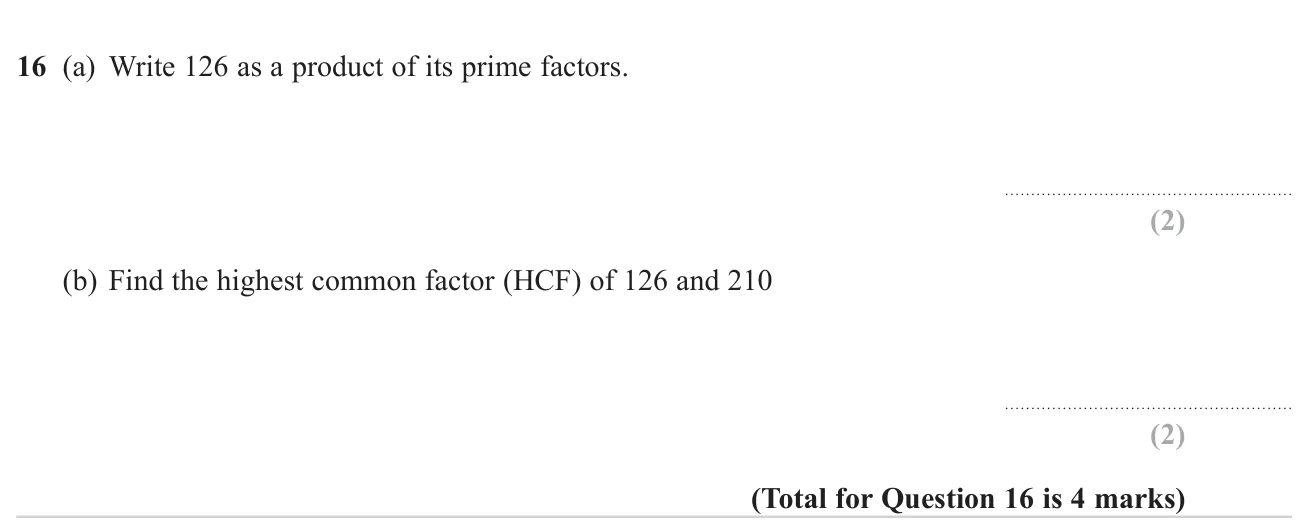
| (a) | 2×32×7 | 2 marks |
|---|
| (b) | 42 | 2 marks |
|---|
Worked solution Checked against the mark scheme
(a) 126=2×63=2×7×9=2×32×7
(b) 210=2×3×5×7
Common primes: 2×3×7=42
Watch out: Listing the prime factors with commas instead of as a product.
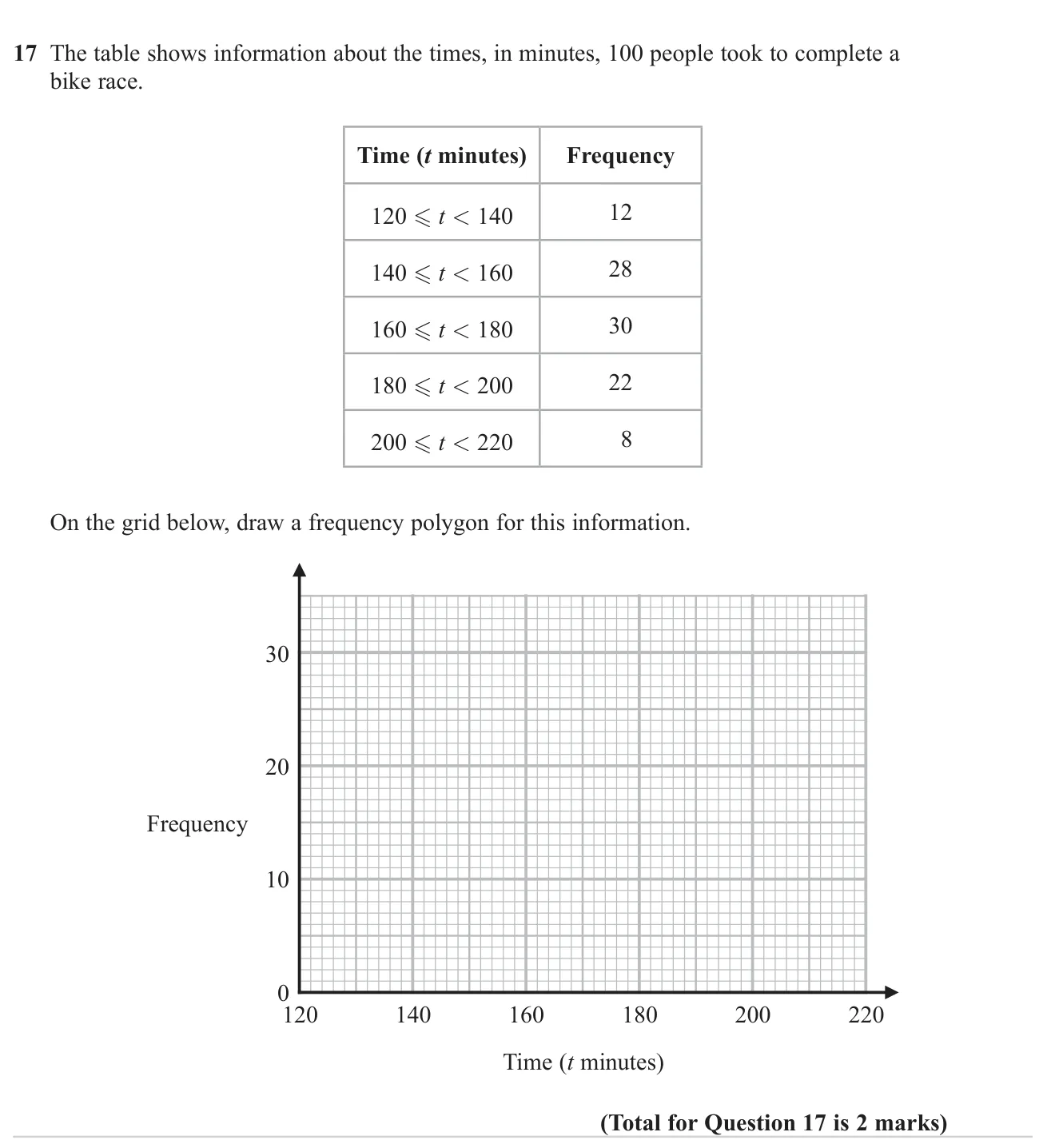
© Pearson Education Ltd. November 2024 Paper 3 (Foundation, calculator), question 17.
Show answer
| Answer | Points at (130, 12), (150, 28), (170, 30), (190, 22), (210, 8) joined with straight lines | 2 marks |
|---|
Worked solution Checked against the mark scheme
Midpoints: 130, 150, 170, 190, 210
Plot (130, 12), (150, 28), (170, 30), (190, 22), (210, 8).
Join neighbouring points with straight lines. Do not join the last point back to the first.
Watch out: Plotting at the ends of the intervals instead of the midpoints.
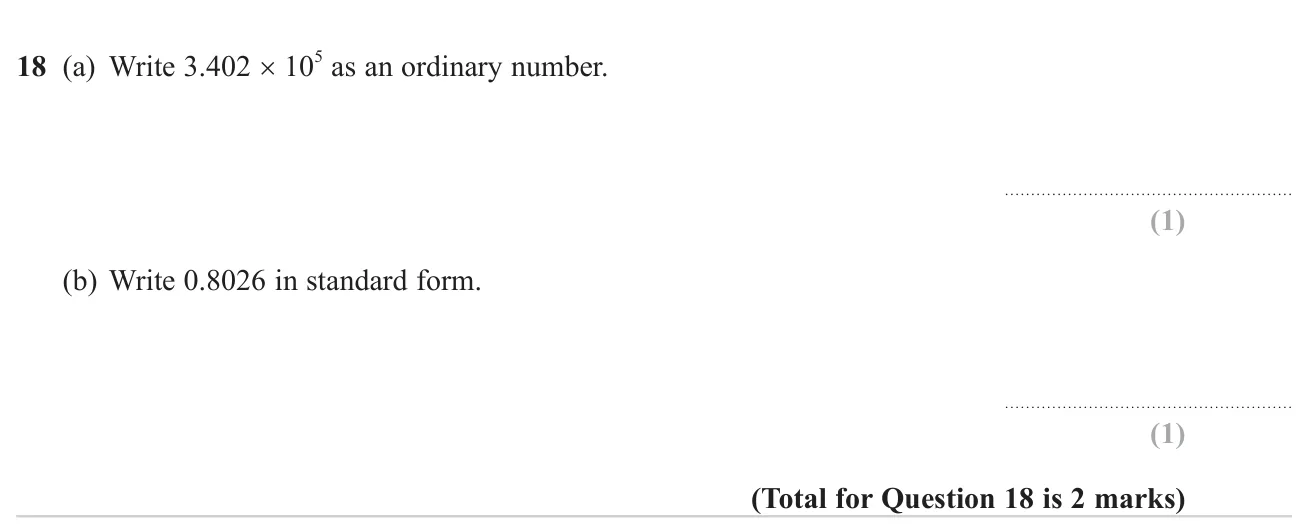
© Pearson Education Ltd. November 2024 Paper 3 (Foundation, calculator), question 18.
Show answer
| (a) | 340200 | 1 mark |
|---|
| (b) | 8.026×10⁻¹ | 1 mark |
|---|
Worked solution Checked against the mark scheme
(a) Move the decimal point 5 places right: 3.402×105=340200
(b) Move the point 1 place right to get 8.026, so the power is −1: 8.026×10⁻¹
Watch out: In (b), writing 0.8026×100 or using a positive power.
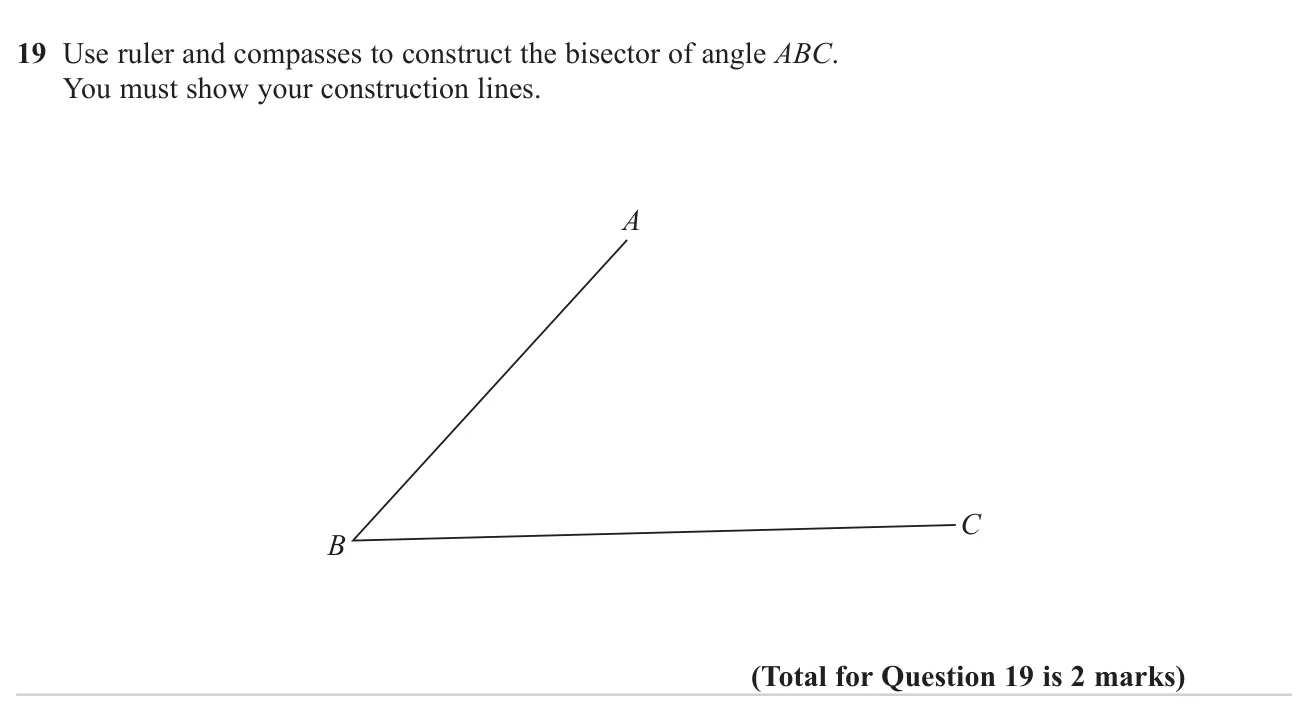
© Pearson Education Ltd. November 2024 Paper 3 (Foundation, calculator), question 19.
Show answer
| Answer | Correct bisector with construction arcs shown | 2 marks |
|---|
Worked solution Checked against the mark scheme
Put the compass point on B and draw an arc crossing BA and BC.
From each crossing point, draw equal arcs that meet inside the angle.
Rule a line from B through where the arcs meet. Leave all arcs visible.
Watch out: Measuring with a protractor and not showing arcs.
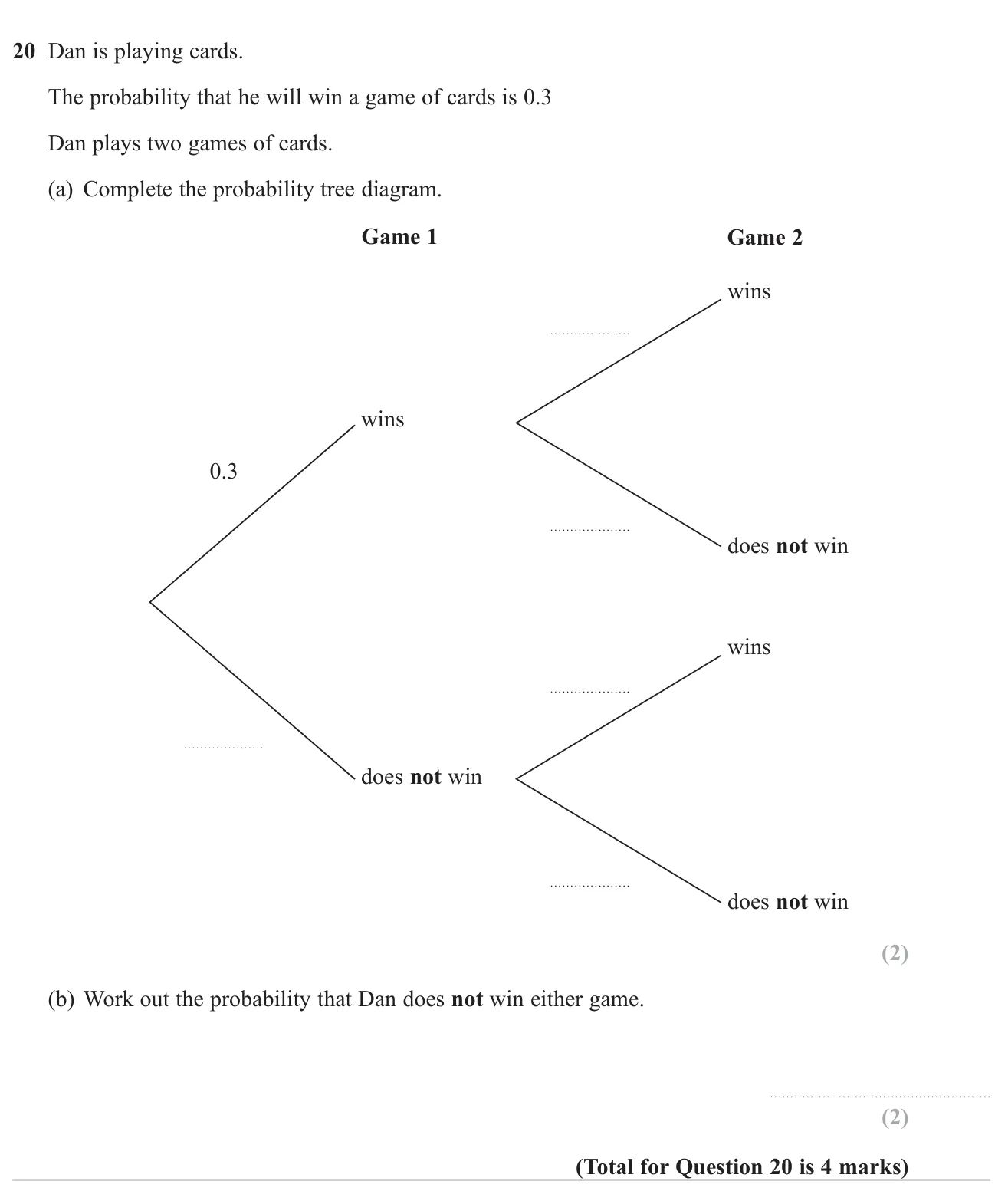
© Pearson Education Ltd. November 2024 Paper 3 (Foundation, calculator), question 20.
Show answer
| (a) | Game 1: 0.3, 0.7; Game 2: 0.3, 0.7 on each pair of branches | 2 marks |
|---|
| (b) | 0.49 | 2 marks |
|---|
Worked solution Checked against the mark scheme
(a) Not winning: 1−0.3=0.7. Each pair of branches is 0.3 (wins) and 0.7 (does not win).
(b) 0.7×0.7=0.49
Watch out: Adding 0.7 + 0.7 instead of multiplying.
© Pearson Education Ltd. November 2024 Paper 3 (Foundation, calculator), question 21.
Show answer
| Answer | 45.6% | 5 marks |
|---|
Worked solution Checked against the mark scheme
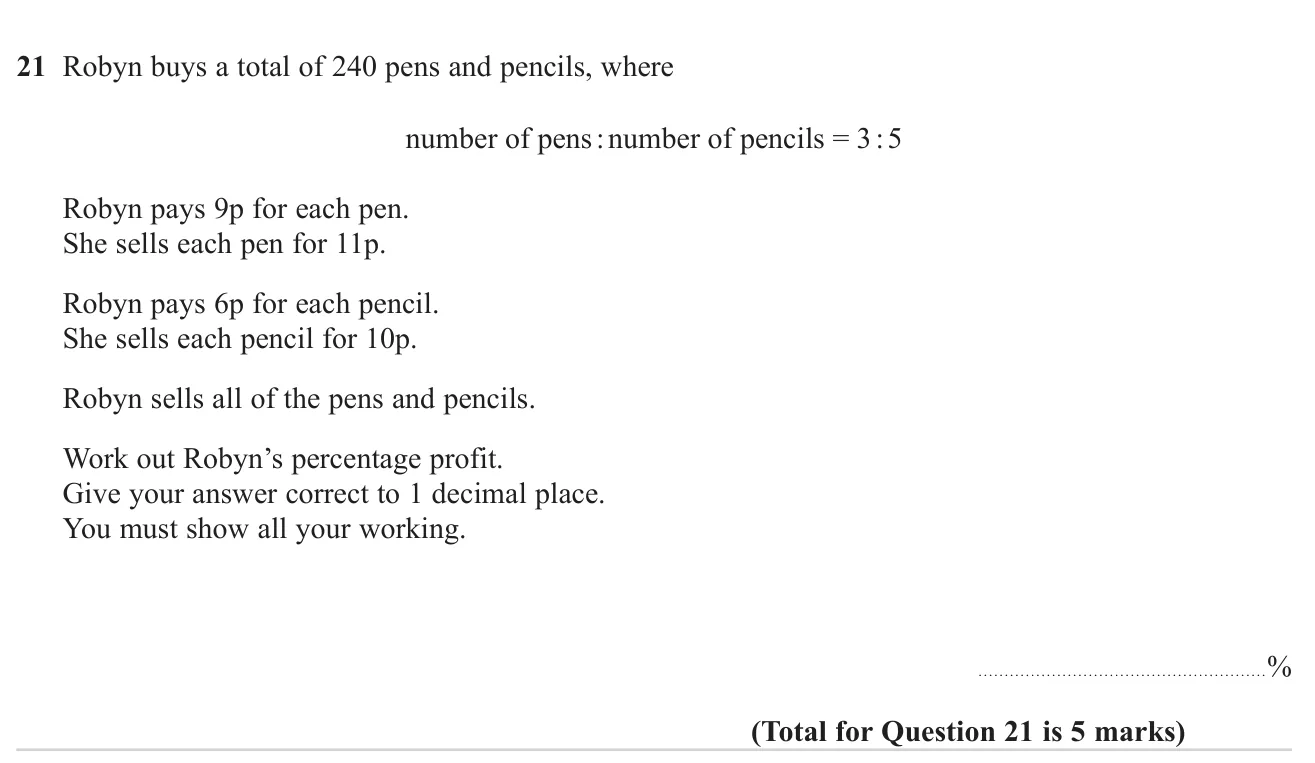
One part: 240÷8=30, so 90 pens and 150 pencils.
Cost: 90×9+150×6=1710p
Income: 90×11+150×10=2490p
Profit: 2490−1710=780p
1710780×100=45.6%
Watch out: Dividing the profit by the selling total instead of the cost.
© Pearson Education Ltd. November 2024 Paper 3 (Foundation, calculator), question 22.
Show answer
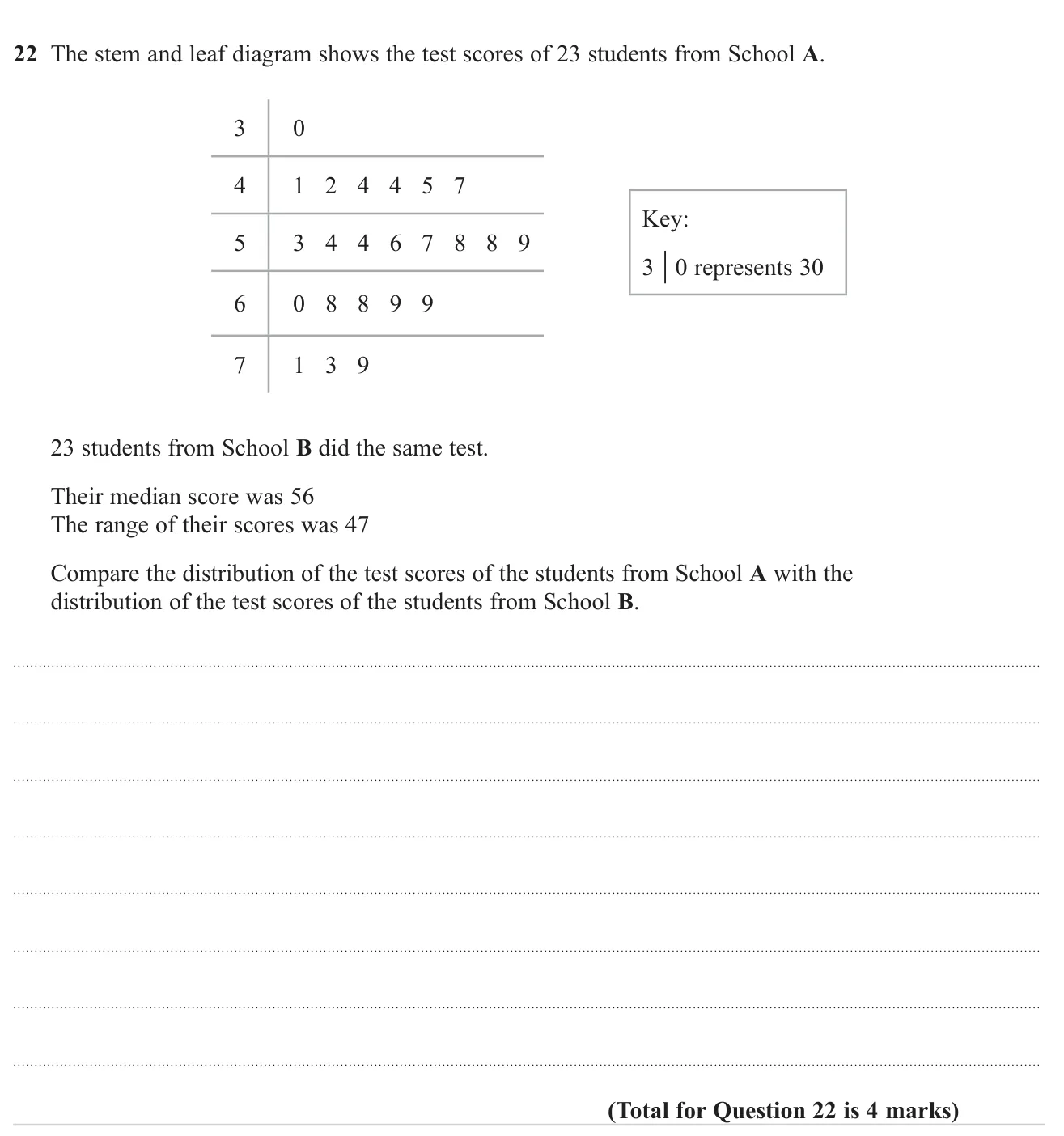
| Answer | School A median 57 is higher than B's 56; School A range 49 is higher than B's 47, so A's scores are more spread out | 4 marks |
|---|
Worked solution Checked against the mark scheme
School A has 23 scores, so the median is the 12th: 57.
Range: 79−30=49
Median: A (57) is higher than B (56), so A did slightly better on average.
Range: A (49) is higher than B (47), so A's scores were more spread out.
Watch out: Only quoting the numbers without saying which school is higher.
© Pearson Education Ltd. November 2024 Paper 3 (Foundation, calculator), question 23.
Show answer
| Answer | 10.2≤t<10.3 | 2 marks |
|---|
Worked solution Checked against the mark scheme
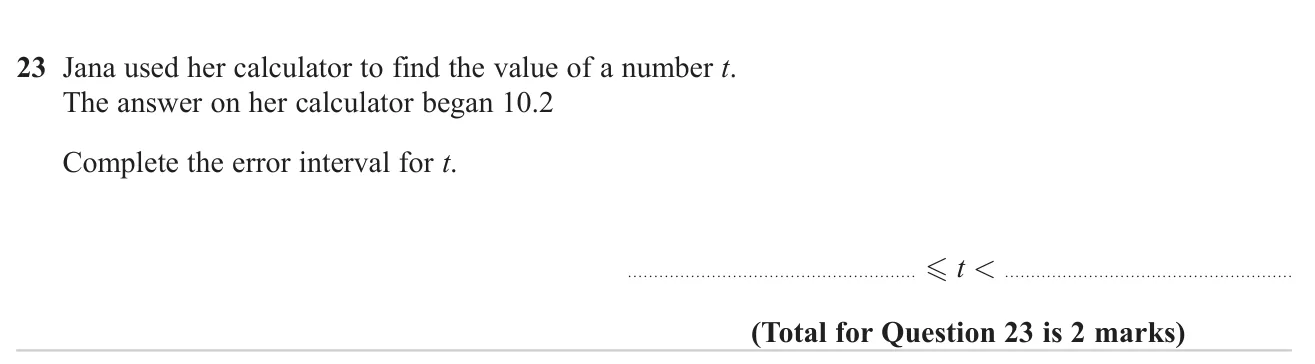
The calculator display began 10.2, so the number was cut off (truncated), not rounded.
It could be anything from 10.2 up to but not including 10.3:
10.2≤t<10.3
Watch out: Treating it as rounding and writing 10.15≤t<10.25.
© Pearson Education Ltd. November 2024 Paper 3 (Foundation, calculator), question 24.
Show answer
| Answer | 14.3 cm | 2 marks |
|---|
Worked solution Checked against the mark scheme
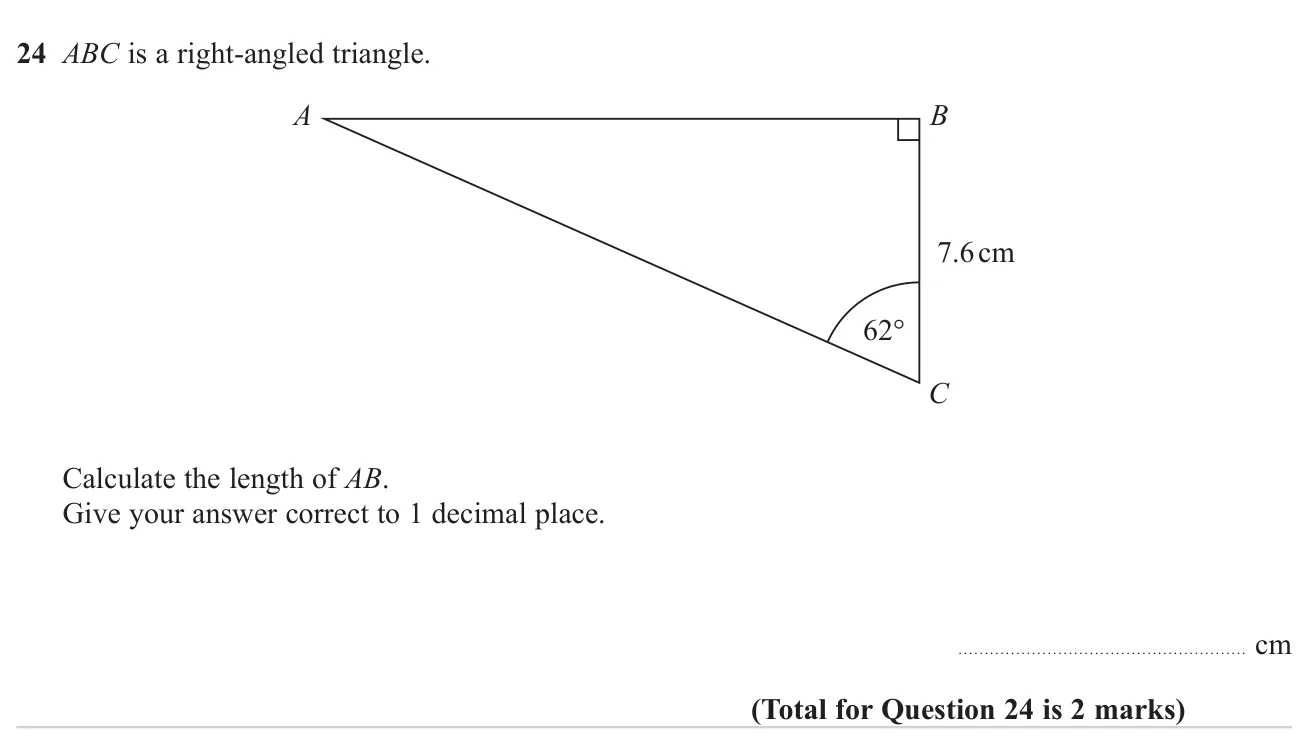
AB is opposite the 62° angle and BC (7.6 cm) is adjacent.
tan62°=7.6AB
AB=7.6×tan62°=14.29...≈14.3 cm
Watch out: Using sin or cos instead of tan.
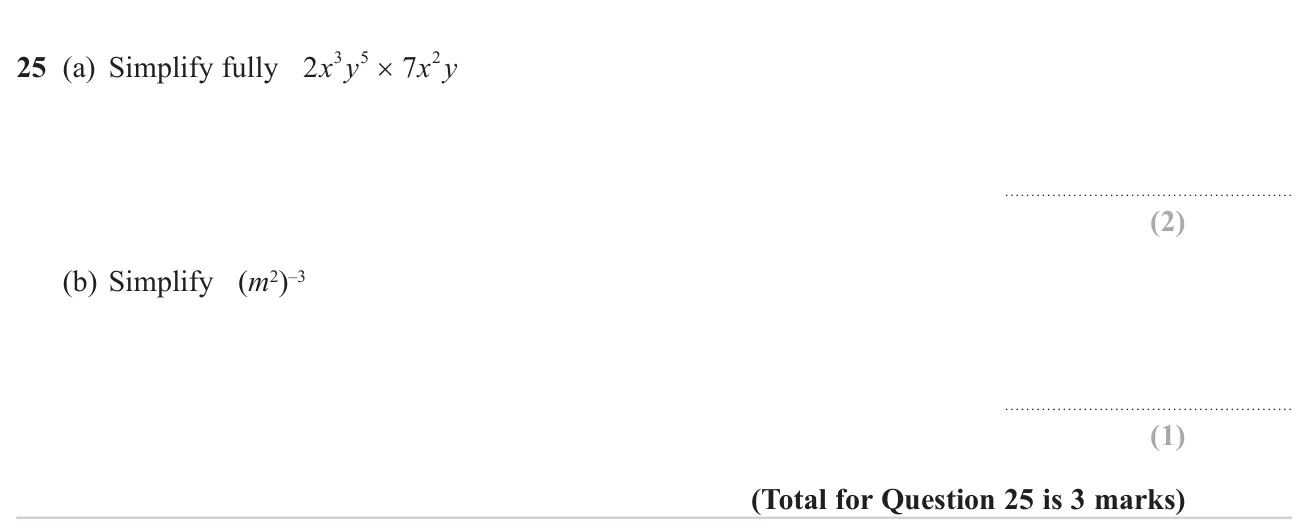
© Pearson Education Ltd. November 2024 Paper 3 (Foundation, calculator), question 25.
Show answer
| (a) | 14x5y6 | 2 marks |
|---|
| (b) | m−6 | 1 mark |
|---|
Worked solution Checked against the mark scheme
(a) Multiply the numbers: 2×7=14. Add the powers: x3+2=x5, y5+1=y6.
So 14x5y6
(b) Multiply the powers: 2×−3=−6, so m−6
Watch out: Multiplying the powers in (a) to get x6.
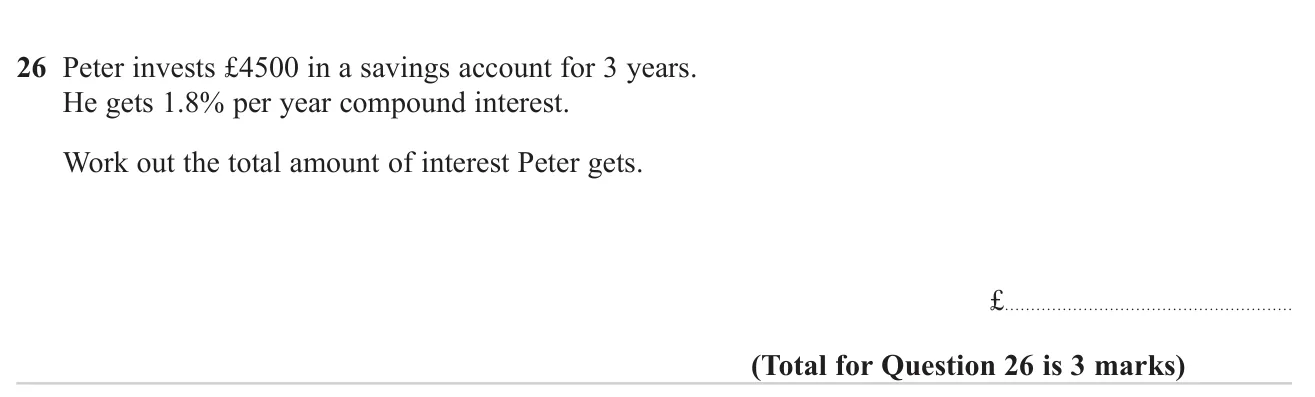
© Pearson Education Ltd. November 2024 Paper 3 (Foundation, calculator), question 26.
Show answer
Worked solution Checked against the mark scheme
Multiplier: 1+0.018=1.018
After 3 years: 4500×1.0183=4747.40...
Interest: 4747.40−4500=£247.40
Watch out: Using simple interest to get £243.
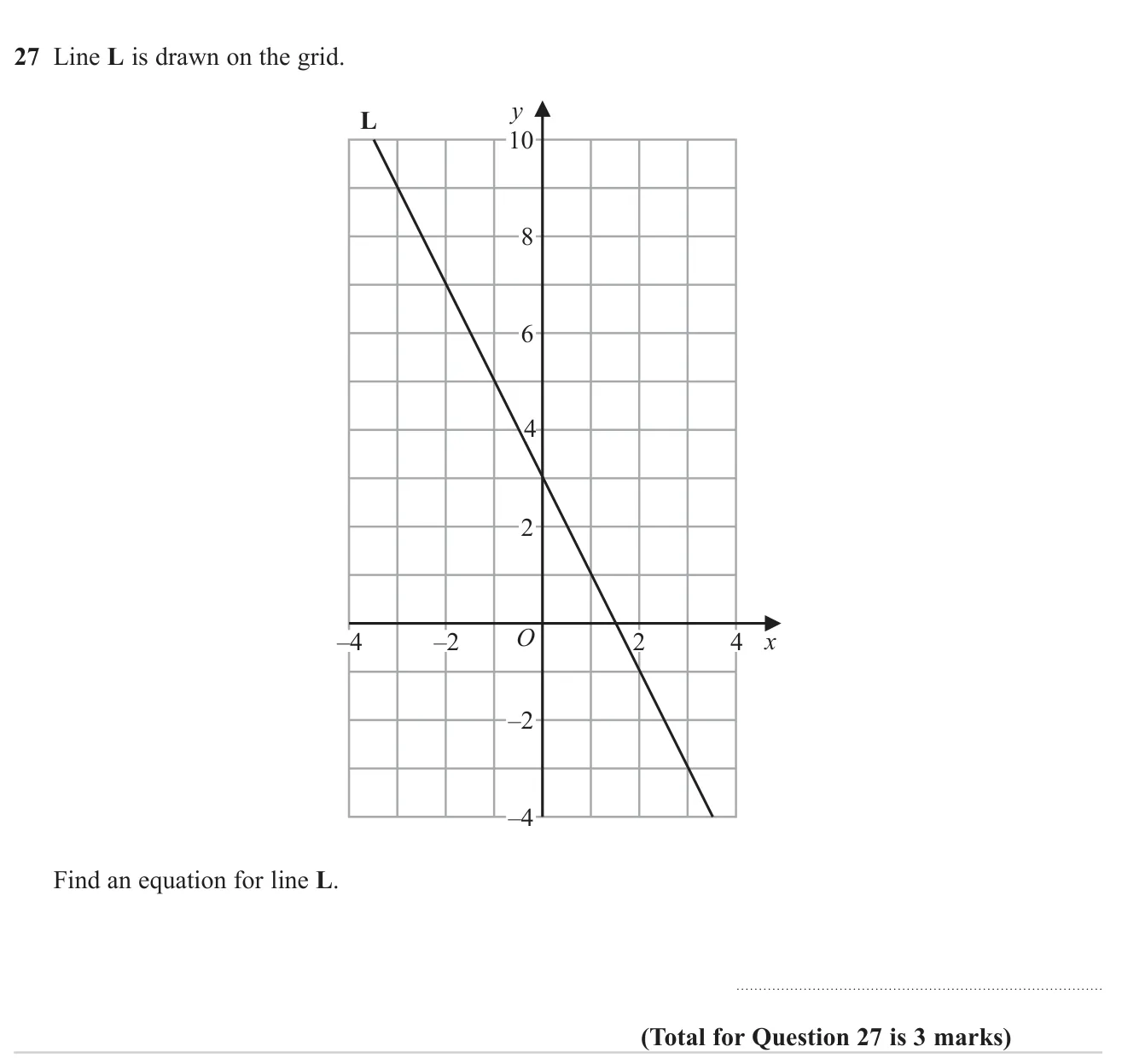
© Pearson Education Ltd. November 2024 Paper 3 (Foundation, calculator), question 27.
Show answer
| Answer | y=−2x+3 | 3 marks |
|---|
Worked solution Checked against the mark scheme
The line crosses the y-axis at 3, so c=3.
It passes through (0,3) and (1,1): y goes down 2 for each 1 across, so m=−2.
y=−2x+3
Watch out: Getting the gradient as +2 or −21.
Finished the paper?
Add up your marks for all three papers and see what grade that would have been.