Systematic listing and the product rule: what you need to know
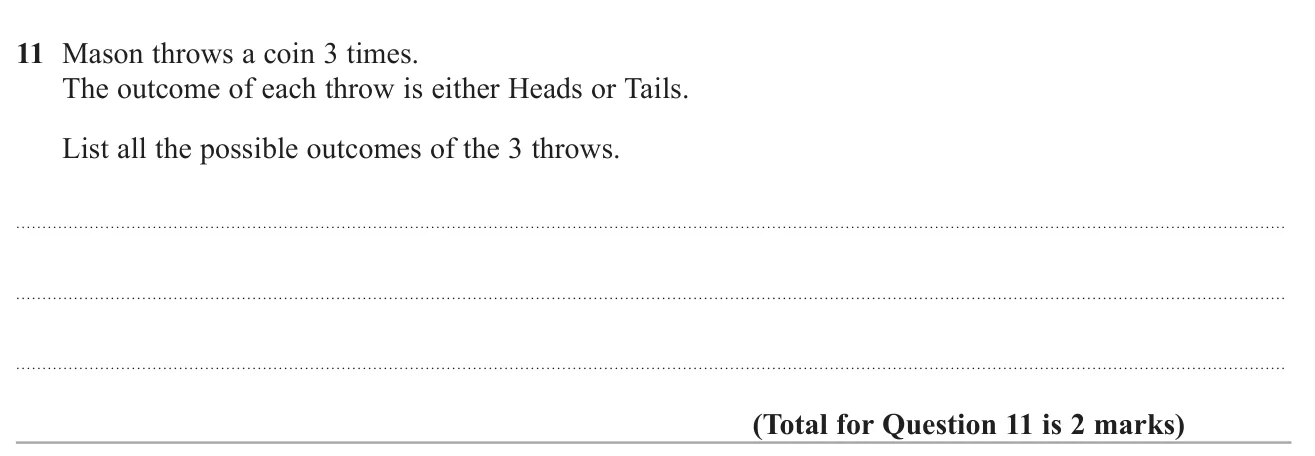
Systematic listing means writing out every possible outcome in an organised order so none are missed or repeated. Higher students also use the product rule to count outcomes without listing them all.
Foundation students need to list outcomes systematically; the product rule for counting larger numbers of outcomes is Higher only.
Key facts
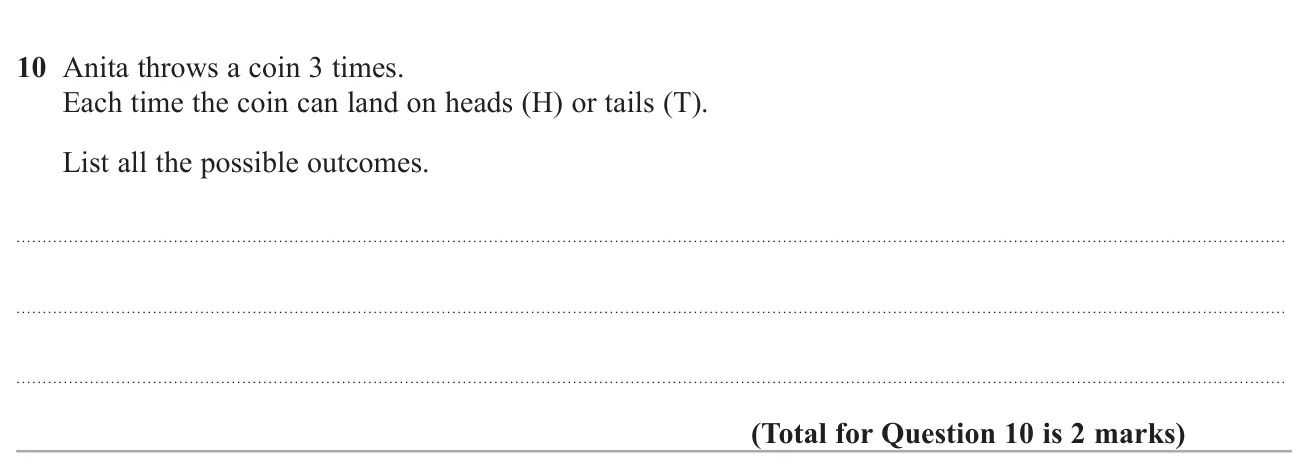
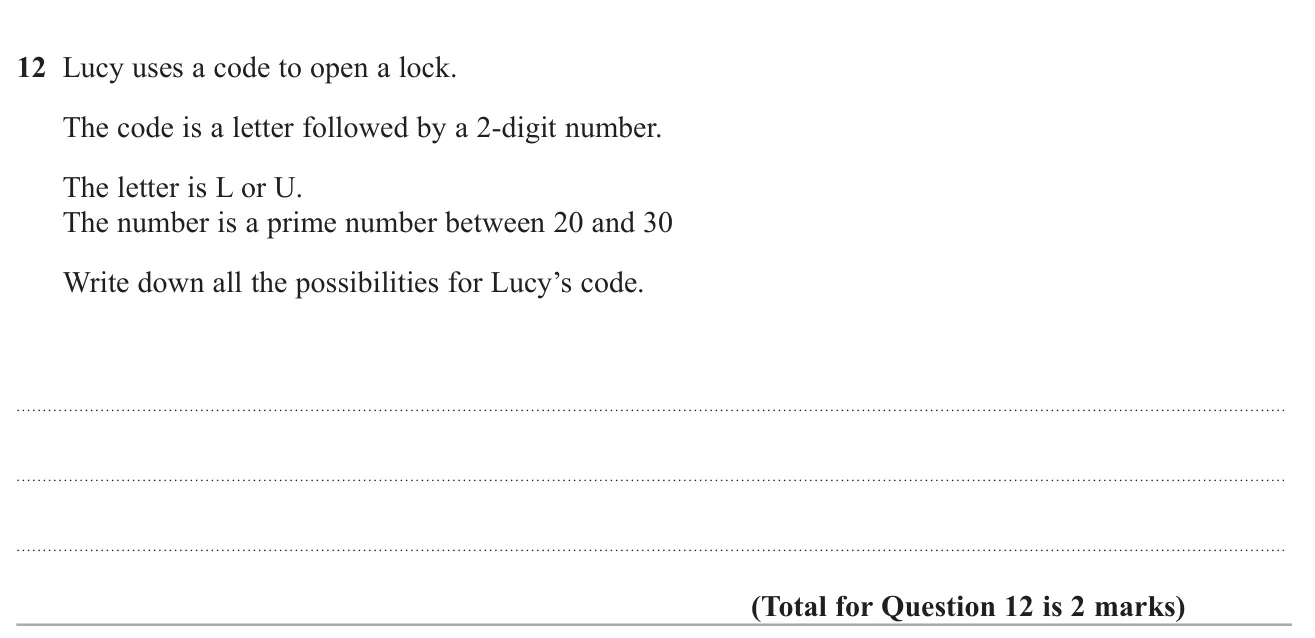
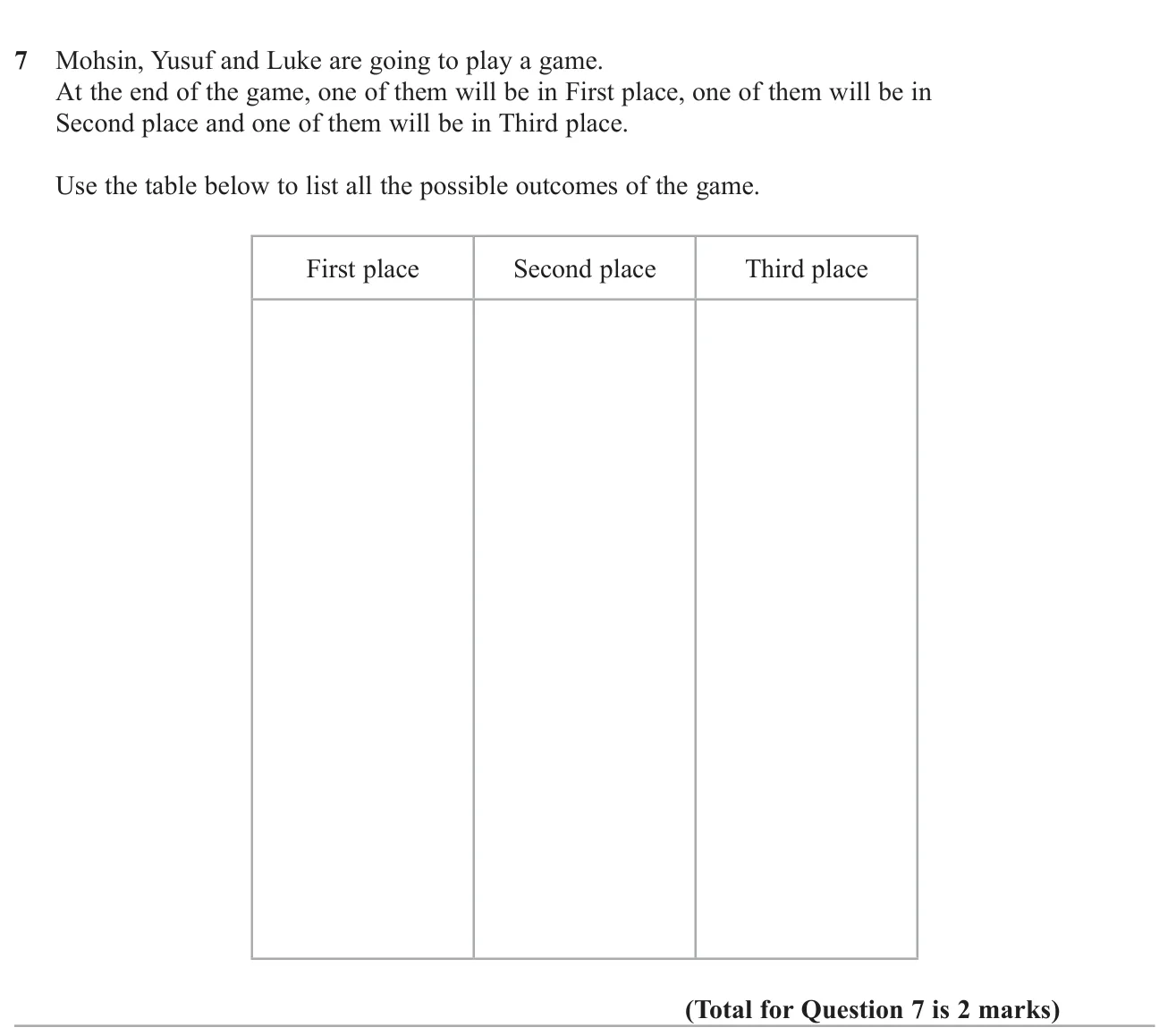
Work in a fixed order, e.g. keep the first choice the same while you change the second.
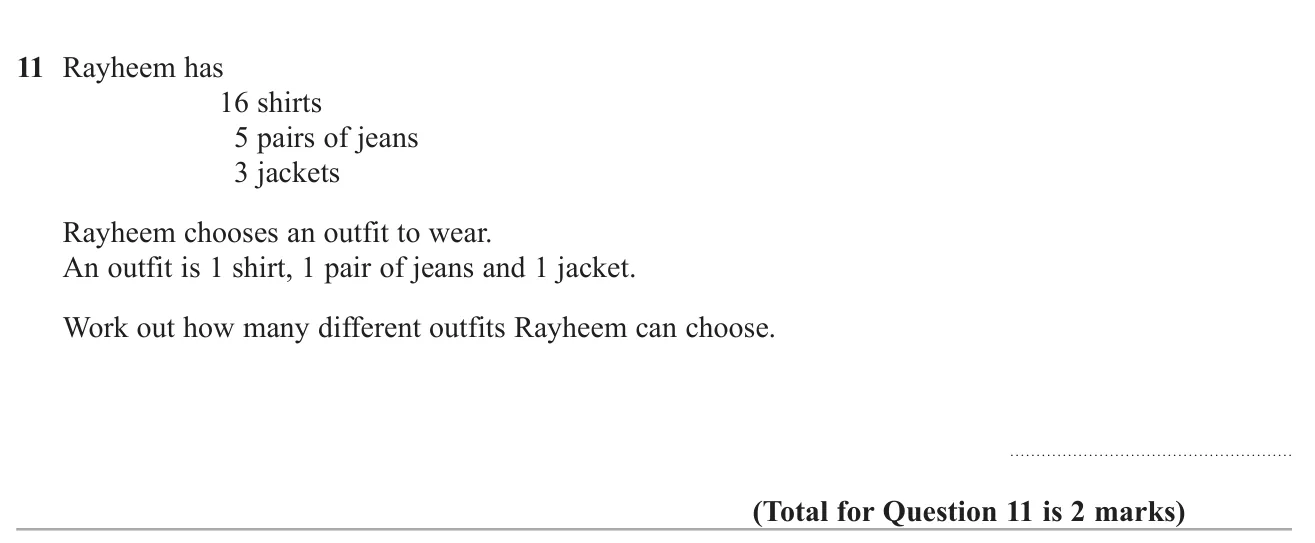
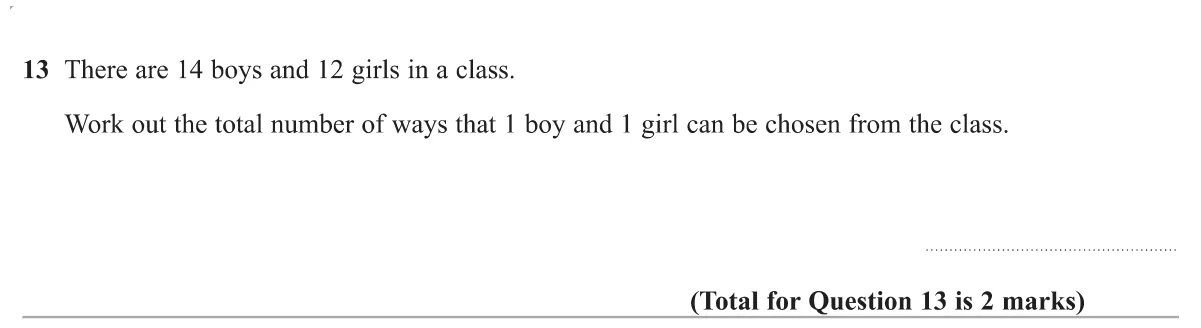
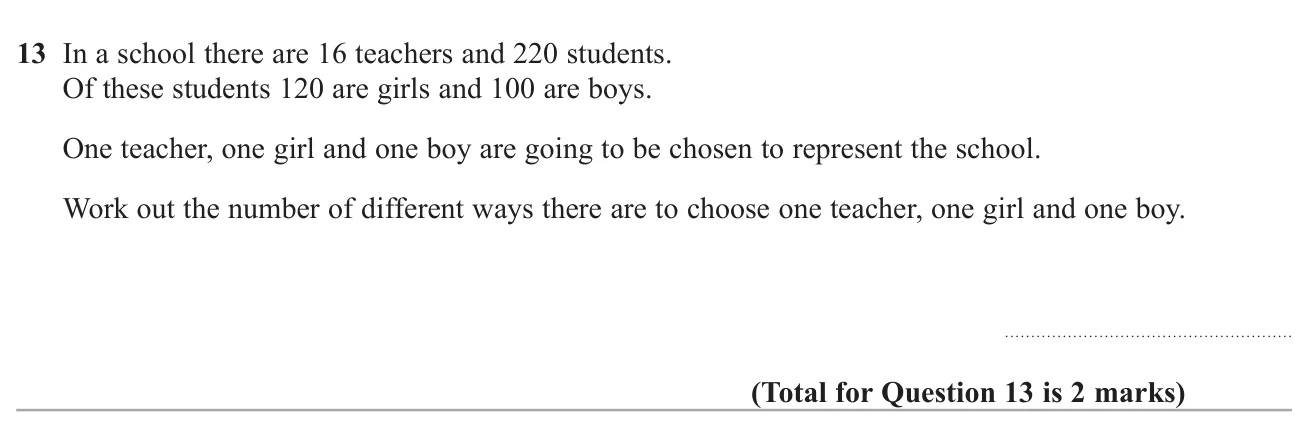
Product rule (Higher): if there are m ways to do one thing and n ways to do another, there are m×n ways to do both.
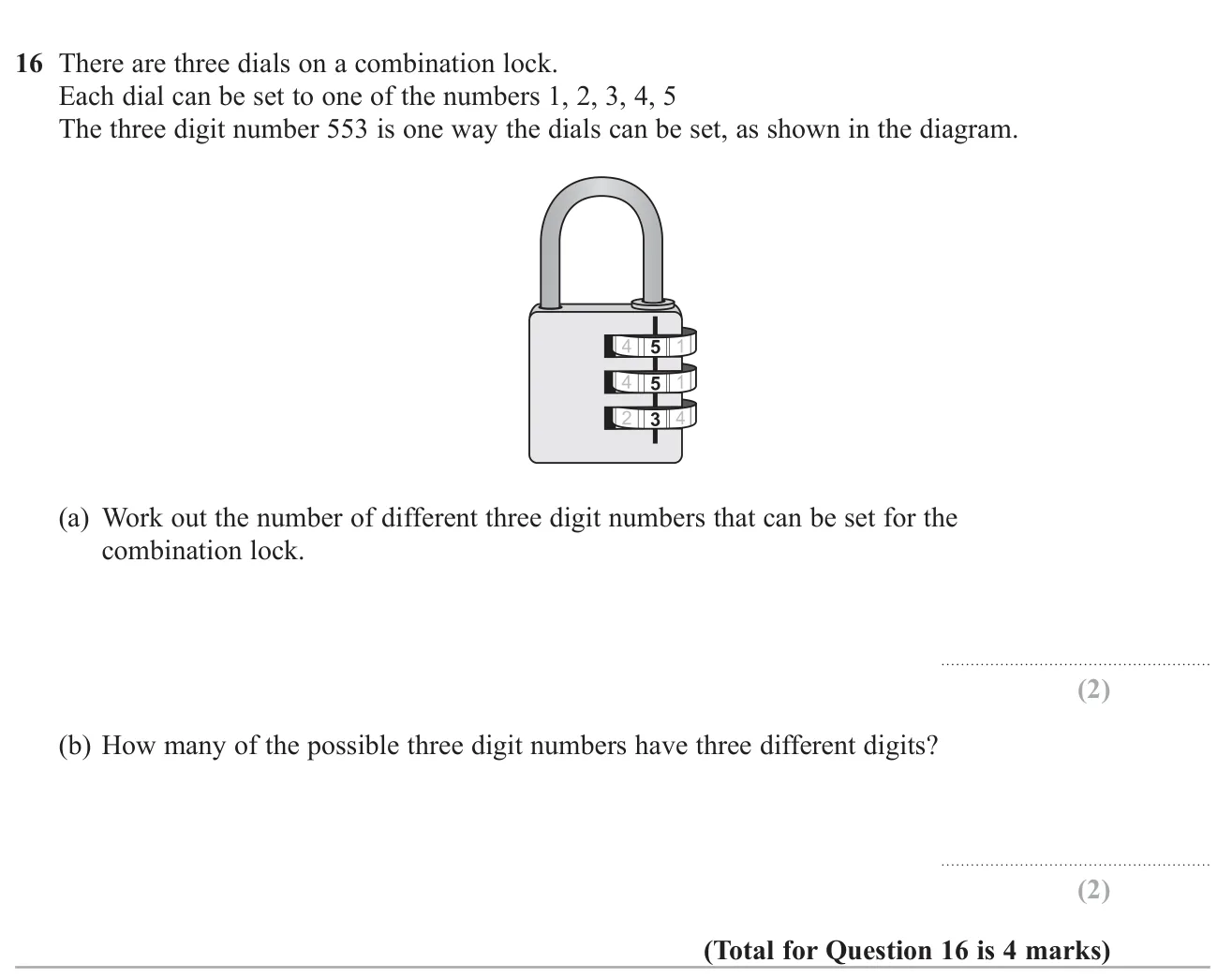
If choices cannot repeat, each later choice has one fewer option: 5×4×3.
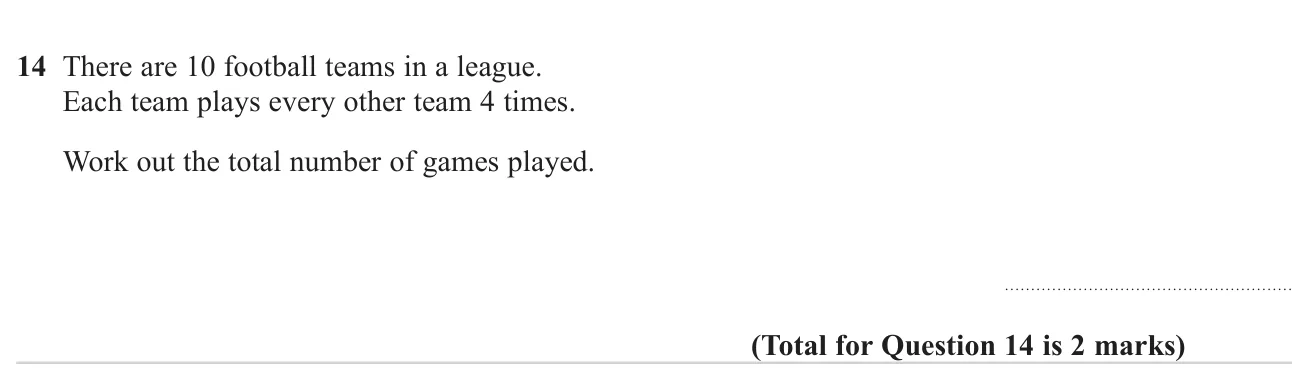
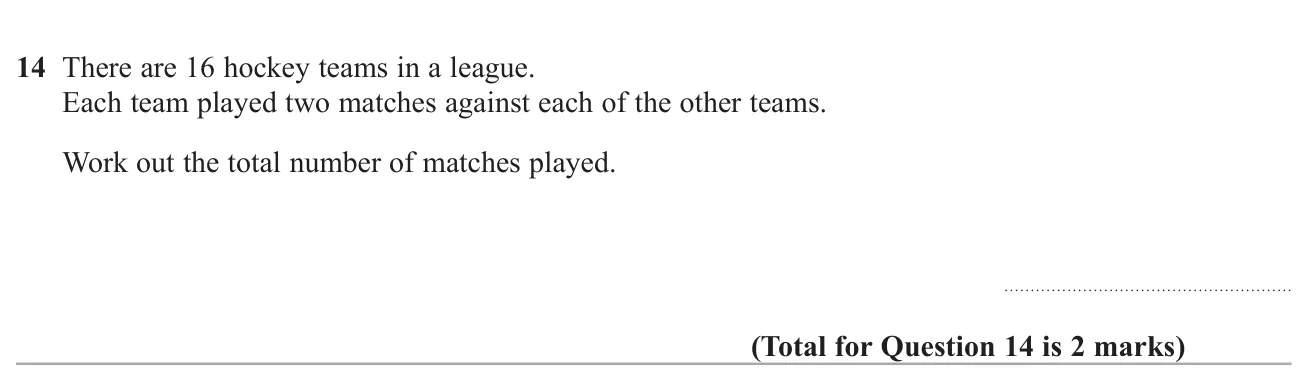
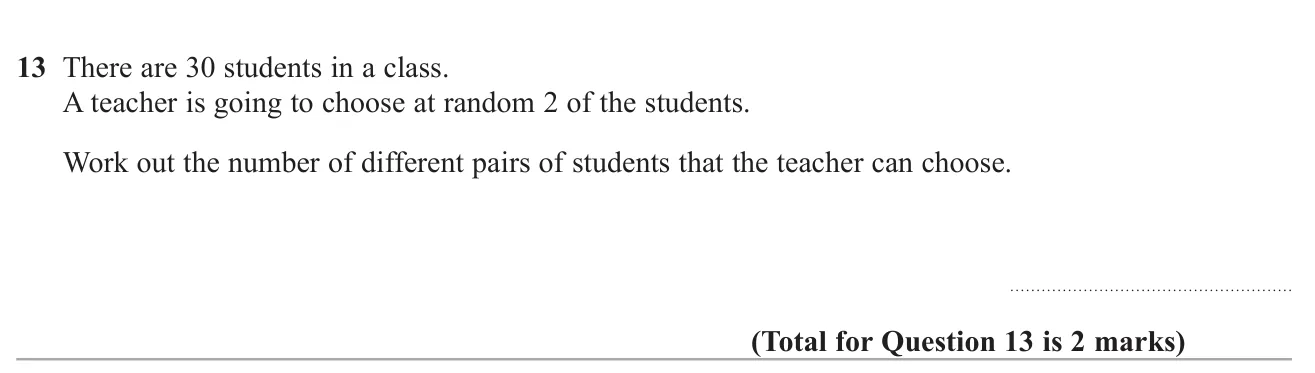
Choosing a pair from n people, or every team playing every other team once: 2n(n−1) (halve, because A with B is the same as B with A). If teams play each other twice (home and away), it is n(n−1).
Listing outcomes
Fix the first item and list every option for the second.
Move to the next first item and repeat.
Count your list and check it against the product rule.
Using the product rule (Higher)
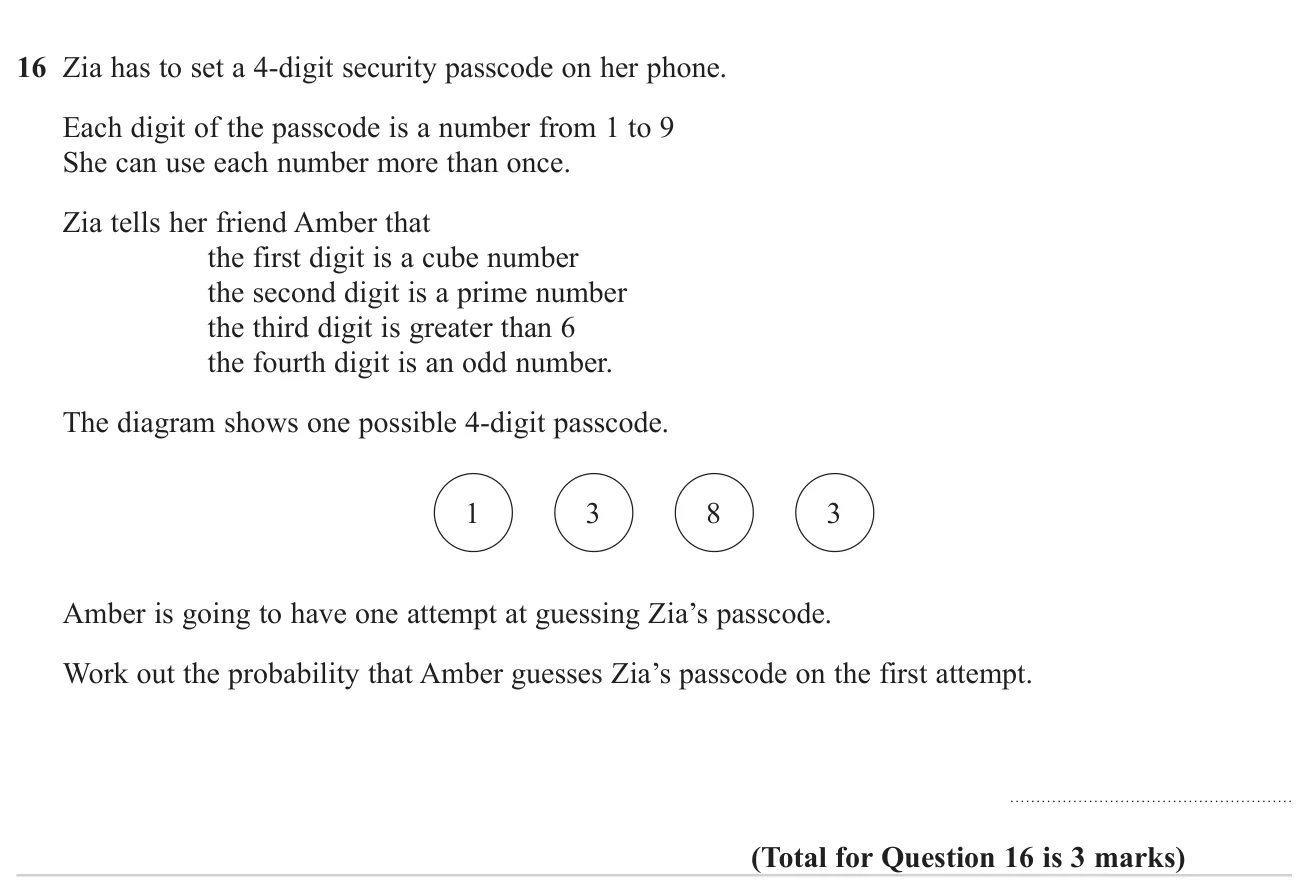
Draw one box for each choice.
Write the number of options in each box, applying any restrictions first.
Multiply the numbers.
Harder product rule questions (Higher)
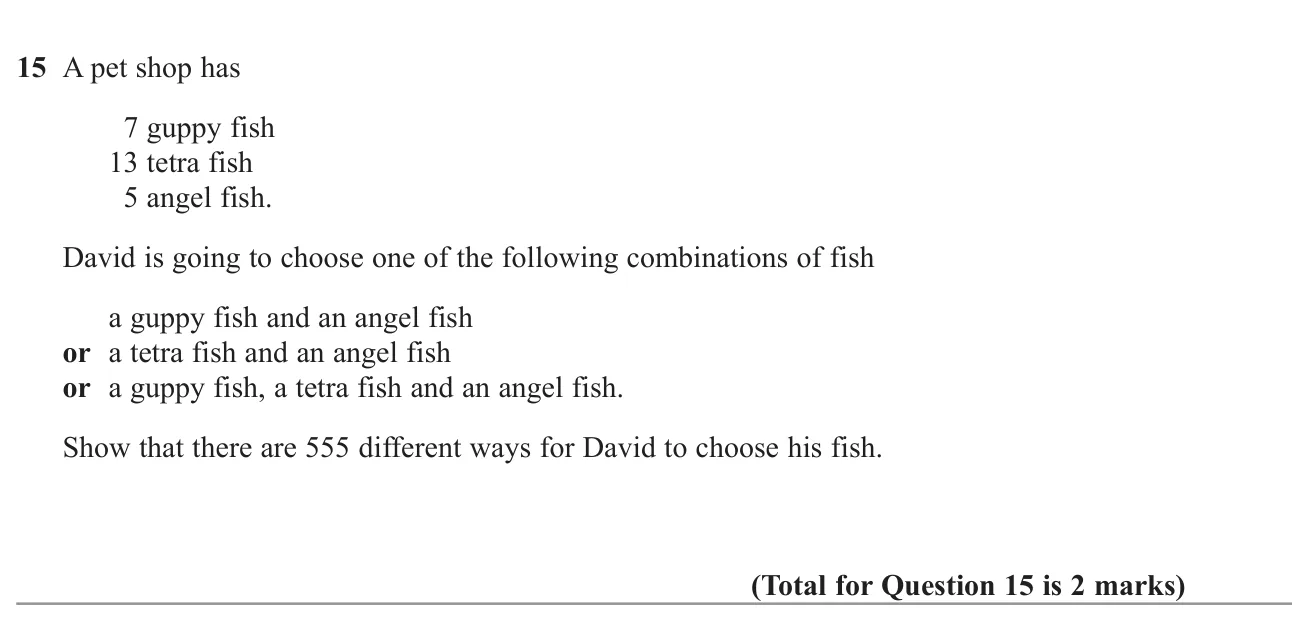
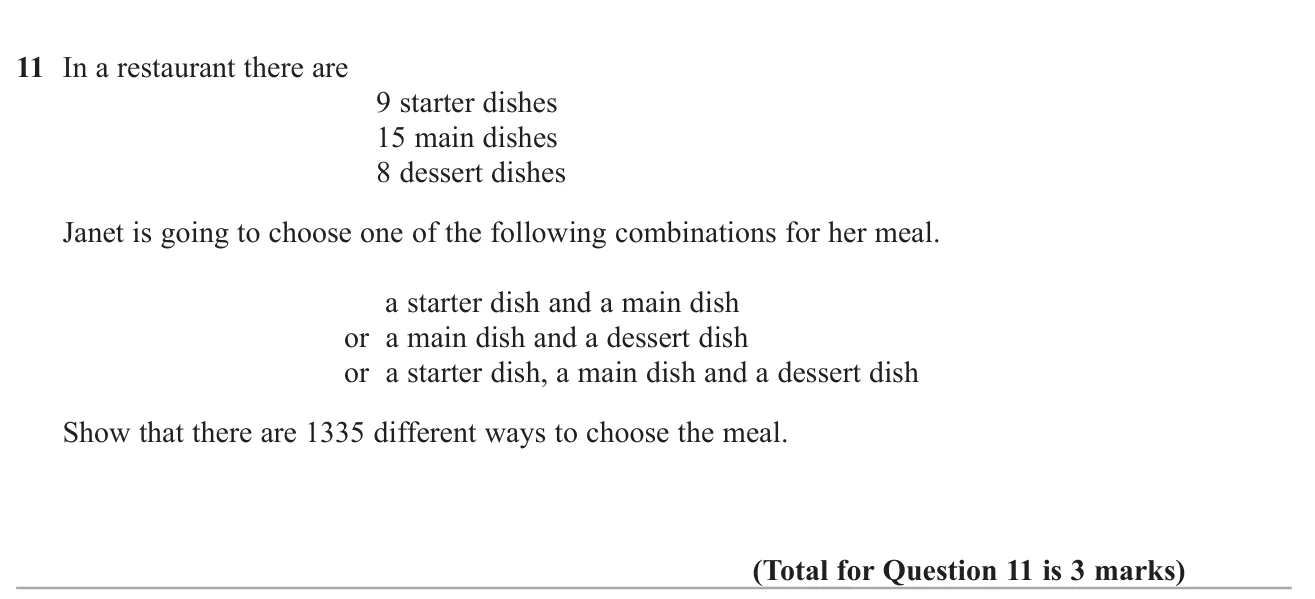
If there are separate ways to choose (e.g. starter and main, or main and dessert), multiply within each way, then add the totals.
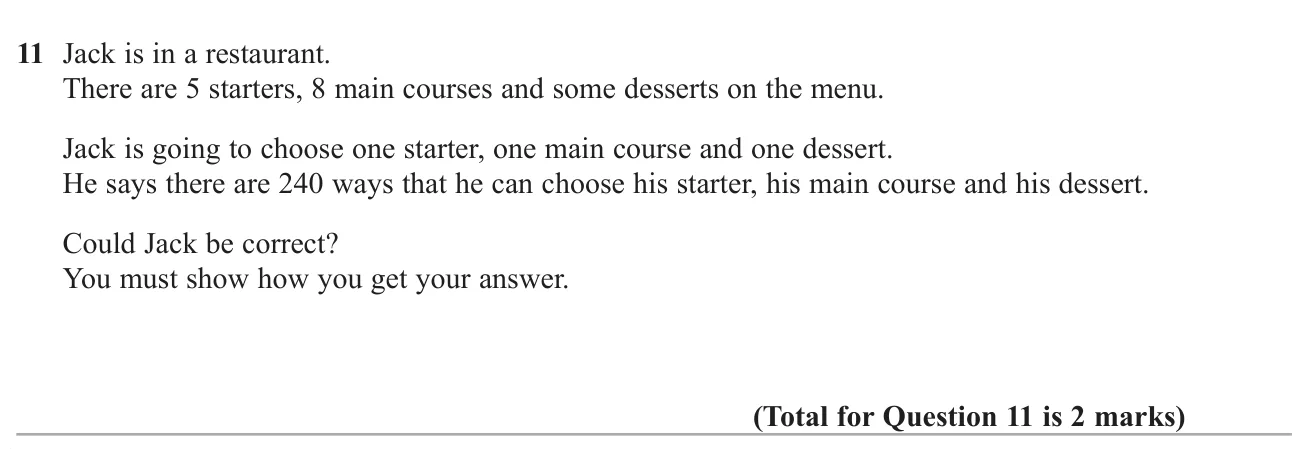
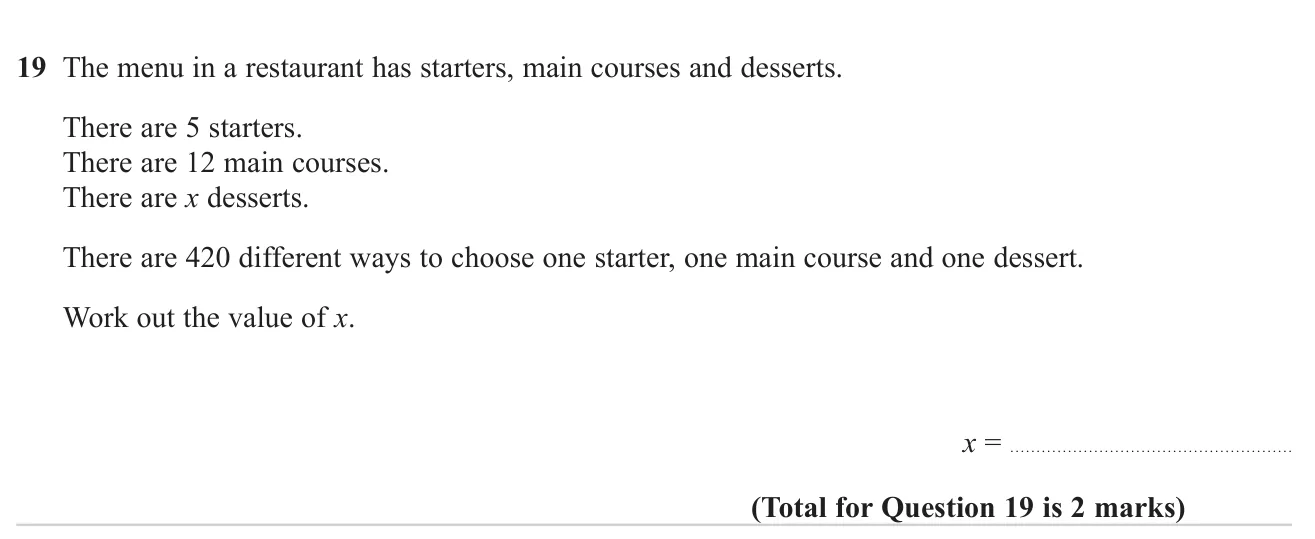
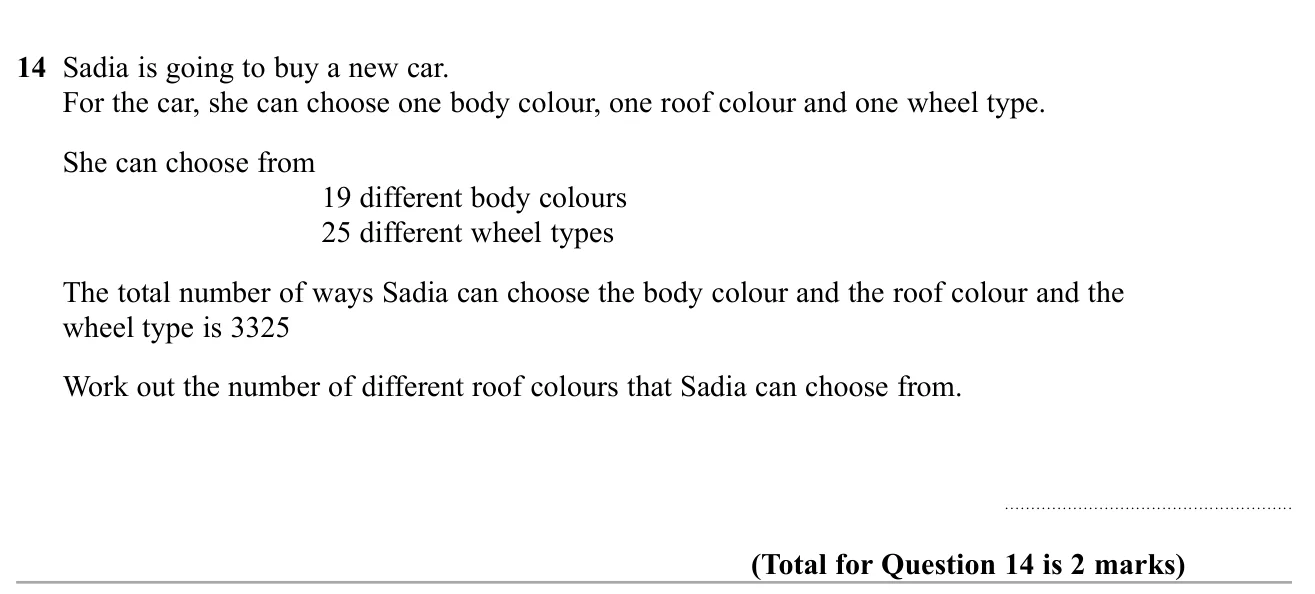
If the total is given and one number is missing, write the product as an equation and divide: 6×7×x=210 gives x=5.
Worked examples
Example 1Foundation · grade 3
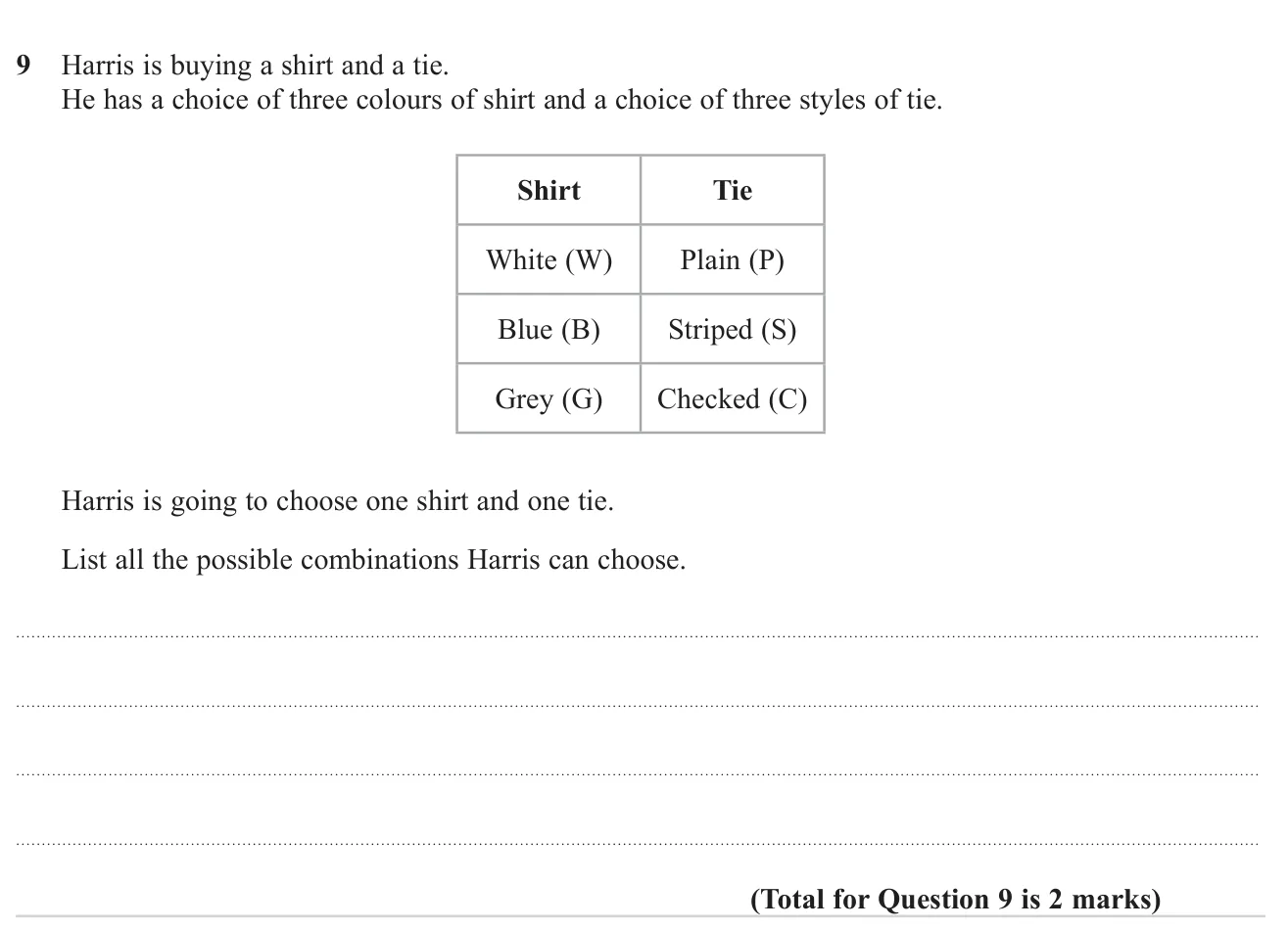
A café sells cheese, ham or egg sandwiches, and tea or juice. Maya buys one sandwich and one drink. List all the possible combinations.
Show the solution
Fix the sandwich and change the drink: Cheese and tea, cheese and juice Ham and tea, ham and juice Egg and tea, egg and juice That is 6 combinations. Check: 3×2=6
Example 2Higher · grade 7
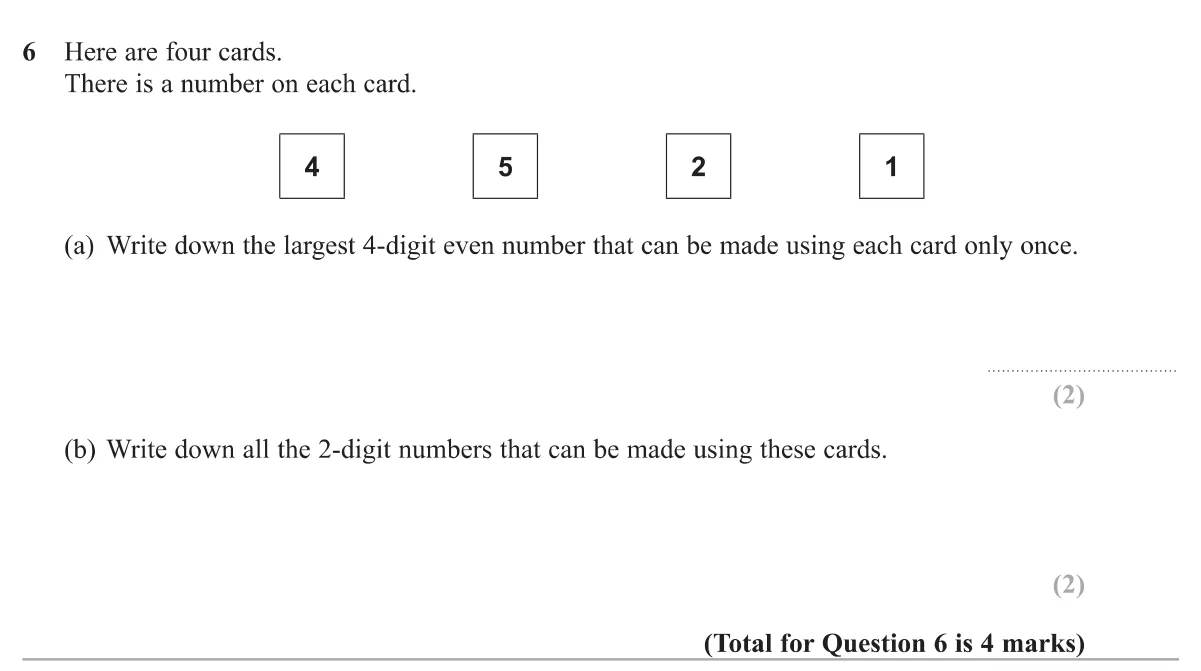
Owen makes a 4-digit code using the digits 1 to 9. No digit can be used more than once and the code must be odd. How many codes are possible?
Show the solution
Deal with the restriction first. The last digit must be odd: 1, 3, 5, 7 or 9, so 5 options. That leaves 8 digits for the first place, then 7, then 6. Number of codes =8×7×6×5=1680
Common mistakes
Adding the numbers of choices (5+8) instead of multiplying them (5×8).
Listing randomly and missing outcomes. Always use a pattern.
Counting each pair or match twice when they only happen once: halve n(n−1). Only leave it unhalved when teams play home and away.
Exam tips
A clear systematic list can earn a method mark even if you miss an outcome, and makes missing one far less likely.
Write the product rule calculation out in full, e.g. 8×7×6×5, before giving the answer.
Questions people ask
What is the product rule for counting?
If one choice can be made in m ways and a second in n ways, the two together can be made in m×n ways. It extends to any number of choices.
How do you list outcomes systematically?
Keep one choice fixed while you run through every option for the next, then move on. This stops you missing or repeating outcomes.
Exam questions: Systematic listing and the product rule (19, easiest first)