Question 1
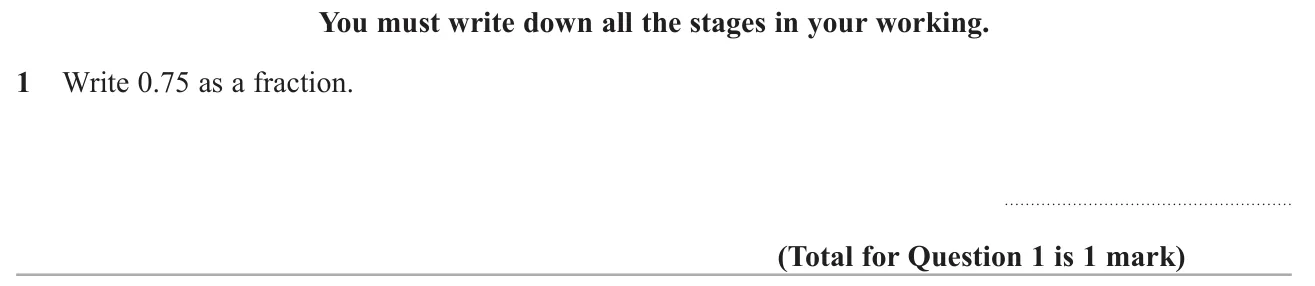
© Pearson Education Ltd. June 2019 Paper 2 (Foundation, calculator), question 1.
Show answer
| Answer | 1 mark |
|---|
Worked solution Checked against the mark scheme
means 75 hundredths: .
Divide top and bottom by 25:
Watch out: Writing or .
Edexcel GCSE Maths · 1MA1
Calculator · 29 questions · 80 marks · 1 hour 30 minutes. Try each question on paper, then press "Show answer".
© Pearson Education Ltd. June 2019 Paper 2 (Foundation, calculator), question 1.
| Answer | 1 mark |
|---|
Worked solution Checked against the mark scheme
means 75 hundredths: .
Divide top and bottom by 25:
Watch out: Writing or .
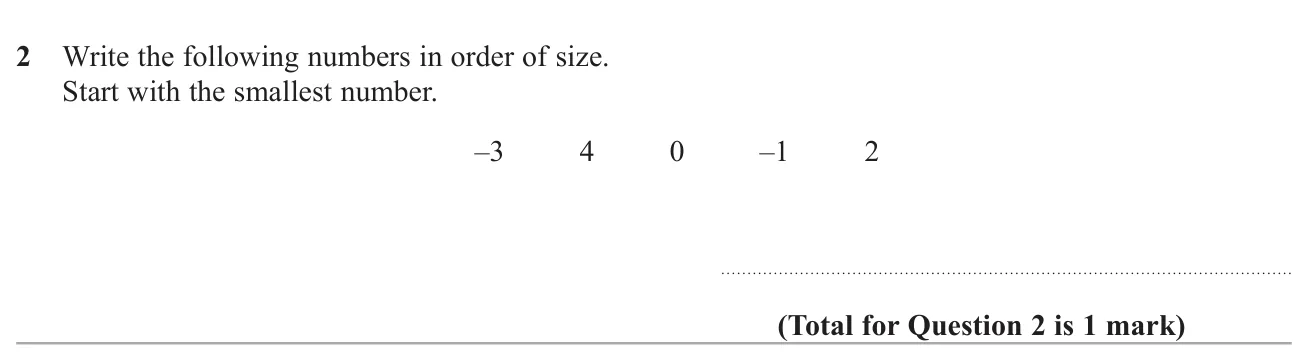
© Pearson Education Ltd. June 2019 Paper 2 (Foundation, calculator), question 2.
| Answer | 1 mark |
|---|
Worked solution Checked against the mark scheme
Negative numbers are smaller than zero, and is further below zero than .
So the order is
Watch out: Putting before .

© Pearson Education Ltd. June 2019 Paper 2 (Foundation, calculator), question 3.
| Answer | Any two of | 1 mark |
|---|
Worked solution Checked against the mark scheme
Factor pairs of 15: and .
So the factors are 1, 3, 5 and 15; any two of these will do, e.g. 3 and 5.
Watch out: Giving multiples of 15 such as 30.
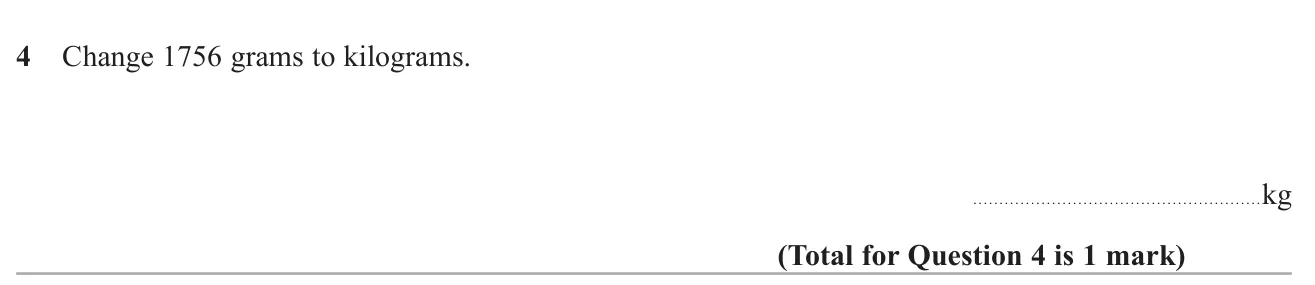
© Pearson Education Ltd. June 2019 Paper 2 (Foundation, calculator), question 4.
| Answer | kg | 1 mark |
|---|
Worked solution Checked against the mark scheme
There are 1000 g in 1 kg, so divide by 1000.
kg
Watch out: Multiplying by 1000 or dividing by 100.
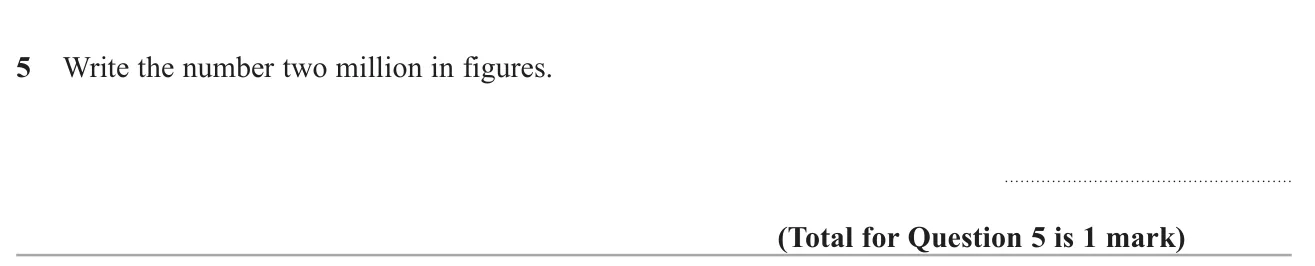
© Pearson Education Ltd. June 2019 Paper 2 (Foundation, calculator), question 5.
| Answer | 1 mark |
|---|
Worked solution Checked against the mark scheme
One million is (six zeros).
Two million is
Watch out: Writing 200 000 or 20 000 000.
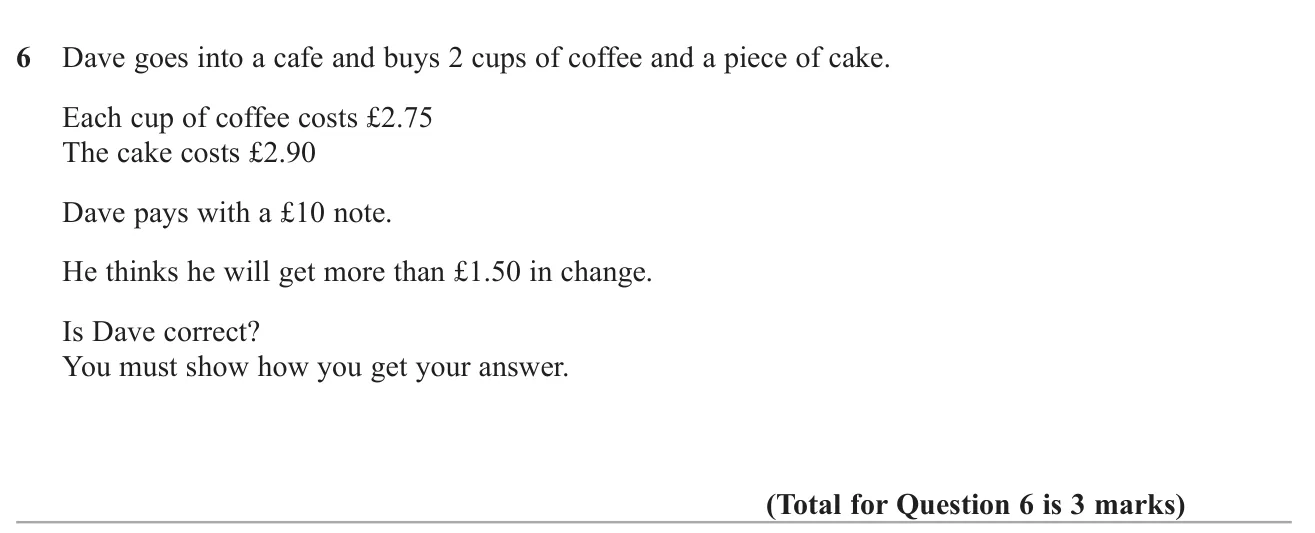
© Pearson Education Ltd. June 2019 Paper 2 (Foundation, calculator), question 6.
| Answer | Yes, he gets £1.60 change | 3 marks |
|---|
Worked solution Checked against the mark scheme
Two coffees:
Total spent: , so £8.40
Change: , so £1.60
£1.60 is more than £1.50, so Dave is correct.
Watch out: Forgetting to double the cost of the coffee.
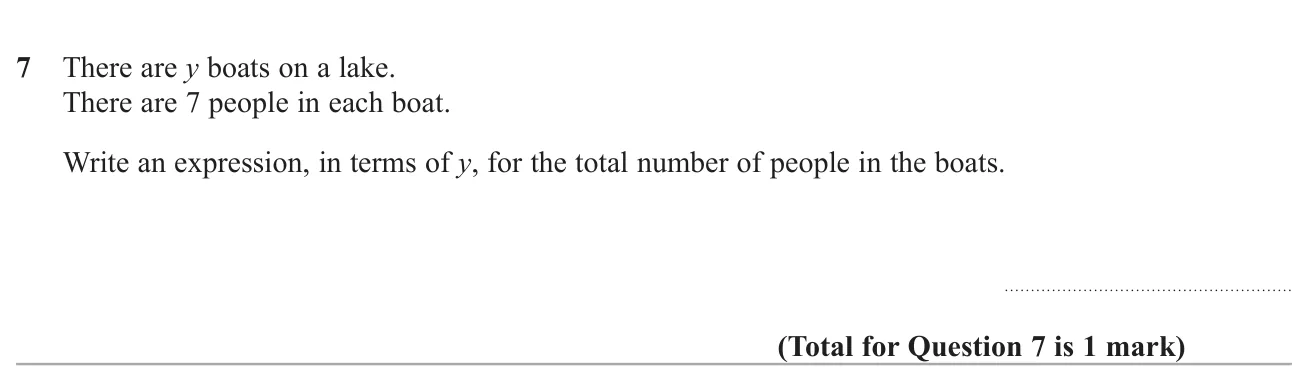
© Pearson Education Ltd. June 2019 Paper 2 (Foundation, calculator), question 7.
| Answer | 1 mark |
|---|
Worked solution Checked against the mark scheme
Each boat holds 7 people, so boats hold people.
In algebra we write this as .
Watch out: Writing .
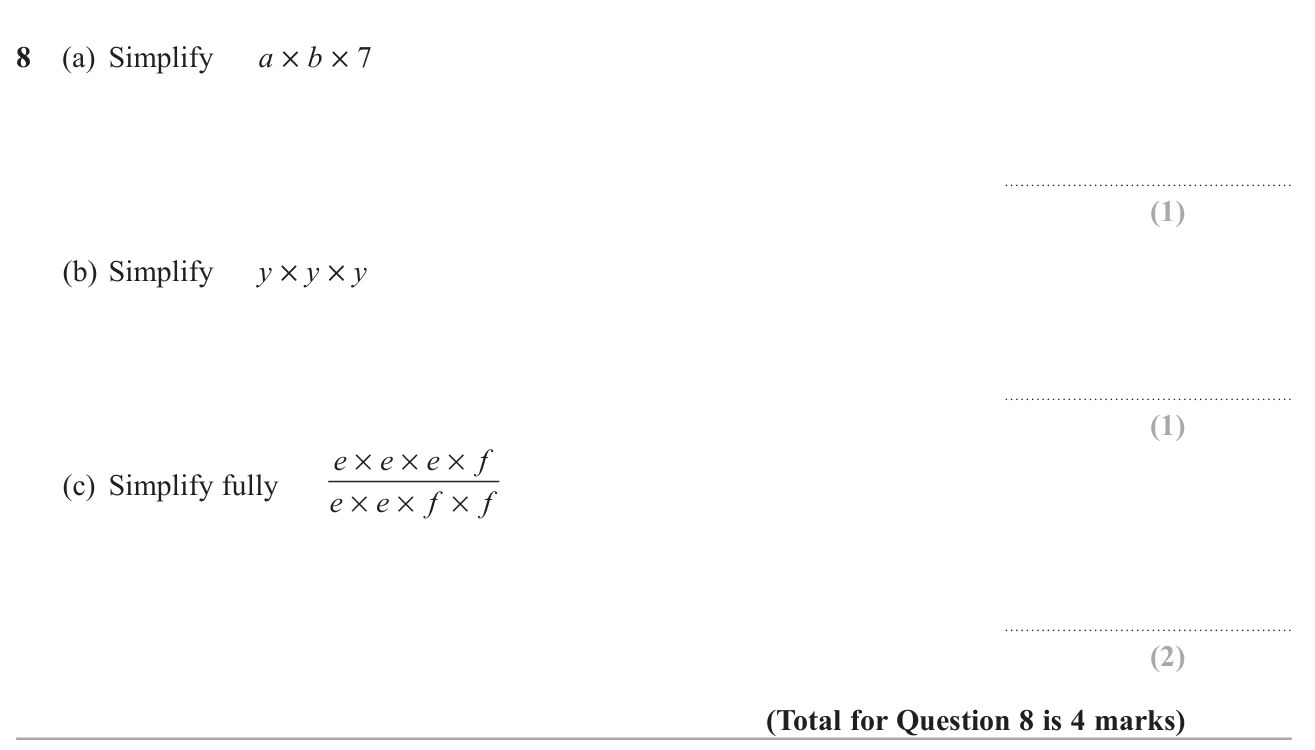
© Pearson Education Ltd. June 2019 Paper 2 (Foundation, calculator), question 8.
| (a) | 1 mark | |
|---|---|---|
| (b) | 1 mark | |
| (c) | 2 marks |
Worked solution Checked against the mark scheme
(a) Write the number first, then the letters:
(b) multiplied by itself three times is
(c) Top: . Bottom:
Cancel two s and one :
Watch out: In (b), writing instead of .
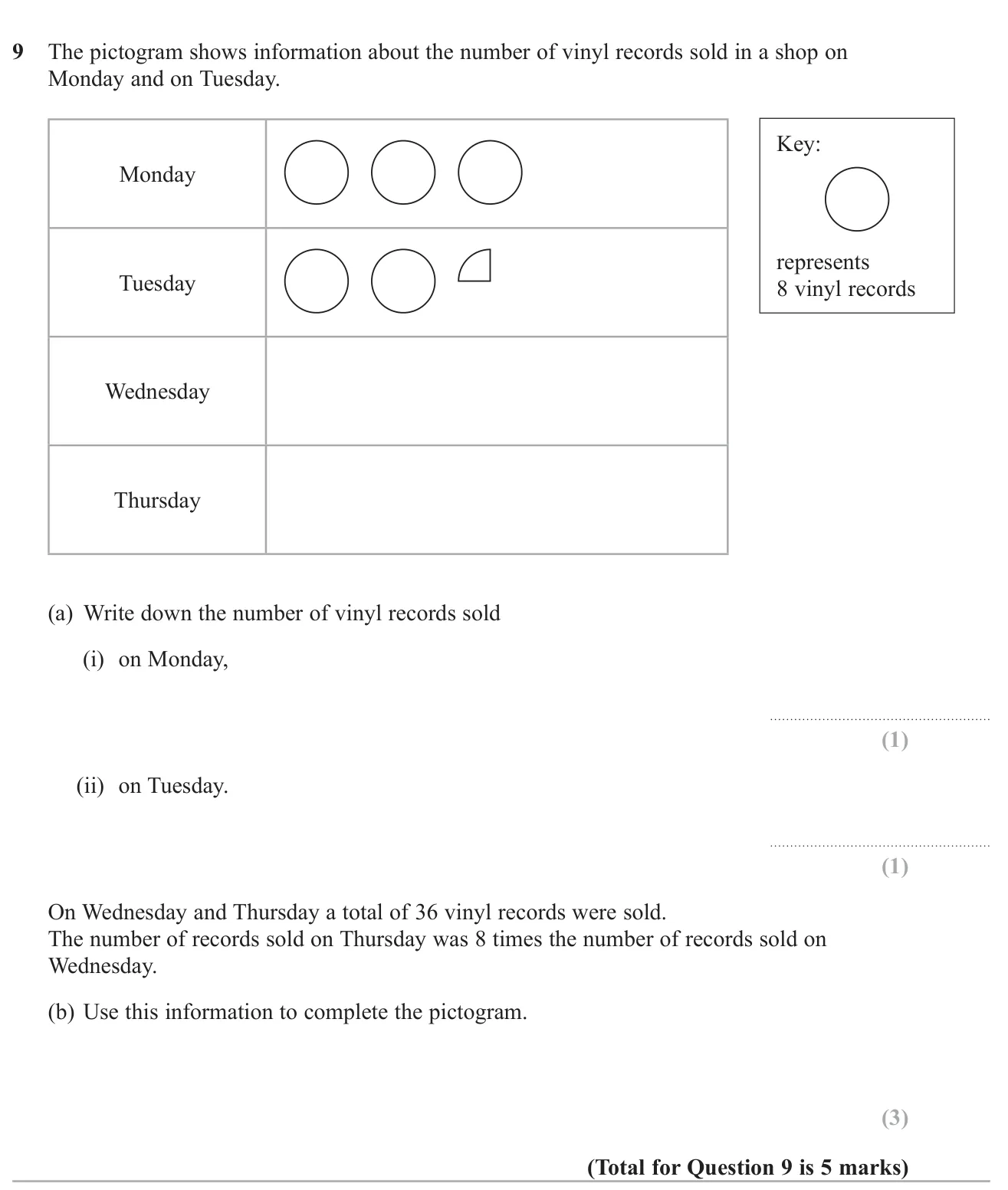
© Pearson Education Ltd. June 2019 Paper 2 (Foundation, calculator), question 9.
| (a(i)) | 24 | 1 mark |
|---|---|---|
| (a(ii)) | 18 | 1 mark |
| (b) | Wednesday: half a circle (4 records); Thursday: 4 circles (32 records) | 3 marks |
Worked solution Checked against the mark scheme
(a)(i) 3 circles:
(a)(ii) 2 circles and a quarter:
(b) Wednesday is 1 part and Thursday 8 parts, so 9 parts make 36:
Wednesday 4, Thursday
Draw half a circle for Wednesday () and 4 full circles for Thursday ().
Watch out: In (b), dividing 36 by 8 instead of by 9.
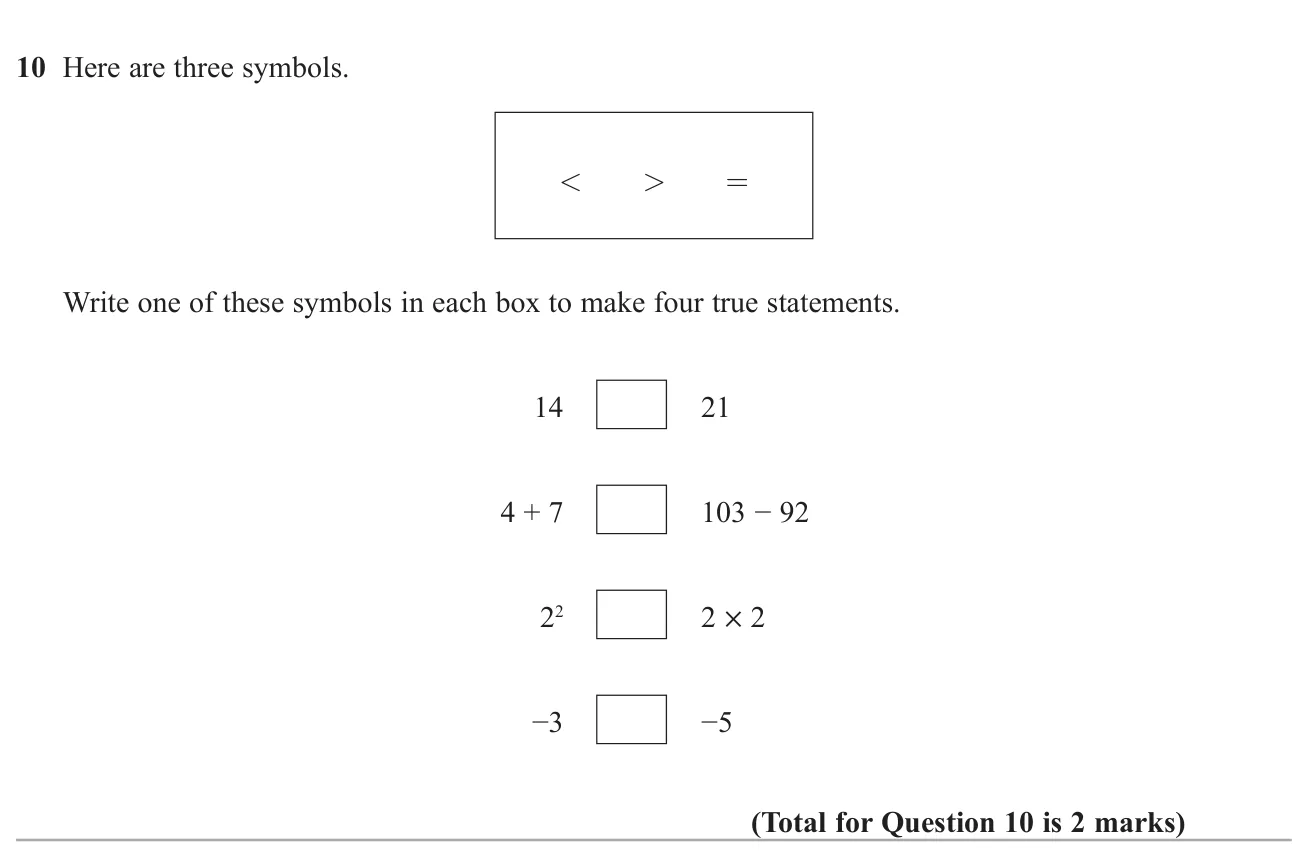
© Pearson Education Ltd. June 2019 Paper 2 (Foundation, calculator), question 10.
| Answer | , , , | 2 marks |
|---|
Worked solution Checked against the mark scheme
and , so they are equal.
and , so they are equal.
is nearer zero than , so
Watch out: Thinking because 3 is less than 5.
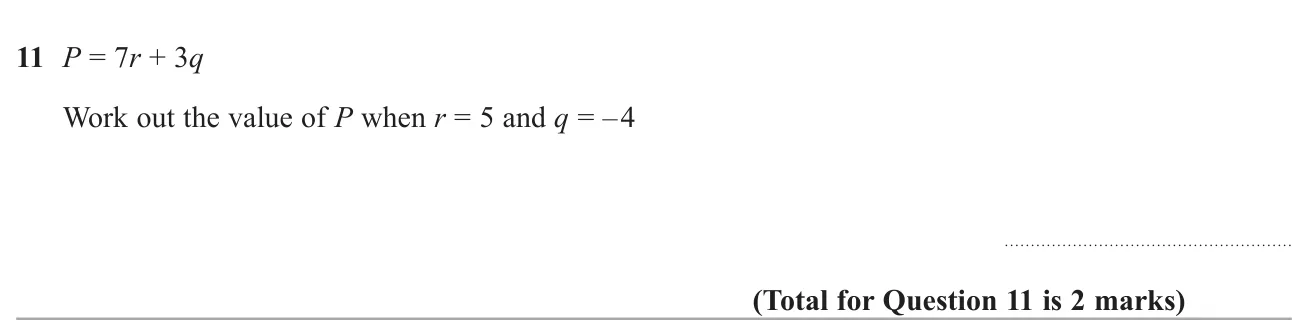
© Pearson Education Ltd. June 2019 Paper 2 (Foundation, calculator), question 11.
| Answer | 23 | 2 marks |
|---|
Worked solution Checked against the mark scheme
Watch out: Treating as , giving 47.
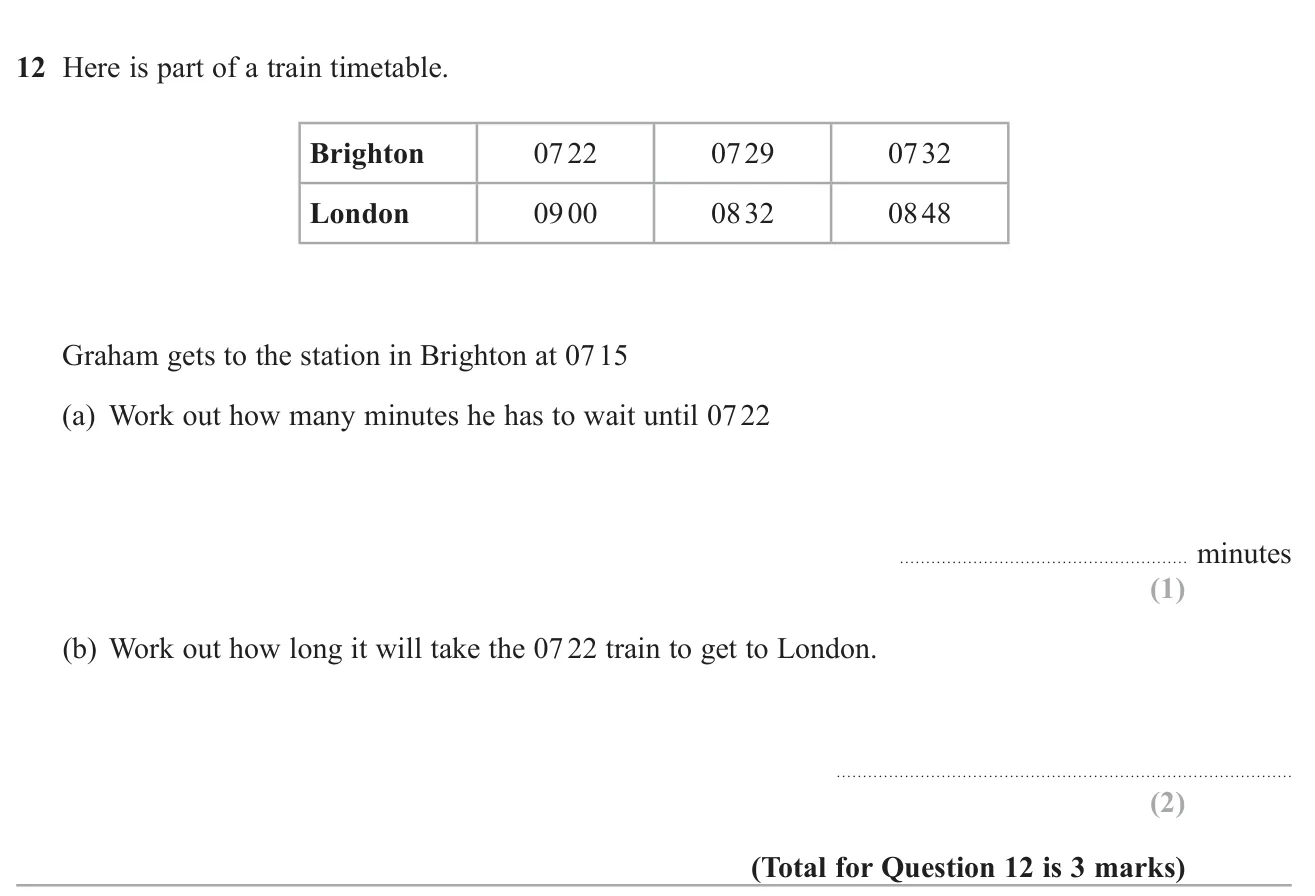
© Pearson Education Ltd. June 2019 Paper 2 (Foundation, calculator), question 12.
| (a) | 7 minutes | 1 mark |
|---|---|---|
| (b) | 1 hour 38 minutes | 2 marks |
Worked solution Checked against the mark scheme
(a) From 07 15 to 07 22 is 7 minutes.
(b) The 07 22 train reaches London at 09 00.
07 22 to 08 00 is 38 minutes; 08 00 to 09 00 is 1 hour.
Journey time: 1 hour 38 minutes (98 minutes).
Watch out: Subtracting like decimals: .
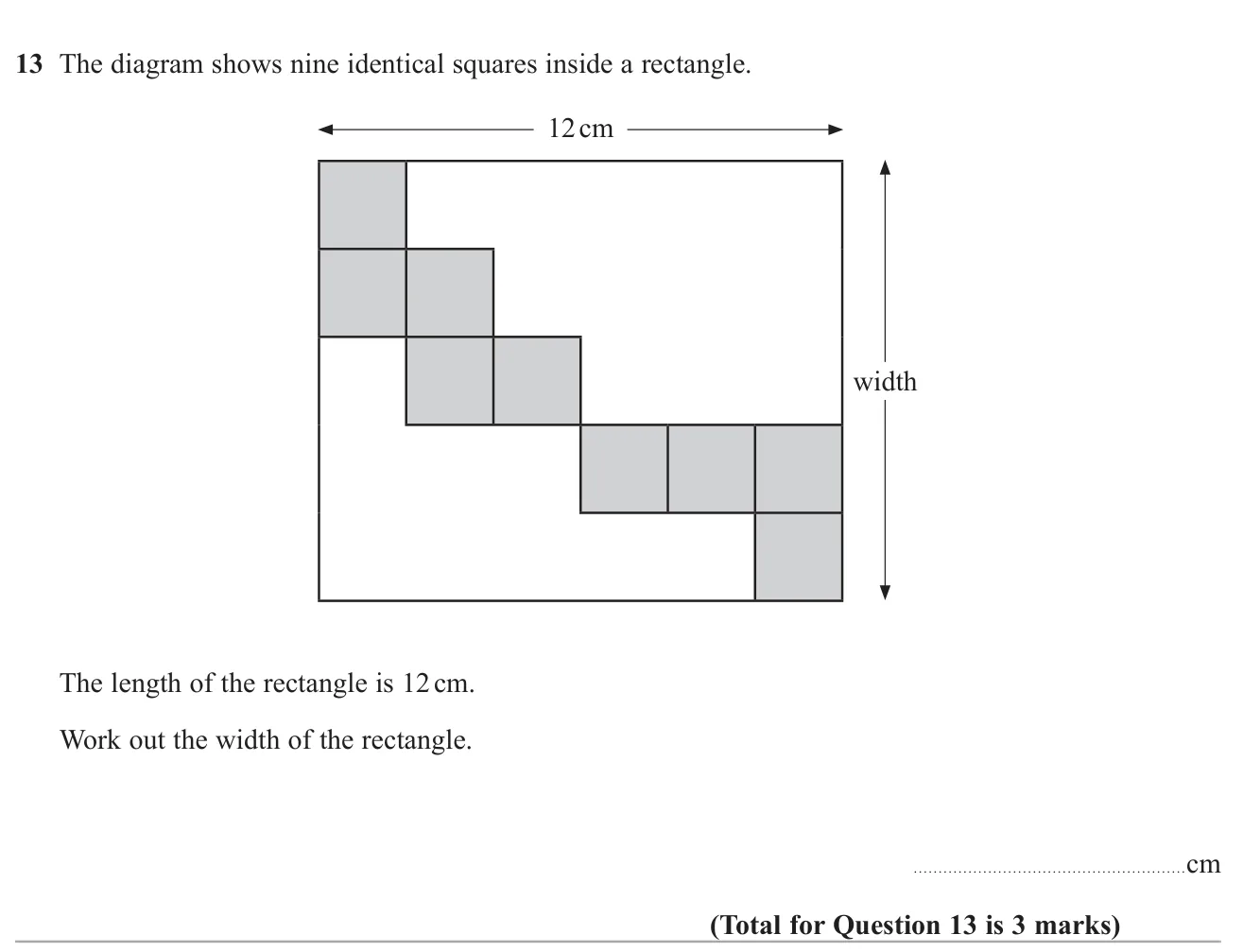
© Pearson Education Ltd. June 2019 Paper 2 (Foundation, calculator), question 13.
| Answer | 10 cm | 3 marks |
|---|
Worked solution Checked against the mark scheme
Across the length there are 6 squares side by side, so each side is cm.
Down the width there are 5 squares, so the width is cm.
Watch out: Dividing 12 by 9 because there are nine squares.
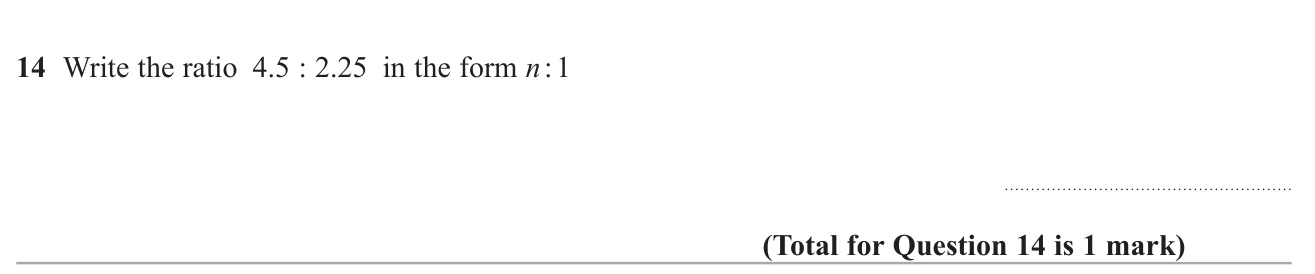
© Pearson Education Ltd. June 2019 Paper 2 (Foundation, calculator), question 14.
| Answer | 1 mark |
|---|
Worked solution Checked against the mark scheme
Divide both sides by 2.25:
and
So the ratio is
Watch out: Writing .
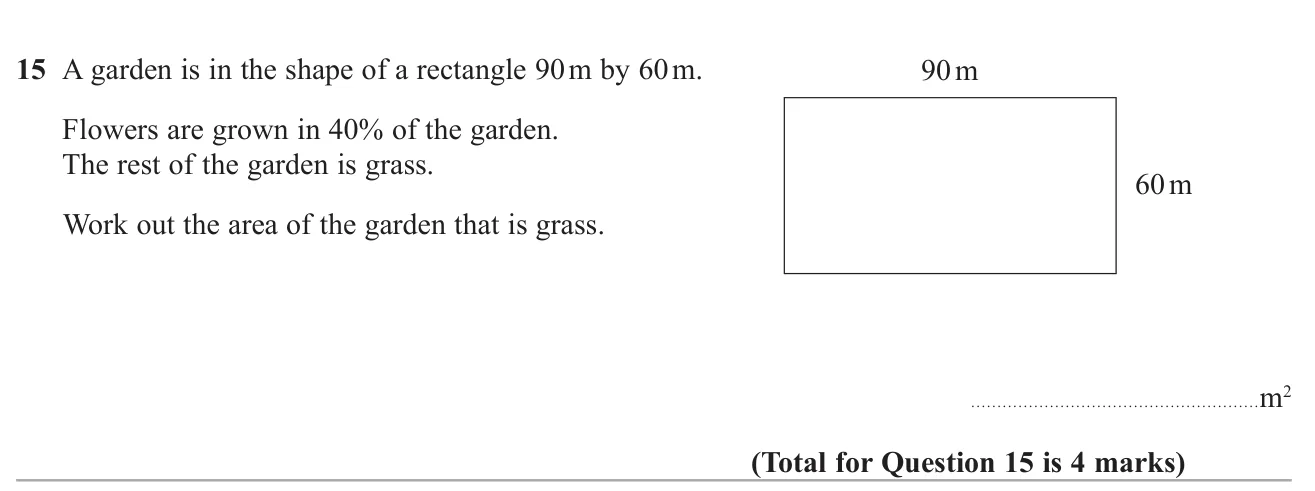
© Pearson Education Ltd. June 2019 Paper 2 (Foundation, calculator), question 15.
| Answer | m² | 4 marks |
|---|
Worked solution Checked against the mark scheme
Area of the garden: m²
Grass is of it.
m²
Watch out: Giving the flower area, 2160 m², instead of the grass area.
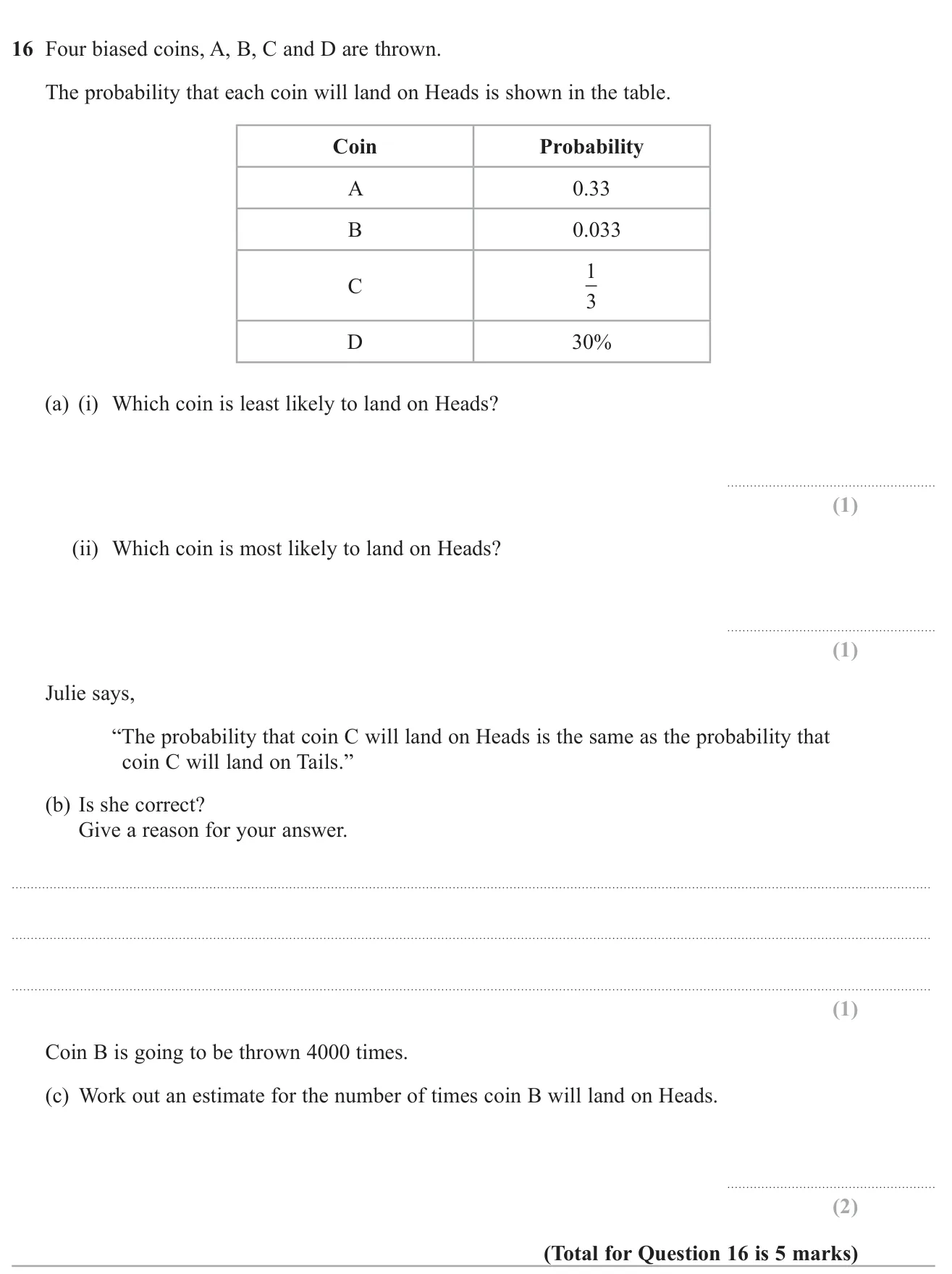
© Pearson Education Ltd. June 2019 Paper 2 (Foundation, calculator), question 16.
| (a(i)) | B | 1 mark |
|---|---|---|
| (a(ii)) | C | 1 mark |
| (b) | No: P(Tails) for C is , not | 1 mark |
| (c) | 132 | 2 marks |
Worked solution Checked against the mark scheme
(a) As decimals: A 0.33, B 0.033, C , D 0.3
Least likely is B; most likely is C.
(b) P(Tails) , which is not , so Julie is wrong.
(c)
Watch out: Thinking 0.33 is bigger than , or that 0.033 and 0.33 are the same.
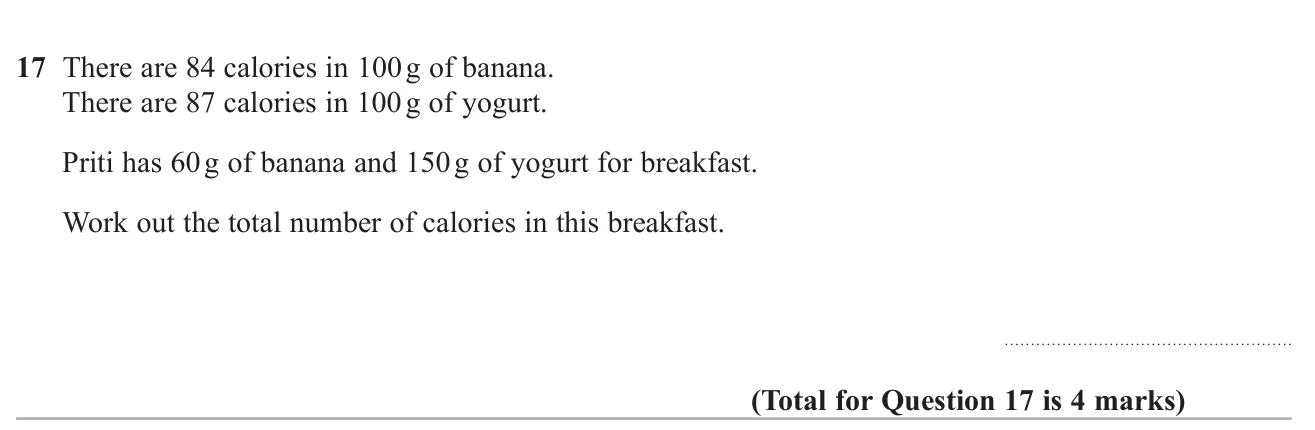
© Pearson Education Ltd. June 2019 Paper 2 (Foundation, calculator), question 17.
| Answer | 180.9 | 4 marks |
|---|
Worked solution Checked against the mark scheme
Banana:
Yogurt:
Total: calories
Watch out: Adding 84 and 87 without scaling for the masses.
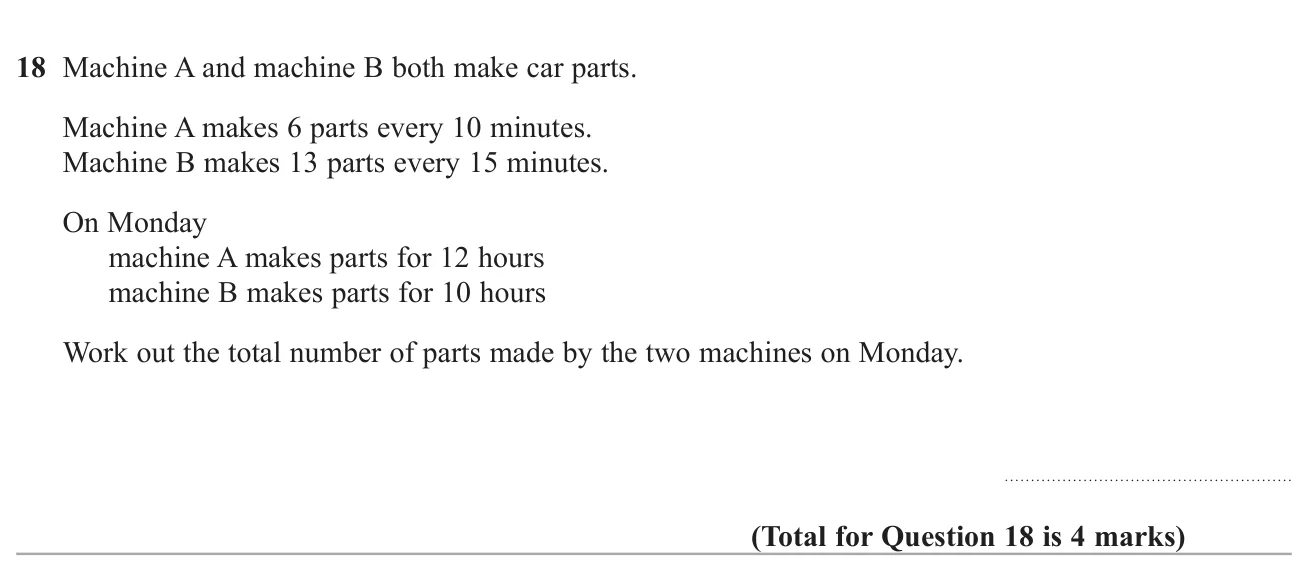
© Pearson Education Ltd. June 2019 Paper 2 (Foundation, calculator), question 18.
| Answer | 952 | 4 marks |
|---|
Worked solution Checked against the mark scheme
Machine A: 6 parts per 10 min is per hour.
Machine B: 13 parts per 15 min is per hour.
Total:
Watch out: Treating 12 hours as 12 lots of 10 minutes.
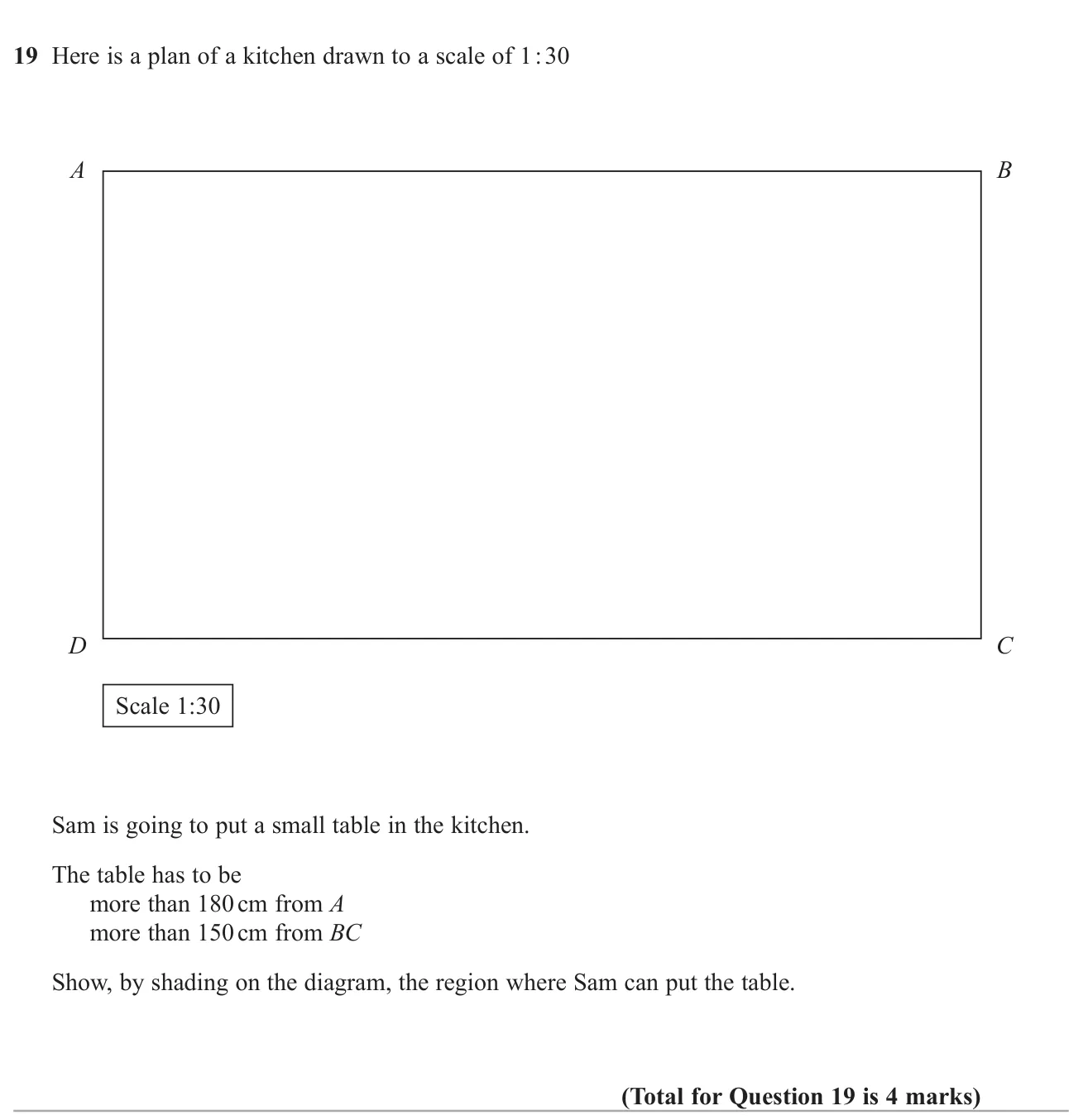
© Pearson Education Ltd. June 2019 Paper 2 (Foundation, calculator), question 19.
| Answer | Region inside the rectangle, outside the arc of radius 6 cm centred on A and more than 5 cm from BC, shaded | 4 marks |
|---|
Worked solution Checked against the mark scheme
Scale 1 : 30, so divide real lengths by 30.
cm and cm
With compasses set to 6 cm, draw an arc centred on A. The table must be outside this arc.
Draw a line parallel to BC, 5 cm in from it. The table must be on the A side of this line.
Shade the part of the kitchen that is outside the arc and beyond the line from BC.
Watch out: Using the real distances (180 and 150) as centimetres on the plan instead of dividing by 30, or measuring from AD instead of BC.
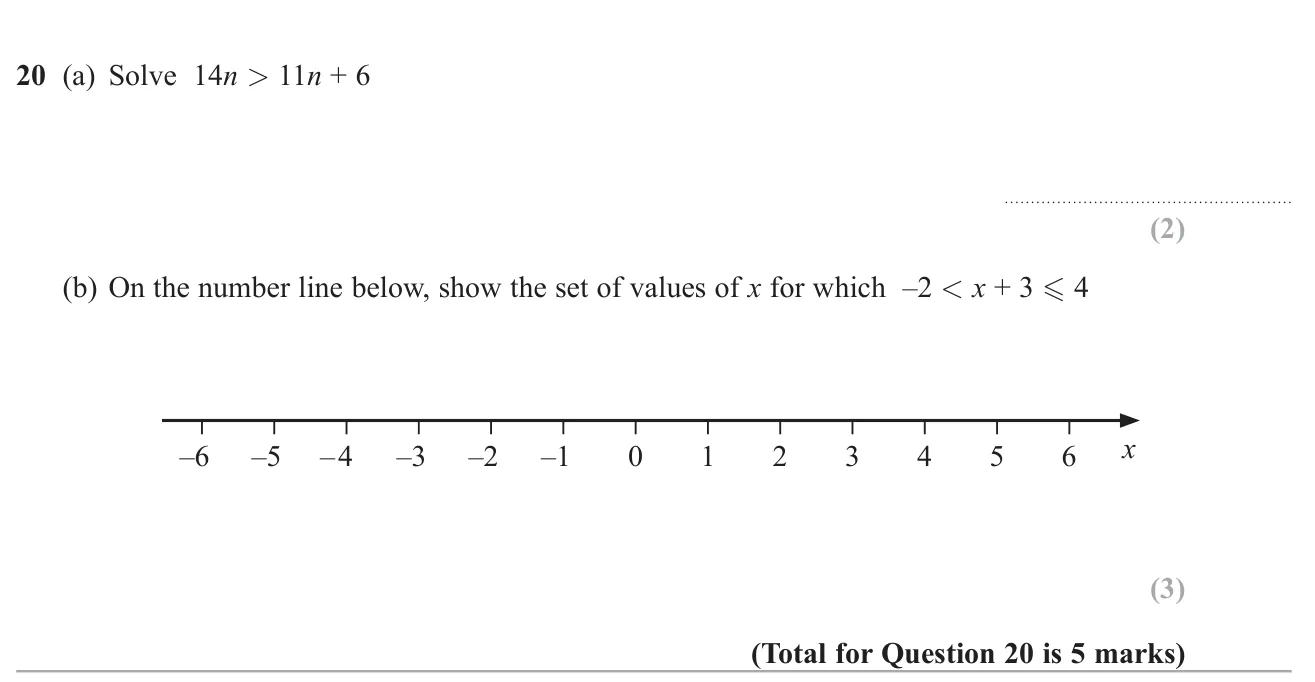
© Pearson Education Ltd. June 2019 Paper 2 (Foundation, calculator), question 20.
| (a) | 2 marks | |
|---|---|---|
| (b) | : open circle at , closed circle at , joined by a line | 3 marks |
Worked solution Checked against the mark scheme
(a) , so and .
(b) Subtract 3 from every part: , so .
Draw an open circle at (not included), a filled circle at (included) and join them.
Watch out: Using a filled circle at −5 for a strict inequality.
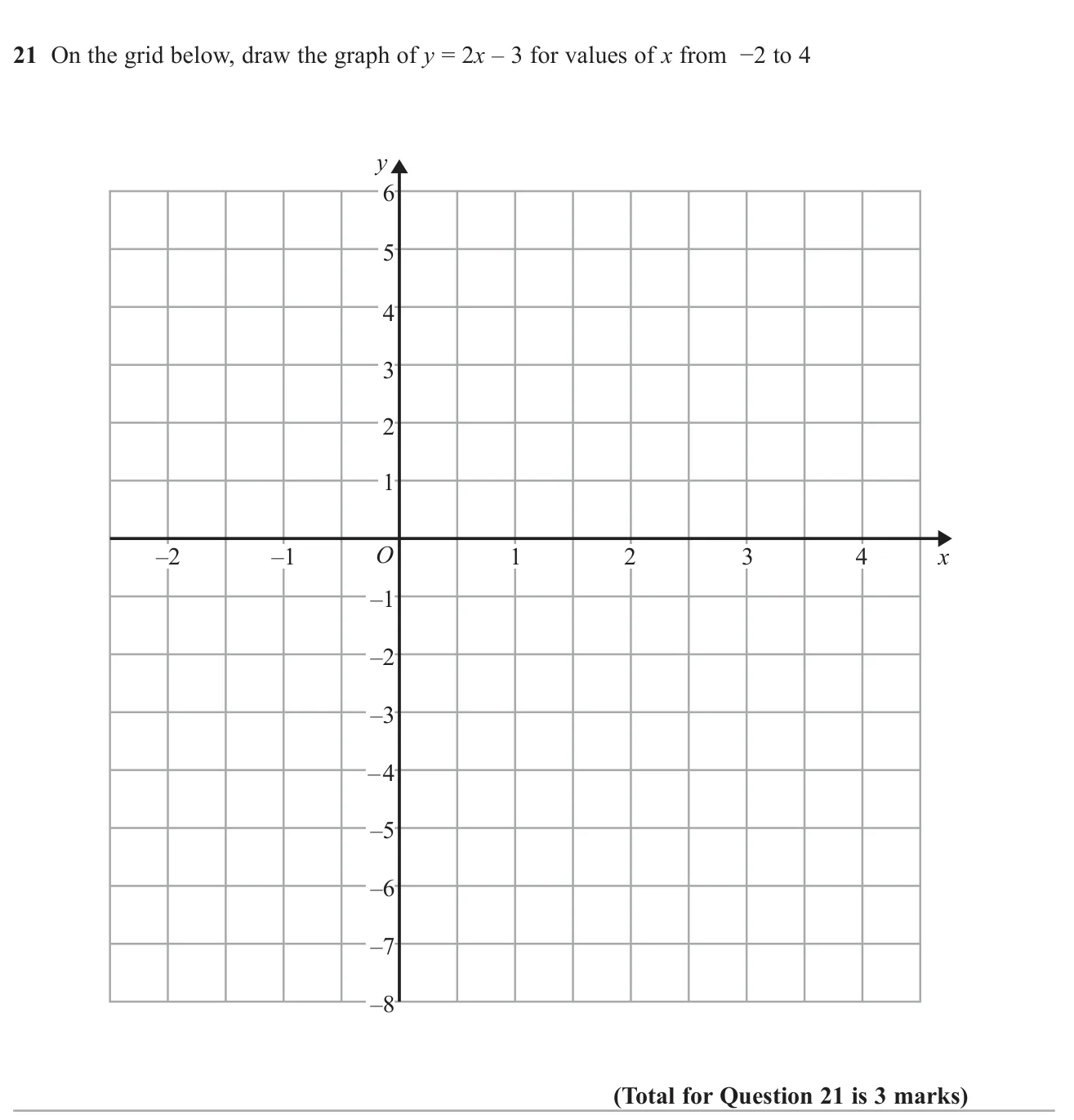
© Pearson Education Ltd. June 2019 Paper 2 (Foundation, calculator), question 21.
| Answer | Straight line through and | 3 marks |
|---|
Worked solution Checked against the mark scheme
Make a table of values using :
| | −2 | −1 | 0 | 1 | 2 | 3 | 4 |
|---|---|---|---|---|---|---|---|
| | −7 | −5 | −3 | −1 | 1 | 3 | 5 |
Plot the points and join them with a single ruled line from to .
Watch out: Stopping the line short of x = −2 or x = 4.
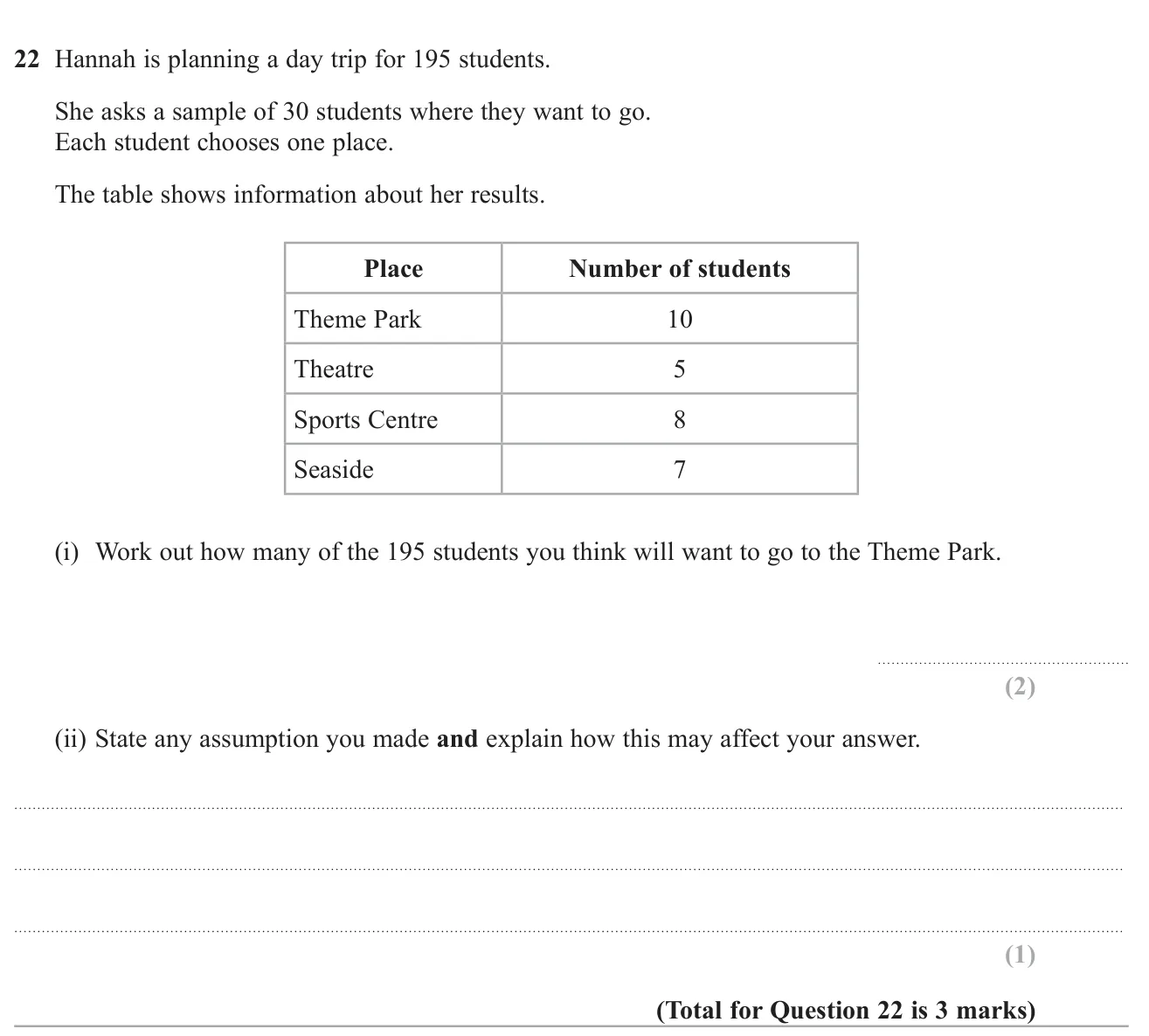
© Pearson Education Ltd. June 2019 Paper 2 (Foundation, calculator), question 22.
| ((i)) | 2 marks | |
|---|---|---|
| ((ii)) | e.g. The sample is representative of all 195 students; if not, the estimate could be wrong | 1 mark |
Worked solution Checked against the mark scheme
(i) of the sample chose the theme park.
(ii) Assume the 30 students represent the whole group fairly. If they do not, the true number could be quite different from 65.
Watch out: Saying only 'I rounded my answer' as the assumption.
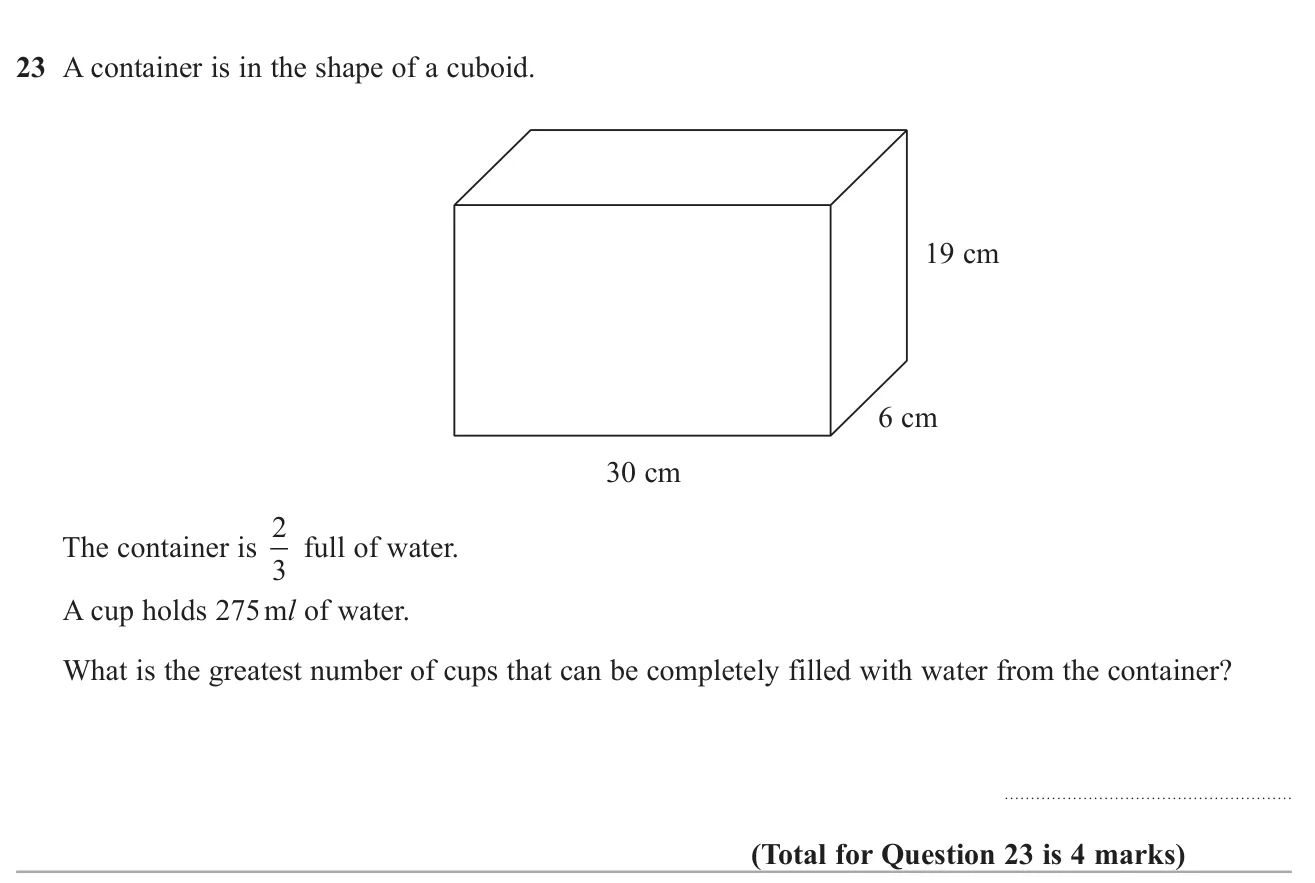
© Pearson Education Ltd. June 2019 Paper 2 (Foundation, calculator), question 23.
| Answer | 4 marks |
|---|
Worked solution Checked against the mark scheme
Volume
Water
Only 8 cups can be completely filled.
Watch out: Rounding 8.29 up to 9 cups.
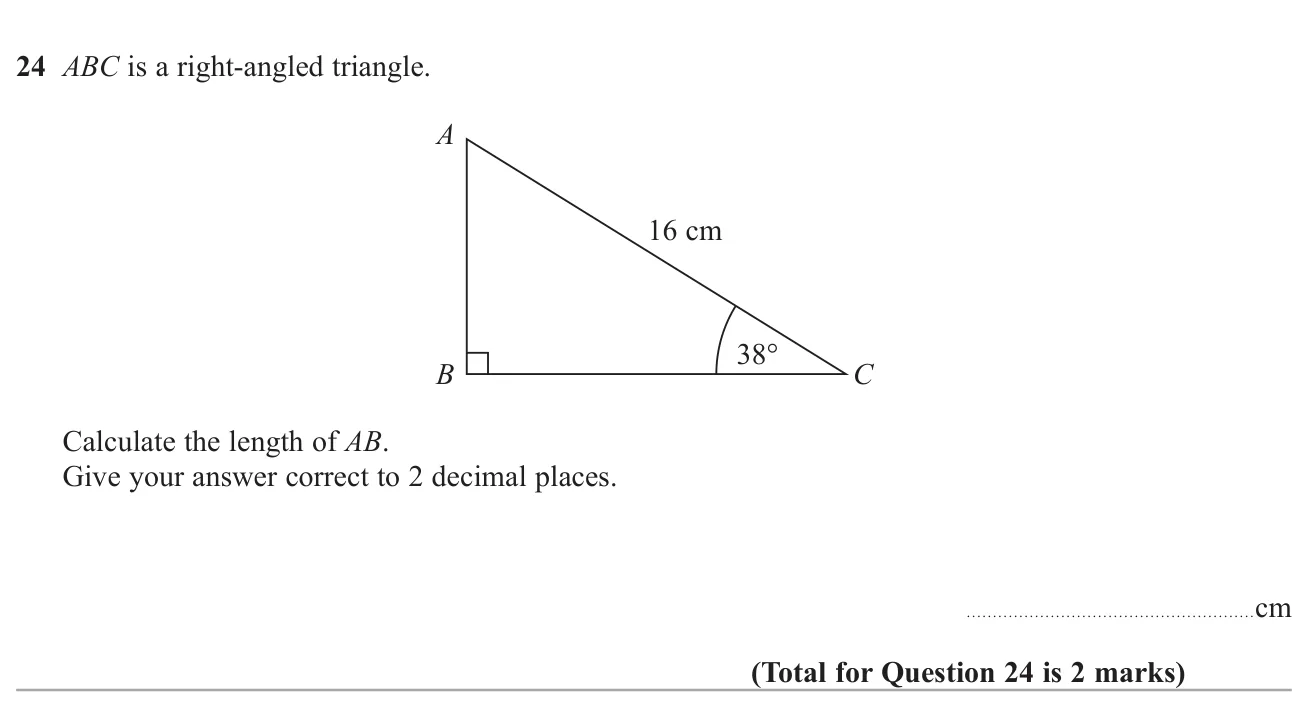
© Pearson Education Ltd. June 2019 Paper 2 (Foundation, calculator), question 24.
| Answer | cm | 2 marks |
|---|
Worked solution Checked against the mark scheme
AC is the hypotenuse (16 cm) and AB is opposite the 38° angle.
Watch out: Using cos instead of sin.
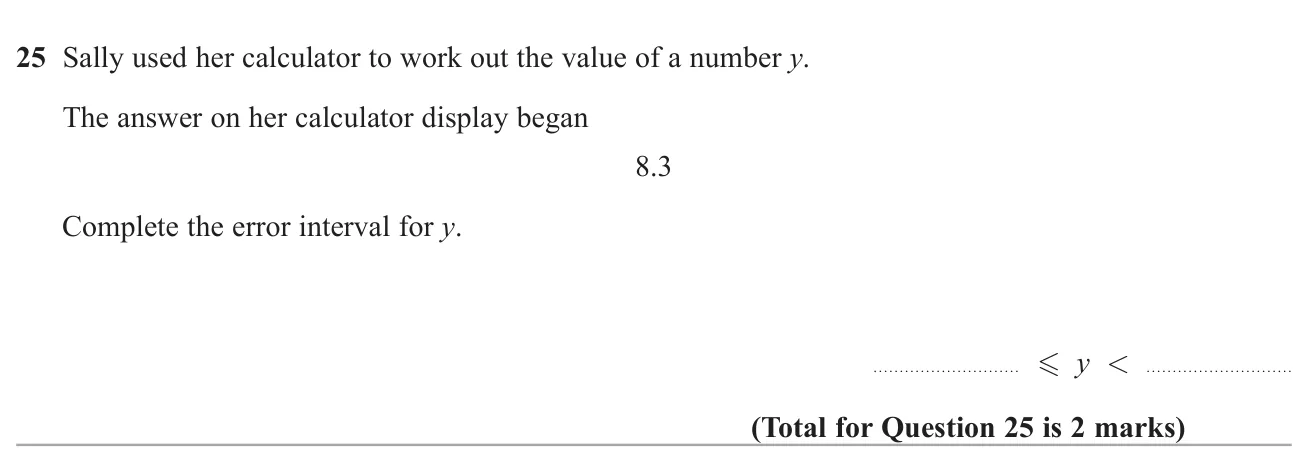
© Pearson Education Ltd. June 2019 Paper 2 (Foundation, calculator), question 25.
| Answer | 2 marks |
|---|
Worked solution Checked against the mark scheme
The display began 8.3, so the digits after 8.3 have been cut off (truncated), not rounded.
The smallest value is 8.3 and can get as close as you like to 8.4 without reaching it.
Watch out: Treating it as rounding and giving 8.25 ≤ y < 8.35.
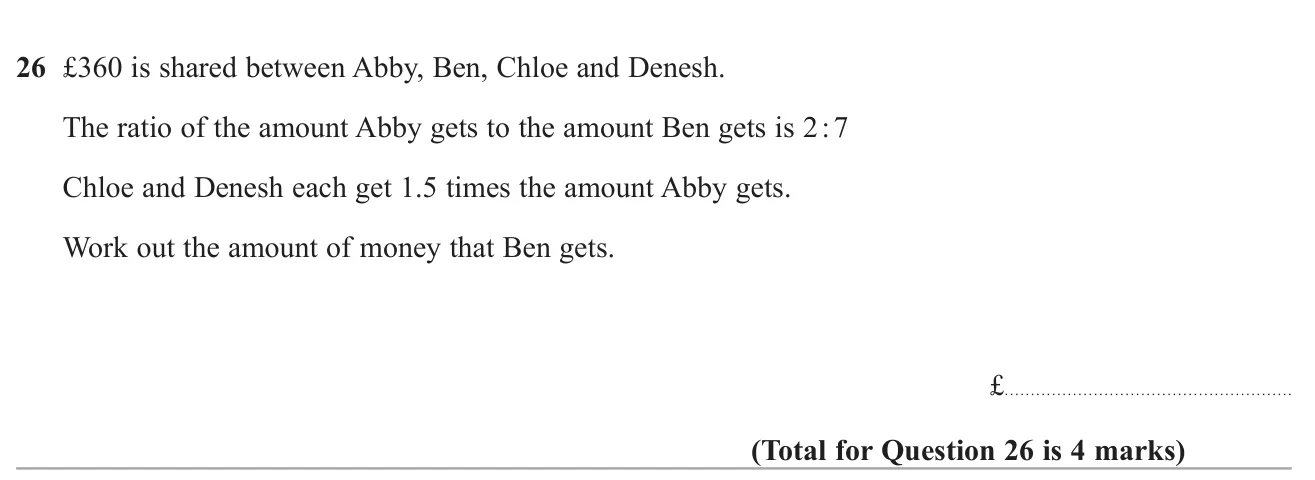
© Pearson Education Ltd. June 2019 Paper 2 (Foundation, calculator), question 26.
| Answer | £168 | 4 marks |
|---|
Worked solution Checked against the mark scheme
Abby : Ben = 2 : 7. Chloe and Denesh each get parts.
Total parts
One part
Ben gets
Watch out: Giving Chloe and Denesh 1.5 parts each instead of 3.
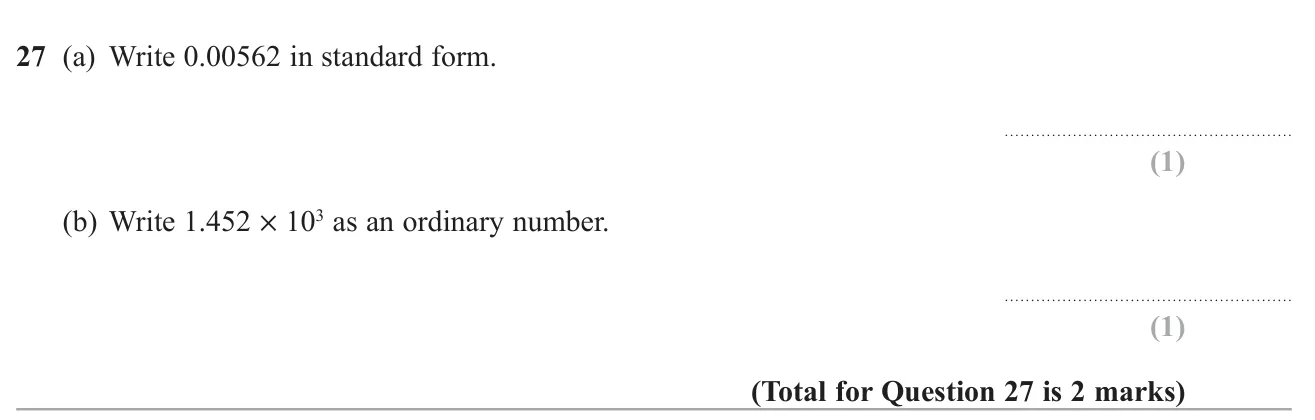
© Pearson Education Ltd. June 2019 Paper 2 (Foundation, calculator), question 27.
| (a) | 1 mark | |
|---|---|---|
| (b) | 1 mark |
Worked solution Checked against the mark scheme
(a) Move the decimal point 3 places right to get 5.62, so .
(b) : move the point 3 places right to get .
Watch out: Using a positive power in (a).
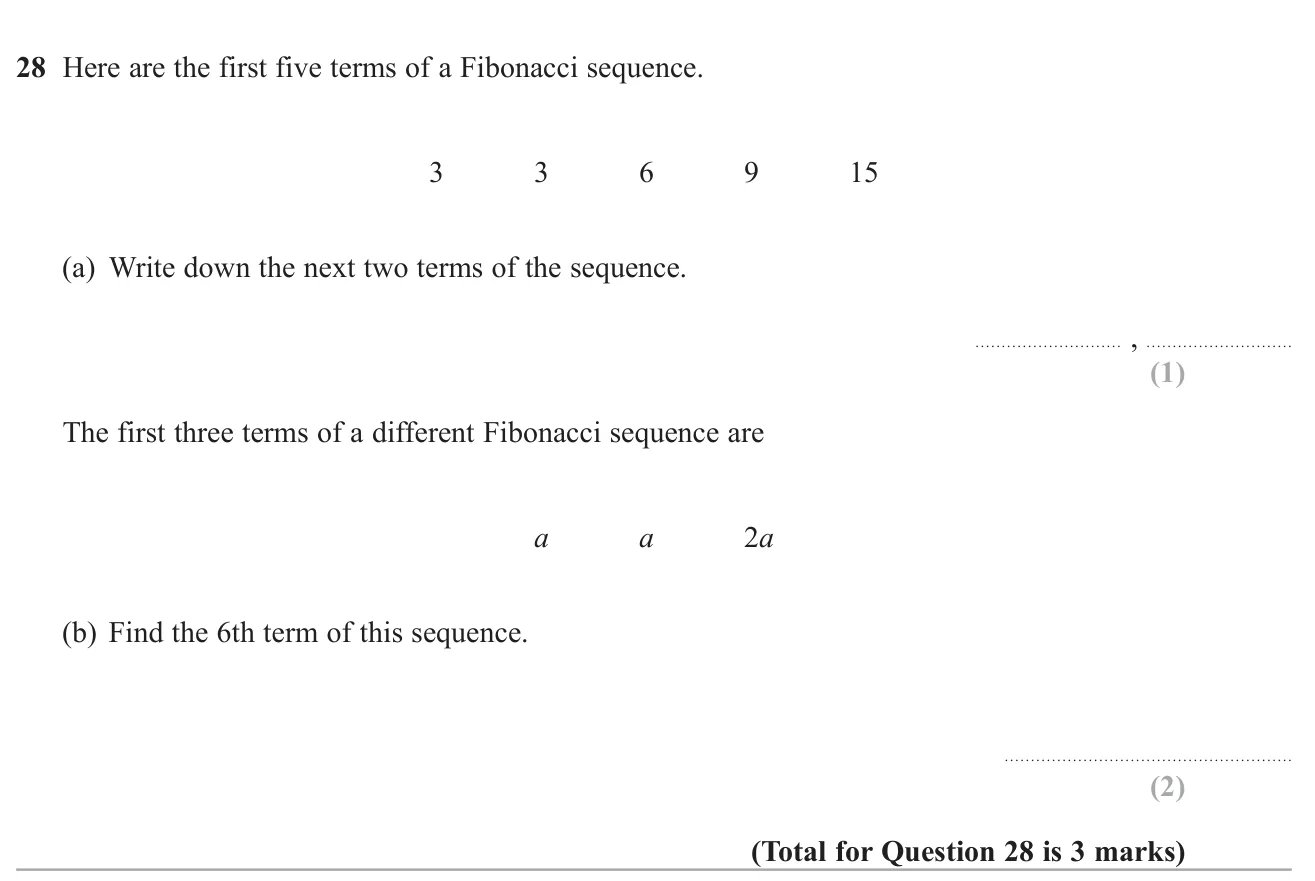
© Pearson Education Ltd. June 2019 Paper 2 (Foundation, calculator), question 28.
| (a) | 24, 39 | 1 mark |
|---|---|---|
| (b) | 2 marks |
Worked solution Checked against the mark scheme
(a) Add the two previous terms: , then
(b) , then , ,
The 6th term is .
Watch out: In (b), giving the 5th term, .
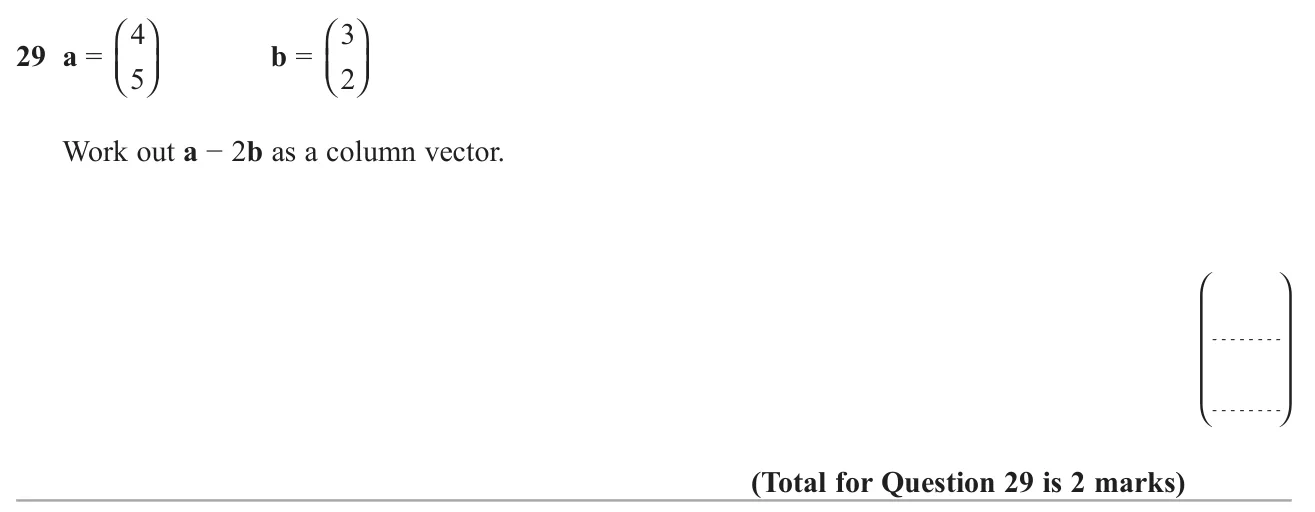
© Pearson Education Ltd. June 2019 Paper 2 (Foundation, calculator), question 29.
| Answer | 2 marks |
|---|
Worked solution Checked against the mark scheme
Watch out: Subtracting only once, giving .
Add up your marks for all three papers and see what grade that would have been.