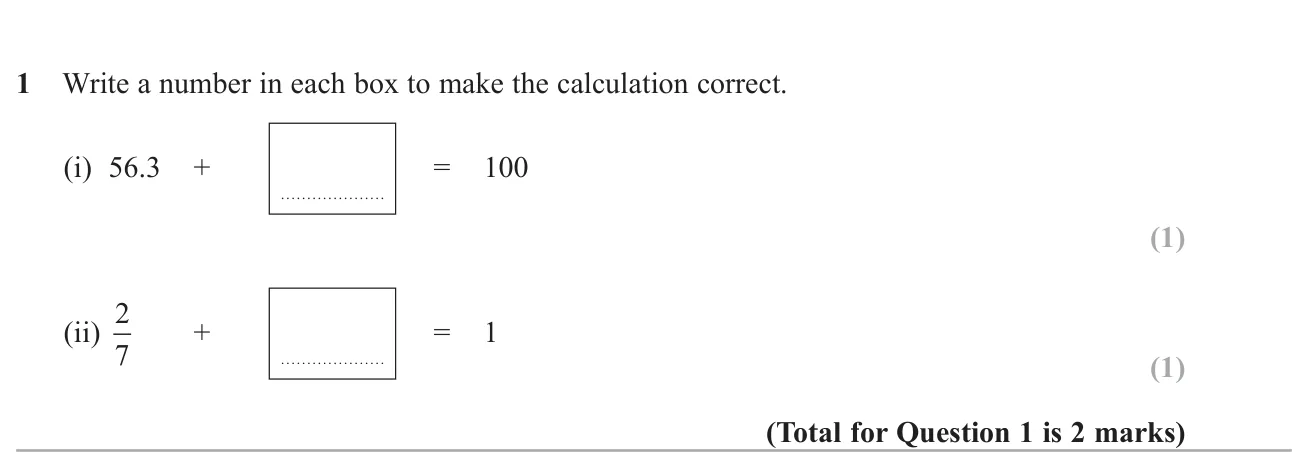
© Pearson Education Ltd. November 2018 Paper 3 (Foundation, calculator), question 1.
Show answer
| (i) | 43.7 | 1 mark |
|---|
| (ii) | 75 | 1 mark |
|---|
Worked solution Checked against the mark scheme
(i) 100−56.3=43.7
(ii) One whole is 77, so 77−72=75
Watch out: In (i), getting 44.7 or 43.3 by mis-handling the decimal when subtracting from 100.
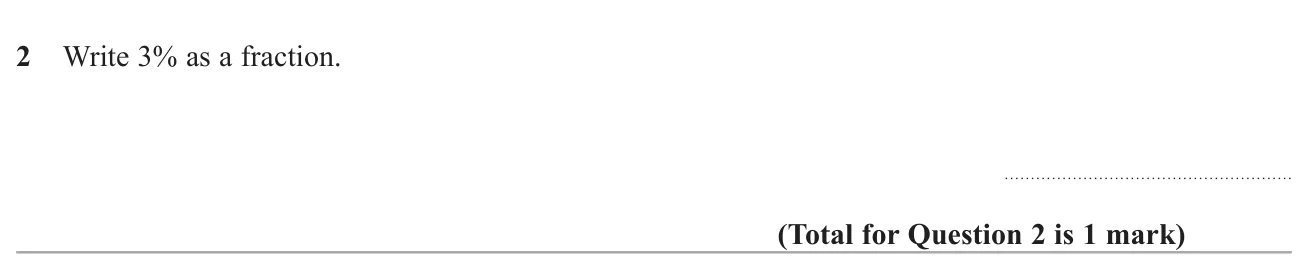
© Pearson Education Ltd. November 2018 Paper 3 (Foundation, calculator), question 2.
Show answer
| Answer | 1003 | 1 mark |
|---|
Worked solution Checked against the mark scheme
Per cent means out of 100, so 3%=1003
Watch out: Writing 103.
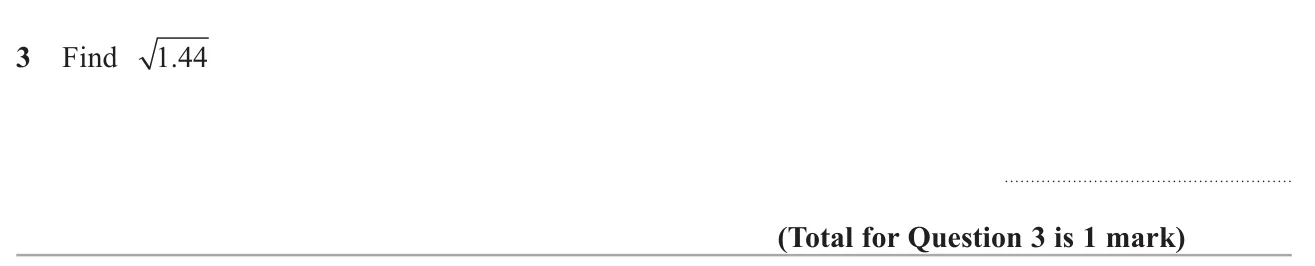
© Pearson Education Ltd. November 2018 Paper 3 (Foundation, calculator), question 3.
Show answer
Worked solution Checked against the mark scheme
1.2×1.2=1.44, so 1.44=1.2
Watch out: Halving the number instead of square rooting it (0.72).
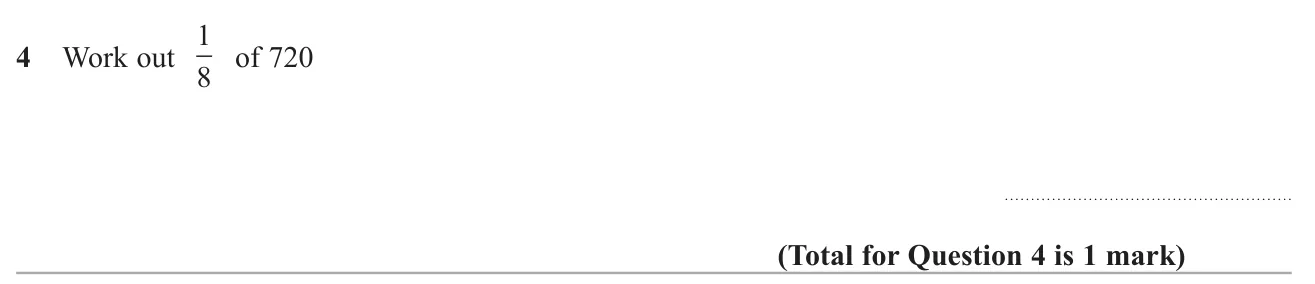
© Pearson Education Ltd. November 2018 Paper 3 (Foundation, calculator), question 4.
Show answer
Worked solution Checked against the mark scheme
81 of 720 means 720÷8=90
Watch out: Multiplying by 8 instead of dividing.
© Pearson Education Ltd. November 2018 Paper 3 (Foundation, calculator), question 5.
Show answer
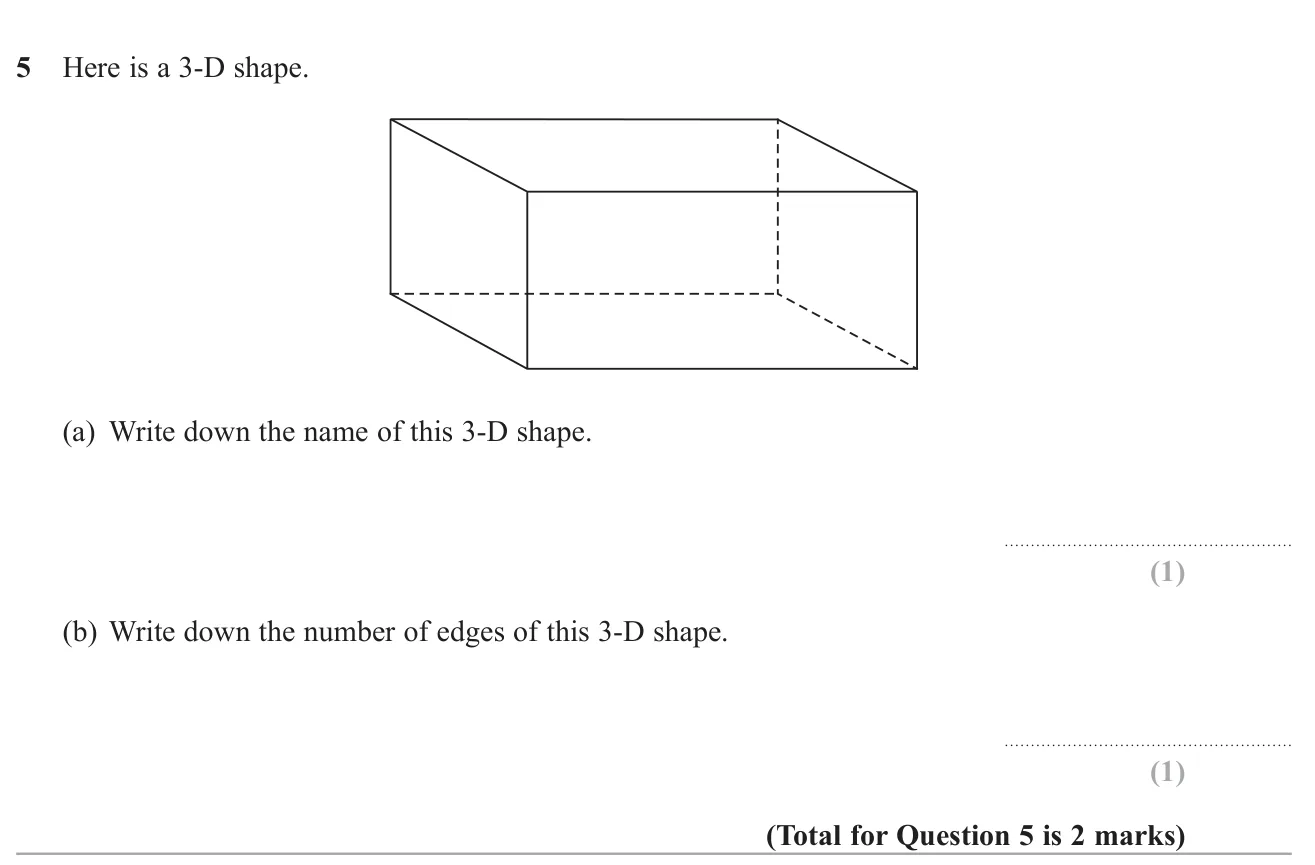
| (a) | Cuboid | 1 mark |
|---|
| (b) | 12 | 1 mark |
|---|
Worked solution Checked against the mark scheme
(a) Six rectangular faces, so it is a cuboid.
(b) 4 edges on the top, 4 on the bottom and 4 upright edges: 4+4+4=12
Watch out: Counting only the edges that can be seen, or confusing edges with vertices (8).
© Pearson Education Ltd. November 2018 Paper 3 (Foundation, calculator), question 6.
Show answer
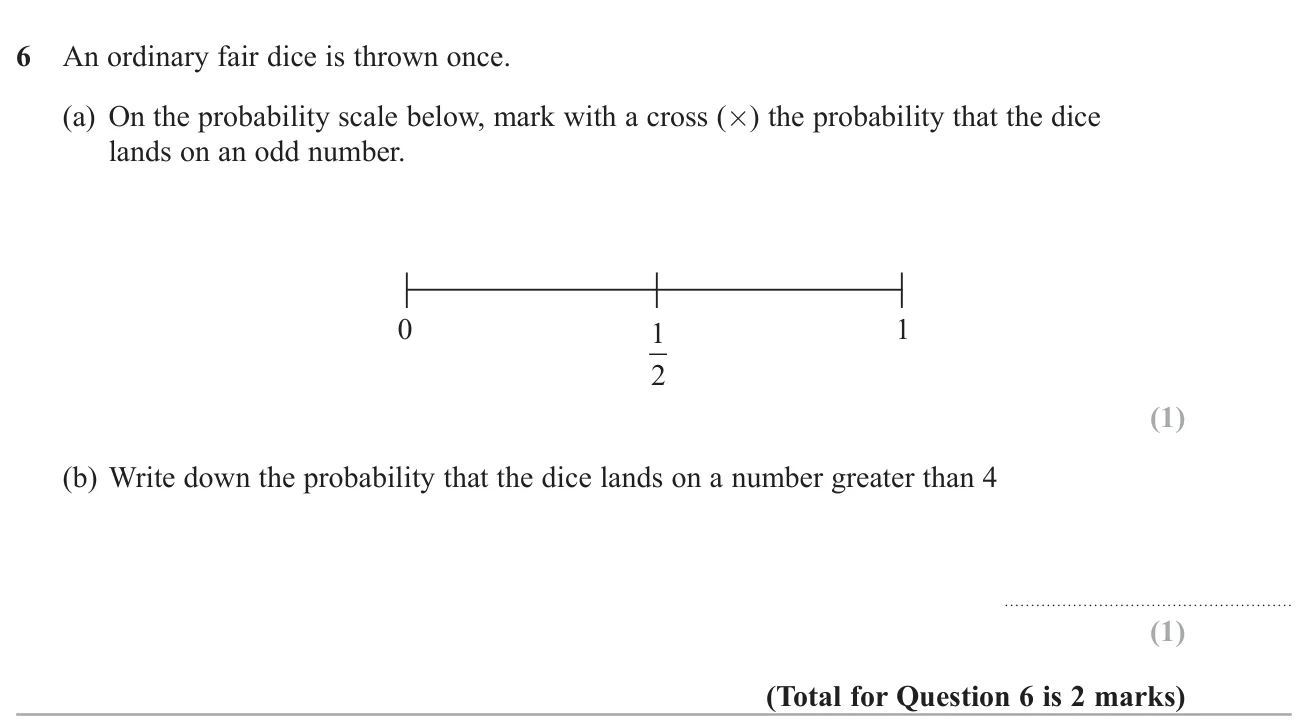
| (a) | Cross at 21 | 1 mark |
|---|
| (b) | 62 | 1 mark |
|---|
Worked solution Checked against the mark scheme
(a) Odd numbers are 1, 3, 5: that is 3 out of 6, so 63=21. Put the cross in the middle.
(b) Numbers greater than 4 are 5 and 6, so the probability is 62=31
Watch out: In (b), including 4 and giving 63.
© Pearson Education Ltd. November 2018 Paper 3 (Foundation, calculator), question 7.
Show answer
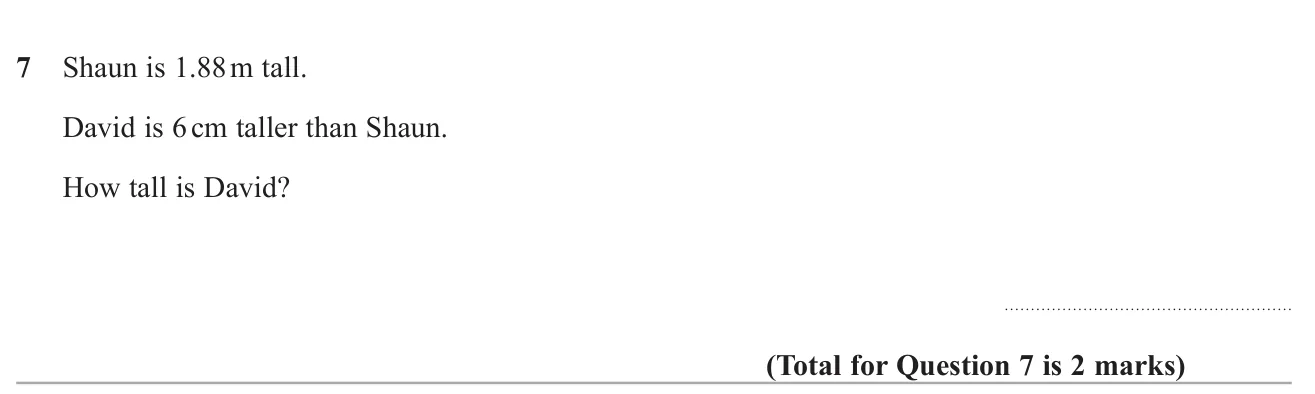
| Answer | 1.94 m (or 194 cm) | 2 marks |
|---|
Worked solution Checked against the mark scheme
Change 6 cm to metres: 6÷100=0.06 m.
1.88+0.06=1.94 m (or 188+6=194 cm).
Watch out: Adding 6 straight on to 1.88 to get 7.88.
© Pearson Education Ltd. November 2018 Paper 3 (Foundation, calculator), question 8.
Show answer
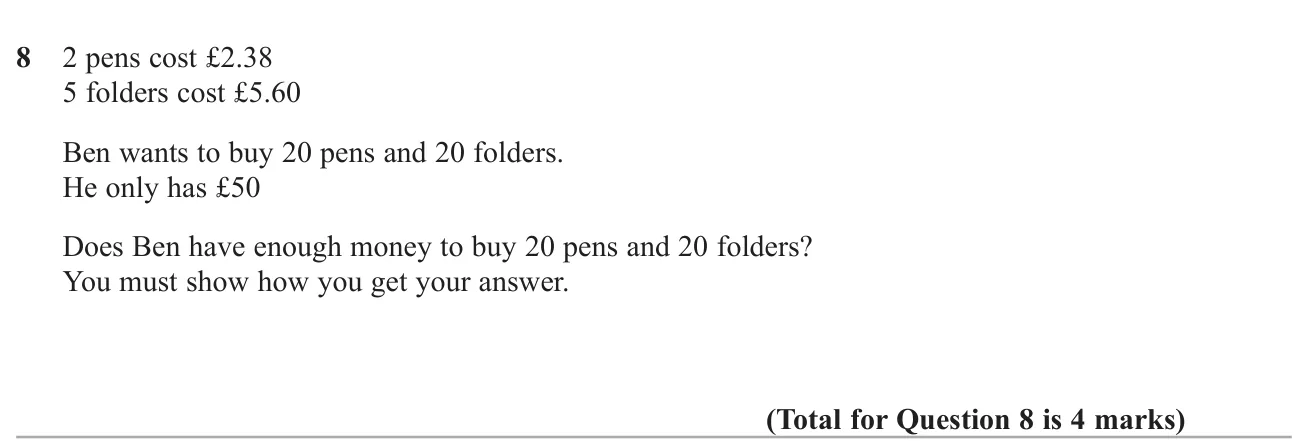
| Answer | Yes: the total is £46.20 (£3.80 left) | 4 marks |
|---|
Worked solution Checked against the mark scheme
One pen: 2.38÷2=£1.19, so 20 pens: 20×1.19=£23.80
One folder: 5.60÷5=£1.12, so 20 folders: 20×1.12=£22.40
Total: 23.80+22.40=£46.20
£46.20<£50, so yes, Ben has enough (with £3.80 left).
Watch out: Multiplying £2.38 by 20 instead of by 10.
© Pearson Education Ltd. November 2018 Paper 3 (Foundation, calculator), question 9.
Show answer
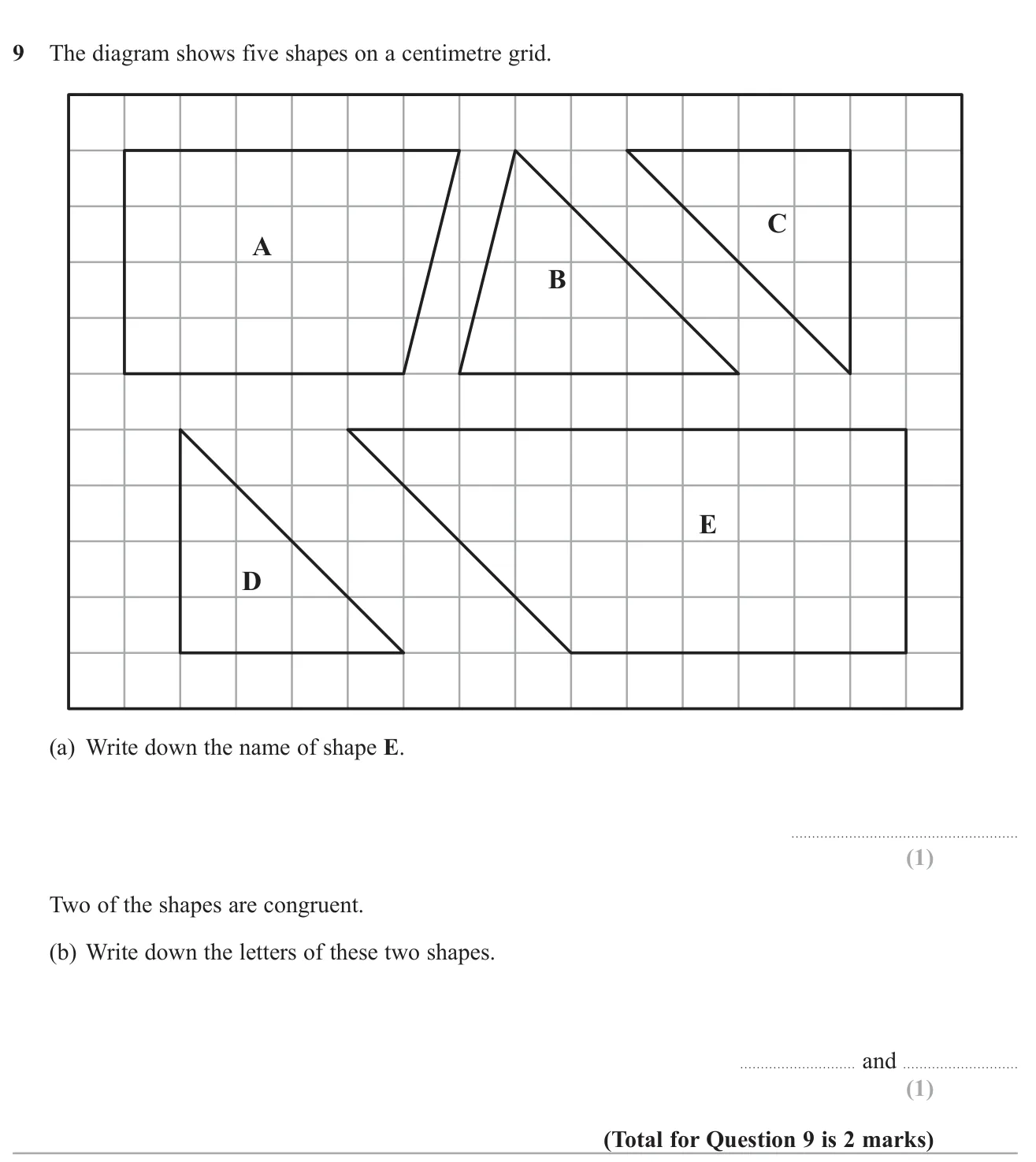
| (a) | Trapezium | 1 mark |
|---|
| (b) | C and D | 1 mark |
|---|
Worked solution Checked against the mark scheme
(a) Shape E has exactly one pair of parallel sides, so it is a trapezium.
(b) Congruent shapes are exactly the same shape and size (they may be turned). C and D match.
Watch out: Choosing two shapes that are similar (same shape, different size) rather than congruent.
© Pearson Education Ltd. November 2018 Paper 3 (Foundation, calculator), question 10.
Show answer
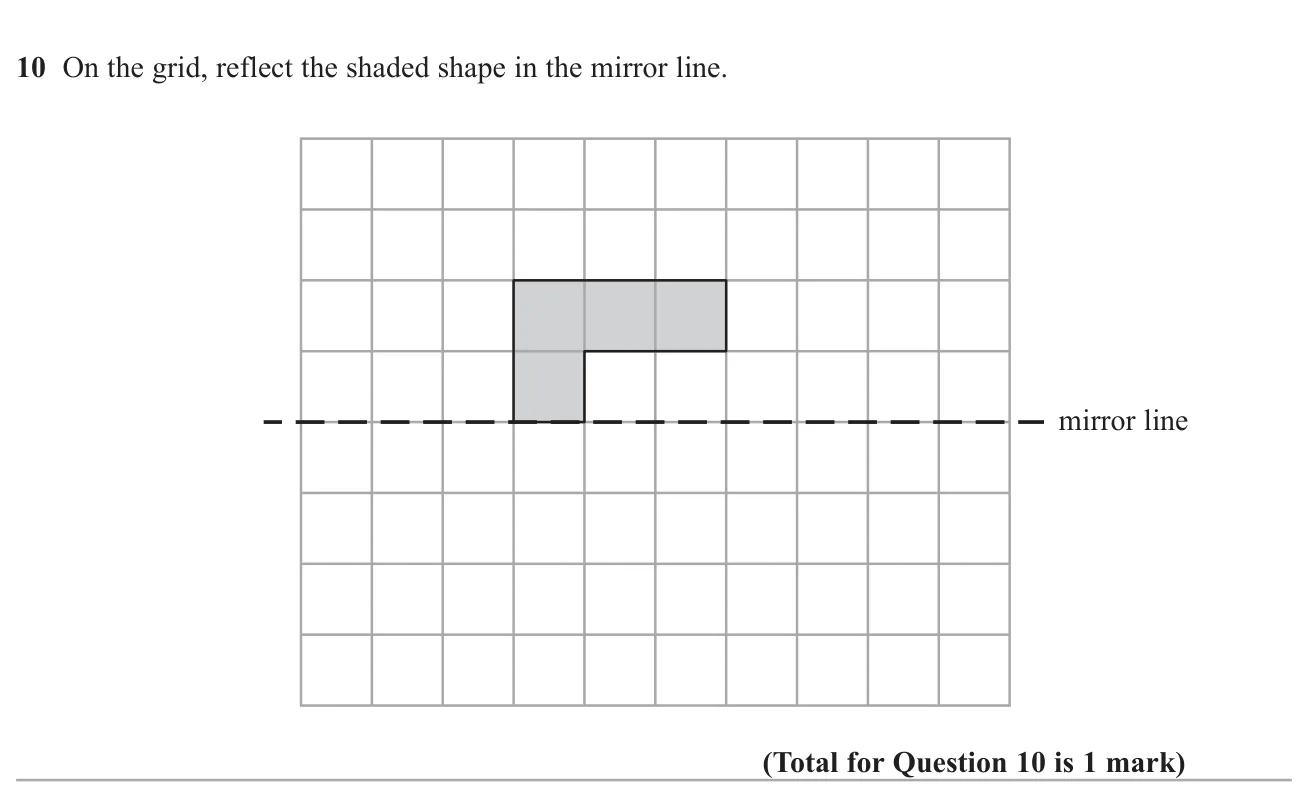
| Answer | Correct reflection drawn | 1 mark |
|---|
Worked solution Checked against the mark scheme
Take each corner of the shape in turn and count its distance to the mirror line.
Plot the image corner the same distance on the other side, then join the corners up.
Watch out: Translating the shape across the line instead of flipping it.
© Pearson Education Ltd. November 2018 Paper 3 (Foundation, calculator), question 11.
Show answer
Worked solution Checked against the mark scheme
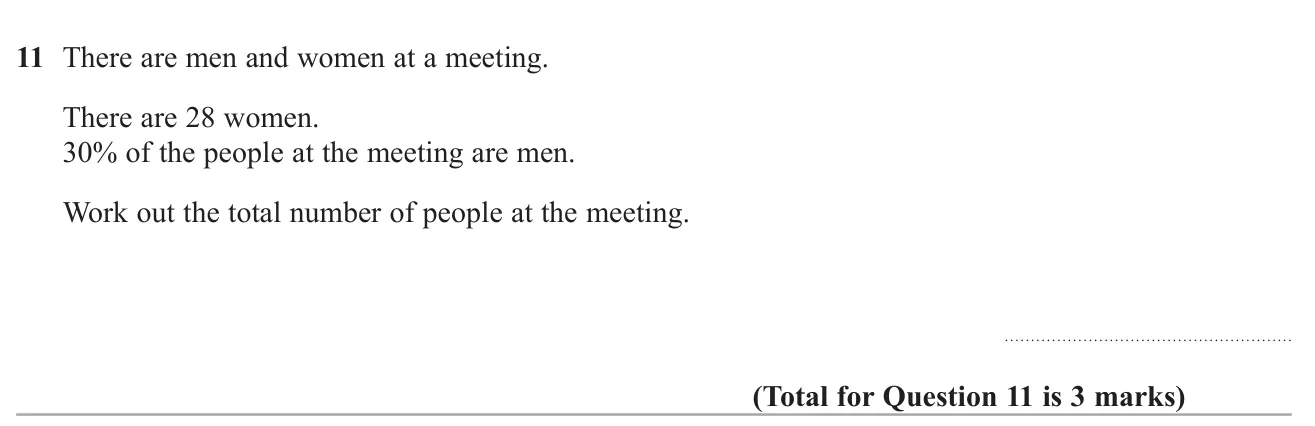
Men are 30%, so women are 100−30=70%
70% is 28, so 10% is 28÷7=4
100% is 4×10=40 people.
Watch out: Working out 30% of 28 and adding it on, giving 36.4.
© Pearson Education Ltd. November 2018 Paper 3 (Foundation, calculator), question 12.
Show answer
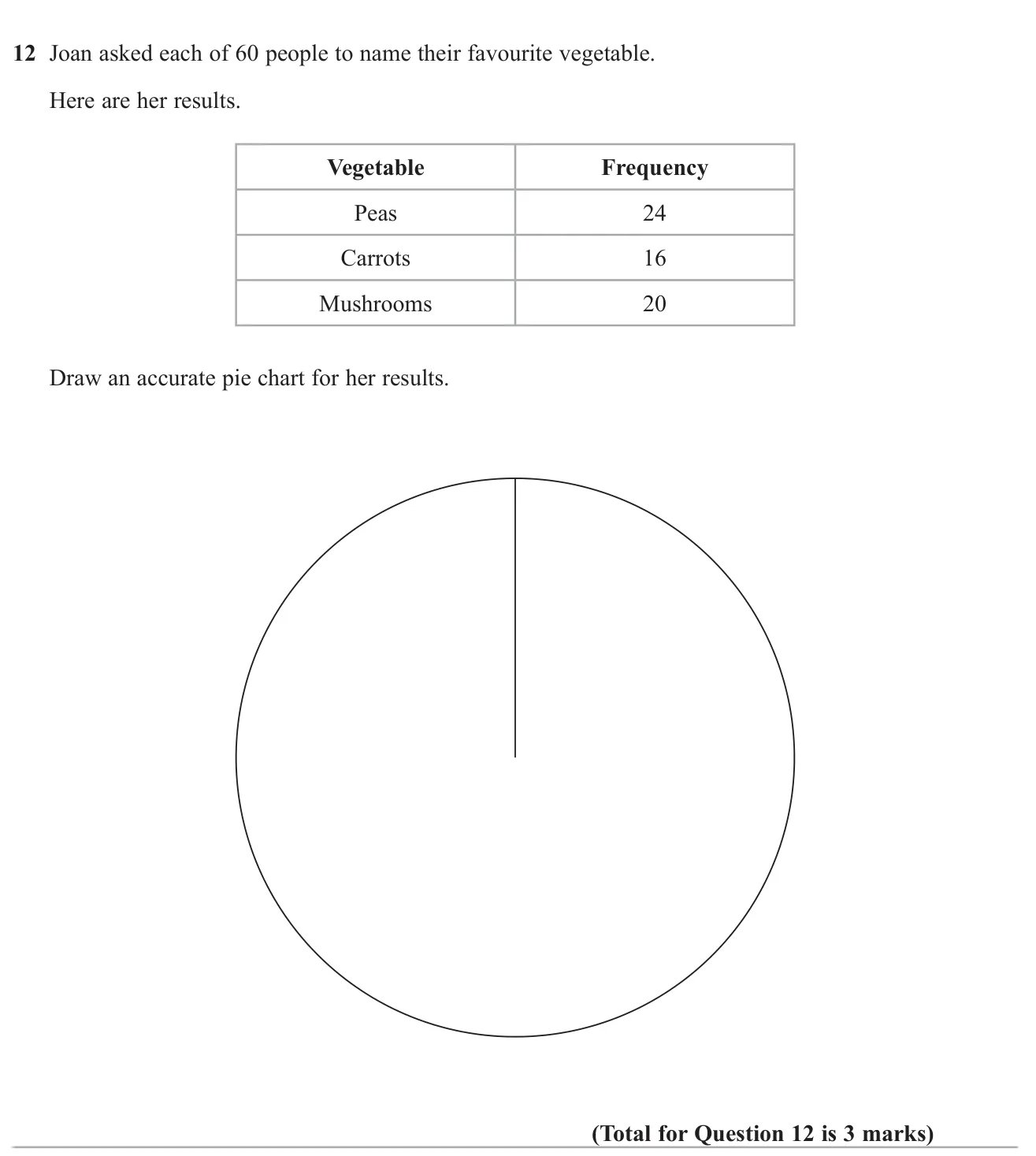
| Answer | Pie chart with Peas 144°, Carrots 96°, Mushrooms 120°, labelled | 3 marks |
|---|
Worked solution Checked against the mark scheme
Each person is worth 360÷60=6°
Peas: 24×6=144°; Carrots: 16×6=96°; Mushrooms: 20×6=120°
Check: 144+96+120=360°. Draw the sectors with a protractor and label each one.
Watch out: Using the frequencies as the angles directly.
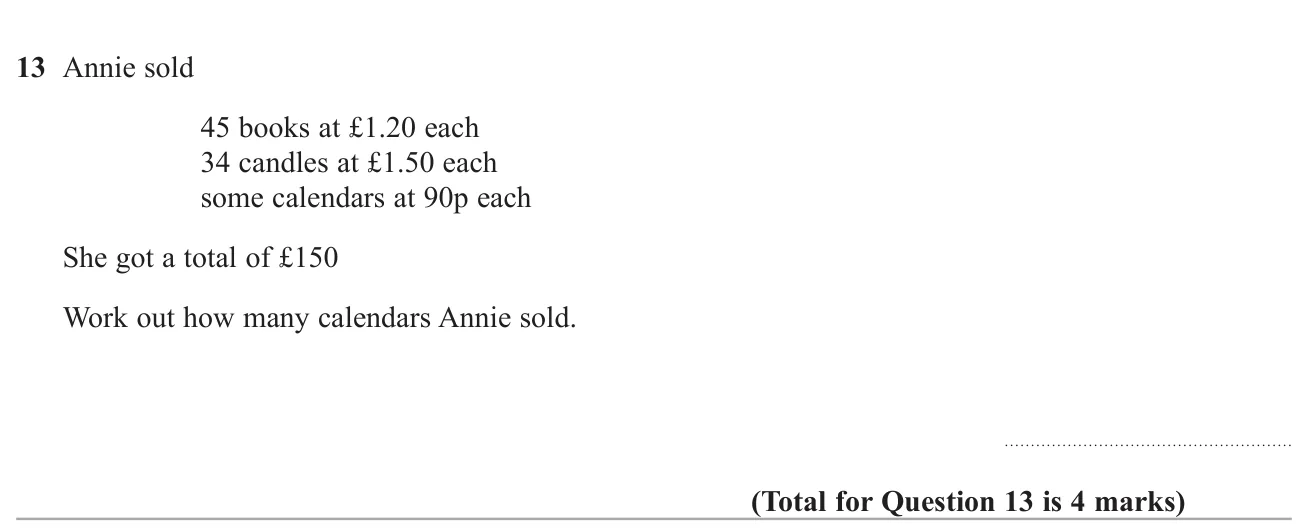
© Pearson Education Ltd. November 2018 Paper 3 (Foundation, calculator), question 13.
Show answer
Worked solution Checked against the mark scheme
Books: 45×1.20=£54
Candles: 34×1.50=£51
Left for calendars: 150−54−51=£45
90p is £0.90, so 45÷0.90=50 calendars.
Watch out: Dividing £45 by 90 without changing pence to pounds.
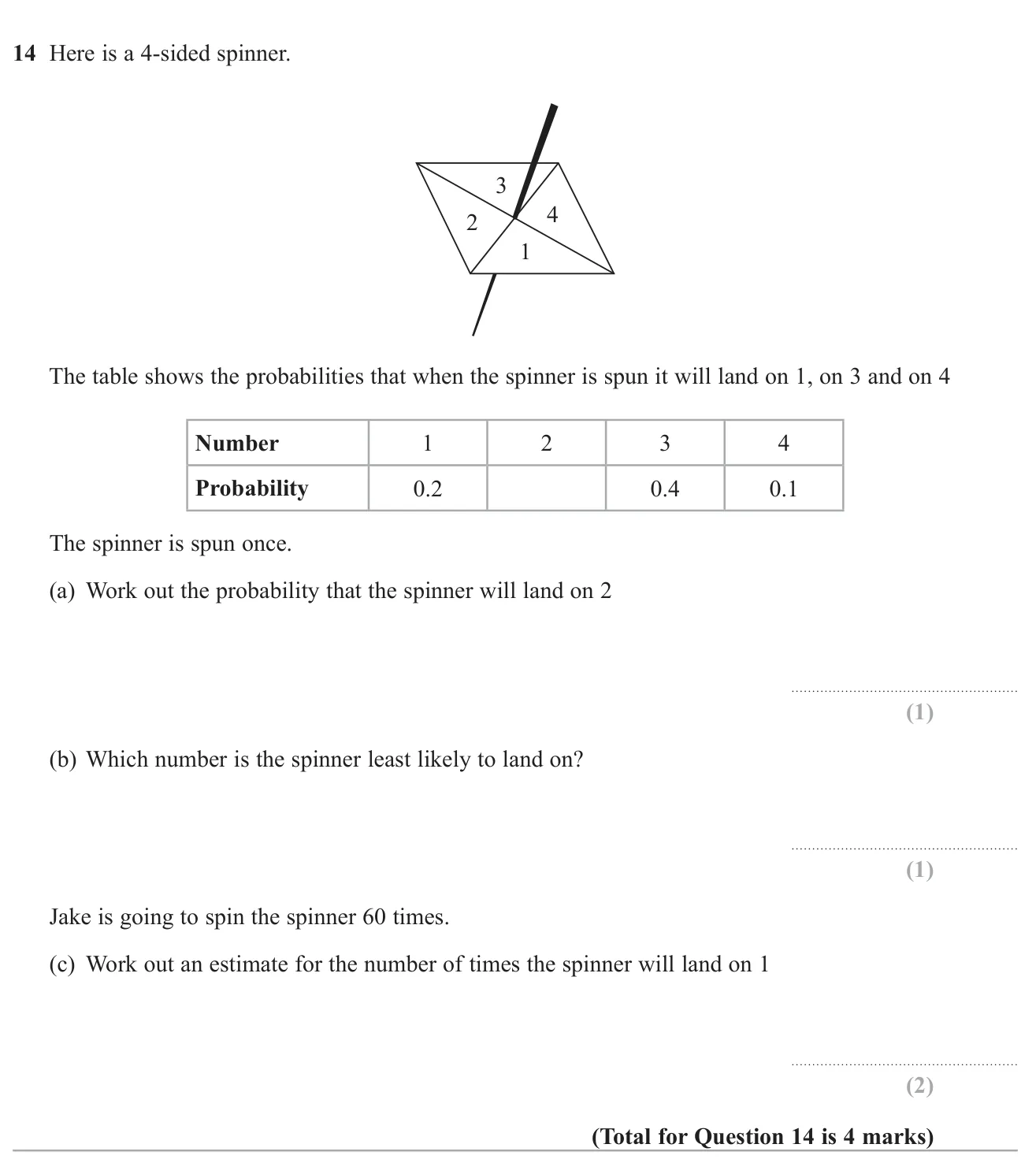
© Pearson Education Ltd. November 2018 Paper 3 (Foundation, calculator), question 14.
Show answer
| (a) | 0.3 | 1 mark |
|---|
| (b) | 4 | 1 mark |
|---|
| (c) | 12 | 2 marks |
|---|
Worked solution Checked against the mark scheme
(a) Probabilities add to 1: 1−(0.2+0.4+0.1)=0.3
(b) The smallest probability is 0.1, which is for 4.
(c) Expected number of 1s: 0.2×60=12
Watch out: In (b), writing the probability 0.1 instead of the number 4.
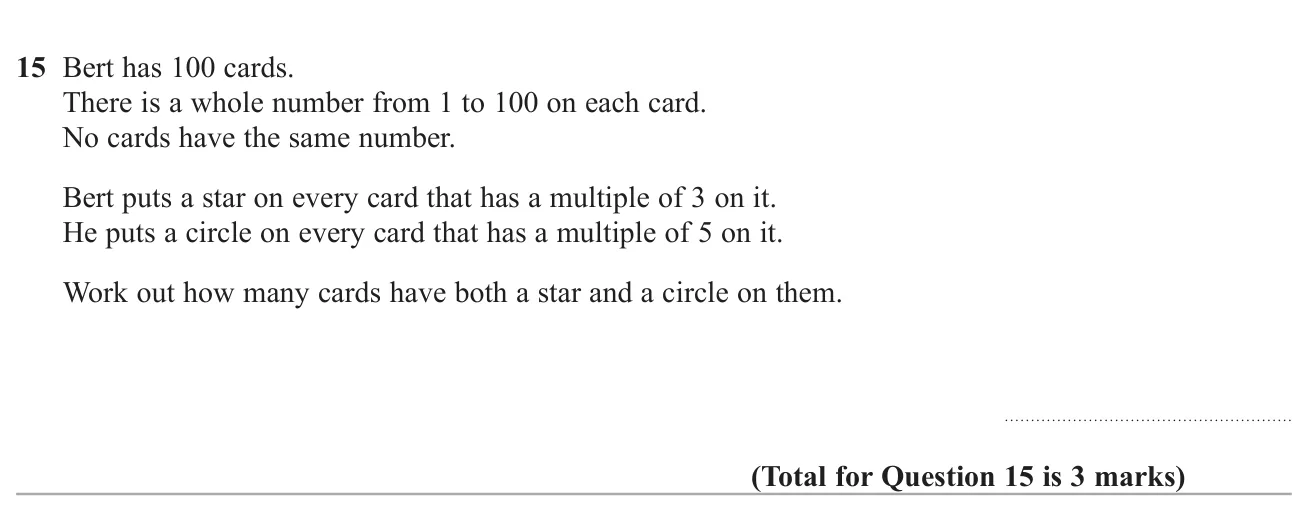
© Pearson Education Ltd. November 2018 Paper 3 (Foundation, calculator), question 15.
Show answer
Worked solution Checked against the mark scheme
A card with both marks is a multiple of 3 and of 5, so a multiple of 15.
Multiples of 15 up to 100: 15, 30, 45, 60, 75, 90.
That is 6 cards.
Watch out: Rounding 100÷15=6.67 up to 7.
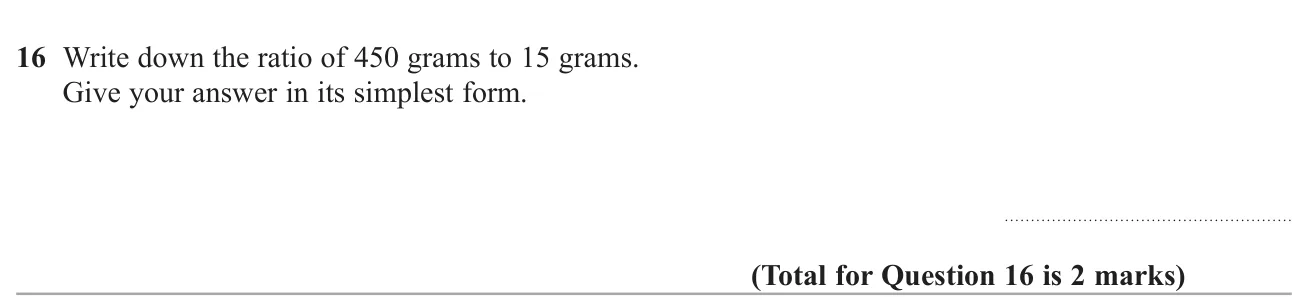
Question 16
Ratio2 marksGrade 3Calculator © Pearson Education Ltd. November 2018 Paper 3 (Foundation, calculator), question 16.
Show answer
| Answer | 30:1 | 2 marks |
|---|
Worked solution Checked against the mark scheme
450:15
Divide both sides by 15: 30:1
Watch out: Writing the ratio the wrong way round as 1 : 30.
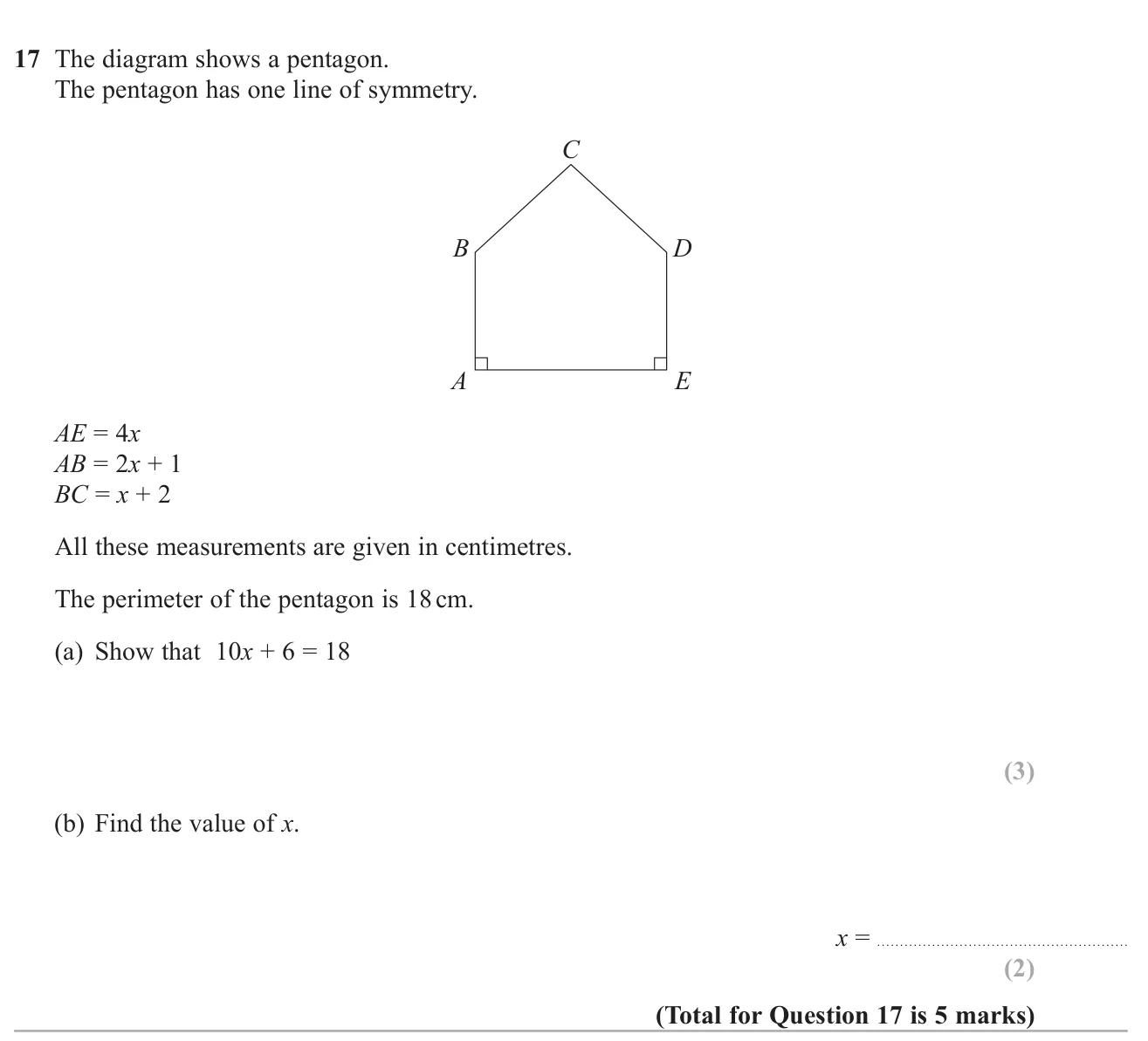
© Pearson Education Ltd. November 2018 Paper 3 (Foundation, calculator), question 17.
Show answer
| (a) | 4x+2(2x+1)+2(x+2)=10x+6=18 | 3 marks |
|---|
| (b) | x=1.2 | 2 marks |
|---|
Worked solution Checked against the mark scheme
(a) By symmetry DE=AB=2x+1 and CD=BC=x+2
Perimeter =4x+2(2x+1)+2(x+2)=4x+4x+2+2x+4=10x+6
The perimeter is 18, so 10x+6=18
(b) 10x=12, so x=1.2
Watch out: In (a), adding only the three given sides and forgetting the two matching sides.
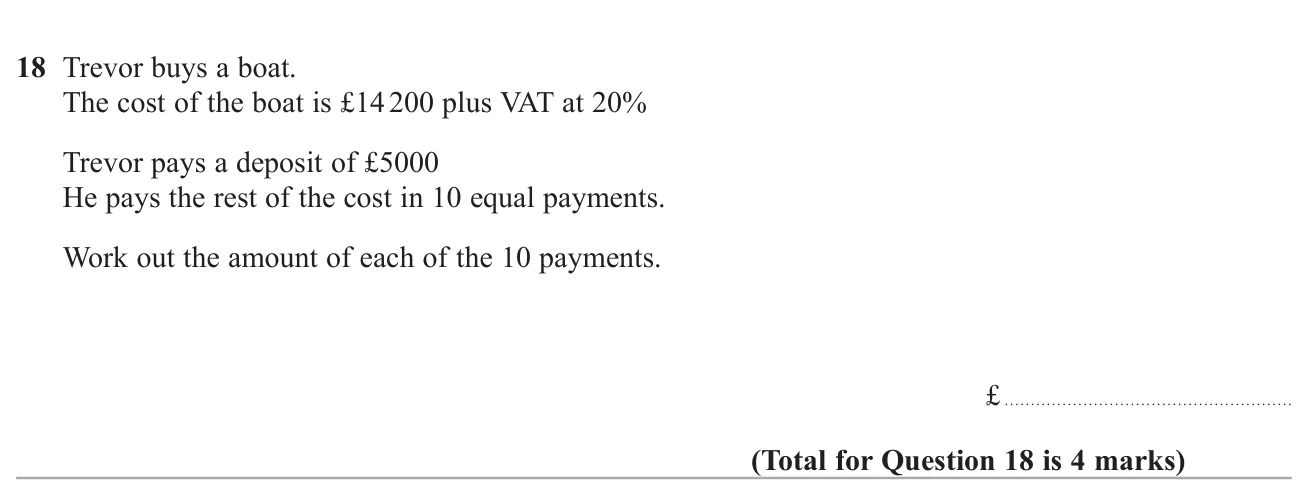
© Pearson Education Ltd. November 2018 Paper 3 (Foundation, calculator), question 18.
Show answer
| Answer | £1204 | 4 marks |
|---|
Worked solution Checked against the mark scheme
VAT: 20% of 14200=2840
Total cost: 14200+2840=£17040
After deposit: 17040−5000=£12040
Each payment: 12040÷10=£1204
Watch out: Forgetting the VAT and getting £920.
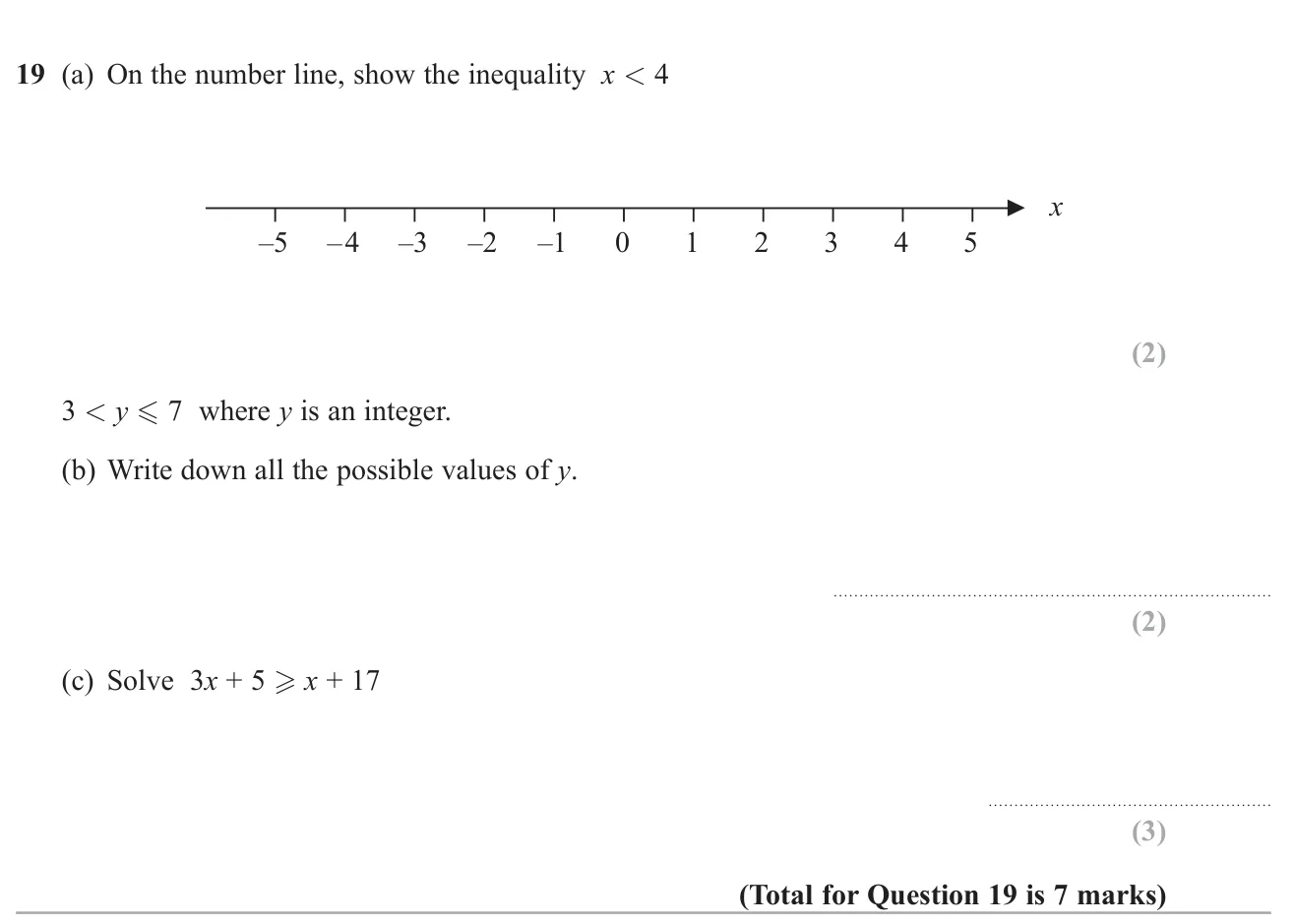
© Pearson Education Ltd. November 2018 Paper 3 (Foundation, calculator), question 19.
Show answer
| (a) | Open circle at 4 with an arrow to the left | 2 marks |
|---|
| (b) | 4,5,6,7 | 2 marks |
|---|
| (c) | x⩾6 | 3 marks |
|---|
Worked solution Checked against the mark scheme
(a) x<4 does not include 4, so draw an open circle at 4 and an arrow pointing left.
(b) y is more than 3 and at most 7: 4,5,6,7
(c) 3x+5⩾x+17
2x+5⩾17
2x⩾12, so x⩾6
Watch out: In (b), including 3 or leaving out 7.
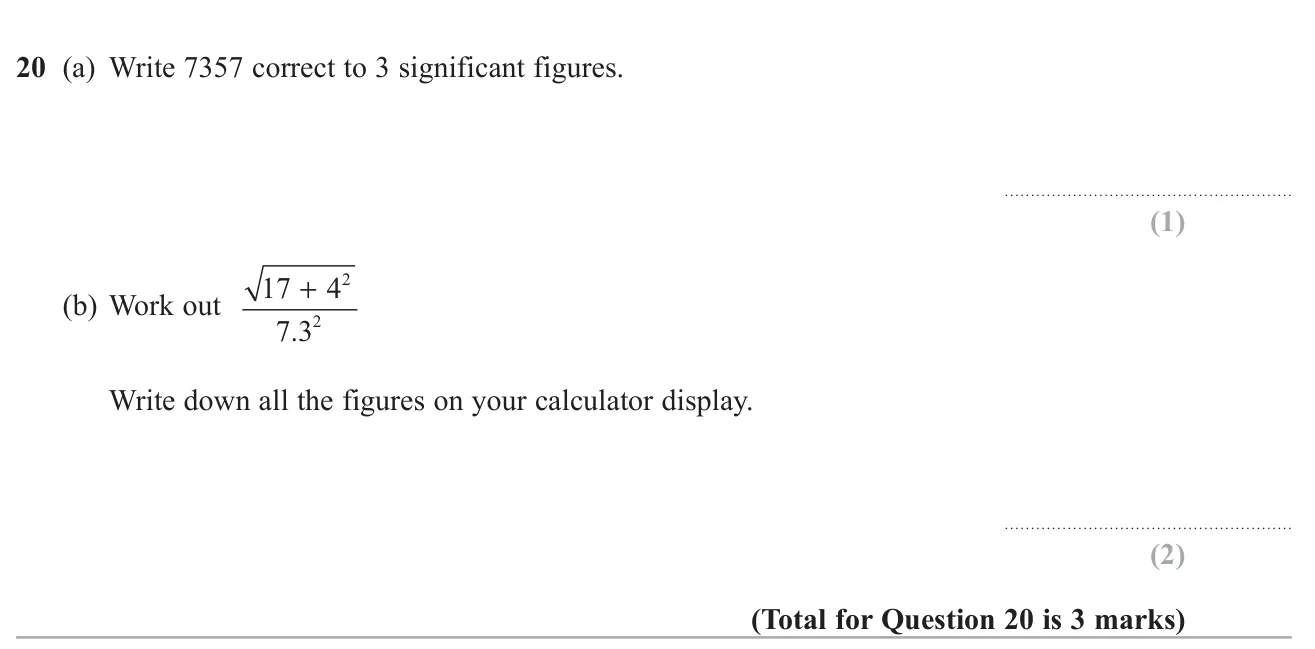
© Pearson Education Ltd. November 2018 Paper 3 (Foundation, calculator), question 20.
Show answer
| (a) | 7360 | 1 mark |
|---|
| (b) | 0.1077981356 | 2 marks |
|---|
Worked solution Checked against the mark scheme
(a) The 4th figure is 7, so round up: 7357→7360
(b) Top: 17+16=33=5.7445…
Bottom: 7.32=53.29
5.7445…÷53.29=0.1077981356
Watch out: In (a), writing 736 and losing the place value.
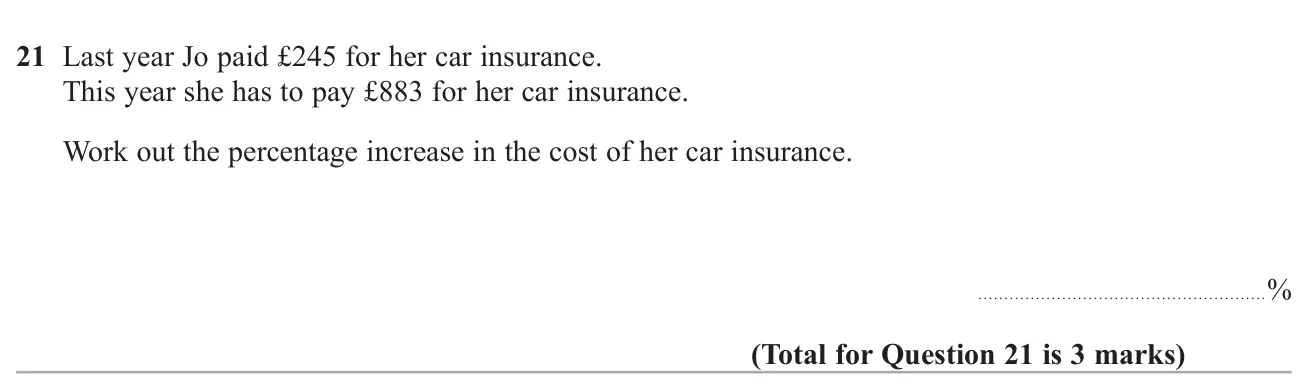
© Pearson Education Ltd. November 2018 Paper 3 (Foundation, calculator), question 21.
Show answer
| Answer | 260.4% | 3 marks |
|---|
Worked solution Checked against the mark scheme
Increase: 883−245=638
Percentage increase: 245638×100=260.4%
Watch out: Dividing by the new price (883) instead of the original.
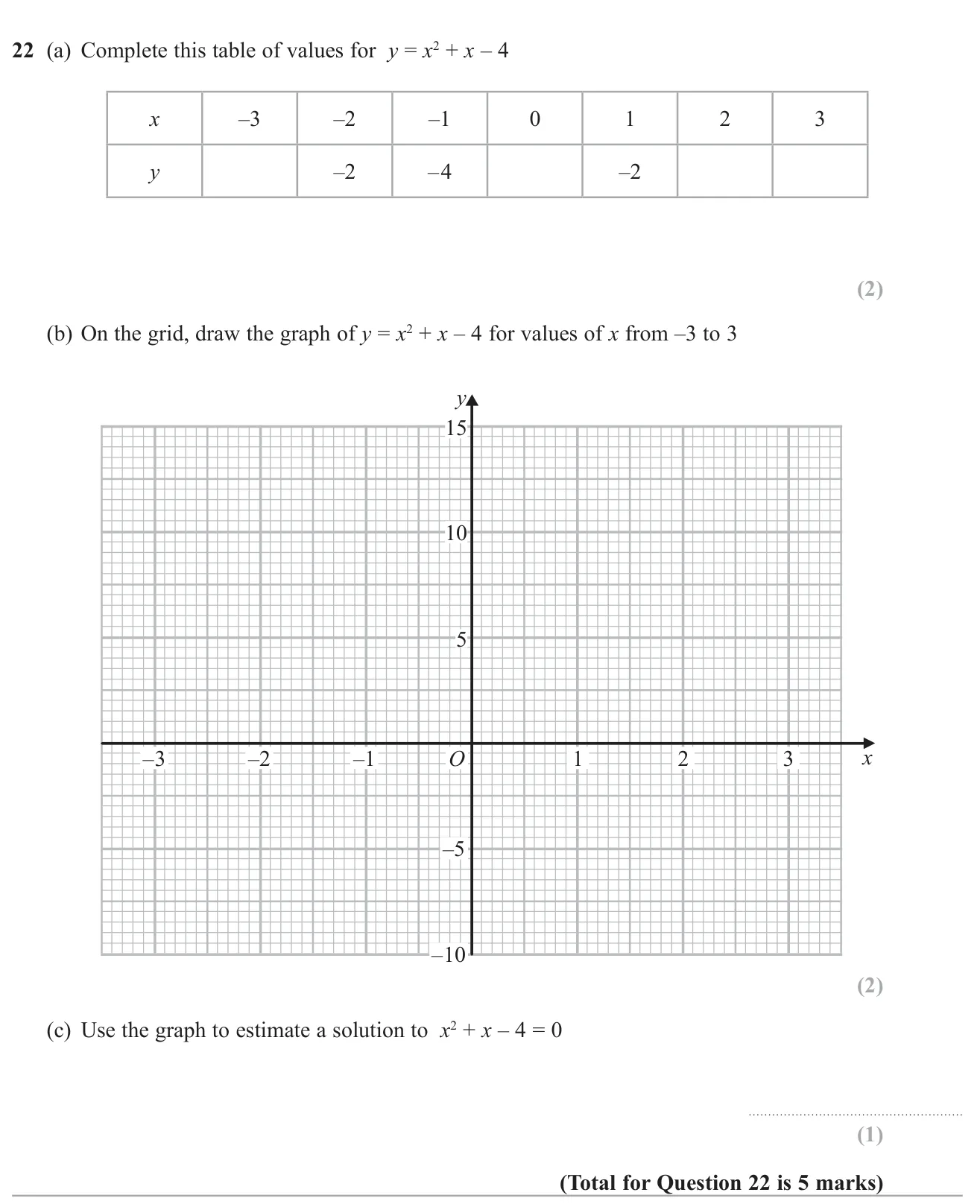
© Pearson Education Ltd. November 2018 Paper 3 (Foundation, calculator), question 22.
Show answer
| (a) | 2,−4,2,8 (for x=−3,−1,2,3) | 2 marks |
|---|
| (b) | Smooth U-shaped curve through the points | 2 marks |
|---|
| (c) | x≈1.6 or x≈−2.6 | 1 mark |
|---|
Worked solution Checked against the mark scheme
(a) x=−3: 9−3−4=2; x=−1: 1−1−4=−4; x=2: 4+2−4=2; x=3: 9+3−4=8
(b) Plot all seven points and join with a smooth curve, dipping just below −4 between x=−1 and x=0.
(c) The roots are where the curve crosses the x-axis: about 1.6 or −2.6
Watch out: In (a), working out −32 as −9.
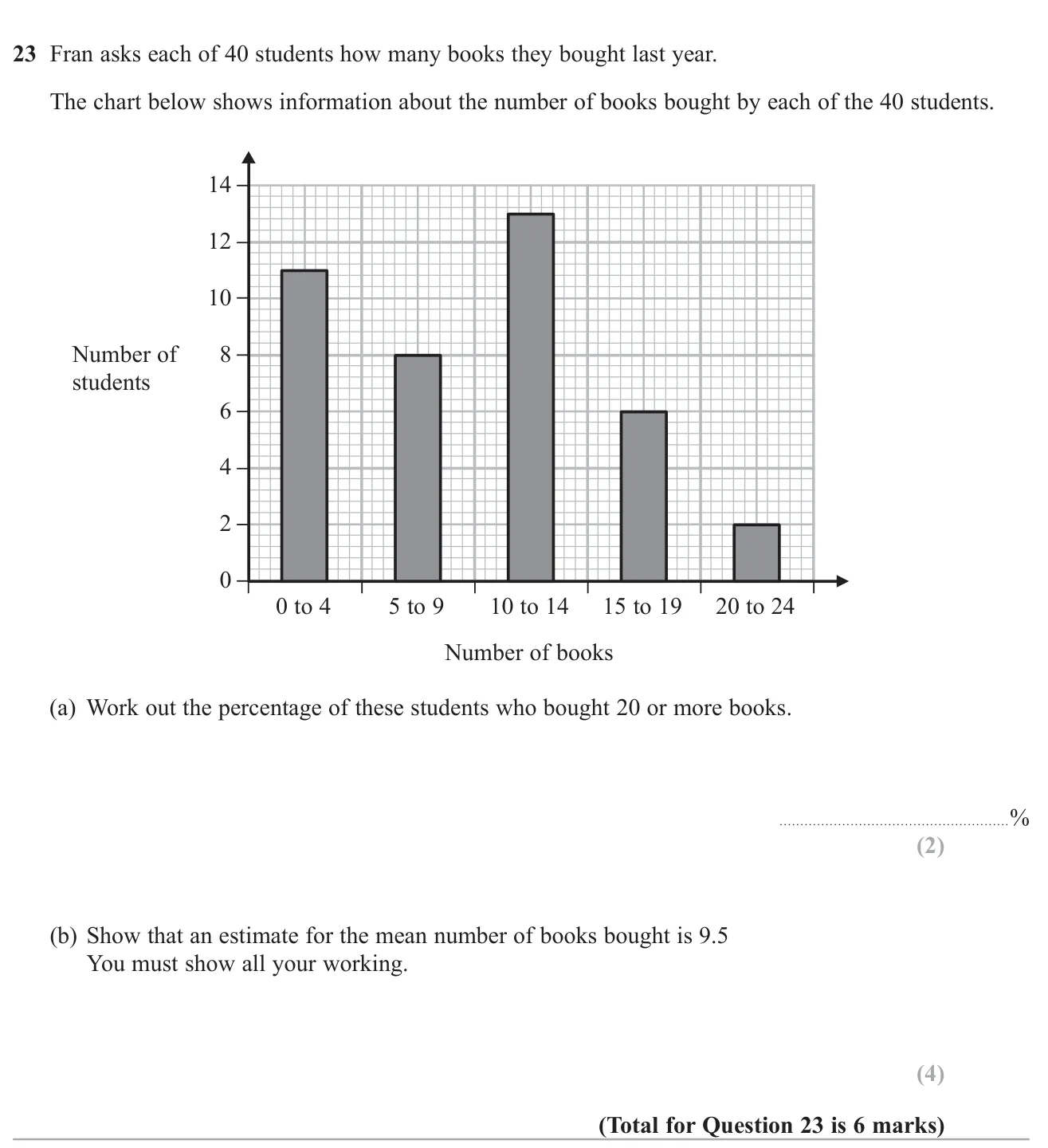
© Pearson Education Ltd. November 2018 Paper 3 (Foundation, calculator), question 23.
Show answer
| (a) | 5% | 2 marks |
|---|
| (b) | 380÷40=9.5 | 4 marks |
|---|
Worked solution Checked against the mark scheme
(a) 2 students bought 20 to 24 books: 402×100=5%
(b) Frequencies 11, 8, 13, 6, 2 and midpoints 2, 7, 12, 17, 22
11×2+8×7+13×12+6×17+2×22=22+56+156+102+44=380
Mean ≈380÷40=9.5
Watch out: Dividing the total by 5 (the number of groups) instead of 40.
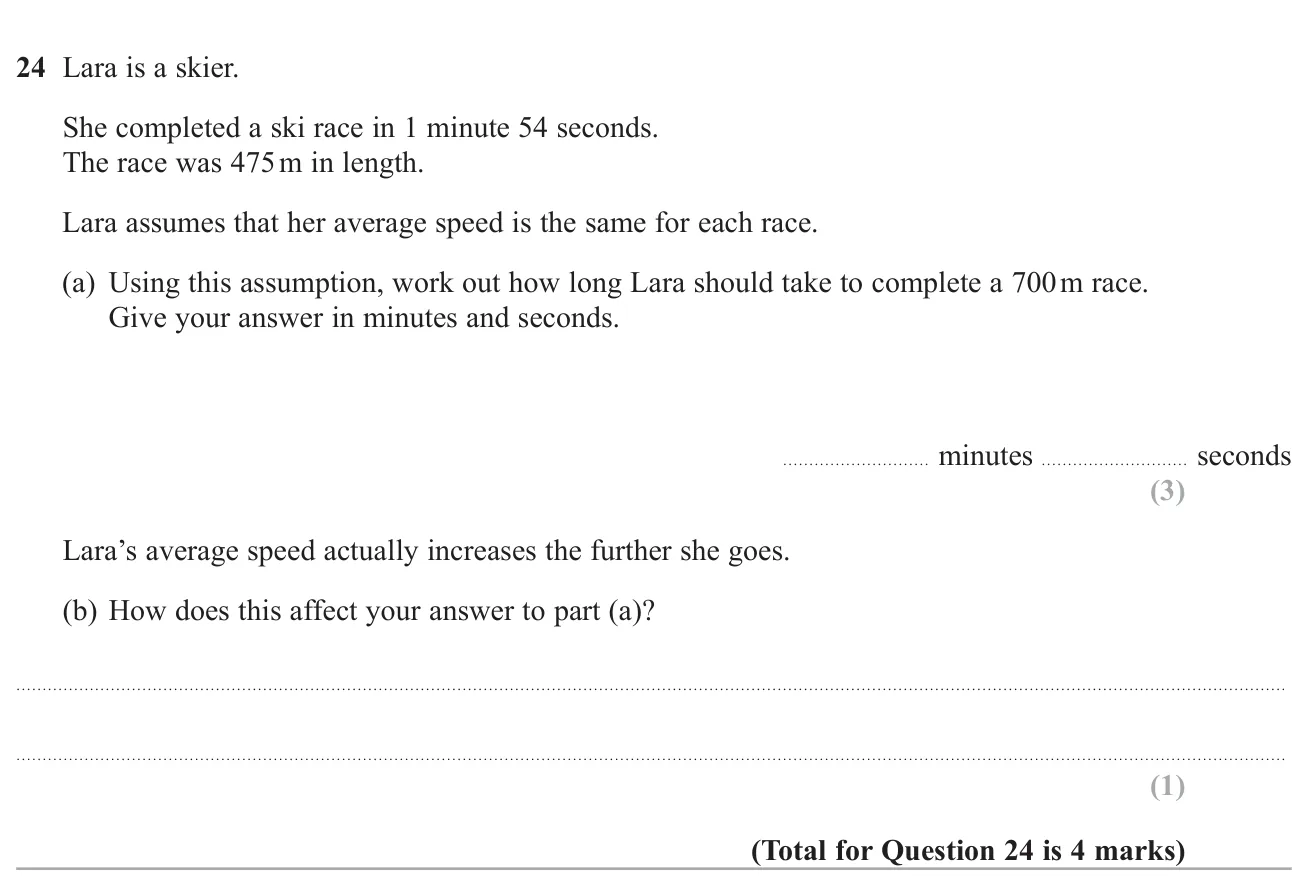
© Pearson Education Ltd. November 2018 Paper 3 (Foundation, calculator), question 24.
Show answer
| (a) | 2 minutes 48 seconds | 3 marks |
|---|
| (b) | It would take less time than the answer to (a) | 1 mark |
|---|
Worked solution Checked against the mark scheme
(a) 1 min 54 s =114 s
Time =475700×114=168 s
168 s =2 minutes 48 seconds
(b) If she speeds up over a longer race, she will finish more quickly, so the real time is less than 2 min 48 s.
Watch out: Treating 1 minute 54 seconds as 1.54 minutes.
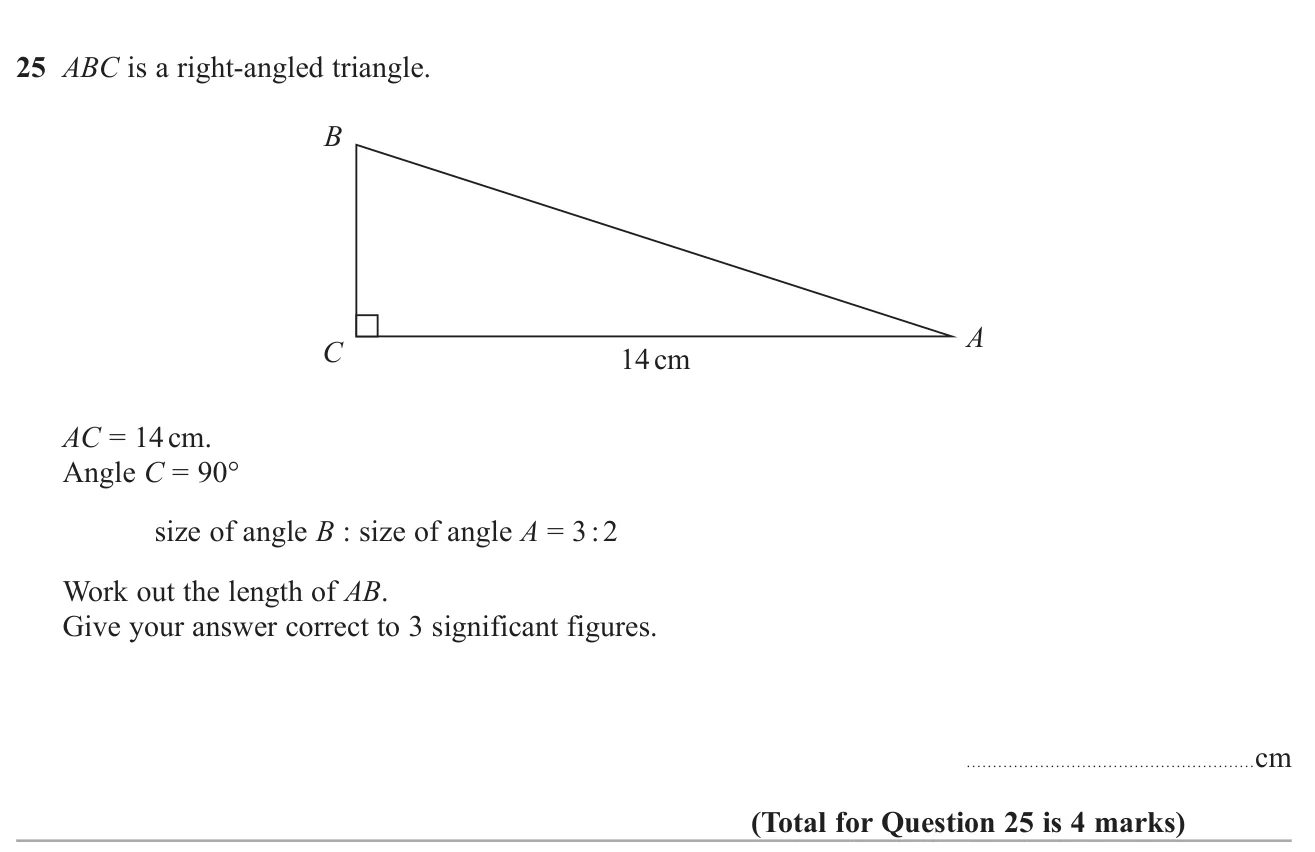
© Pearson Education Ltd. November 2018 Paper 3 (Foundation, calculator), question 25.
Show answer
| Answer | 17.3 cm | 4 marks |
|---|
Worked solution Checked against the mark scheme
Angles A and B share 180−90=90° in the ratio 3:2 (B : A)
One part =90÷5=18°, so A=36° and B=54°
AC is next to angle A and AB is the hypotenuse: cos36°=AB14
AB=cos36°14=17.3 cm
Watch out: Giving A the larger angle, 54°, and getting 24.1 cm.
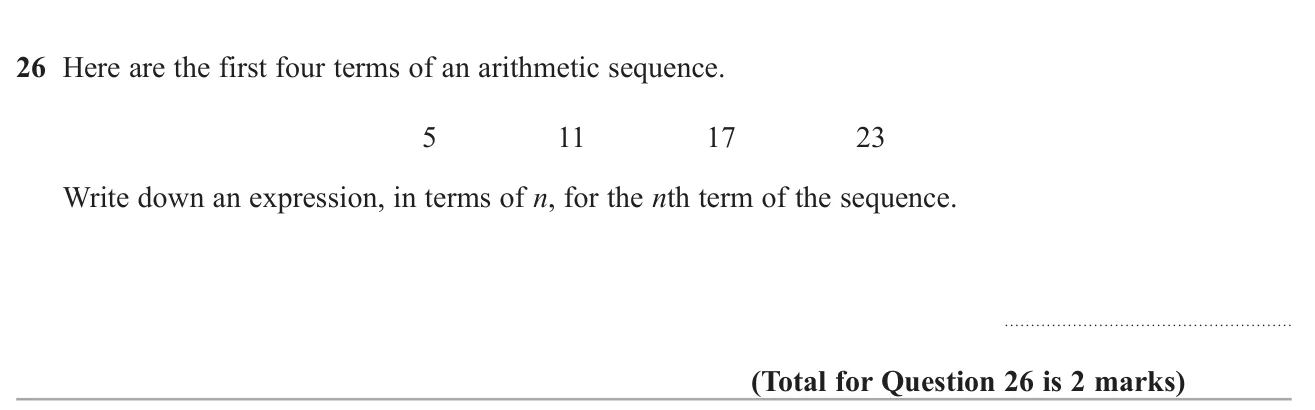
© Pearson Education Ltd. November 2018 Paper 3 (Foundation, calculator), question 26.
Show answer
| Answer | 6n−1 | 2 marks |
|---|
Worked solution Checked against the mark scheme
The terms go up by 6, so start with 6n.
6n gives 6, 12, 18, 24. Each term is 1 less, so the nth term is 6n−1.
Watch out: Writing n + 6.
Finished the paper?
Add up your marks for all three papers and see what grade that would have been.