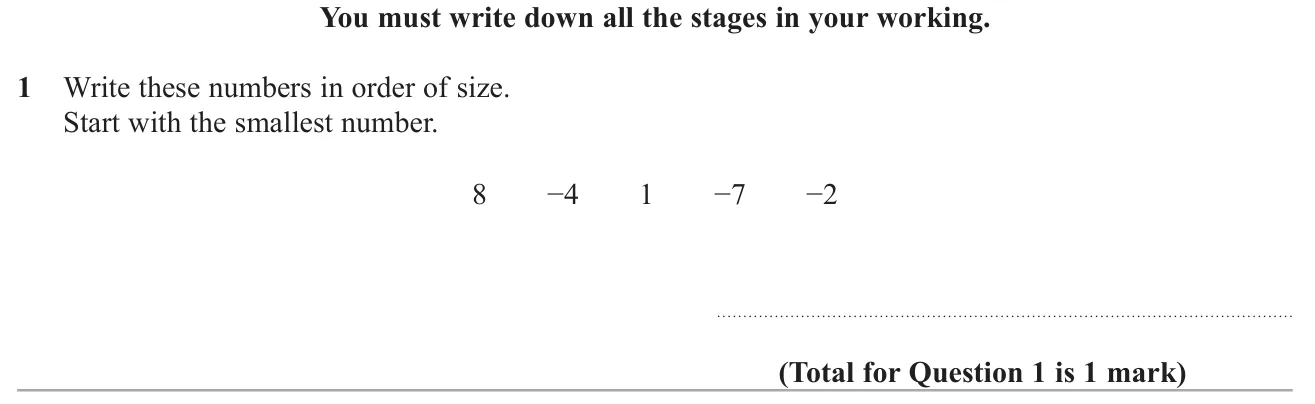
© Pearson Education Ltd. November 2019 Paper 2 (Foundation, calculator), question 1.
Show answer
| Answer | −7,−4,−2,1,8 | 1 mark |
|---|
Worked solution Checked against the mark scheme
The most negative number is the smallest.
Order: −7,−4,−2,1,8
Watch out: Putting −2 before −7 because 2 is smaller than 7.
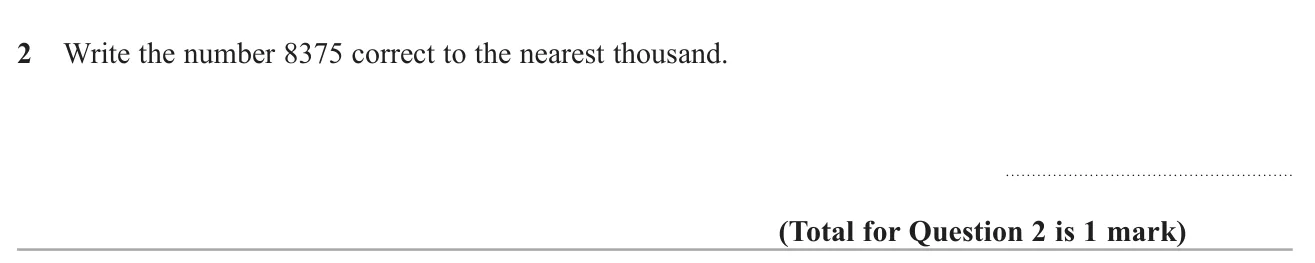
© Pearson Education Ltd. November 2019 Paper 2 (Foundation, calculator), question 2.
Show answer
Worked solution Checked against the mark scheme
8375 lies between 8000 and 9000.
The hundreds digit is 3, which is less than 5, so round down to 8000.
Watch out: Writing 8400 (rounding to the nearest hundred).
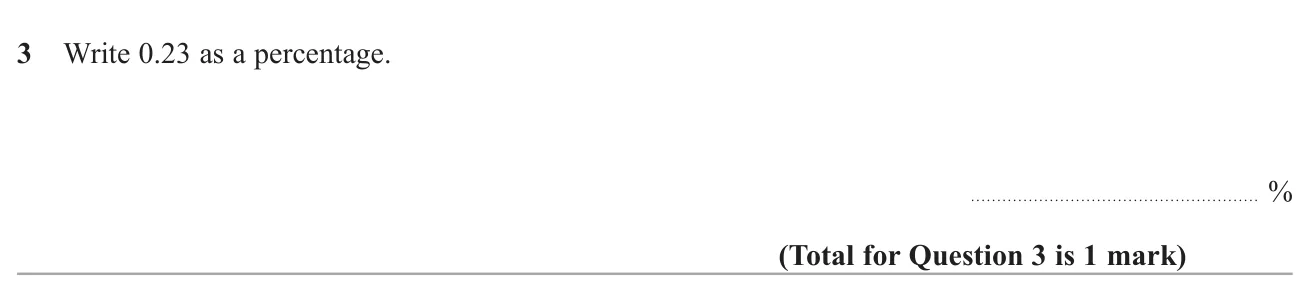
© Pearson Education Ltd. November 2019 Paper 2 (Foundation, calculator), question 3.
Show answer
Worked solution Checked against the mark scheme
Multiply by 100 to turn a decimal into a percentage.
0.23×100=23%
Watch out: Writing 0.23% or 2.3%.
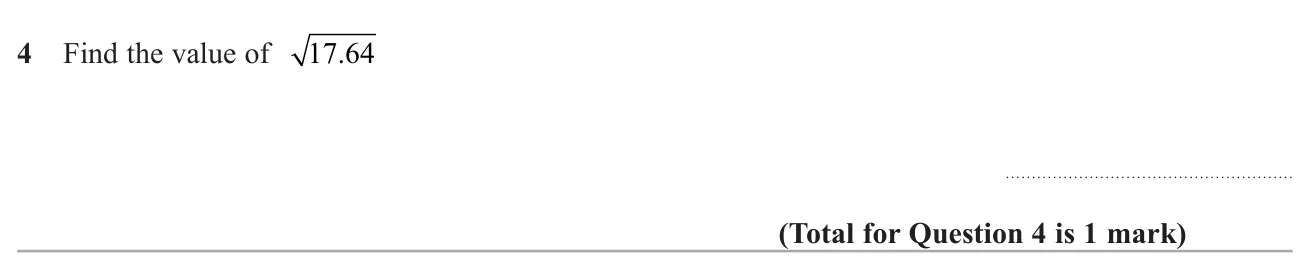
© Pearson Education Ltd. November 2019 Paper 2 (Foundation, calculator), question 4.
Show answer
Worked solution Checked against the mark scheme
Use the square root key: 17.64=4.2
Check: 4.2×4.2=17.64
Watch out: Halving 17.64 instead of square rooting.
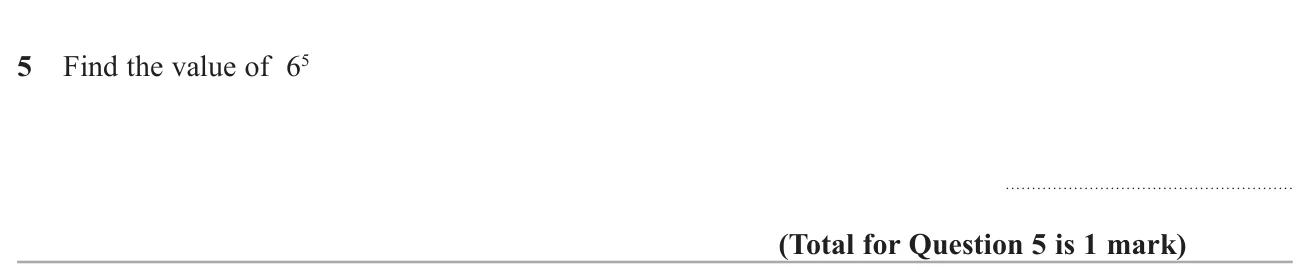
© Pearson Education Ltd. November 2019 Paper 2 (Foundation, calculator), question 5.
Show answer
Worked solution Checked against the mark scheme
65=6×6×6×6×6
=7776
Watch out: Working out 6×5=30.
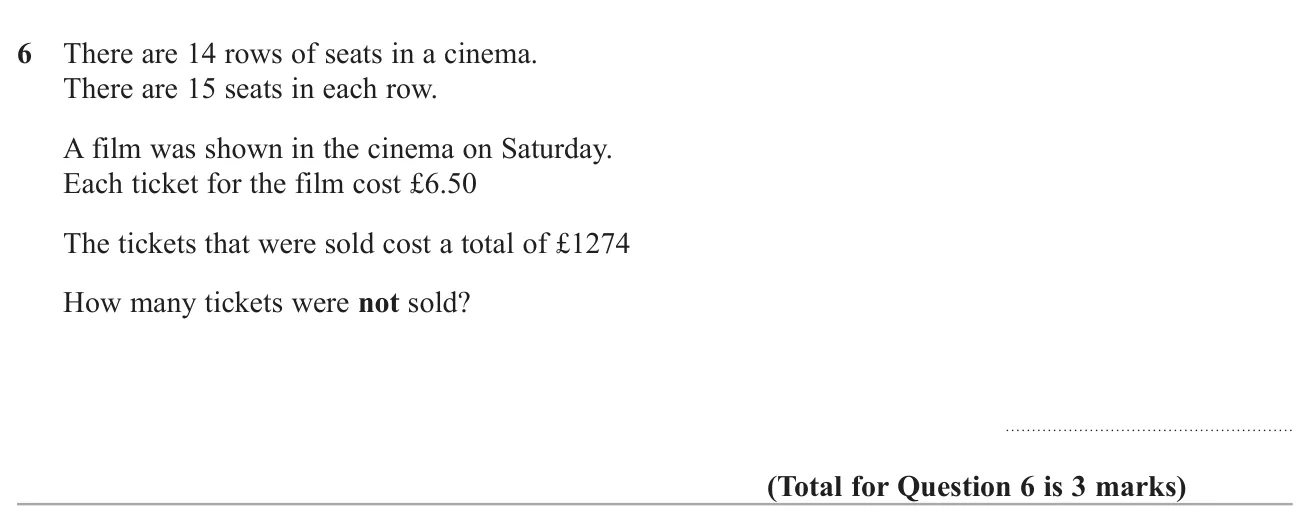
© Pearson Education Ltd. November 2019 Paper 2 (Foundation, calculator), question 6.
Show answer
Worked solution Checked against the mark scheme
Seats: 14×15=210
Tickets sold: 1274÷6.50=196
Not sold: 210−196=14
Watch out: Stopping at 196, the number sold.
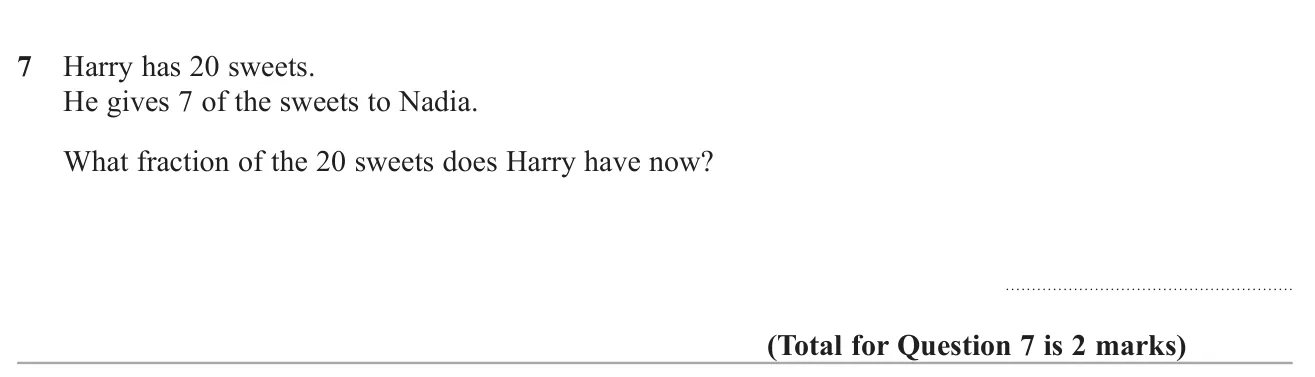
© Pearson Education Ltd. November 2019 Paper 2 (Foundation, calculator), question 7.
Show answer
| Answer | 2013 | 2 marks |
|---|
Worked solution Checked against the mark scheme
Harry has 20−7=13 sweets left.
As a fraction of 20: 2013
Watch out: Giving 207, the fraction given away.
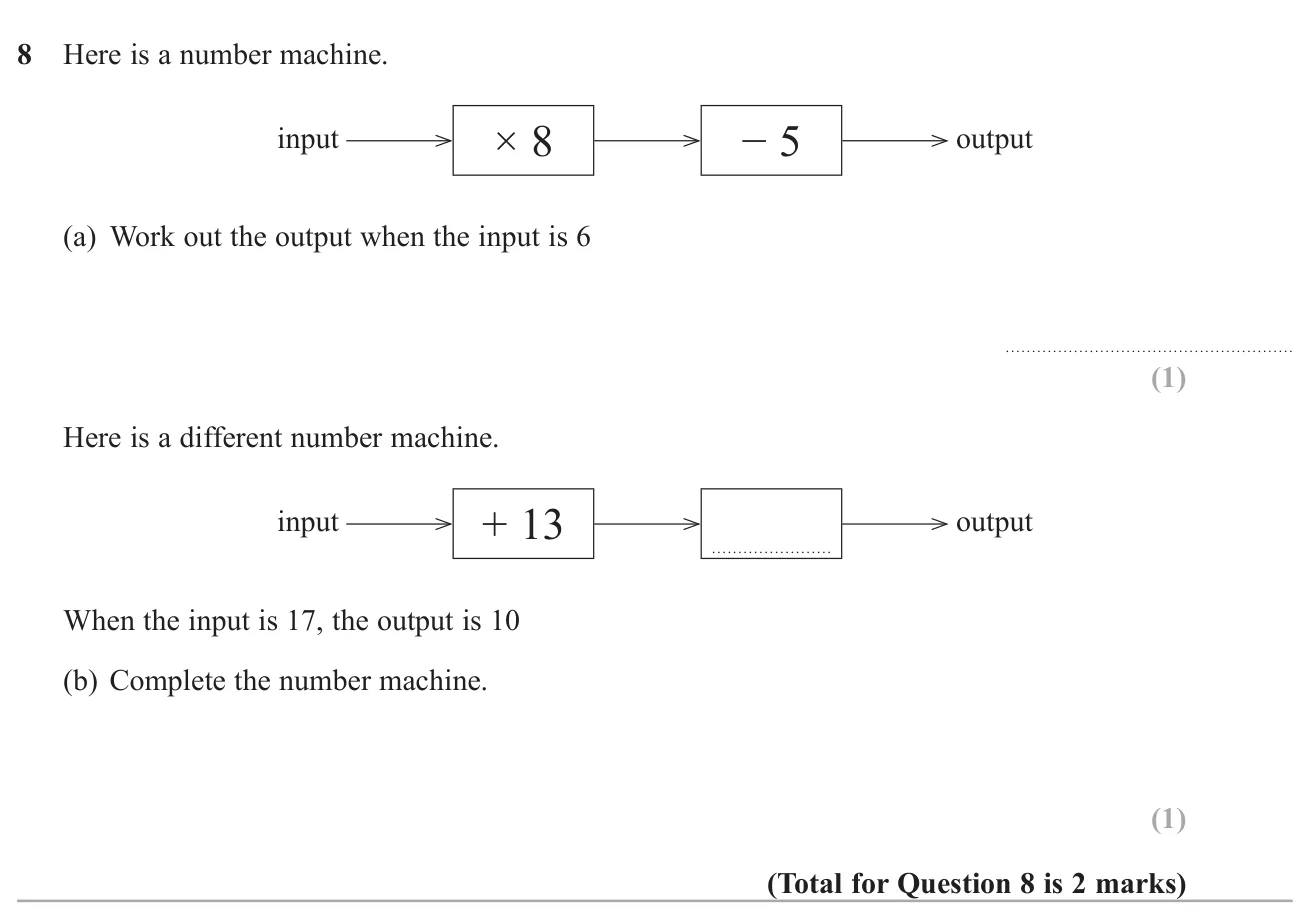
© Pearson Education Ltd. November 2019 Paper 2 (Foundation, calculator), question 8.
Show answer
| (a) | 43 | 1 mark |
|---|
| (b) | ÷3 (or −20) | 1 mark |
|---|
Worked solution Checked against the mark scheme
(a) 6×8=48, then 48−5=43
(b) After the first box: 17+13=30
The second box must turn 30 into 10: 30÷3=10 (or 30−20=10)
So the missing box is ÷3 (or −20).
Watch out: Doing the operations in the wrong order in (a), giving 8.
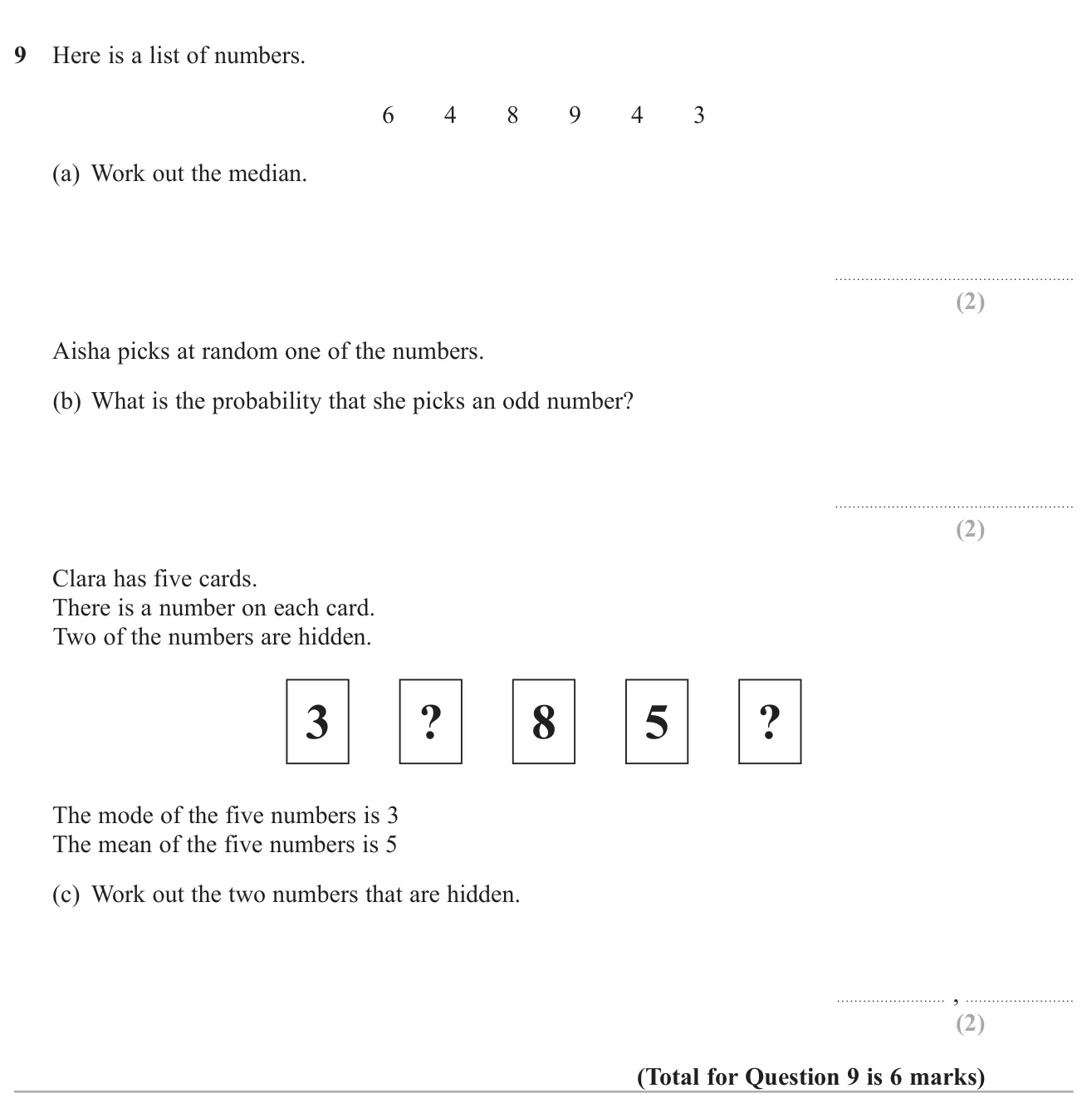
© Pearson Education Ltd. November 2019 Paper 2 (Foundation, calculator), question 9.
Show answer
| (a) | 5 | 2 marks |
|---|
| (b) | 62 | 2 marks |
|---|
| (c) | 3 and 6 | 2 marks |
|---|
Worked solution Checked against the mark scheme
(a) In order: 3, 4, 4, 6, 8, 9. The middle two are 4 and 6, so the median is 24+6=5
(b) The odd numbers are 9 and 3, so P(odd)=62=31
(c) Mode 3 means one hidden card is 3. Total =5×5=25, so the other card is 25−3−3−8−5=6
Watch out: In (a), forgetting to put the numbers in order first.
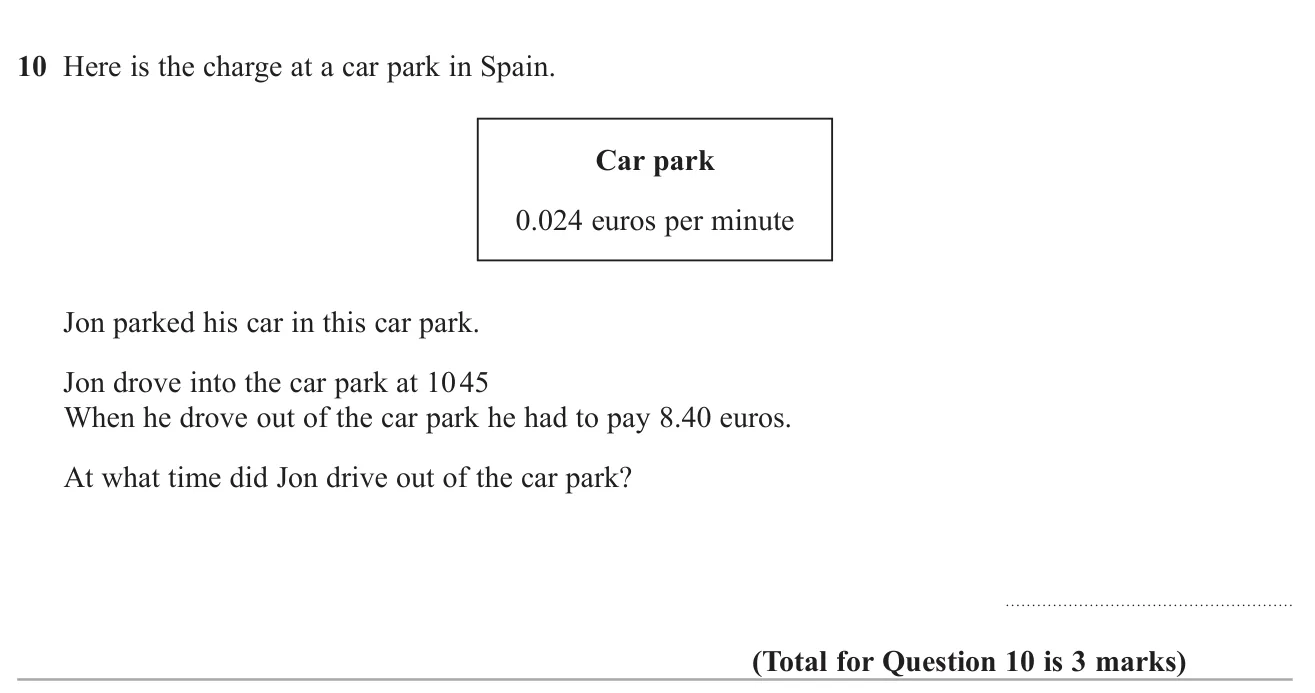
© Pearson Education Ltd. November 2019 Paper 2 (Foundation, calculator), question 10.
Show answer
| Answer | 16:35 (4:35 pm) | 3 marks |
|---|
Worked solution Checked against the mark scheme
Minutes parked: 8.40÷0.024=350 minutes
350 minutes =5 hours 50 minutes
10:45+5 h 50 min=16:35
Watch out: Treating 5.83 hours as 5 hours 83 minutes.
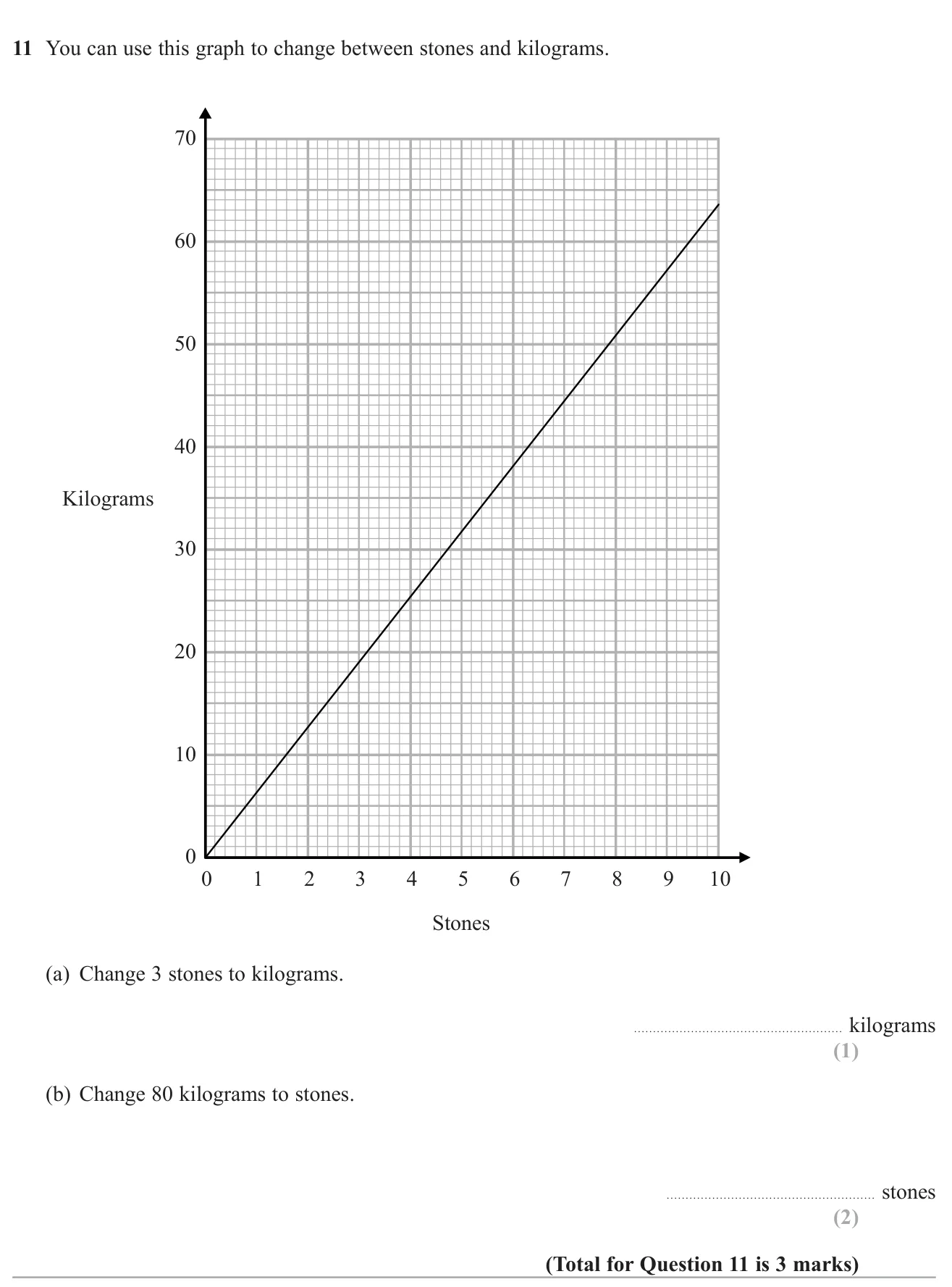
© Pearson Education Ltd. November 2019 Paper 2 (Foundation, calculator), question 11.
Show answer
| (a) | 19 kg | 1 mark |
|---|
| (b) | 12.6 stones (12.4 to 12.8) | 2 marks |
|---|
Worked solution Checked against the mark scheme
(a) Go up from 3 stones to the line and across: about 19 kg.
(b) 80 kg is off the graph, so use 40 kg: 40 kg is about 6.3 stones.
80 kg=2×6.3=12.6 stones
Watch out: Reading 80 on the stones axis, or not scaling up.
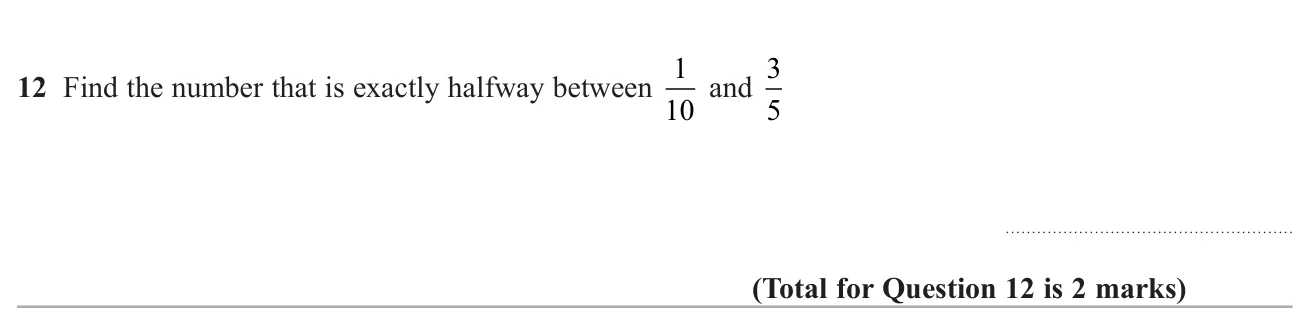
© Pearson Education Ltd. November 2019 Paper 2 (Foundation, calculator), question 12.
Show answer
| Answer | 0.35 or 207 | 2 marks |
|---|
Worked solution Checked against the mark scheme
101=0.1 and 53=0.6
Halfway: 20.1+0.6=0.35 (or 207)
Watch out: Just adding the fractions without halving.
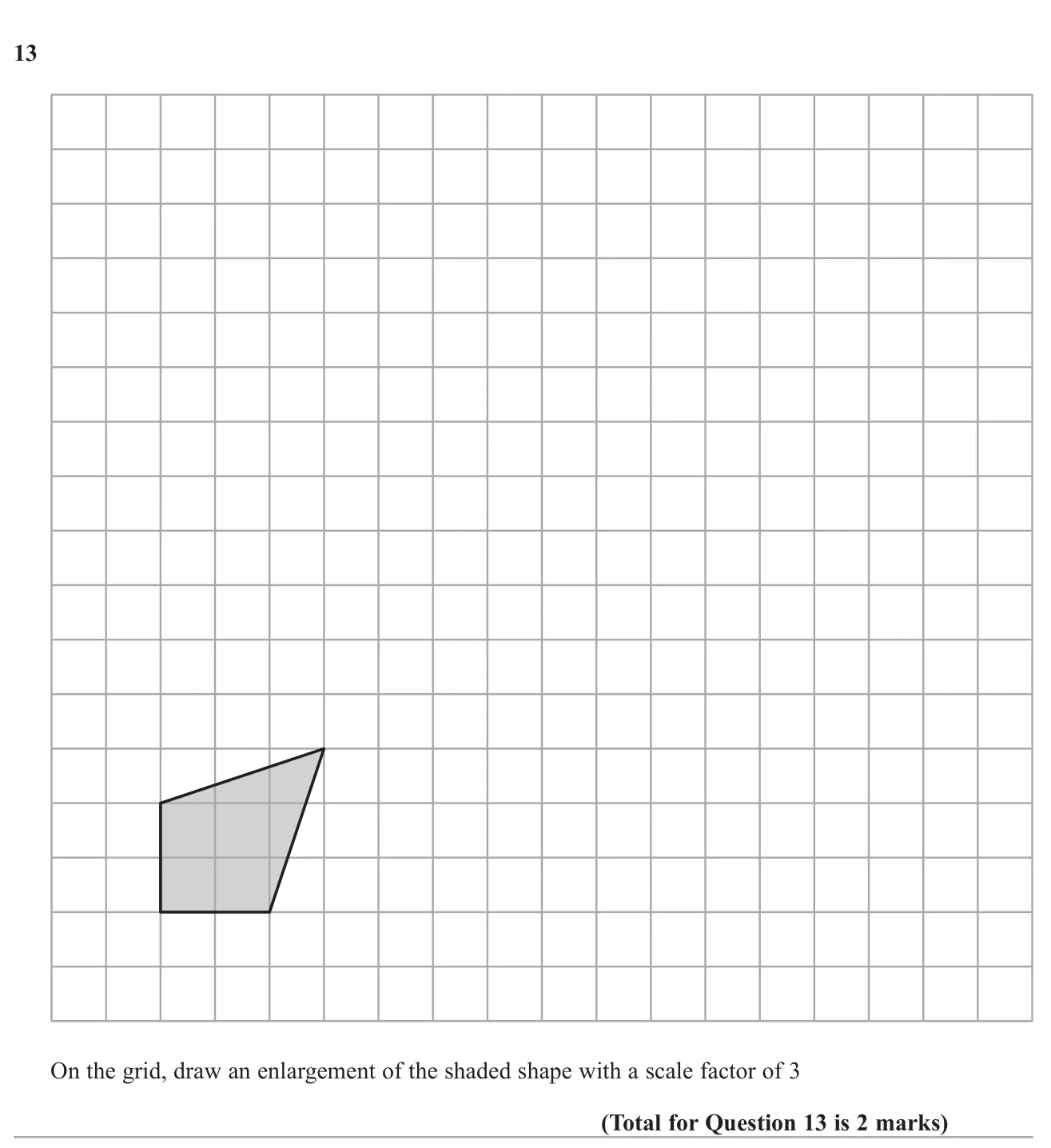
© Pearson Education Ltd. November 2019 Paper 2 (Foundation, calculator), question 13.
Show answer
| Answer | Correct enlargement scale factor 3, any position | 2 marks |
|---|
Worked solution Checked against the mark scheme
Count the length of each side of the shape in squares, including how far across and up each sloping side goes.
Multiply every horizontal and vertical step by 3.
For example, a side 2 squares long becomes 6 squares long, and a slope of 3 across, 1 up becomes 9 across, 3 up.
Watch out: Adding 3 to each length instead of multiplying by 3.
Question 14
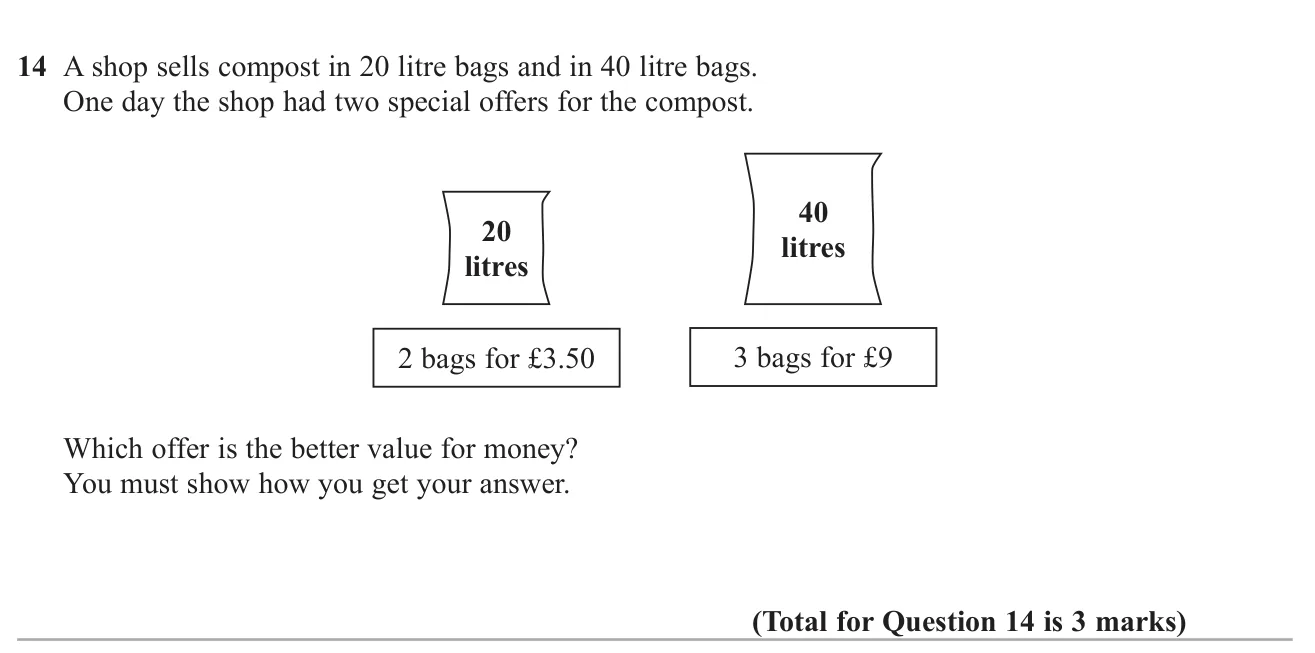
Ratio3 marksGrade 3Calculator © Pearson Education Ltd. November 2019 Paper 2 (Foundation, calculator), question 14.
Show answer
| Answer | The 40 litre offer (e.g. £0.075 per litre against £0.0875 per litre) | 3 marks |
|---|
Worked solution Checked against the mark scheme
20 litre offer: 2 bags = 40 litres for £3.50, so 3.50÷40=£0.0875 per litre.
40 litre offer: 3 bags = 120 litres for £9, so 9÷120=£0.075 per litre.
The 40 litre bags are cheaper per litre, so they are better value.
Watch out: Comparing the price per bag without allowing for the different bag sizes.
Question 15
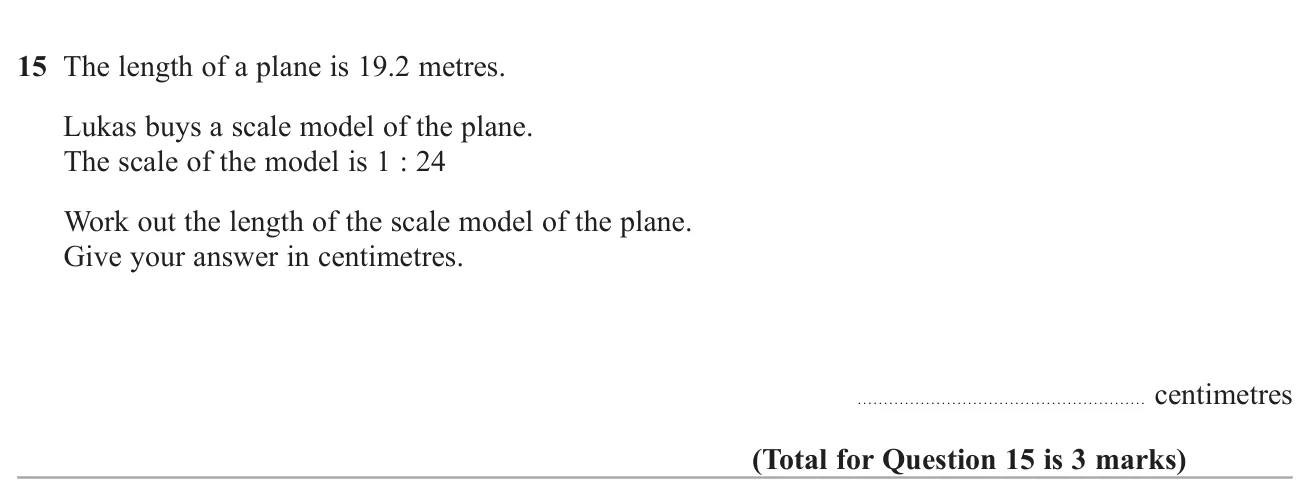
Ratio3 marksGrade 3Calculator © Pearson Education Ltd. November 2019 Paper 2 (Foundation, calculator), question 15.
Show answer
Worked solution Checked against the mark scheme
19.2 m=1920 cm
Model length: 1920÷24=80 cm
Watch out: Leaving the answer as 0.8 (metres).
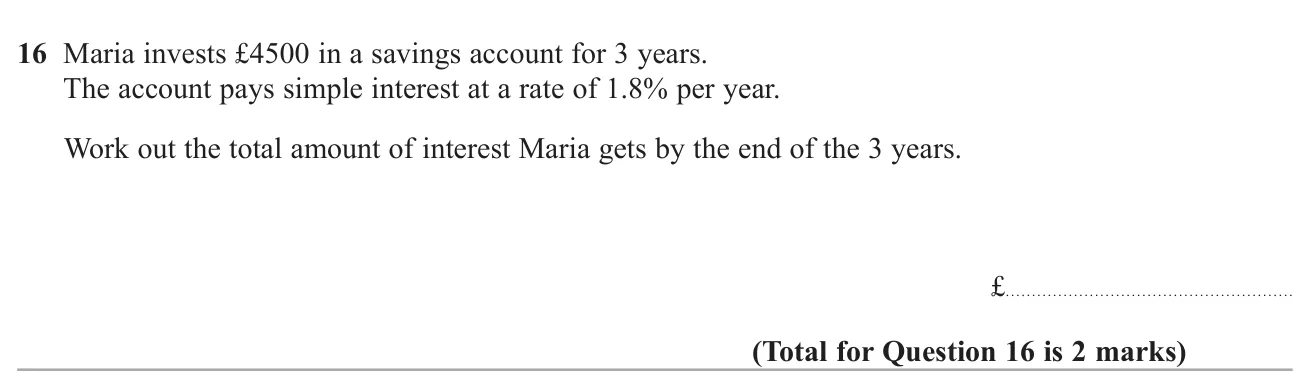
© Pearson Education Ltd. November 2019 Paper 2 (Foundation, calculator), question 16.
Show answer
Worked solution Checked against the mark scheme
One year: 4500×0.018=£81
Three years: 81×3=£243
Watch out: Using compound interest, or giving the total amount £4743.
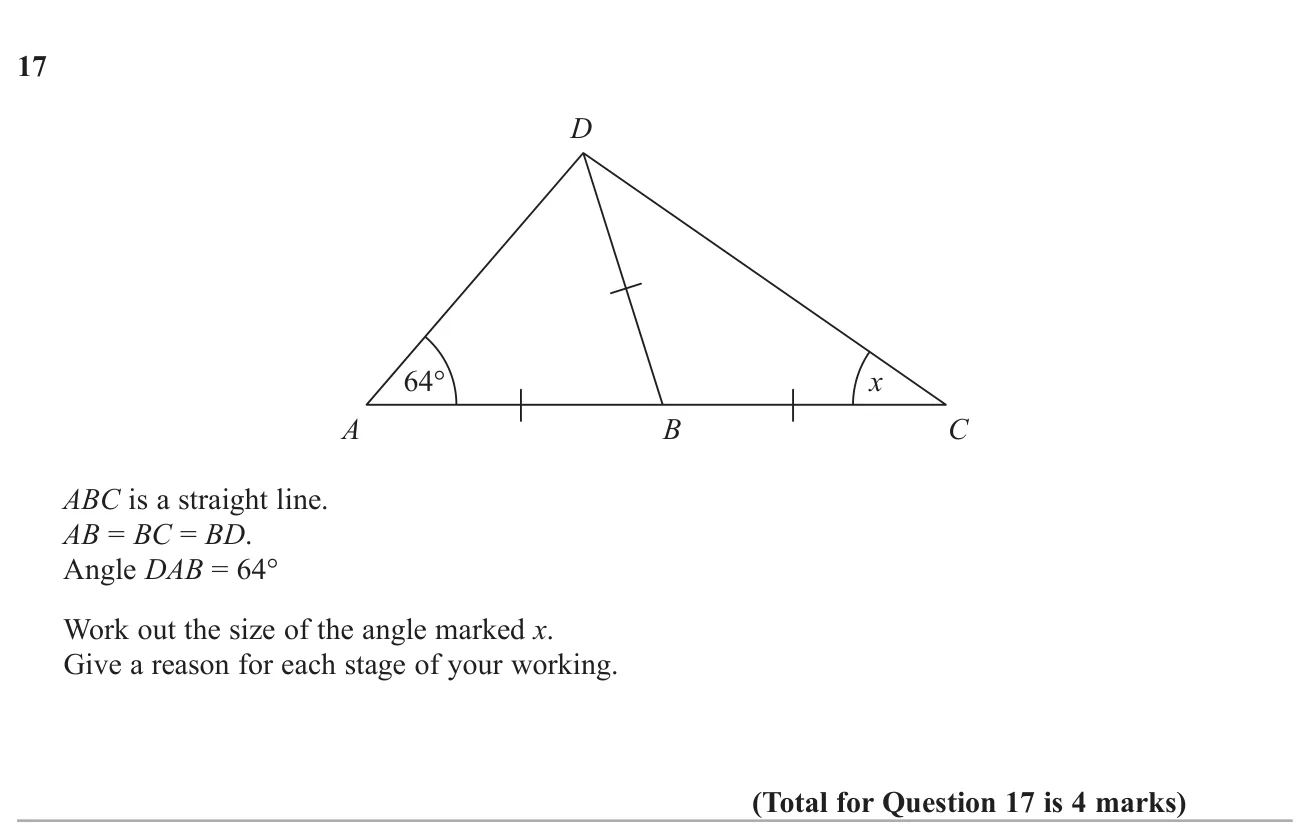
© Pearson Education Ltd. November 2019 Paper 2 (Foundation, calculator), question 17.
Show answer
| Answer | x=26° with reasons | 4 marks |
|---|
Worked solution Checked against the mark scheme
Triangle ABD is isosceles (AB=BD), so ∠ADB=64° (base angles of an isosceles triangle are equal).
∠ABD=180−64−64=52° (angles in a triangle add up to 180°).
∠DBC=180−52=128° (angles on a straight line add up to 180°).
Triangle DBC is isosceles (BD=BC), so x=2180−128=26°
Watch out: Giving the angle without any reasons, which loses the communication mark.
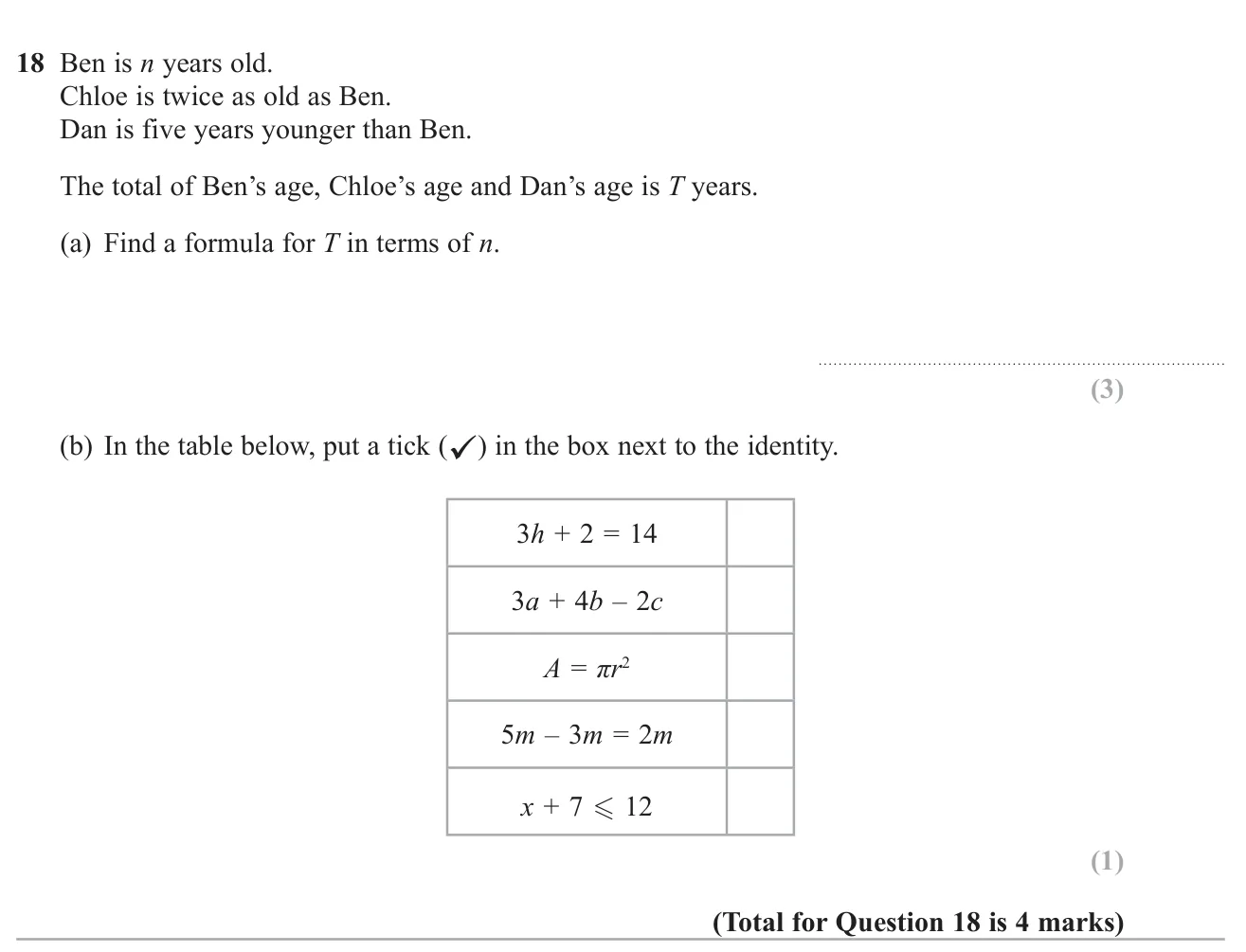
© Pearson Education Ltd. November 2019 Paper 2 (Foundation, calculator), question 18.
Show answer
| (a) | T=4n−5 | 3 marks |
|---|
| (b) | 5m−3m=2m | 1 mark |
|---|
Worked solution Checked against the mark scheme
(a) Ben =n, Chloe =2n, Dan =n−5
T=n+2n+n−5=4n−5
(b) An identity is true for every value of the letter. 5m−3m always equals 2m, so tick 5m−3m=2m.
Watch out: In (a), writing 4n−5 without T=, so it is not a formula.
Question 19
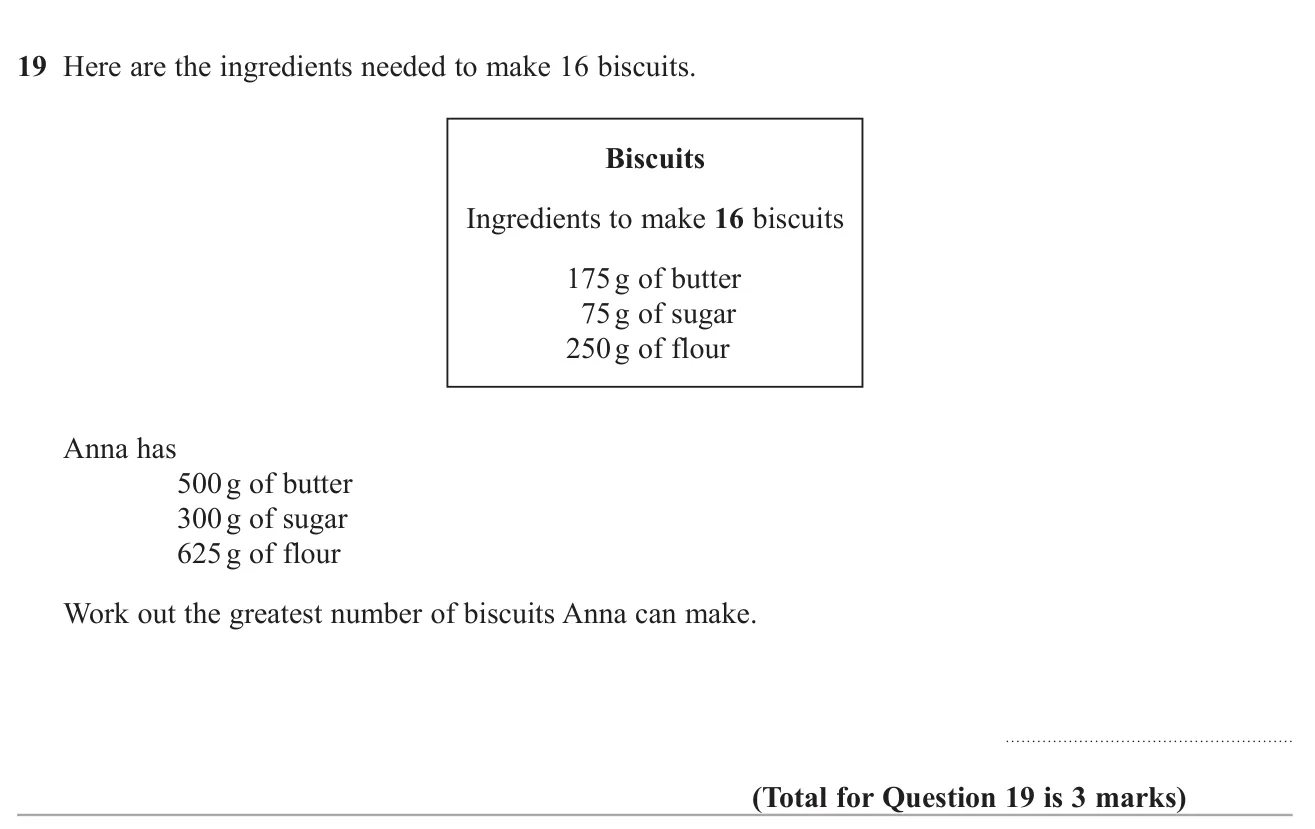
Ratio3 marksGrade 4Calculator © Pearson Education Ltd. November 2019 Paper 2 (Foundation, calculator), question 19.
Show answer
Worked solution Checked against the mark scheme
Batches of 16 each ingredient allows:
Butter 500÷175=2.86, sugar 300÷75=4, flour 625÷250=2.5
Flour runs out first: 2.5×16=40 biscuits
Watch out: Rounding 2.5 batches down to 2 and getting 32.
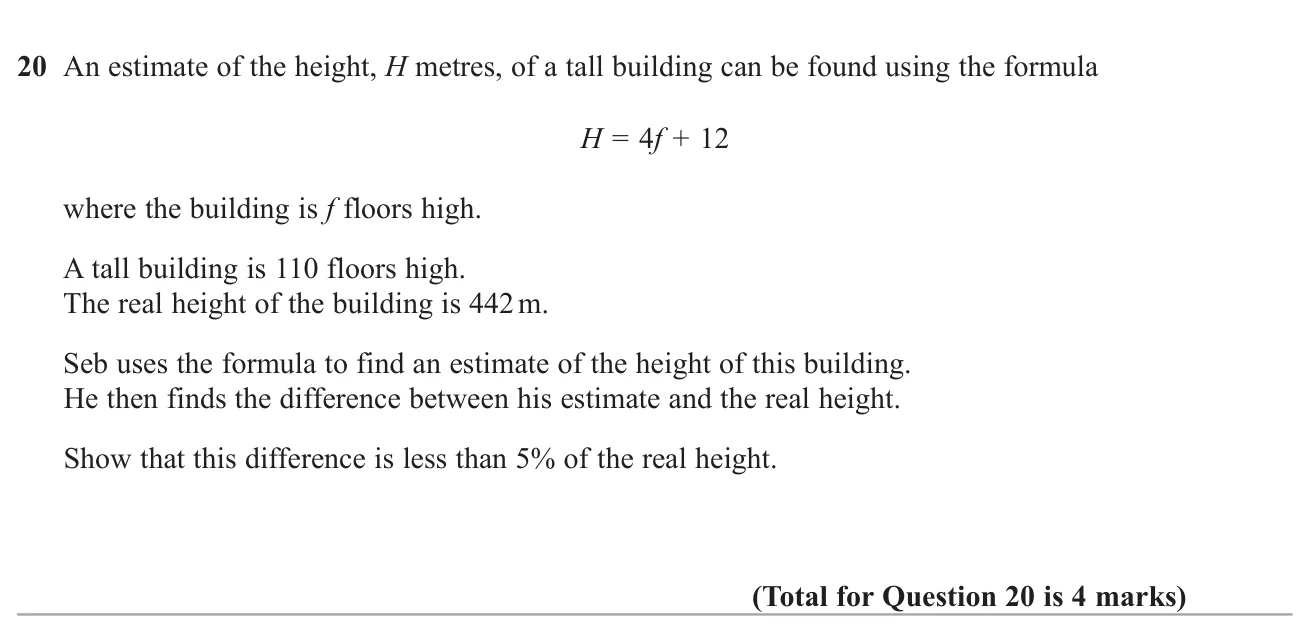
© Pearson Education Ltd. November 2019 Paper 2 (Foundation, calculator), question 20.
Show answer
| Answer | Estimate 452 m, difference 10 m, which is about 2.26% (under 5%) | 4 marks |
|---|
Worked solution Checked against the mark scheme
Estimate: H=4×110+12=452 m
Difference: 452−442=10 m
5% of 442 =22.1 m
10<22.1, so the difference is less than 5% of the real height (44210×100=2.26%).
Watch out: Finding 5% of the estimate (452) instead of the real height.
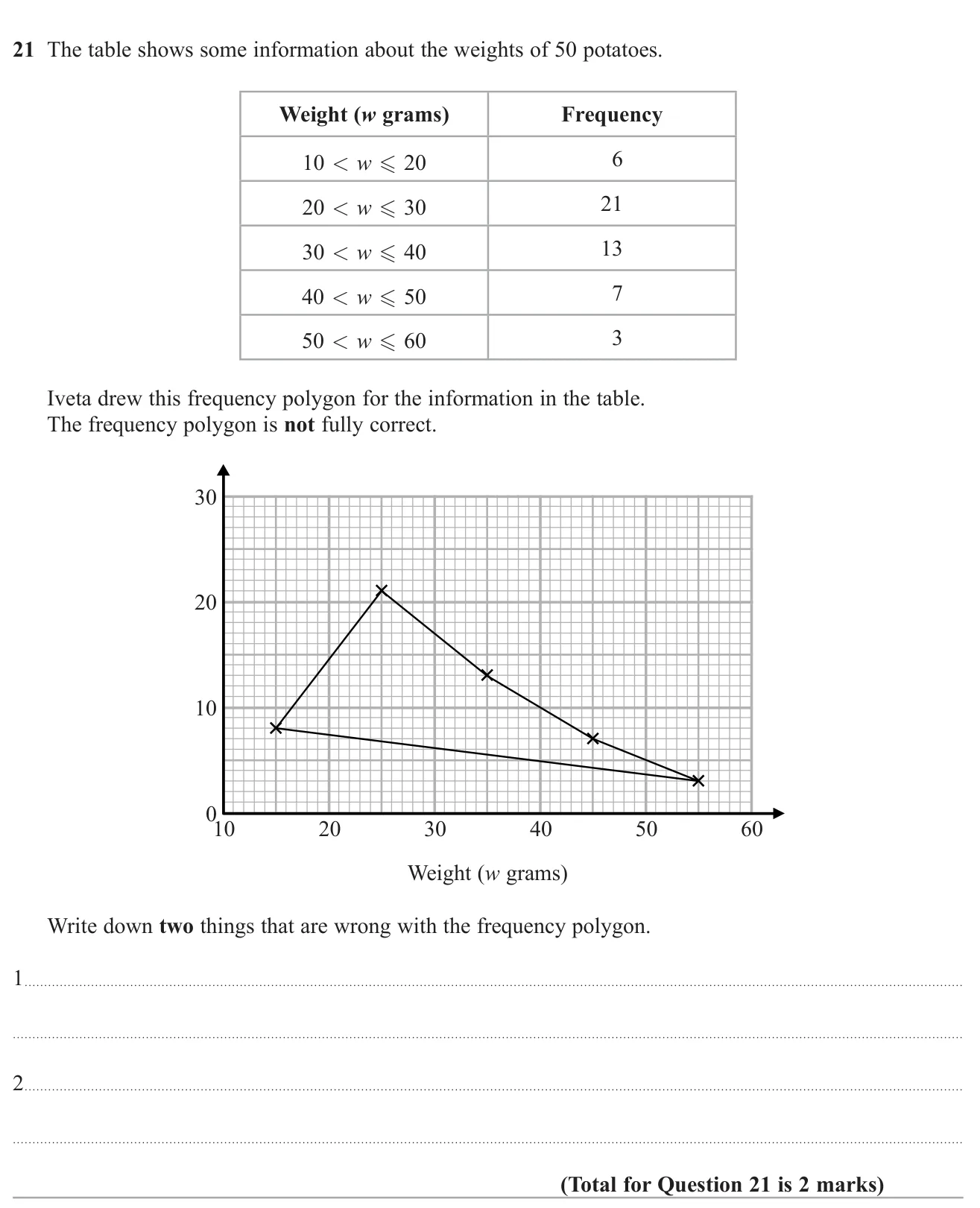
© Pearson Education Ltd. November 2019 Paper 2 (Foundation, calculator), question 21.
Show answer
| Answer | Any two of: first point plotted at 8 not 6; the polygon should not be closed (first and last points joined); the frequency axis has no label | 2 marks |
|---|
Worked solution Checked against the mark scheme
Check each point against the table at the class midpoints.
The point at 15 is plotted at 8, but the frequency is 6.
The first and last points are joined; a frequency polygon should not be closed.
The vertical axis also has no 'Frequency' label.
Watch out: Saying the midpoints are wrong: plotting at midpoints is correct.
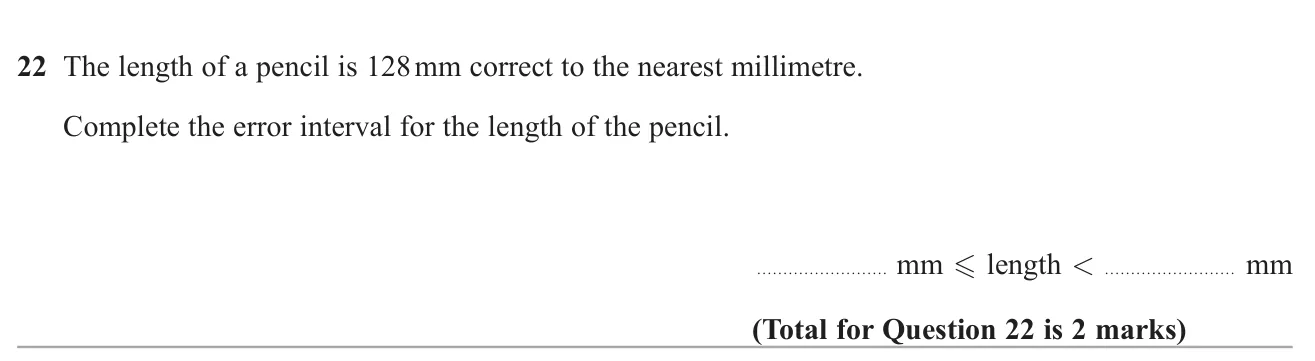
© Pearson Education Ltd. November 2019 Paper 2 (Foundation, calculator), question 22.
Show answer
| Answer | 127.5≤length<128.5 | 2 marks |
|---|
Worked solution Checked against the mark scheme
Nearest millimetre means half a millimetre either side.
Lower bound: 128−0.5=127.5
Upper bound: 128+0.5=128.5
127.5≤length<128.5
Watch out: Using 127 and 129.
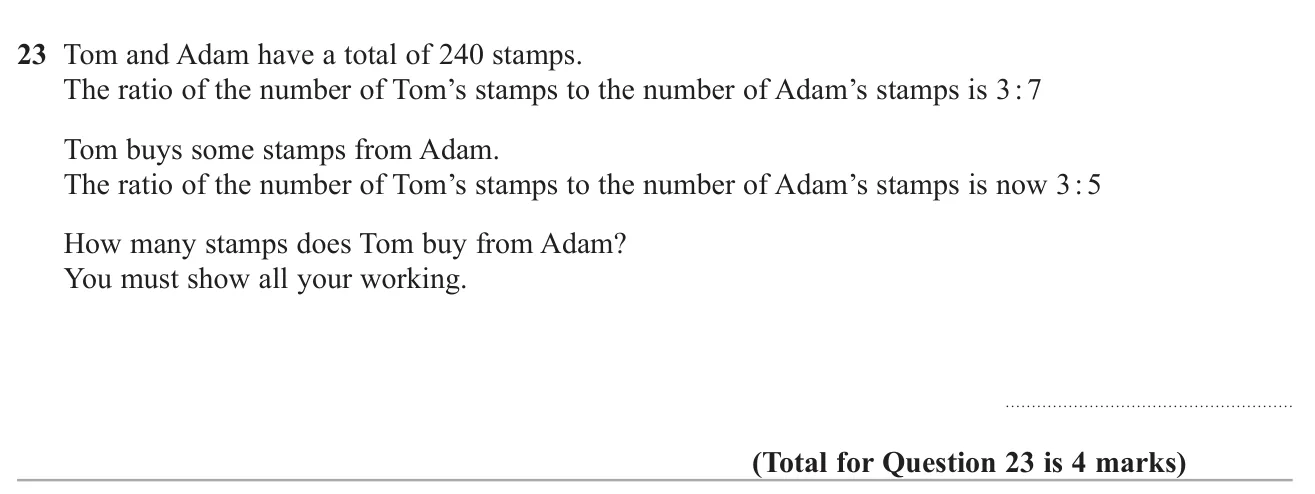
© Pearson Education Ltd. November 2019 Paper 2 (Foundation, calculator), question 23.
Show answer
Worked solution Checked against the mark scheme
Before: 240÷10=24, so Tom has 3×24=72
After: 240÷8=30, so Tom has 3×30=90
Tom buys 90−72=18 stamps
Watch out: Dividing 240 by 3 or 7 instead of by the total number of parts.
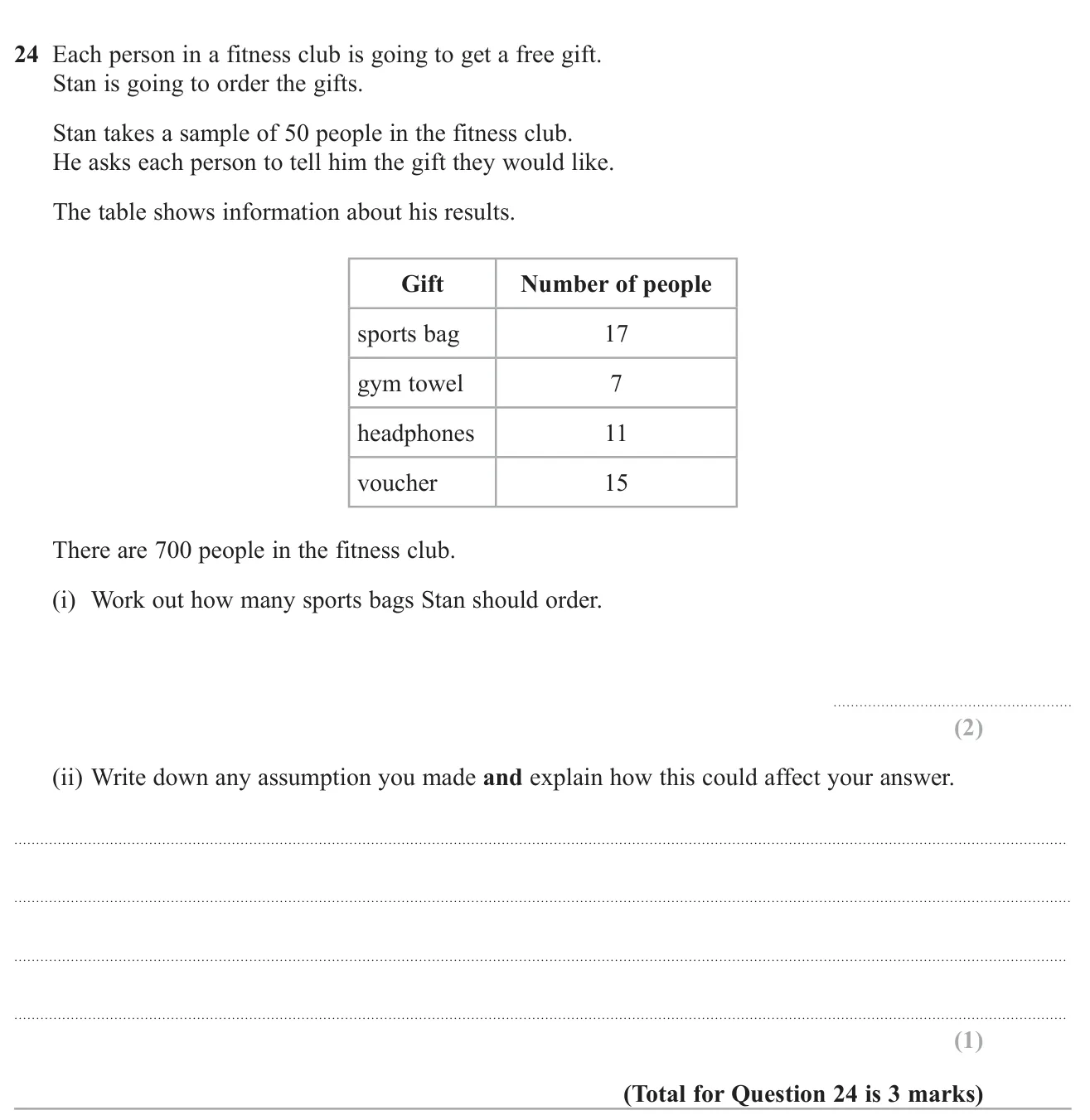
© Pearson Education Ltd. November 2019 Paper 2 (Foundation, calculator), question 24.
Show answer
| (i) | 238 | 2 marks |
|---|
| (ii) | e.g. The sample is representative of the whole club, otherwise the number could be wrong | 1 mark |
|---|
Worked solution Checked against the mark scheme
(i) 5017×700=238 sports bags
(ii) I assumed the 50 people are representative of all 700. If they are not, 238 could be too many or too few.
Watch out: In (ii), just repeating the calculation instead of stating an assumption.
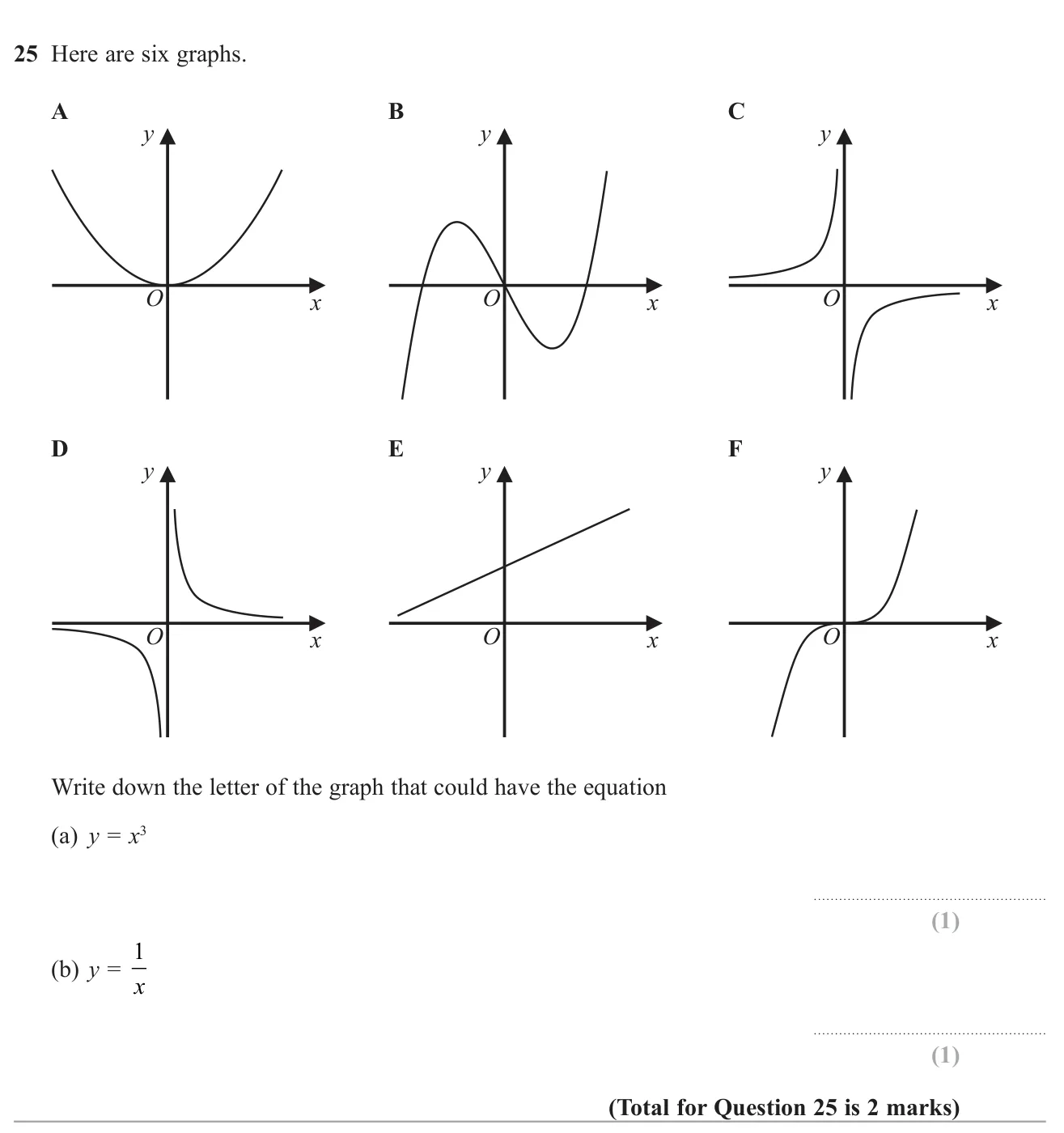
© Pearson Education Ltd. November 2019 Paper 2 (Foundation, calculator), question 25.
Show answer
Worked solution Checked against the mark scheme
(a) y=x3 passes through the origin, is negative for negative x and rises steeply: graph F.
(b) y=x1 never touches the axes, with branches in the top-right and bottom-left: graph D.
Watch out: Choosing B for y=x3 (that is x3−kx) or C for 1/x (that is −1/x).
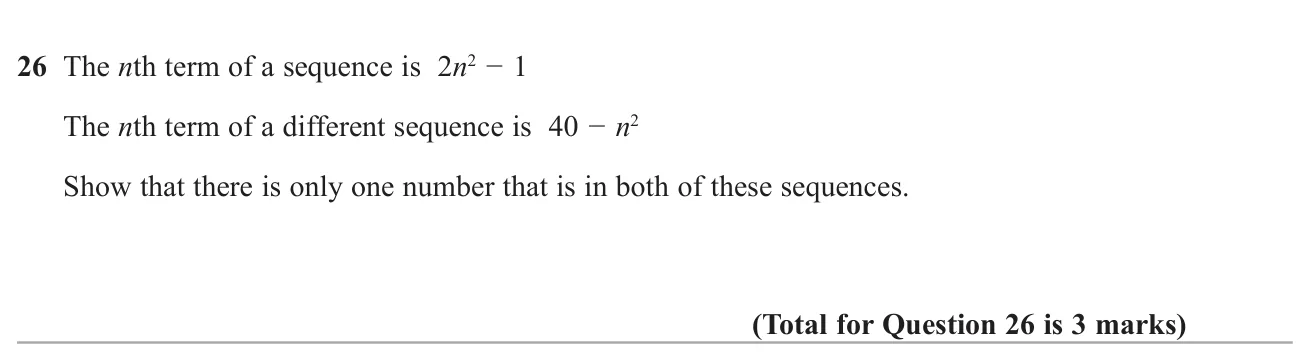
© Pearson Education Ltd. November 2019 Paper 2 (Foundation, calculator), question 26.
Show answer
| Answer | 31 is the only common term | 3 marks |
|---|
Worked solution Checked against the mark scheme
First sequence 2n2−1: 1, 7, 17, 31, 49, 71, ... (increasing)
Second sequence 40−n2: 39, 36, 31, 24, 15, 4, -9, ... (decreasing)
The only number in both is 31. After this the first keeps rising above 31 and the second keeps falling below it, so there can be no other.
Watch out: Treating 2n2 as (2n)2.
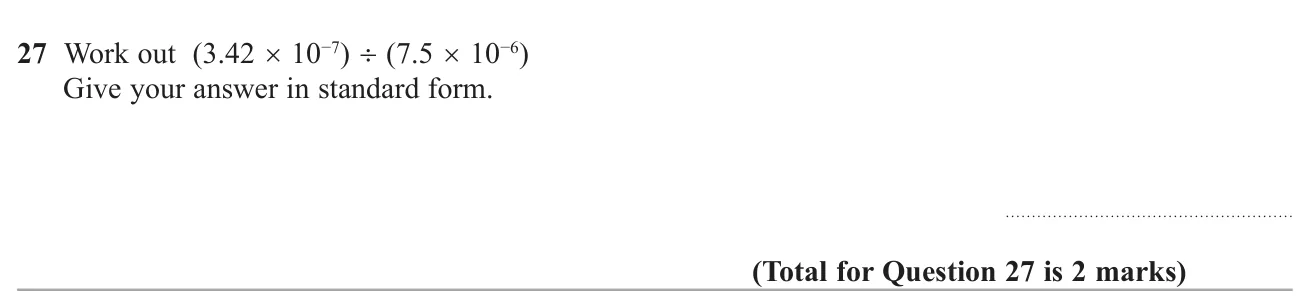
© Pearson Education Ltd. November 2019 Paper 2 (Foundation, calculator), question 27.
Show answer
| Answer | 4.56×10⁻² | 2 marks |
|---|
Worked solution Checked against the mark scheme
7.53.42=0.456 and 10−7÷10−6=10−1
0.456×10−1=0.0456=4.56×10⁻²
Watch out: Leaving the answer as 0.456×10⁻¹, which is not in standard form.
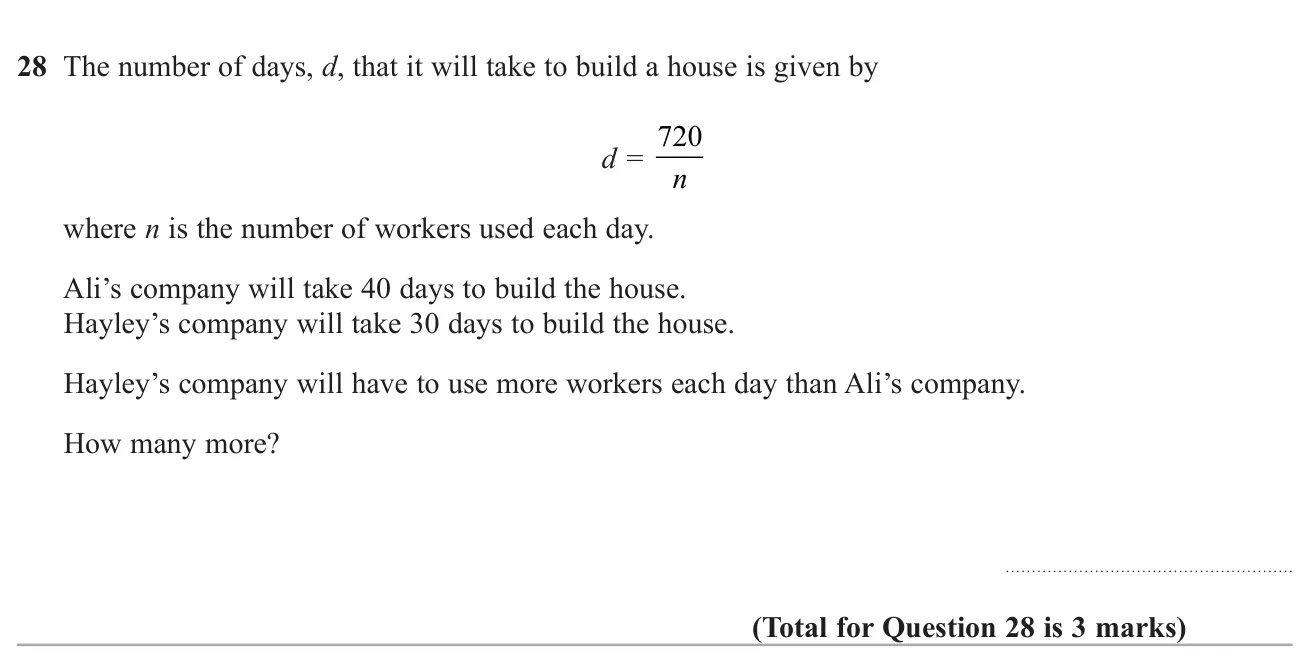
© Pearson Education Ltd. November 2019 Paper 2 (Foundation, calculator), question 28.
Show answer
Worked solution Checked against the mark scheme
Rearrange: n=d720
Ali: 720÷40=18 workers
Hayley: 720÷30=24 workers
24−18=6 more
Watch out: Subtracting days (40 − 30 = 10).
© Pearson Education Ltd. November 2019 Paper 2 (Foundation, calculator), question 29.
Show answer
| Answer | No: cube volume 1000 cm³, cuboid volume 864 cm³ | 5 marks |
|---|
Worked solution Checked against the mark scheme
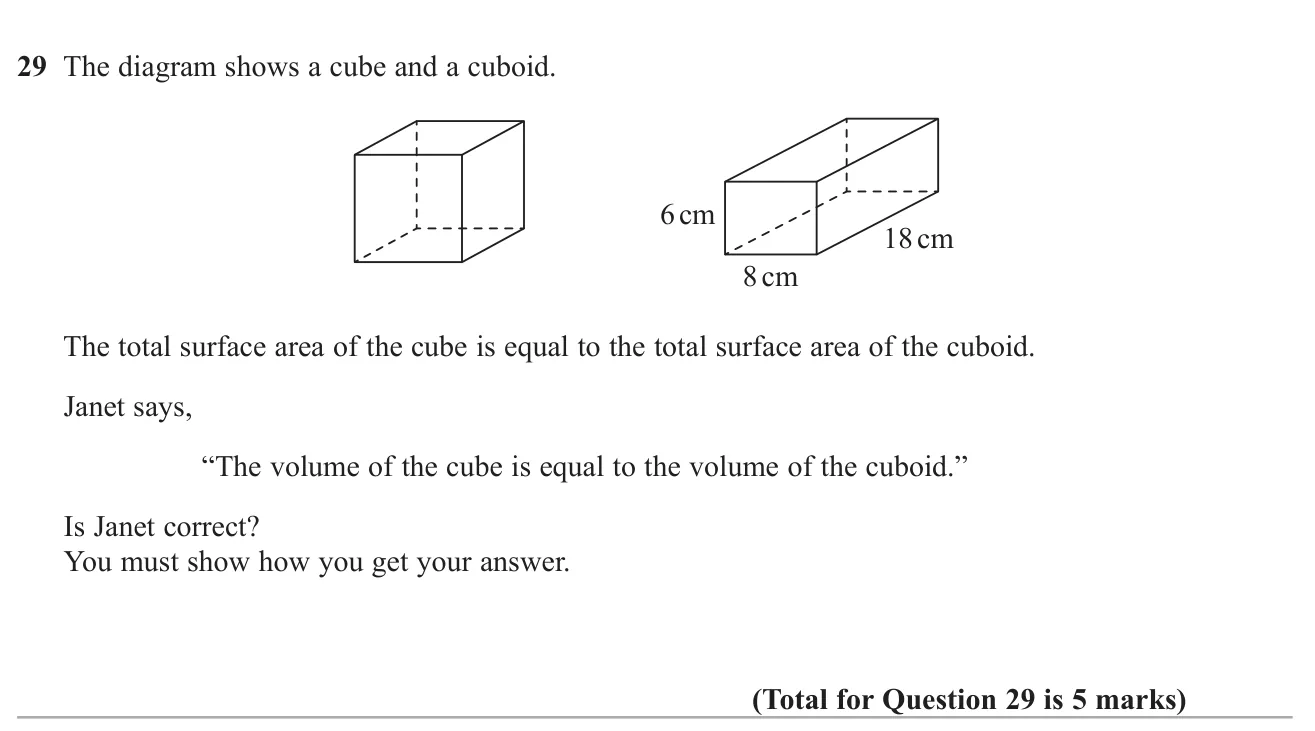
Cuboid surface area: 2(6×8+6×18+8×18)=2(48+108+144)=600 cm2
Each cube face: 600÷6=100, so the side is 100=10 cm
Cube volume =103=1000 cm3; cuboid volume =6×8×18=864 cm3
1000=864, so Janet is not correct.
Watch out: Only adding three faces of the cuboid (300) instead of all six.
© Pearson Education Ltd. November 2019 Paper 2 (Foundation, calculator), question 30.
Show answer
| Answer | (−14) drawn with an arrow and labelled | 3 marks |
|---|
Worked solution Checked against the mark scheme
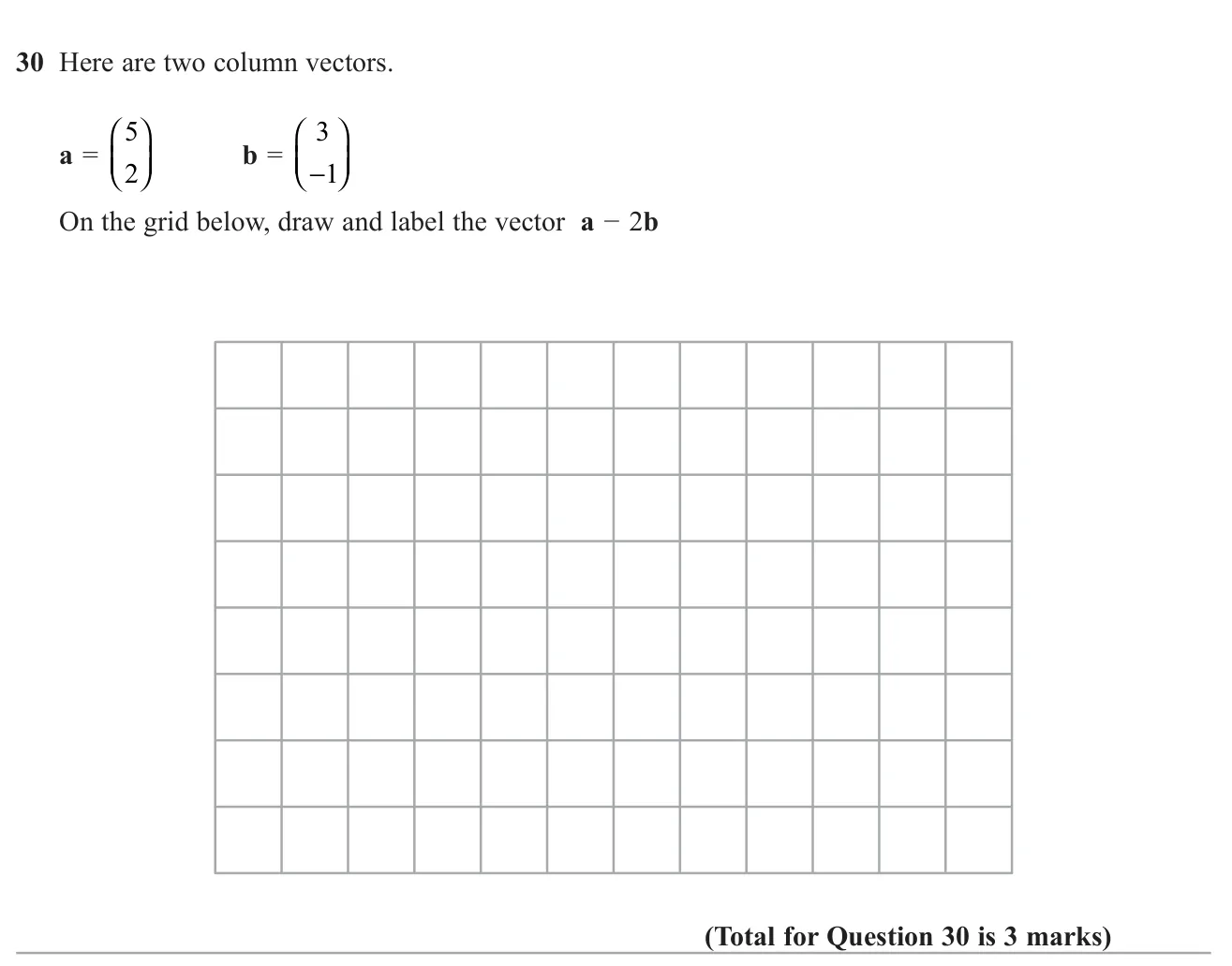
2b=(6−2)
a−2b=(5−62−(−2))=(−14)
Draw an arrow going 1 square left and 4 squares up, and label it.
Watch out: Getting 2−2=0 by mishandling the negative in b.
Finished the paper?
Add up your marks for all three papers and see what grade that would have been.